Summary
Table of Content

Europe Medical Device Distribution Services Market
Get a free sample of this report
Form submitted successfully!
Error submitting form. Please try again.
Thank you!
Your inquiry has been received. Our team will reach out to you with the required details via email. To ensure that you don't miss their response, kindly remember to check your spam folder as well!
Request Sectional Data
Thank you!
Your inquiry has been received. Our team will reach out to you with the required details via email. To ensure that you don't miss their response, kindly remember to check your spam folder as well!
Form submitted successfully!
Error submitting form. Please try again.
Europe Medical Device Distribution Services Market Size
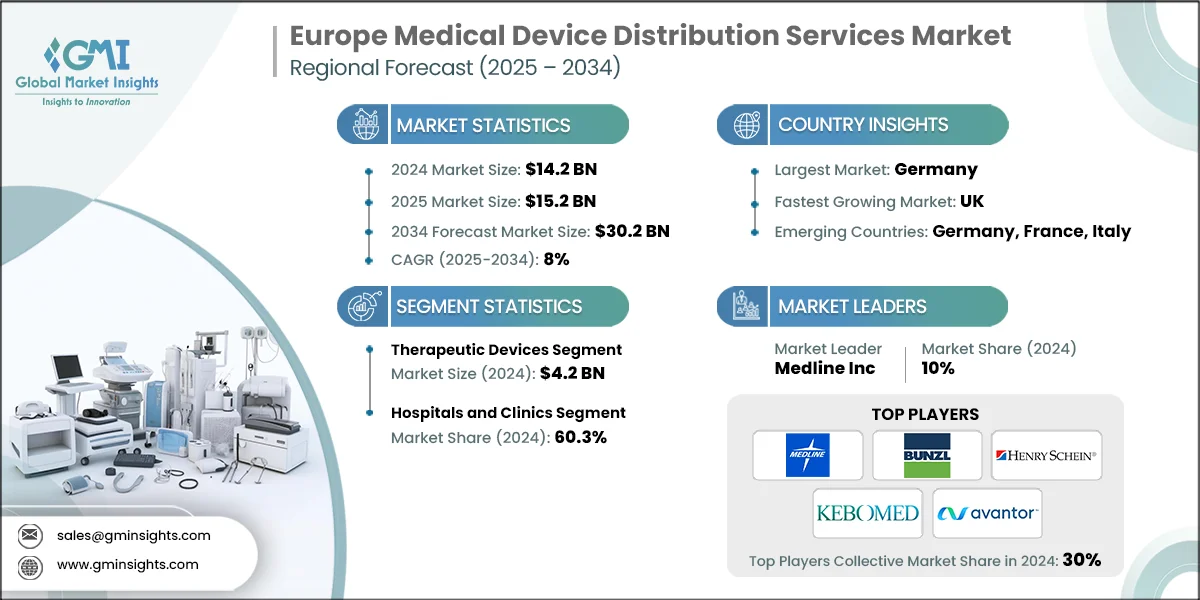
The Europe medical device distribution services market was valued at USD 14.2 billion in 2024. The market is expected to grow from USD 15.2 billion in 2025 to USD 30.2 billion in 2034, at a CAGR of 8% during the forecast period, according to the latest report published by Global Market Insights Inc. The medical device distribution services market is experiencing constant growth, propelled by growing prevalence of chronic diseases, increasing investments and device approvals, and rising demand for home healthcare and remote monitoring.
Europe Medical Device Distribution Services Market Key Takeaways
Market Size & Growth
- 2024 Market Size: USD 14.2 Billion
- 2025 Market Size: USD 15.2 Billion
- 2034 Forecast Market Size: USD 30.2 Billion
- CAGR (2025–2034): 8%
Regional Dominance
- Largest Market: Germany
- Fastest Growing Country: UK
Key Market Drivers
- Growing prevalence of chronic diseases.
- Increasing investments and device approvals.
- Rising demand for home healthcare and remote monitoring.
- Advancements in medical device technology.
Challenges
- Stringent regulatory compliance.
- High initial capital expenditure.
Opportunity
- Growing demand for integrated solutions.
Key Players
- Leading Players: Top 5 players in this market include Medline Inc, Bunzl, Henry Schein, KEBOMED Europe AG, Avantor, which collectively held a market share of 30% in 2024.
Get Market Insights & Growth Opportunities
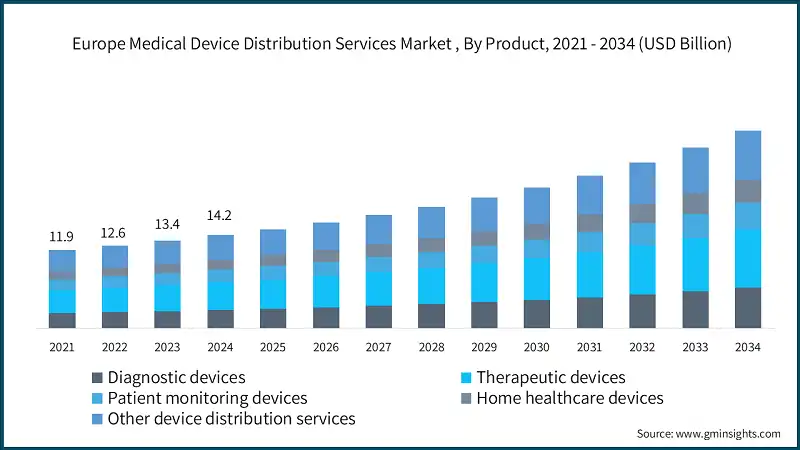
The market is witnessing sharp growth, expanding from USD 11.9 billion in 2021 to USD 13.4 billion in 2023. The growing prevalence of cardiovascular diseases (CVD) is a key factor driving the Europe medical device distribution services market. As healthcare systems across the region shift toward continuous, preventive, and home-based care, the demand for reliable access to diagnostic, monitoring, and therapeutic devices has intensified. Cardiovascular conditions, often chronic and management-intensive, require sustained availability of advanced medical technologies, creating a strong need for efficient distribution networks that serve hospitals, diagnostic centers, long-term care facilities, and homecare environments.
For instance, according to European heart network, around 85 million people are living with CVD in the European Region, including 49 million within the European Union. This burden underscores the critical role of medical device distribution in ensuring timely access to essential solutions such as cardiac monitoring systems, implantable devices, and remote diagnostic tools. The trend also reflects a broader opportunity for distributors to support healthcare providers in managing chronic disease care through integrated logistics, inventory optimization, and last-mile delivery services. As Europe faces rising healthcare demands, robust distribution frameworks will be pivotal in enabling equitable access to life-saving technologies and supporting the region’s transition toward advanced, patient-centric care models.
Additionally, Europe medical device distribution services market is expanding rapidly, driven by substantial investments in research and development and a steady rise in device approvals across the region. Governments, private investors, and leading healthcare companies are committing significant resources to innovation, aiming to enhance device performance, safety, and accessibility within diverse care settings. This growth reflects a broader shift toward advanced technologies that enable precision medicine, minimally invasive procedures, and digital health integration.
Europe has seen consistent increases in health-related R&D spending, with major economies prioritizing medical technology advancements. These investments are fueling a strong pipeline of innovative devices entering the market. Recent regulatory clearances for AI-powered diagnostic platforms and next-generation surgical systems highlight the region’s transition toward smart, connected solutions. As Europe accelerates its adoption of digital health and personalized care, robust distribution networks will play a pivotal role in bridging manufacturers and healthcare providers, supporting faster integration of breakthrough technologies across the continent.
The medical device distribution services market comprises third-party logistics and hybrid distributors that manage the storage, handling, and delivery of medical devices from manufacturers to healthcare providers and end-users (home care service providers, self-managed patients). This market focuses on service revenues, which include distributor margins and value-added services, excluding the cost of medical devices (at manufacturer level).
To get key market trends
Europe Medical Device Distribution Services Market Trends
- The market is undergoing rapid transformation, driven by technological advancements that are reshaping healthcare delivery. Innovations in artificial intelligence (AI), robotics, Internet of Things (IoT), and sensor-based digital health solutions are making devices smarter, more connected, and increasingly patient-centric. These developments are not only improving diagnostic and therapeutic outcomes but also redefining distribution strategies to meet the evolving needs of healthcare systems across the region.
- Sensor-based digital health technologies, such as wearable patches and smartwatches, are gaining traction in Europe and are being integrated into clinical workflows. These devices enable continuous monitoring of vital signs outside traditional hospital settings, supporting remote care and chronic disease management. By reducing hospital burden and enhancing patient engagement, they create new requirements for distributors to manage timely delivery, inventory optimization, and compliance for connected health solutions.
- The convergence of advanced technologies and regulatory modernization in Europe is accelerating the adoption of digital health tools and minimally invasive devices. This trend opens opportunities for distributors to move beyond traditional logistics and become strategic partners in healthcare transformation. Distributors are increasingly expected to provide value-added services such as technical support, training, and integration of smart devices into care pathways.
- In conclusion, technological innovation is a key growth driver for the Europe medical device distribution services market. The rise of AI-enabled diagnostics, IoT-based monitoring systems, and robotics reflects a shift toward patient-centric care models. For distributors, this evolution demands agility, compliance expertise, and digital capabilities to ensure seamless access to next-generation medical technologies across hospitals, clinics, and homecare environments.
Europe Medical Device Distribution Services Market Analysis
Learn more about the key segments shaping this market
Based on product, market is segmented into diagnostic devices, therapeutic devices, patient monitoring devices, home healthcare devices, and other product types. The therapeutic devices were worth USD 4.2 billion in 2024.
- The therapeutic devices segment represents the largest share of the Europe medical device distribution services market, driven by the persistent demand for products used in managing chronic diseases and supporting surgical interventions. This category encompasses a wide range of technologies, including drug delivery systems, infusion pumps, respiratory care devices, cardiovascular stents, prosthetic implants, and dialysis equipment each critical to patient care across hospitals and home settings.
- Therapeutic devices often require specialized handling, installation, and post-sale support, which strengthens the role of distributors as essential intermediaries in Europe’s healthcare ecosystem. Beyond ensuring timely delivery, distributors provide technical assistance, compliance guidance, and training, fostering long-term partnerships with hospitals, clinics, and homecare providers.
- The segment’s dominance is due to Europe’s high prevalence of chronic conditions such as cardiovascular diseases, diabetes, and respiratory disorders.
- These conditions demand a continuous supply of therapeutic devices for both acute care and long-term management, creating sustained opportunities for distribution networks to deliver reliable and efficient solutions.
Learn more about the key segments shaping this market
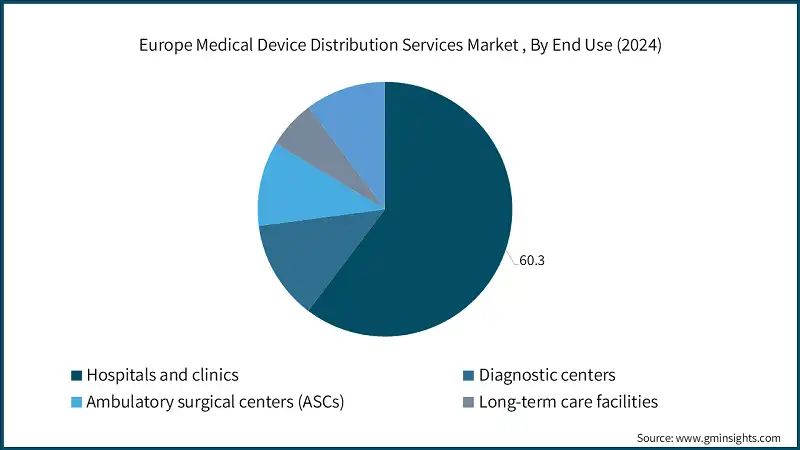
Based on end use, the Europe medical device distribution services market is bifurcated into hospitals and clinics, diagnostic centers, ambulatory surgical centers (ASCs), long-term care facilities, and homecare settings. The hospitals and clinics segment held a significant market share of 60.3% in 2024.
- Hospitals and clinics form the largest end-use segment in Europe’s medical device distribution services market, driven by their comprehensive care models that cover chronic disease management, emergency procedures, and advanced therapeutic interventions. These facilities handle high volumes of patients, creating a demand for a wide range of medical devices.
- To maintain continuous access to critical devices and prevent shortages, hospitals in Europe typically purchase in bulk and maintain significant inventories. Their procurement teams often negotiate large-scale contracts with suppliers and Group Purchasing Organizations (GPOs), leveraging economies of scale to optimize costs and ensure timely availability.
- Hospitals and clinics also possess advanced storage and servicing capabilities, which are essential for managing high-value and complex devices such as cardiovascular stents, infusion pumps, and surgical implants. These capabilities make them strategic partners for distributors offering specialized handling, compliance-driven logistics, and technical support.
Looking for region specific data?
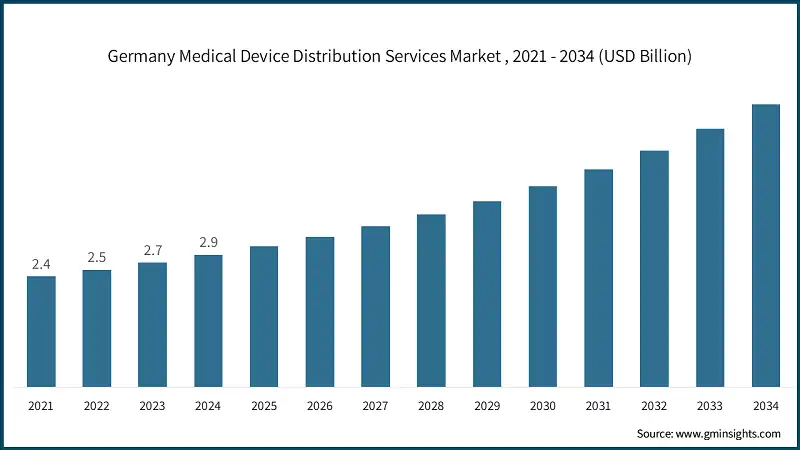
Germany dominates the Europe medical device distribution services market, showcasing strong growth potential.
- The increasing burden of chronic diseases is a major driver of the Germany medical device distribution services market. As healthcare systems across the region shift toward continuous care and preventive health models, the demand for reliable access to diagnostic, monitoring, and therapeutic devices has surged. Chronic conditions such as cardiovascular diseases, diabetes, and respiratory disorders require sustained device availability, creating strong reliance on efficient and compliant distribution networks.
- For instance, Germany dominates the European market due to its high prevalence of cardiovascular diseases and associated healthcare utilization. More than 1.1 million inpatient hospitalizations and 174,005 rehabilitations were recorded for ASCVD diagnoses, accounting for 12.7 million inpatient care days. Additionally, 158,359 deaths linked to ASCVD resulted in 1.6 million YLL, underscoring the immense healthcare burden and the need for advanced therapeutic and monitoring devices.
The UK medical device distribution services market is anticipated to grow at 8.8% CAGR during the analysis timeframe.
- The UK medical device distribution services market is increasingly driven by the growing preference for home-based care and remote patient monitoring. This trend reflects a shift in healthcare delivery toward convenience, cost-efficiency, and patient-centric models.
- With an aging population and a high prevalence of chronic conditions such as cardiovascular disease and diabetes, the need for devices that enable continuous monitoring outside hospital settings has surged.
- Wearable technologies, smart patches, and IoT-enabled diagnostic tools are becoming integral to clinical workflows, allowing patients to manage their health from home while reducing hospital burden. These innovations require distribution networks to ensure timely delivery, technical support, and compliance with regulatory standards.
- The rising adoption of home healthcare and remote monitoring solutions positions distributors as critical enablers of digital health transformation in the UK, creating opportunities for growth through specialized handling and value-added services.
France market is estimated to grow with a significant CAGR in the Europe medical device distribution services market.
- The France medical device distribution services market is significantly driven by the rising incidence of chronic conditions, which continues to reshape healthcare delivery. Diseases such as diabetes, cardiovascular disorders, and respiratory illnesses require continuous access to advanced therapeutic and monitoring devices, creating strong demand for efficient and compliant distribution networks.
- For instance, France has a total adult population of 46,024,000, with an estimated 8.6% prevalence of diabetes among adults, translating to approximately 3,942,900 cases. This growing diabetic population underscores the need for devices such as glucose monitors, insulin delivery devices, and remote patient monitoring devices, both in hospital and homecare settings. The sustained demand for these technologies positions distributors as critical partners in ensuring timely availability and regulatory compliance.
- The increasing burden of chronic diseases in France highlights the strategic importance of medical device distribution services. Distributors must evolve beyond traditional logistics to deliver integrated solutions that support chronic disease management and improve patient outcomes across the healthcare continuum.
Spain medical device distribution services market is estimated to grow with a significant CAGR in the Europe medical device distribution services market.
- The Spain medical device distribution services market is increasingly shaped by the rising incidence of chronic conditions, particularly diabetes, which demands continuous access to monitoring and therapeutic devices. This trend is driving strong reliance on efficient distribution networks to support hospitals, clinics, and homecare settings.
- For instance, the number of adults aged 20–79 living with diabetes in Spain has grown significantly over the past two decades from 2.0 million in 2000 to 2.8 million in 2011, and reaching 4.7 million in 2024, with projections of 4.9 million by 2050. This sharp increase underscores the need for devices such as glucose monitors, insulin delivery systems, and remote monitoring solutions to manage chronic care effectively.
- The escalating diabetes burden in Spain highlights the critical role of medical device distribution services in ensuring timely access to advanced technologies.
Italy medical device distribution services market to experience substantial growth in the Europe medical device distribution services market in 2024.
- Italy’s medical device distribution services market is being reshaped by the growing focus on home-based care and remote health monitoring. This evolution reflects a broader move toward patient-focused healthcare models that aim to improve accessibility, reduce hospital congestion, and deliver cost-effective solutions.
- The country’s aging population and increasing prevalence of chronic conditions such as diabetes and cardiovascular disease have accelerated the adoption of technologies that enable continuous monitoring outside traditional clinical settings. Devices like connected wearables, smart sensors, and IoT-enabled platforms are now central to managing long-term care and enhancing patient engagement.
- The surge in home healthcare and remote monitoring demand is creating significant growth opportunities for Italy’s medical device distribution sector, driving a shift toward integrated service models that support both healthcare providers and patients.
Europe Medical Device Distribution Services Market Share
Leading players in Europe’s medical device distribution services market, including major multinational and regional companies such as, Medline Inc., Bunzl, Henry Schein, KEBOMED Europe AG, Avantor, are actively strengthening their presence through strategic acquisitions, localized partnerships, and technology-driven collaborations. These initiatives aim to expand market reach, enhance service capabilities, and support long-term growth in an increasingly competitive and evolving distribution landscape. Collectively, these top five players account for about 30% of the market share.
Their portfolios now feature advanced solutions across multiple categories, such as connected diagnostic systems, AI-enabled monitoring devices, and minimally invasive therapeutic technologies. By integrating digital platforms and enabling remote care management, these companies are improving treatment precision, scalability, and patient convenience across hospitals, clinics, and homecare environments.
Collaboration with European healthcare providers and regulatory authorities ensures compliance with stringent standards and clinical protocols. At the same time, targeted programs focused on improving access for aging populations and underserved regions are making distribution services more inclusive and equitable.
Through continuous innovation and a patient-centric approach, these companies are redefining medical device distribution in Europe, optimizing supply chains, reducing care delays, and supporting sustainable healthcare systems across the region.
Europe Medical Device Distribution Services Market Companies
Prominent players operating in the Europe medical device distribution services industry are as mentioned below:
- Avantor, Inc.
- Bunzl plc
- B. Braun Melsungen
- Cardinal Health, Inc.
- Henry Schein, Inc.
- KEBOMED Europe AG
- McKesson Corporation
- Medline Inc.
- Owens & Minor, Inc.
- Patterson Companies, Inc.
- Cardinal Health
Cardinal Health delivers comprehensive medical supply chain solutions for healthcare providers, including distribution, inventory management, and logistics. Their approach focuses on scalability, reliability, and visibility through advanced tracking tools. A notable feature is ValueLink, which optimizes supply delivery, reduces costs, and enhances efficiency using Lean Six Sigma principles.
This company provides comprehensive healthcare distribution solutions, delivering pharmaceuticals, medical-surgical supplies, and equipment to various care settings. Their services include fast delivery, cold chain logistics, inventory management, and compliance support. With a wide product range and advanced technology platforms, they ensure streamlined ordering, accurate fulfillment, and efficient inventory control, making them a reliable partner for healthcare providers.
This company is a leading manufacturer and distributor of medical supplies, serving hospitals, surgery centers, long-term care, and home health providers. They offer a broad product portfolio and customized solutions such as surgical procedure trays, crisis supply management, and data-driven guidance. Their integrated approach combines clinical expertise with supply chain strategies to enhance operational efficiency and patient outcomes. With strong scalability and adaptability, they are recognized for supply chain resiliency and comprehensive healthcare support.
Europe Medical Device Distribution Services Market Report Attributes
| Key Takeaway | Details |
|---|---|
| Market Size & Growth | |
| Base Year | 2024 |
| Market Size in 2024 | USD 14.2 Billion |
| Market Size in 2025 | USD 15.2 Billion |
| Forecast Period 2025 - 2034 CAGR | 8% |
| Market Size in 2034 | USD 30.2 Billion |
| Key Market Trends | |
| Drivers | Impact |
| Growing prevalence of chronic diseases | Increase demand for advanced medical devices and continuous care solutions. |
| Increasing investments and device approvals | This accelerates market growth and speeds up product availability. |
| Rising demand for home healthcare and remote monitoring | Drives adoption of portable connected medical devices. |
| Advancements in medical device technology | Enhances efficiency, accuracy, and expands application areas in healthcare. |
| Pitfalls & Challenges | Impact |
| Stringent regulatory compliance | Slows product approvals and increases operational complexity for manufacturers and distributors. |
| High initial capital expenditure | Limits entry for smaller players and delays adoption of advanced technologies. |
| Opportunities: | Impact |
| Growing demand for integrated solutions | Creates scope for bundled services and end-to-end supply chain offerings, improving efficiency and customer retention. |
| Market Leaders (2024) | |
| Market Leaders |
10 % market share |
| Top Players |
Collective market share in 2024 is 30% |
| Competitive Edge |
|
| Regional Insights | |
| Largest market | Germany |
| Fastest growing market | UK |
| Emerging countries | Germany, France, Italy |
| Future outlook |
|
What are the growth opportunities in this market?
Europe Medical Device Distribution Services Industry News
- In April 2025, Bunzl plc, a global leader in distribution and services, announced two strategic acquisitions to strengthen its healthcare and packaging presence. The company has signed an agreement to acquire Hospitalia, a major healthcare distributor in Chile, marking its entry into the Chilean healthcare market. Hospitalia supplies a wide range of products, including those used in surgical settings, to both public and private hospitals. In addition, Bunzl has completed the acquisition of a business in the Netherlands, further expanding its footprint in Europe.
The Europe medical device distribution services market research report includes in-depth coverage of the industry with estimates and forecast in terms of revenue in USD million and volume in Units from 2021 - 2034 for the following segments:
Market, By Product Type
- Diagnostic devices
- Therapeutic devices
- Patient monitoring devices
- Home healthcare devices
- Other product types
Market, By End Use
- Hospitals and clinics
- Diagnostic centers
- Ambulatory surgical centers (ASCs)
- Long-term care facilities
- Homecare settings
The above information is provided for the following countries:
- Germany
- UK
- France
- Spain
- Italy
- Netherlands
Frequently Asked Question(FAQ) :
What was the market size of the Europe medical device distribution services market in 2024?
The market size was USD 14.2 billion in 2024, driven by the growing prevalence of chronic diseases, increasing investments, device approvals, and rising demand for home healthcare and remote monitoring.
What is the projected value of the Europe medical device distribution services market by 2034?
The market is expected to reach USD 30.2 billion by 2034, growing at a CAGR of 8% during the forecast period, supported by technological advancements and evolving healthcare delivery systems.
What is the projected size of the Europe medical device distribution services market in 2025?
The market is expected to reach USD 15.2 billion in 2025.
How much revenue did the therapeutic devices segment generate in 2024?
The therapeutic devices segment generated USD 4.2 billion in 2024.
What was the market share of the hospitals and clinics segment in 2024?
The hospitals and clinics segment held a significant market share of 60.3% in 2024.
Which country is expected to witness the highest growth in the Europe medical device distribution services market?
The UK is anticipated to grow at a CAGR of 8.8% during the analysis timeframe, driven by advancements in healthcare infrastructure and increasing adoption of connected health solutions.
What are the upcoming trends in the Europe medical device distribution services industry?
Key trends include the adoption of sensor-based digital health technologies, such as wearable patches and smartwatches, integration of AI and IoT in medical devices, and the shift towards patient-centric healthcare delivery models.
Who are the key players in the Europe medical device distribution services market?
Key players include Avantor, Inc., Bunzl plc, B. Braun Melsungen, Cardinal Health, Inc., Henry Schein, Inc., KEBOMED Europe AG, McKesson Corporation, Medline Inc., and Owens & Minor, Inc.
Europe Medical Device Distribution Services Market Scope
Related Reports