Summary
Table of Content

Europe Diabetes Care Devices Market
Get a free sample of this report
Form submitted successfully!
Error submitting form. Please try again.
Thank you!
Your inquiry has been received. Our team will reach out to you with the required details via email. To ensure that you don't miss their response, kindly remember to check your spam folder as well!
Request Sectional Data
Thank you!
Your inquiry has been received. Our team will reach out to you with the required details via email. To ensure that you don't miss their response, kindly remember to check your spam folder as well!
Form submitted successfully!
Error submitting form. Please try again.
Europe Diabetes Care Devices Market Size
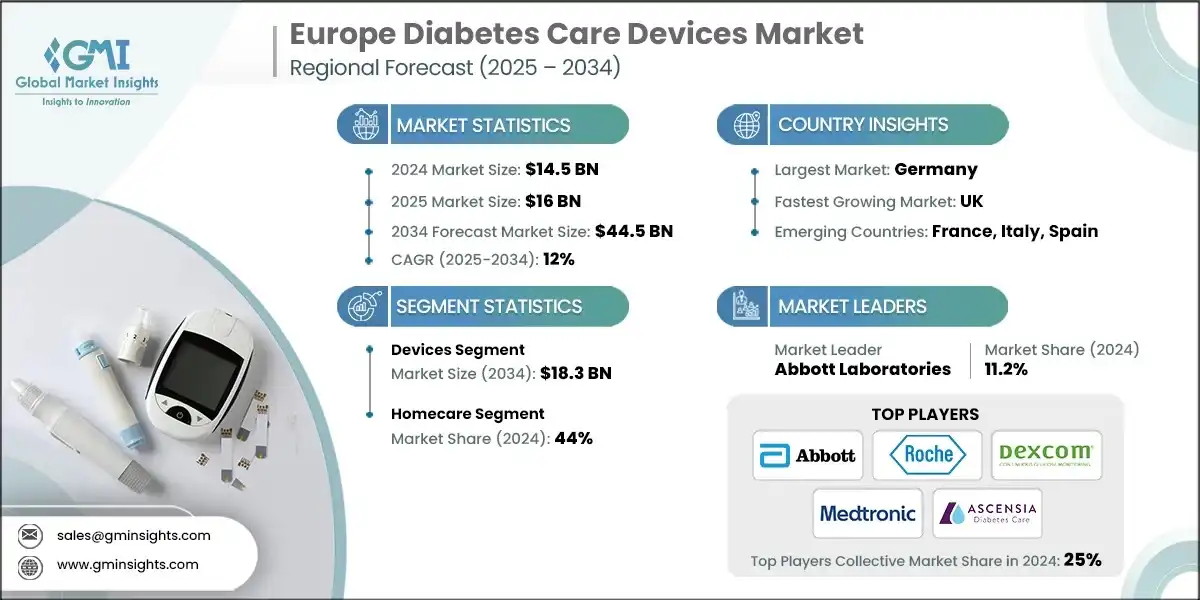
The Europe diabetes care devices market was valued at USD 14.5 billion in 2024 and is projected to grow from USD 16 billion in 2025 to USD 44.5 billion by 2034, expanding at a CAGR of 12%, according to the latest report published by Global Market Insights Inc. This consistent growth is induced by different reasons such as increasing incidence of diabetes in the region, increased technological developments in diabetes care devices, and augmented investments by public and private enterprises towards diabetes care. Diabetes care devices are a group of medical devices used to assist people suffering from diabetes to effectively manage their condition. The devices are vital to monitor blood glucose levels, infuse insulin, and diabetes management in general. Major companies in the industry include Abbott Laboratories, F. Hoffmann-La Roche, Dexcom, Medtronic and Ascensia Diabetes Care.
Europe Diabetes Care Devices Market Key Takeaways
Market Size & Growth
- 2024 Market Size: USD 14.5 billion
- 2025 Market Size: USD 16 billion
- 2034 Forecast Market Size: USD 44.5 billion
- CAGR (2025–2034): 12%
Key Market Drivers
- Rising prevalence of diabetes and obesity in Europe.
- Technological advancements in CGM and smart insulin pens.
- Supportive reimbursement policies and insurance coverage.
Challenges
- High cost of advanced devices and limited rural access.
- Rigorous regulatory framework.
- Data residency and privacy regulations.
Opportunity
- Integrated care models combining CGM, insulin delivery, and telehealth.
- AI-enabled decision support and closed-loop insulin automation.
Key Players
- Market Leader: Abbott Laboratories led with over 11.2% market share in 2024.
- Leading Players: Top 5 players in this market include Abbott Laboratories, F. Hoffmann-La Roche, Dexcom, Medtronic, Ascensia Diabetes Care, which collectively held a market share of 25% in 2024.
Get Market Insights & Growth Opportunities
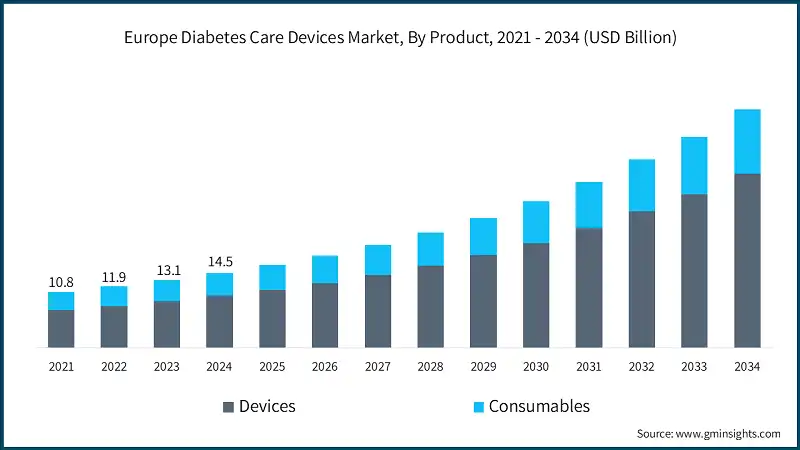
The market increased from USD 10.8 billion in 2021 to USD 13.1 billion in 2023, largely due to the increased adoption of digital technologies, shift in consumer behaviour preferring more advanced and sustainable solutions, and growing demand in emerging markets. Moreover, companies also capitalized on post pandemic momentum, expanding their product portfolio, and optimizing supply chain to meet the changing expectations. Thus, all these factors collectively contributed to the upward growth of the market during the period.
The growth of the Europe diabetes care devices market is strongly driven by the rising prevalence of diabetes across the region. According to the World Health Organization (WHO), diabetes is one of the most common chronic conditions in the WHO European Region, and Europe bears the highest global burden of type 1 diabetes. It is projected that 1 in 10 people living in the region will have diabetes by 2045, underscoring the urgent need for effective monitoring and management solutions. This increasing prevalence necessitates the adoption of technologically advanced diabetes care devices, including blood glucose monitors and insulin delivery systems, to support patients in managing their condition effectively.
Demographic trends further amplify the demand for diabetes care solutions. Europe is home to some of the oldest populations in the world, with Southern Europe including countries such as Croatia, Greece, Italy, Malta, Portugal, Serbia, Slovenia, and Spain recognized as the oldest region globally, where 21% of the population is aged 65 and above. Among individual countries, Italy has 23%, Finland, Portugal, and Greece each country just under 22%, rank among the top five globally for elderly population share. As aging is a major risk factor for chronic diseases such as diabetes, the growing elderly demographic in Europe is a significant catalyst for market expansion. Older adults are more likely to require frequent blood glucose monitoring and consistent insulin administration, thereby driving the need for reliable and efficient diabetes care devices.
Additionally, the growth of the Europe diabetes care devices market is further supported by the increasing awareness initiatives across the region. Each year, November marks Diabetes Awareness Month, and in 2024, IDF Europe spearheaded a series of impactful campaigns and events aimed at raising awareness about diabetes and advocating for policy actions to support people living with diabetes and those at risk. The key activities included, a social media campaign highlighting IDF Europe’s call to action and sharing testimonials from the diabetes community, and blood glucose testing events organized at various EU institution buildings, promoting early detection and awareness. These initiatives are instrumental in increasing public and institutional awareness, which in turn drives the demand for diabetes management tools such as blood glucose monitors and insulin delivery devices. As awareness grows, so does the adoption of these technologies, contributing significantly to the expansion of the diabetes care devices market in Europe.
Diabetes care devices refer to a range of medical devices designed to help individuals with diabetes manage their condition effectively. These devices play a crucial role in monitoring blood glucose levels, administering insulin, and the overall diabetes management.
To get key market trends
Europe Diabetes Care Devices Market Trends
- One of the key forces propelling the diabetes care devices market in Europe is the rapid pace of technological innovation. Companies are actively developing solutions that are more affordable, less invasive, and deliver highly accurate results addressing the needs of a growing diabetic population across the continent.
- For example, Dexcom’s G7 continuous glucose monitor is a notable advancement. It is significantly smaller than the previous G6 model by about 60% and offers real-time glucose readings directly to smartphones and smartwatches. This eliminates the need for routine fingerstick testing and is suitable for people with type 1, type 2, or gestational diabetes. The G7 has already received CE Mark approval, making it available in several European countries.
- Similarly, Abbott’s FreeStyle Libre 3, launched in Europe in 2022, offers a 14-day wear sensor that continuously monitors glucose levels and transmits data to a mobile app. It is approved for use in children as young as four, making it a versatile option for both pediatric and adult patients. Its compact design and ease of use have made it popular in markets such as Germany, France, and the UK.
- Beyond CGMs, traditional self-monitoring blood glucose (SMBG) devices have also evolved. Ascensia Diabetes Care’s CONTOUR NEXT ONE meter, for instance, includes a “Second Chance Sampling” feature. This allows users to apply more blood to the same strip if the first attempt was insufficient, reducing waste and improving user comfort. This kind of ergonomic and user-friendly design is especially valued in European healthcare systems that emphasize patient-centered care.
- In addition to product innovation, major players are expanding their presence in Europe through strategic moves such as partnerships, acquisitions, and regulatory approvals. These efforts are aimed at strengthening their footprint in both mature markets such as Germany and the UK, and emerging ones.
Europe Diabetes Care Devices Market Analysis
Learn more about the key segments shaping this market
The market was valued at USD 10.8 billion in 2021. The market size reached USD 13.1 billion in 2023, from USD 11.9 billion in 2022. Based on the product, the market is segmented into devices and consumables. The devices segment is further bifurcated into blood glucose monitoring devices and insulin delivery devices. The blood glucose monitoring devices segment was valued at USD 5 billion in 2024 and is projected to reach USD 18.3 billion by 2034, growing at a CAGR of 14.1%. In comparison, the consumables segment, valued at USD 9.8 billion in 2024, is expected to grow to USD 31.3 billion by 2034.
- Obesity is a major public health concern in Europe, significantly increasing the risk of chronic conditions such as type 2 diabetes, cardiovascular diseases, hypertension, and certain cancers. Nearly 53% of the EU population aged 16 and above are overweight, and 17% are obese. The trend is rising sharply among both adults and children, highlighting the urgent need for preventive and management strategies.
- Blood glucose monitoring devices, including continuous glucose monitors (CGMs) and self-monitoring blood glucose (SMBG) meters, are essential tools for individuals living with diabetes. These devices help users make informed decisions about their diet, physical activity, and insulin dosing, based on real-time glucose data.
- Diabetes requires constant monitoring to avoid complications such as hyperglycemia and hypoglycemia. CGMs and SMBG meters allow patients to track their glucose levels throughout the day, improving disease management and quality of life.
- The rising prevalence of diabetes across Europe, especially in aging populations and urban centers, is a key driver for the growth of the blood glucose monitoring segment.
- This growing burden of obesity and diabetes in Europe underscores the importance of technologically advanced monitoring devices that offer accurate, timely, and user-friendly solutions for effective disease management supporting market expansion.
Learn more about the key segments shaping this market
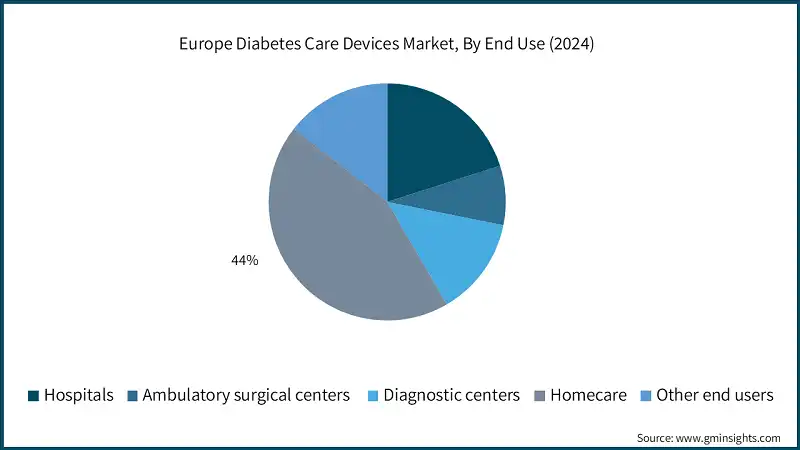
Based on end use, the diabetes care devices market is segmented into hospitals, ambulatory surgical centers, diagnostic centers, homecare, and other end users. The homecare segment accounted for the market share of 44% in 2024.
- The aging population in Europe is expanding rapidly, with the number of people aged 60 and above projected to grow from 215 million in 2021 to 247 million by 2030 and surpass 300 million by 2050, as reported by WHO. Among them, individuals aged 80 and older who are most likely to require ongoing health support are expected to more than double, placing increasing pressure on healthcare systems across the region.
- In response to this demographic shift, home-use diabetes care devices are becoming increasingly important. These tools allow individuals to manage their condition conveniently from home, reducing the need for frequent hospital visits and enabling greater independence especially for older adults.
- Devices such as continuous glucose monitors (CGMs) provide real-time insights into blood glucose levels, helping users make informed decisions about their diet, physical activity, and insulin dosing. This continuous monitoring is particularly beneficial for elderly patients that may struggle with traditional testing methods.
- As CGMs gain popularity across Europe, patients are experiencing improved control and understanding of their condition, which contributes to better long-term outcomes. Countries with strong digital health infrastructure, such as Germany and the Netherlands, are seeing faster adoption of these technologies.
- Furthermore, home-based diabetes care supports personalized treatment plans. Patients can collaborate with healthcare professionals to tailor insulin regimens based on daily routines, meals, and activity levels. Older adults, that are more vulnerable to diabetes, increasingly prefer home-based solutions that allow them to maintain autonomy and reduce dependency on clinical care. This trend is driving strong growth in the homecare segment of the diabetes market across Europe.
- In conclusion, the rising elderly population, combined with the growing need for convenient and personalized diabetes management, is significantly boosting the demand for home-use diabetes care devices throughout the region.
Looking for region specific data?
Germany Diabetes Care Devices Market
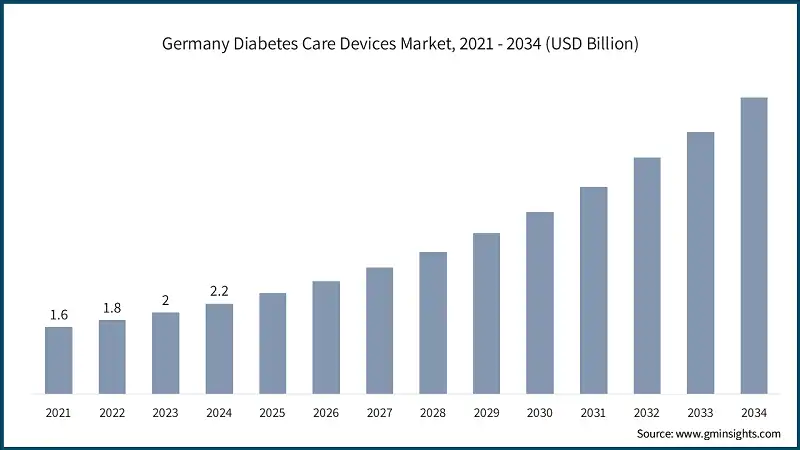
Germany diabetes care devices market accounted for USD 2.2 billion in 2024 and is anticipated to show lucrative growth over the forecast period.
- Germany is one of the 59 countries in the IDF Europe Region, where diabetes remains a significant public health concern. As of 2021, the country had a total adult population of over 62 million, with 10% of adults living with diabetes, amounting to approximately 6.2 million cases. This figure is expected to rise in the coming years, reflecting broader regional trends and placing increased pressure on the healthcare system.
- A major factor contributing to this growing burden is Germany’s rapidly aging population. By 2050, the number of people aged 65 and older is projected to increase by 41%, reaching 24 million which will account for nearly one-third of the total population. As people age, their vulnerability to chronic conditions such as diabetes increases, driving the need for more effective monitoring and management solutions.
- This demographic shift is leading to a surge in demand for diabetes care devices, particularly those designed for home use and regular monitoring. Older adults are more likely to experience diabetes-related complications, making tools such as glucose meters and continuous glucose monitors (CGMs) essential for daily management. These devices offer convenience, accuracy, and independence qualities that are especially valued by elderly patients.
- As the aging population grows, so does the need for accessible, user-friendly, and reliable diabetes care technologies. This trend is not only shaping consumer preferences but also influencing healthcare policies and reimbursement frameworks in Germany, which are increasingly focused on supporting long-term disease management and home-based care.
France Diabetes Care Devices Market
France diabetes care devices market accounted for USD 1.6 billion in 2024 and is anticipated to show lucrative growth over the forecast period.
- France is facing a growing public health challenge as its elderly population continues to expand. Currently, 13.16 million people in France are aged 65 and above, making up 20.3% of the total population of 64.83 million. Notably, 1.4 million individuals are aged 85 and older, and this number is projected to rise to 5 million by 2060, driven by increasing life expectancy.
- This demographic shift is expected to place significant pressure on the country’s healthcare system, particularly in managing chronic diseases such as diabetes.
- Diabetes is already a major concern in France. As of 2021, the country had a total adult population of 46 million, with a diabetes prevalence of 8.6%, amounting to approximately 3.94 million adults living with the condition. With the aging population more susceptible to diabetes and its complications, the demand for effective monitoring and management tools is expected to grow substantially.
- This rising need is fueling the adoption of diabetes care devices, especially those designed for home use. Devices such as glucose meters and continuous glucose monitors (CGMs) are becoming essential for daily management, offering real-time insights and enabling patients to make informed decisions about their diet, activity, and insulin dosing.
- Older adults, in particular, benefit from the convenience and independence these devices provide. As more elderly individuals opt for home-based care, the market for accessible, user-friendly, and reliable diabetes technologies is expanding.
UK Diabetes Care Devices Market
UK diabetes care devices market is projected to experience steady growth between 2025 and 2034.
- The growth of the market in the country is highly attributed to the rising prevalence of diabetes in the country.
- For instance, as per the data from the Public Health England’s Diabetes prevalence model, by 2035, the prevalence of diabetes in the country is expected to reach 4.9 million, which is equivalent to 9.7% of the total population of the country.
- Thus, as the rate of diabetic prevalence increases, the adoption of diabetic care devices among the affected population is anticipated to increase in the foreseeable future, propelling the market growth in the country.
Italy Diabetes Care Devices Market
Italy diabetes care devices market is projected to experience steady growth between 2025 and 2034.
- Italy is one of the 60 countries and territories in the IDF Europe Region, and it ranks among the most affected nations in terms of diabetes burden. As of 2021, Italy had a total adult population of approximately 45.1 million, with a diabetes prevalence of 9.9%, translating to around 4.47 million adults living with diabetes. Notably, Italy holds the fourth highest number of adults (aged 20 - 79) with diabetes in the region and is also among the top 10 countries globally in terms of total diabetes-related health expenditure in 2024.
- Demographically, Italy is one of the oldest countries in Europe. With 13.76 million people aged 65 and above, seniors make up 22.8% of the total population of 60.34 million. This aging trend is a key driver of the growing demand for diabetes care, as older adults are more susceptible to chronic conditions such as diabetes and its associated complications.
- As the elderly population continues to grow, the need for effective, accessible, and home-based diabetes management solutions is becoming increasingly urgent. Devices such as glucose meters and continuous glucose monitors (CGMs) play a critical role in helping patients monitor their blood glucose levels, manage insulin dosing, and maintain better control over their condition especially from the comfort of their homes.
Europe Diabetes Care Devices Market Share
- The top 5 players in the European diabetes care devices market Abbott Laboratories, F. Hoffmann-La Roche, Dexcom, Medtronic, and Ascensia Diabetes Care collectively hold a 25% share of the regional market. These companies maintain their leadership through robust product portfolios, strategic collaborations, regulatory approvals, and continuous innovation in glucose monitoring and insulin delivery technologies.
- Abbott Laboratories stands out as the market leader, driven by the widespread adoption of its FreeStyle Libre CGM systems across Europe. The company has strengthened its position through strategic acquisitions and product expansion. For instance, in September 2023, Abbott acquired Bigfoot Biomedical, a developer of smart insulin management systems. This move brought together expertise in CGM and insulin dosing support, enriching Abbott’s product portfolio and enhancing its revenue potential in the diabetes care segment.
- F. Hoffmann-La Roche, Medtronic, and Ascensia Diabetes Care continue to play pivotal roles in the market through their focus on diagnostics, insulin delivery systems, and user-friendly SMBG devices. Their sustained investment in R&D and digital health integration supports their competitive positioning across key European countries.
Europe Diabetes Care Devices Market Companies
Few of the prominent players operating in the Europe diabetes care devices industry include:
- Abbott Laboratories
- ARKRAY
- Ascensia Diabetes Care
- B. Braun Melsungen
- Becton, Dickinson and Company
- Bionime
- DarioHealth
- Dexcom
- Dr. Reddy’s Laboratories
- Eli Lilly and Company
- F. Hoffmann-La Roche
- Insulet
- Medtronic
- Nova Biomedical
- Novo Nordisk
- Sanofi
- Ypsomed Holding
- Abbott Laboratories
Abbott Laboratories is a leading healthcare company with a strong and growing presence across Europe. The company offers a comprehensive range of diabetes care solutions, with its flagship product, the FreeStyle Libre continuous glucose monitoring, (which was valued at USD 10.9 billion in 2024) (CGM) system, playing a central role in its market success. FreeStyle Libre provides real-time glucose readings and trend data without the need for routine fingerstick calibrations, making it highly popular among both patients and healthcare professionals across the region.
Ascensia is well-established in Europe for its CONTOUR series of blood glucose monitoring systems, known for their accuracy and ease of use. The company has been expanding its offerings to include digital health tools and CGM technologies, supporting more personalized and connected diabetes management. Ascensia’s focus on innovation and patient-friendly solutions has helped it maintain a solid position in the European market.
Headquartered in Germany, B. Braun is a key player in the European medical technology space, including diabetes care. While traditionally known for infusion therapy and hospital equipment, the company has broadened its portfolio to include diabetes management products. With operations in over 64 countries and a product range of more than 5,000 items, B. Braun leverages its strong European base to support the growing demand for homecare and clinical diabetes solutions.
Europe Diabetes Care Devices Market Report Attributes
| Key Takeaway | Details |
|---|---|
| Market Size & Growth | |
| Base Year | 2024 |
| Market Size in 2024 | USD 14.5 billion |
| Market Size in 2025 | USD 16 billion |
| Forecast Period 2025 - 2034 CAGR | 12% |
| Market Size in 2034 | USD 44.5 billion |
| Key Market Trends | |
| Drivers | Impact |
| Rising prevalence of diabetes and obesity in Europe | Drives sustained demand for monitoring and insulin delivery devices, especially in aging populations and urban centers. |
| Technological advancements in CGM and smart insulin pens | Enhances device accuracy, usability, and integration with mobile apps; improves patient compliance and outcomes. |
| Supportive reimbursement policies and insurance coverage | National reforms in Germany other than EU countries are expanding CGM access, boosting adoption and market volume. |
| Pitfalls & Challenges | Impact |
| High cost of advanced devices and limited rural access | Restricts adoption in low-income and underserved regions; affordability remains a barrier despite reimbursement efforts. |
| Rigorous regulatory framework | Slows down innovation and time-to-market for new products. |
| Data residency and privacy regulations | Privacy, cybersecurity, and compliance risks in connected diabetes care devices undermine patient trust, increase regulatory and legal burdens, and raise development costs. |
| Opportunities: | Impact |
| Integrated care models combining CGM, insulin delivery, and telehealth | Enhances patient outcomes and convenience; supports remote care and chronic disease management; drives demand for interoperable systems. |
| AI-enabled decision support and closed-loop insulin automation | Improves glycemic control and reduces complications; enables personalized treatment; boosts efficiency in clinical workflows and remote monitoring |
| Market Leaders (2024) | |
| Market Leaders |
11.2% |
| Top Players |
Collective market share in 2024 is 25% |
| Competitive Edge |
|
| Regional Insights | |
| Largest Market | Germany |
| Fastest Growing Market | UK |
| Emerging Country | France, Italy, Spain |
| Future Outlook |
|
What are the growth opportunities in this market?
Europe Diabetes Care Devices Industry News
- In January 2024, Dexcom announced a major expansion in Europe by breaking ground on a new manufacturing facility in Athenry, County Galway, Ireland. This strategic move marks Dexcom’s first manufacturing site in Europe. The facility will support Dexcom’s growing customer base across Europe, Middle East and Africa (EMEA), and is expected to create up to 1,000 highly skilled jobs in the region. This expansion strengthened Dexcom’s competitive position in the European diabetes care devices market by localizing manufacturing, improving delivery timelines, and supporting regional growth.
The Europe diabetes care devices market research report includes in-depth coverage of the industry with estimates and forecast in terms of revenue in USD Million and from 2021 - 2034 for the following segments:
Market, By Product
- Devices
- Blood glucose monitoring devices
- Self-monitoring blood glucose meters
- Continuous glucose monitors
- Insulin delivery devices
- Insulin pumps
- Tubed pumps
- Tubeless pumps
- Pens
- Reusable
- Disposable
- Other insulin delivery devices
- Insulin pumps
- Blood glucose monitoring devices
- Consumables
- Testing strips
- Lancets
- Pen needles
- Standard
- Safety
- Syringes
- Insulin pumps consumables
Market, By End Use
- Hospital
- Ambulatory surgical centers
- Diagnostic centers
- Homecare
- Other end use
The above information is provided for the following countries:
- Germany
- France
- UK
- Italy
- Spain
- Netherlands
- Sweden
- Belgium
- Denmark
- Finland
- Norway
- Lithuania
- Latvia
- Estonia
- Russia
- Poland
- Switzerland
Frequently Asked Question(FAQ) :
What is the market size of the Europe diabetes care devices industry in 2024?
The market size was USD 14.5 billion in 2024, with a CAGR of 12% expected through 2034 driven by rising diabetes prevalence, aging population, and supportive reimbursement policies.
What is the current Europe diabetes care devices market size in 2025?
The market size is projected to reach USD 16 billion in 2025.
What is the projected value of the Europe diabetes care devices market by 2034?
The Europe diabetes care devices industry is expected to reach USD 44.5 billion by 2034, driven by technological innovation in CGM systems, homecare adoption, and integrated telehealth models.
How much revenue did the blood glucose monitoring devices segment generate in 2024?
Blood glucose monitoring devices generated USD 5 billion in 2024, supported by strong demand for continuous glucose monitors (CGM) and self-monitoring devices.
What was the valuation of the homecare segment in 2024?
The homecare segment accounted for 44% share in 2024, fueled by rising elderly population and preference for convenient, patient-centric diabetes management.
Which country leads the Europe diabetes care devices market?
Germany led the Europe diabetes care devices industry with USD 2.2 billion in 2024. Growth is driven by its aging population and increasing adoption of home-use diabetes monitoring devices.
What are the upcoming trends in the Europe diabetes care devices industry?
Key trends include development of non-invasive glucose monitoring technologies, AI-enabled insulin automation, and integration of CGM with telehealth for personalized care.
Who are the key players in the Europe diabetes care devices market?
Key players include Abbott Laboratories, F. Hoffmann-La Roche, Dexcom, Medtronic, Ascensia Diabetes Care, Novo Nordisk, Sanofi, Insulet, B. Braun Melsungen, and Ypsomed Holding
Europe Diabetes Care Devices Market Scope
Related Reports