Summary
Table of Content

Enteral Nutrition Ingredients Market
Get a free sample of this report
Form submitted successfully!
Error submitting form. Please try again.
Thank you!
Your inquiry has been received. Our team will reach out to you with the required details via email. To ensure that you don't miss their response, kindly remember to check your spam folder as well!
Request Sectional Data
Thank you!
Your inquiry has been received. Our team will reach out to you with the required details via email. To ensure that you don't miss their response, kindly remember to check your spam folder as well!
Form submitted successfully!
Error submitting form. Please try again.
Enteral Nutrition Ingredients Market Size
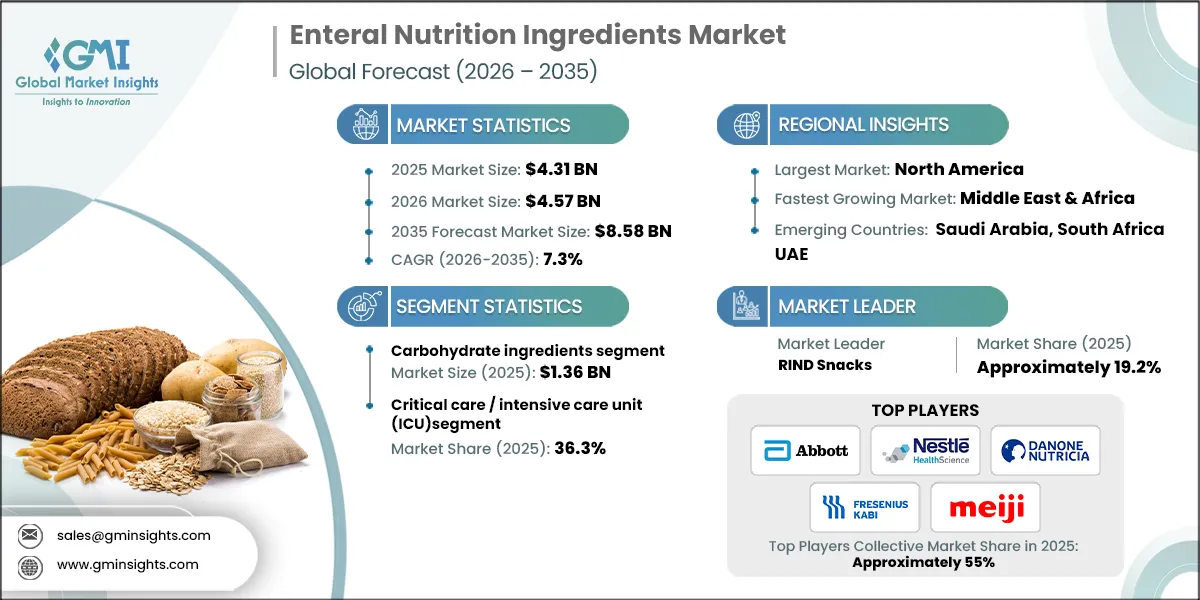
The global enteral nutrition ingredients market was valued at USD 4.31 billion in 2025. It is projected to grow from USD 4.57 billion in 2026 to USD 8.58 billion by 2035, representing 7.3% CAGR from 2026 to 2035, according to latest report published by Global Market Insights Inc.
Enteral Nutrition Ingredients Market Key Takeaways
Market Size & Growth
- 2025 Market Size: USD 4.31 Billion
- 2026 Market Size: USD 4.57 Billion
- 2035 Forecast Market Size: USD 8.58 Billion
- CAGR (2026–2035): 7.3%
Regional Dominance
- Largest Market: North America
- Fastest Growing Region: Middle East & Africa
Key Market Drivers
- Rising chronic disease cases increasing enteral intake needs.
- Expanding aging population requiring long?term nutritional support.
- Higher preference for clinical nutrition over invasive feeding.
- Product innovation improving nutrient density and digestibility.
Challenges
- High formulation costs restricting product affordability.
- Supply fluctuations affecting specialized ingredient availability.
- Regulatory delays slowing new formulation approvals.
Opportunity
- Growing demand for personalized clinical nutrition solutions.
- Expansion of home‑based enteral care services globally.
- New formulations using plant‑based functional ingredients.
- Rising adoption in pediatric therapeutic nutrition programs.
Key Players
- Market Leader: RIND Snacks led with over market share of 19.2% in 2025.
- Leading Players: Some of the top players in this market include Abbott, Nestlé Health Science, Nutricia (Danone), Fresenius Kabi, Meiji, which collectively held a market share of 55% in 2025.
Get Market Insights & Growth Opportunities
- The market for enteral nutrition ingredients is experiencing stable growth due to the growing prevalence of chronic diseases including cancer, neurological diseases, gastrointestinal diseases, and diabetes that promote the need to provide individuals with long-term nutritional help. Clinical care settings and hospitals are beginning to embrace enteral nutrition as compared to parenteral nutrition because of the improved patient outcomes, decreased infection rates, and economical nature of the treatment. This is a long term clinical preference that is directly increasing the demand of such basic ingredients as proteins, carbohydrates, lipids, vitamins, and minerals.
- Another important factor that guarantees the growth of the market is the quickly aging worldwide population. The older adults are even more susceptible to malnutrition, problems with swallowing, and chronic diseases that require enteral nutrition. With the development of geriatric care in the hospitals, nursing homes, and in assisted living models, the manufacturers are increasing their production of specialized and easily digestible ingredients to cater to the nutritional needs, thus enhancing the market growth.
- The market is also being enhanced through technological improvements and innovation in ingredient formulation. Business organizations are now creating more disease specific, condition-based as well as clean-label enteral nutrition components, such as plant-based proteins, omega-3 lipids, and functional fibers. These innovations enhance nutrient absorption and tolerance and clinical efficacy, allowing ingredient suppliers to add to their portfolios and access high-value segments of therapeutic nutrition.
- Also, the increasing trend towards home-based healthcare and long-term care nutrition is also contributing to the demand of enteral nutrition ingredients immensely. Cause: This is due to the growth of home enteral nutrition programs which are aided by healthcare reimbursement policies and enhanced feeding technologies leading to the steady consumption of quality ingredients. This trend is compelling ingredient manufacturers to invest in scalable, standardized, and custom solutions, which is in the long term market growth.
To get key market trends
Enteral Nutrition Ingredients Market Trends
- The growing demand for clean label and natural ingredients is also one of the major trends affecting the market of enteral nutrition ingredients. The caregivers and healthcare providers are focusing on formulations containing recognizable and minimally processed ingredients and this is making suppliers reformulate their products to contain plant-based proteins, natural carbohydrates, and non-artificial additives. This change is indicative of wider consumer and clinical interest and perception in transparency and perceived safety in therapeutic nutrition.
- The other current industry trend is the incorporation of functional nutrient of higher level aimed at a particular health outcome. Amino acid profiles specific to a condition, omega-3 fatty acids, prebiotic and probiotic fibers are some of the ingredients that are increasingly becoming popular in enteral formulas. Not only do these functional ingredients enhance their overall nutrition but also help them deal with inflammation and gut health, as well as immune response, enhancing the level of sophistication and value of ingredient portfolios.
- The emergence of individual nutrition programs is also affecting the market due to the development of health information and health diagnostic. Clinicians are becoming more personalized in their enteral nutrition initiatives according to patient genetics, disease condition, metabolic requirements as well as tolerance profiles. This customization is driving ingredient manufacturers towards the provision of modular ingredient systems and flexible formulations that can be customized to meet needs of individual patients.
- Lastly, regulatory emphasis on quality and safety standards in products is growing resulting in an increased industry standard of ingredient sourcing, traceability and manufacturing procedures. The increase of the compliance demands is pushing firms into choosing better quality assurance measures and investing in certifications that will prove the purity and stability of the ingredients. Such trend builds market credibility and helps to promote long-term uptake of enteral nutrition products both in clinical and home care environments.
Enteral Nutrition Ingredients Market Analysis
Learn more about the key segments shaping this market
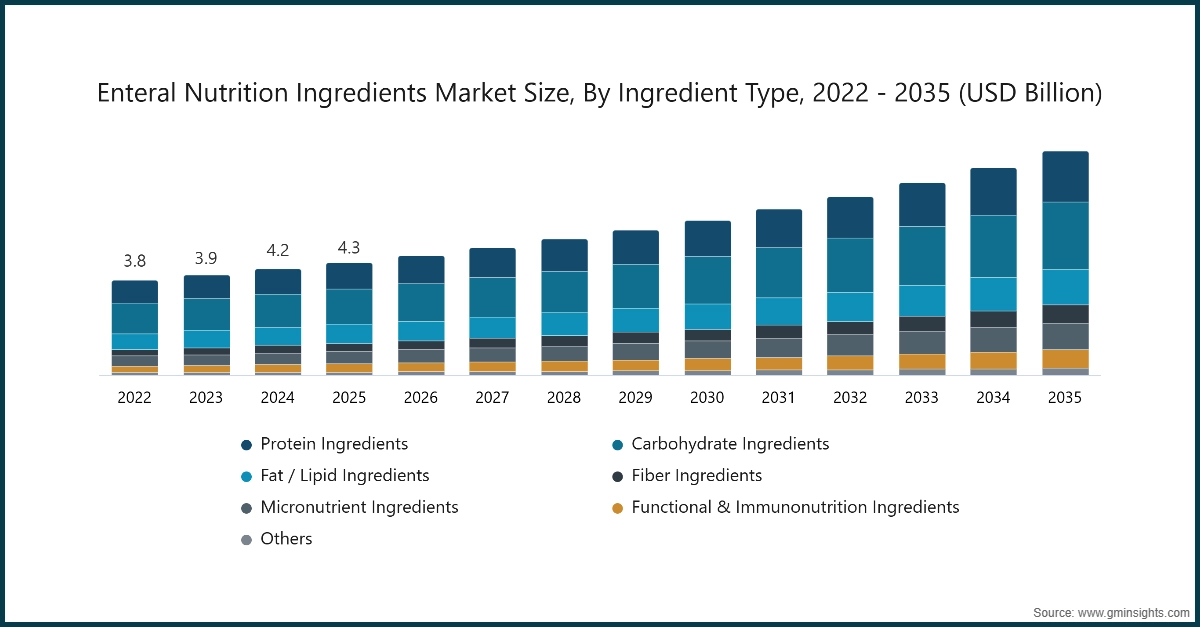
Enteral nutrition ingredients market based on ingredient type is segmented into protein ingredients, carbohydrate ingredients, fat / lipid ingredients, fiber ingredients, micronutrient ingredients, functional & immunonutrition ingredients, and others. The carbohydrate ingredients segment was valued at USD 1.36 Billion in 2025, and it is anticipated to expand to 6.7% of CAGR during 2026-2035.
- The increase in ingredient type is currently being influenced by greater formulation complexity and increased clinical emphasis. Increased protein ingredients with corresponding growth in formulations include enhanced muscle maintenance, wound healing and recovery support, whereas the carbohydrate ingredients are being developed to release controlled energy, and enhance a better glycemic response. The components of fats and lipids are shifting to the structured and medium-chain forms to enhance their absorption and tolerability especially in impaired patients. This diversification is widening ingredient use with standard and disease specific formulation.
- Simultaneously, the increase in the demand of fiber, micronutrients, and functional ingredients is on the increase as enteral nutrition is no longer limited to the provision of calories. Consumers are also seeking fiber contents to aid the gut and promote digestive comfort and stability as well as micronutrients that are being optimized to increase bioavailability and stability in liquid formulations. Condition-specific amino acids and fatty acids are increasingly popular as functional and immunonutrition ingredients and are used as care protocols to bolster immune function and manage inflammation, leading to an increase in market expansion in specialized ingredient categories.
Learn more about the key segments shaping this market
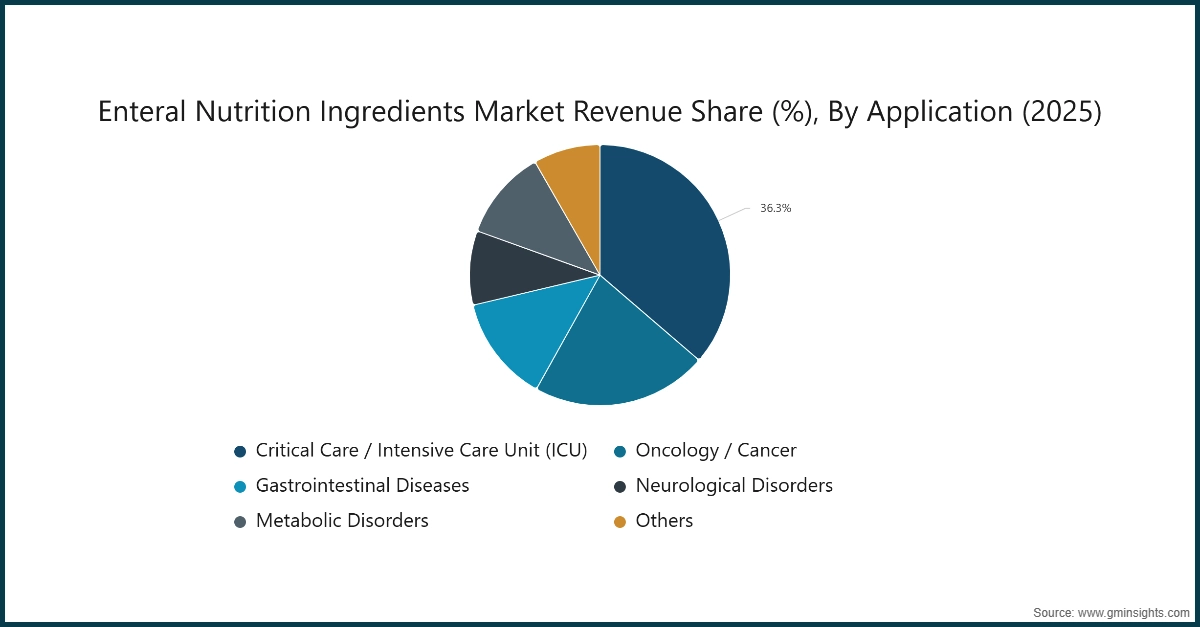
Enteral nutrition ingredients market based on application is segmented into critical care / intensive care unit (ICU), oncology / cancer, gastrointestinal diseases, neurological disorders, metabolic disorders, and others. The critical care / intensive care unit (ICU)segment was valued at USD 1.56 billion with a market share of with a market share of 36.3% in 2025, and it is anticipated to expand to 6.6% of CAGR during 2026-2035.
- Application-based growth is strongly intertwined with the changing clinical nutrition guidelines in the care environments. The enteral nutrition is being started earlier in critical care and ICU setting, creating a demand for products that combat metabolic loads and organ dysfunction and provide quick recovery. The application of oncology and gastrointestinal diseases is placing pressure on effortless digestion and excellent tolerance of ingredient profiles as nutrition is an additional support to medical therapy. These trends are raising the amount and assortment of ingredients applied per formulation.
- Market expansion is also being supported with the neurological and metabolic disorder applications as long-term nutrition management becomes part of the care provided to the patient. The use of ingredients specific to neurological conditions is aimed at the controlled energy intake and the absorption of nutrients, whereas the use of ingredients in cases of metabolic disorders involves the exact composition of nutrients to regulate glucose and lipid metabolism. With more clinical nutrition being part of disease treatment processes, ingredient suppliers are enjoying long-term usage across a broad spectrum of treatment environments.
Looking for region specific data?
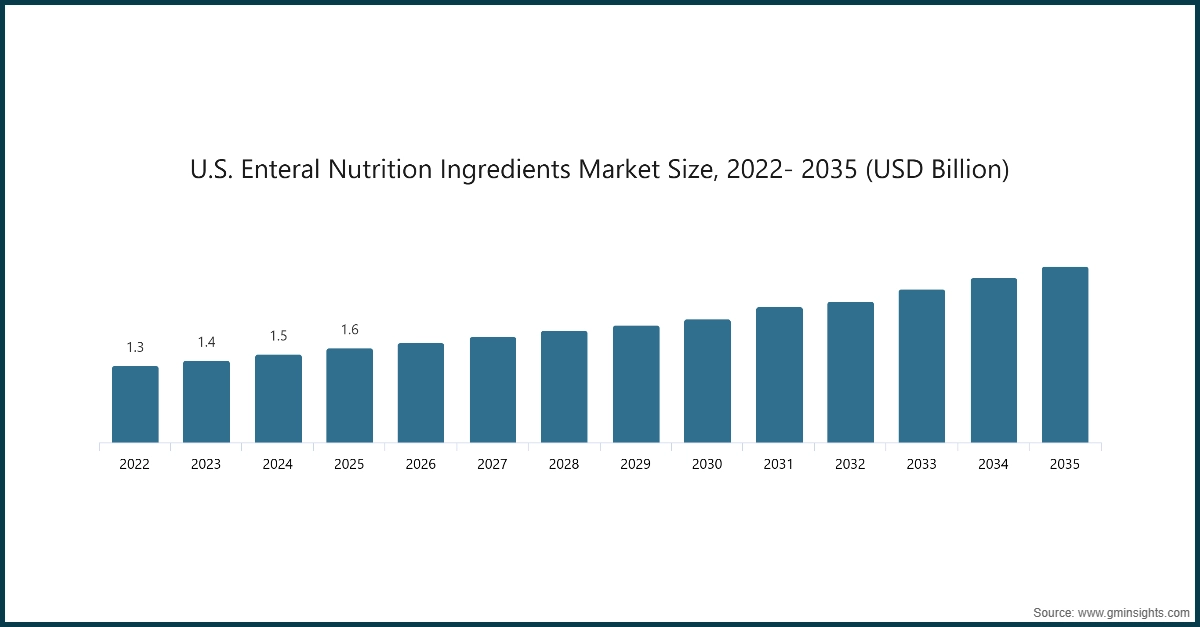
The North America enteral nutrition ingredients market accounted for USD 1.79 billion in 2025 and is anticipated to show lucrative growth over the forecast period.
The market in North America is increasing steadily with nutrition support in clinical care pathways becoming part of primary care. High healthcare expenditure, modern hospitalization infrastructure as well as laid down reimbursement systems facilitate the uniform adoption in acute care as well as long-term and home settings. The United States has a lot to play as it has a huge proportion of chronic diseases and an aging population that needs long-term nutritional control. The clinical recommendations are focusing more and more on the timely and focused nutrition interventions by promoting the use of specific protein, lipid, fiber and micronutrient food material. The ever-formulating innovation and the increased awareness of clinicians promote the growth of a stable market even more.
The Europe enteral nutrition ingredients market accounted for USD 1.15 billion in 2025 and is anticipated to show lucrative growth over the forecast period.
In Europe, the clinical nutrition practices are structured and the accessibility to healthcare services is high, which facilitates the growth of markets. Germany has an important role as it has one of the most developed hospital networks and it pays much attention to the care based on the food and prevention. The growing focus on the treatment of age-related disorders and chronic diseases is contributing to the rise in the demand in more advanced enteral nutrition ingredients based on the particular clinical requirements. Refined proteins, functional fibers and micronutrients are being integrated into the hospitals and outpatient care systems to enhance patient tolerance and patient outcomes. Each region is experiencing consistent market development as harmonized regulation actions and increasing levels of cooperation between ingredient suppliers and healthcare providers.
Asia Pacific enteral nutrition ingredients market accounted for 21.2% market share in 2025 and is anticipated to show lucrative growth over the forecast period.
Asia Pacific market is growing at high rates, and these growth rates are backed by the increasing healthcare infrastructure and increase in clinical nutrition awareness. China is one of the key growth engines because of its large population base, rising life expectancy, and rising rate of chronic and critical diseases. The demand for ingredients is growing faster due to government spending on modernization of hospitals and the expansion of access to medical nutrition treatment. The manufacturers are working on the scalable production and regional specific formulations to address a wide range of clinical demands. The growing popularity of home-based enteral nutrition and distribution networks expansion is also adding to a long-term market growth in urban and non-urban healthcare institutions.
Latin America enteral nutrition ingredients market is anticipated to grow at a CAGR of 8.5% during the analysis timeframe.
The market in Latin America has shown slow growth due to an increase in the strength of healthcare systems and the adoption of clinical nutrition. Brazil is remarkable because of the increase of the hospital capacity and the growing interest in the nutritional support of the critical and chronic care management. Enteral feeding solutions are becoming more common due to the process and effects of urbanization and the availability of specialized healthcare services. The interest in the balanced formulation of proteins, lipids, fibers, as well as micronutrients is growing due to the inclusion of nutrition by clinicians as part of treatment regimen. An increase in awareness of healthcare practitioners and slow increment of home care nutrition program is favoring gradual market development in the area.
Middle East & Africa enteral nutrition ingredients market is expected to grow at a CAGR of 8.9% during the analysis timeframe.
The market in the Middle East and Africa is growing with investments in management of healthcare infrastructure and quality improvement programs. Investments in hospitals, special care centers, and chronic disease management programs are being done at large levels. This is making Saudi Arabia a major growth country. The growing prevalence of diabetes and conditions that are lifestyle-related is causing a rise in the use of structured nutritional support. The hospitals are including holistic enteral formulations of functional and micronutrient-containing substances in patient care regimen. Even though the adoption in the region is uneven, the increased access to healthcare services and the increasing awareness of clinical nutrition is contributing to steady market growth.
Enteral Nutrition Ingredients Market Share
- Abbott, Nestlé Health Science, Nutricia (Danone), Fresenius Kabi, and Meiji are a significant part of the global market and with further standing of being highly consolidated with the top five players steadily holding 55% market share in the year 2025.
- Players in the industry focus on constant innovations in products and invest in research to make their products more effective in terms of ingredients, their digestion, and clinical efficacy, and thus place them in line with therapeutic requirements and clinical guidelines.
- High-quality assurance plans and adherence procedures are highlighted, and test rigor, traceability, and compliance with regulatory requirements are also provided to guarantee the safety and reliability of ingredients and breed trust in the healthcare professionals and the formulators of nutrition.
- Strategic alliances with medical facilities and nutrition experts allow companies to co-create the formulations, have clinical knowledge, and push the use of sophisticated ingredient innovations in the care facilities.
- Specialization in diversified ingredient portfolios gives market players a wide spectrum of clinical conditions that they can address, including standard nutrition support and disease-specific and immunonutrition needs, expanding their market.
- By investing in scalable manufacturing capacity, the company can provide stable supply and quick reaction to demand changes, which means that each region and segment of the care will have access to the grades of its key ingredients.
- The focus on educational and training programs on clinicians and caregivers will improve their awareness of the benefits of enteral nutrition and promote the use of special ingredients in treatment plans with evidence.
- Regional market expansion strategies such as local alliances, differentiated formulations and distribution channels are being adopted so as to enable the companies to enter the new market and fit in the new healthcare set ups.
- Focus on sustainability and responsible sourcing enhances brand position, and the programs of environmentally aware sourcing of ingredients and less harmful impact on the supply chain have an appeal to the institutional customers.
- The application of data analytics and subsequent generation evidence enhances product differentiation, since the available knowledge based on real-world study and research findings on outcomes underpin efficacy claims and leads to the development of future ingredients.
Enteral Nutrition Ingredients Market Companies
The major players operating in enteral nutrition ingredients industry include:
- Abbott
- Nestlé Health Science
- Nutricia (Danone)
- Fresenius Kabi
- Meiji
- Others
- Abbott use decades of science-based research to create a wide line of enteral and therapeutic nutrition products that are customized to meet the needs of patients, which benefit their clinical outcomes. The company also has good worldwide distribution and extensive healthcare relationships, which means that its nutrition ingredients and formulas are consumed in the majority of hospitals and home-care facilities.
- Nestle Health Science division specializes in integrative clinical nutrition programs that are supported by scientific studies and evidence-based production and has been constantly reviewing its enteral nutrition product lines to meet various gastrointestinal and metabolic needs. The combination of cooperation with healthcare specialists and the adjustments of the products to the local area will allow being responsive to the local clinical needs.
- Nutricia (Danone) focuses on condition-specific and specialized enteral nutrition formulations that can be used to manage complex clinical conditions in children and adults. It offers an interdisciplinary combination of clinical evidence and individualized nutrition plans to address the requirements of gastrointestinal, metabolic and chronic diseases.
- Fresenius Kabi is dedicated to the production of excellent-quality enteral and clinical nutrition products that are applicable to the critical care and chronic disease treatment and contribute to the improvement of patient recovery and tolerance. The firm funds research projects in clinical and educational activities to increase the level of awareness of the role of nutrition in the treatment of patients.
- Meiji provides nutrition science services to the market, providing enteral and supplemental nutritional products, which when met, will serve to satisfy the basic nutrient needs. The combination of pharmaceutical and food expertise serves in the integration of the company to design balanced nutrient solutions.
Enteral Nutrition Ingredients Market Report Attributes
| Key Takeaway | Details |
|---|---|
| Market Size & Growth | |
| Base Year | 2025 |
| Market Size in 2025 | USD 4.31 Billion |
| Market Size in 2026 | USD 4.57 Billion |
| Forecast Period 2026-2035 CAGR | 7.3% |
| Market Size in 2035 | USD 8.58 Billion |
| Key Market Trends | |
| Drivers | Impact |
| Rising chronic disease cases increasing enteral intake needs | Boosts overall product utilization across hospitals and homecare |
| Expanding aging population requiring long-term nutritional support | Increases steady demand for sustained use formulations |
| Higher preference for clinical nutrition over invasive feeding | Encourages ingredient diversification for safer intake |
| Product innovation improving nutrient density and digestibility | Strengthens uptake of advanced ingredient blends |
| Pitfalls & Challenges | Impact |
| High formulation costs restricting product affordability | Limits penetration in cost sensitive regions |
| Supply fluctuations affecting specialized ingredient availability | Disrupts consistent production and fulfillment |
| Regulatory delays slowing new formulation approvals | Slows market entry for new ingredients |
| Opportunities: | Impact |
| Growing demand for personalized clinical nutrition solutions | Creates scope for tailored ingredient combinations |
| Expansion of home‑based enteral care services globally | Elevates consumption of ready‑to‑use mixes |
| New formulations using plant‑based functional ingredients | Opens pathways for clean‑label ingredient adoption |
| Rising adoption in pediatric therapeutic nutrition programs | Enhances demand for sensitive‑gut ingredient options |
| Market Leaders (2025) | |
| Market Leader |
Market Share Approximately 19.2% |
| Top Players |
Collective Market Share Approximately 55% |
| Competitive Edge |
|
| Regional Insights | |
| Largest Market | North America |
| Fastest growing market | Middle East & Africa |
| Emerging countries | Saudi Arabia, South Africa, UAE |
| Future outlook |
|
What are the growth opportunities in this market?
Enteral Nutrition Ingredients Market News
- In May 2024, Danone (Nutricia) purchased Functional Formularies, an enteral tube feeding expert based in the US, further diversifying its medical nutrition business and increasing product line to tube fed patients, which broadened its offering of ingredients and formulas in the enteral nutrition market.
- In January 2025, Otsuka Pharmaceutical Factory released ENOSOLID Semi Solid for Enteral Use, a new semi-solid enteric nutrition formula, which was developed with important nutrients and trace elements and is intended to be used selectively in specific clinical cases. The introduction was based on clinical need to have alternative enteral texture, which enhances patient tolerance and increase product choice in enteral nutrition care.
- In 2025, Abbott increased its enteral portfolio, such as the addition of a diabetes-specific version to its Ensure Plus product line to meet the need of outpatient and clinical care. Clinical applicability and use of ingredients in specialized nutrition segments were increased with the extension of product variants based on metabolic conditions.
The enteral nutrition ingredients market research report includes in-depth coverage of the industry with estimates & forecasts in terms of revenue (USD Billion) & (Kilo Tons) from 2022 to 2035, for the following segments:
Market, By Ingredient Type
- Protein Ingredients
- Whole Proteins
- Hydrolyzed Proteins/Peptides
- Free Amino Acids
- Functional Amino Acids
- Carbohydrate Ingredients
- Maltodextrins
- Corn Syrup Solids / Glucose
- Complex Carbohydrates
- Simple Sugars
- Fat / Lipid Ingredients
- Long-Chain Triglycerides (LCTs)
- Medium-Chain Triglycerides (MCTs)
- Omega-3 Fatty Acids
- Monounsaturated Fatty Acids (MUFA)
- Structured Lipids & Blended Emulsions
- Fiber Ingredients
- Soluble Fibers
- Insoluble Fibers
- Resistant Starch
- Prebiotic Fibers
- Micronutrient Ingredients
- Vitamins
- Minerals
- Electrolytes
- Trace Elements
- Functional & Immunonutrition Ingredients
- Nucleotides
- Probiotics
- Antioxidants
- Bioactive Peptides
- Others
Market, By Application
- Critical care / intensive care unit (ICU)
- Oncology / cancer
- Gastrointestinal diseases
- Neurological disorders
- Metabolic disorders
- Others
The above information is provided for the following regions and countries:
- North America
- U.S.
- Canada
- Europe
- UK
- Germany
- France
- Italy
- Spain
- Rest of Europe
- Asia Pacific
- China
- India
- Japan
- South Korea
- Australia
- Rest of Asia Pacific
- Latin America
- Brazil
- Mexico
- Argentina
- Rest of Latin America
- MEA
- UAE
- Saudi Arabia
- South Africa
- Rest of Middle East and Africa
Frequently Asked Question(FAQ) :
What was the market size of the enteral nutrition ingredients market in 2025?
The market size was USD 4.31 billion in 2025, with a CAGR of 7.3% projected from 2026 to 2035, driven by the increasing demand for clean label ingredients, functional nutrients, and personalized nutrition programs.
What is the projected value of the enteral nutrition ingredients market by 2035?
The market is expected to reach USD 8.58 billion by 2035, fueled by advancements in ingredient formulations, including plant-based proteins, omega-3 fatty acids, and prebiotic and probiotic fibers.
What is the projected size of the enteral nutrition ingredients market in 2026?
The market is expected to grow to USD 4.57 billion in 2026.
What was the market share of the carbohydrate ingredients segment in 2025?
The carbohydrate ingredients segment was valued at USD 1.36 billion in 2025 and is projected to grow at a CAGR of 6.7% from 2026 to 2035.
What was the market share of the critical care/ICU application segment in 2025?
The critical care/ICU segment held a market share of 36.3% in 2025, with a valuation of USD 1.56 billion, and is anticipated to grow at a CAGR of 6.6% through 2035.
Which region leads the global enteral nutrition ingredients market?
North America was the largest market in 2025, with an estimated value of USD 1.79 billion. The region is expected to exhibit lucrative growth over the forecast period, driven by advancements in healthcare infrastructure and increasing adoption of personalized nutrition.
What are the upcoming trends in the enteral nutrition ingredients industry?
Key trends include the rising demand for clean label and natural ingredients, the incorporation of functional nutrients for specific health outcomes, and the emergence of personalized nutrition programs driven by advancements in health diagnostics and patient-specific formulations.
Who are the key players in the enteral nutrition ingredients market?
Major players include Abbott, Nestlé Health Science, Nutricia (Danone), Fresenius Kabi, Meiji, and others.
Enteral Nutrition Ingredients Market Scope
Related Reports