Summary
Table of Content

Cognitive Behavioral Therapy Market
Get a free sample of this report
Form submitted successfully!
Error submitting form. Please try again.
Thank you!
Your inquiry has been received. Our team will reach out to you with the required details via email. To ensure that you don't miss their response, kindly remember to check your spam folder as well!
Request Sectional Data
Thank you!
Your inquiry has been received. Our team will reach out to you with the required details via email. To ensure that you don't miss their response, kindly remember to check your spam folder as well!
Form submitted successfully!
Error submitting form. Please try again.
Cognitive Behavioral Therapy Market Size
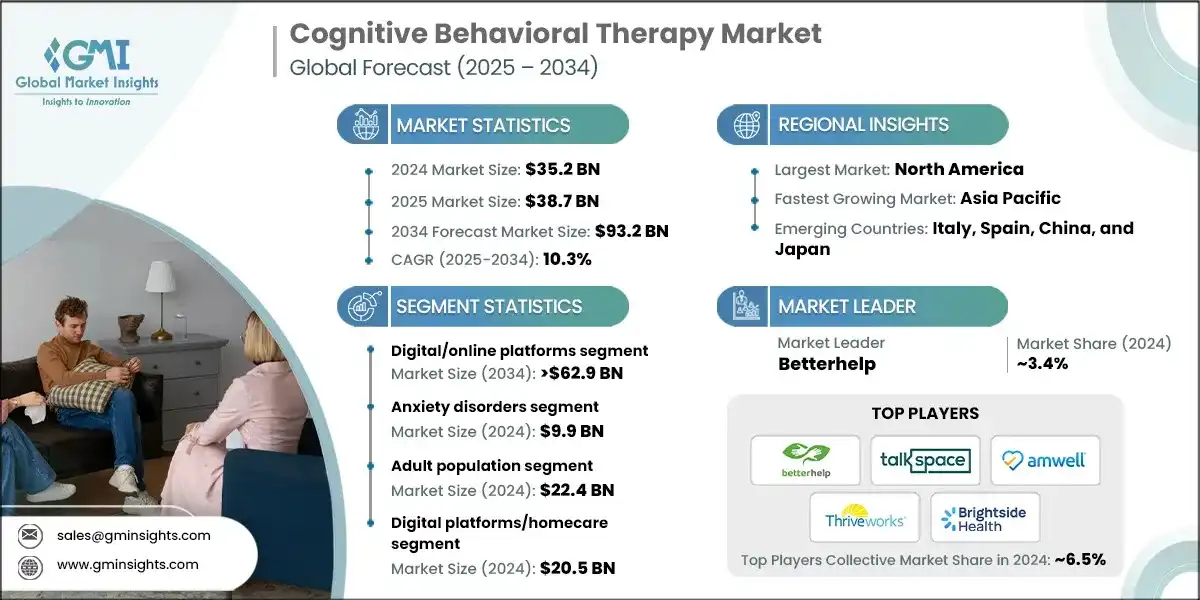
The global cognitive behavioral therapy market was valued at USD 35.2 billion in 2024. The market is expected to grow from USD 38.7 billion in 2025 to USD 93.2 billion in 2034, at a CAGR of 10.3% during the forecast period, according to the latest report published by Global Market Insights Inc. The high market growth is attributed to the rising prevalence of mental health disorders, growing awareness and destigmatization of therapy, and supportive government policies and insurance coverage, among others.
Cognitive Behavioral Therapy Market Key Takeaways
Market Size & Growth
- 2024 Market Size: USD 35.2 Billion
- 2025 Market Size: USD 38.7 Billion
- 2034 Forecast Market Size: USD 93.2 Billion
- CAGR (2025–2034): 10.3%
Regional Dominance
- Largest Market: North America
- Fastest Growing Region: Asia Pacific
Key Market Drivers
- Rising prevalence of mental health disorders.
- Technological advancements.
- Growing awareness and destigmatization of therapy.
- Supportive government policies and insurance coverage.
Challenges
- High dropout rates due to therapy duration.
- Limited access in rural and underserved areas.
Opportunity
- Growth of AI-powered CBT tools and apps.
- Expansion into corporate wellness programs.
Key Players
- Market Leader: Betterhelp led with over 3.4% market share in 2024.
- Leading Players: Top 5 players in this market include betterhelp, Talkspace, amwell, Brightside Health, Thriveworks, which collectively held a market share of 6.5% in 2024.
Get Market Insights & Growth Opportunities
Cognitive behavioral therapy (CBT) solutions are transforming the landscape of behavioral health by offering personalized, evidence-based interventions that address a wide spectrum of mental health conditions. Leading providers such as betterhelp, Talkspace, amwell, Thriveworks, and Brightside Health deliver robust CBT portfolios that include AI-enhanced digital platforms, certified therapist networks, and hybrid care models integrating telehealth and in-person sessions.
These solutions are designed to support cognitive restructuring, emotional regulation, and behavioral activation, while also leveraging data from wearables and digital assessments to provide real-time feedback and progress tracking. By improving outcomes in areas such as anxiety, depression, post-traumatic stress disorder (PTSD), and obsessive-compulsive disorder (OCD), CBT platforms are enhancing mental resilience, productivity, and overall quality of life across diverse populations.
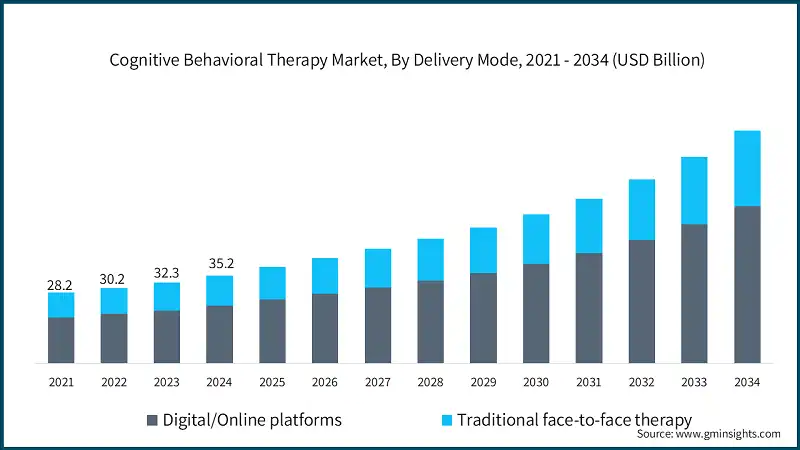
The market has increased from USD 28.2 billion in 2021 and reached USD 32.3 billion in 2023, with a historic growth rate of 7%. This expansion has been driven by the rapid adoption of digital cognitive behavioral therapy platforms, growing awareness of non-pharmacological mental health interventions, and increased demand for accessible, scalable behavioral health solutions.
The growing awareness of non-pharmacological mental health interventions has played a pivotal role in reshaping consumer preferences and clinical practices. Cognitive behavioral therapy, in particular, has gained traction as a first-line treatment for a range of psychological conditions due to its structured, goal-oriented approach and minimal reliance on medication. Patients and providers alike are increasingly seeking alternatives to pharmacotherapy, driven by concerns over side effects, dependency risks, and long-term efficacy.
This shift has been amplified by public health campaigns, academic endorsements, and digital education platforms that promote CBT as a scientifically validated, accessible, and empowering form of care. As a result, CBT adoption has surged across digital platforms, telehealth services, and traditional clinical settings, reinforcing its market position.
Cognitive behavioral therapy (CBT) is a structured, time-limited, and evidence-based form of psychotherapy that focuses on identifying and modifying negative patterns of thinking and behavior.
To get key market trends
Cognitive Behavioral Therapy Market Trends
Technological advancements are playing a critical role in accelerating the adoption and evolution of cognitive behavioral therapy services.
- The proliferation of mobile health (mHealth) applications and web-based platforms has transformed the delivery of CBT, making therapy accessible anytime and anywhere. These platforms offer structured CBT programs, interactive exercises, and real-time communication with licensed therapists, reducing geographical and scheduling barriers. Mobile-first solutions have particularly enhanced engagement among younger demographics and tech-savvy users, contributing to higher adoption rates globally.
- Additionally, artificial intelligence (AI) plays a pivotal role in personalizing CBT interventions. AI-driven algorithms analyze user behavior, therapy progress, and biometric data to deliver adaptive therapy modules tailored to individual needs. Predictive analytics further enables early identification of relapse risks and symptom escalation, allowing timely interventions. This level of personalization improves post-traumatic stress disorder (PTSD) treatment outcomes and patient adherence, positioning AI as a cornerstone of next-generation CBT solutions.
- Moreover, wearable biosensors and connected health devices are increasingly integrated into CBT platforms to track physiological indicators such as heart rate variability, sleep patterns, and stress levels. These data points provide therapists and users with actionable insights, enabling real-time feedback and behavioral adjustments. Such integration supports holistic care by linking mental health interventions with physical wellness, reinforcing CBT’s role in preventive and chronic care management.
Cognitive Behavioral Therapy Market Analysis
Learn more about the key segments shaping this market
Based on delivery mode, the cognitive behavioral therapy market is segmented into digital/online platforms and traditional face-to-face therapy. The digital/online platforms segment accounted for 65.7% of the market in 2024 due to their superior accessibility, cost-effectiveness, and scalability compared to traditional face-to-face therapy. The segment is expected to exceed USD 62.9 billion by 2034, growing at a CAGR of 10.6% during the forecast period.
On the other hand, traditional face-to-face therapy segment held a significant market share of 34.3% in 2024, and its growth can be attributed to the rising emphasis on preventive mental health care, increasing adoption of stress management and resilience programs in corporate wellness initiatives, and growing consumer preference for holistic, non-clinical solutions that integrate CBT with lifestyle coaching. Additionally, the proliferation of mobile apps, gamified engagement tools, and multilingual content has made wellness-oriented CBT more accessible and appealing to diverse populations, further driving segment expansion.
- The adoption of digital/online platforms has been driven by the convenience of mobile applications, telehealth services, and subscription-based models, particularly among younger demographics and corporate wellness programs. Furthermore, the integration of AI-powered personalization, real-time progress tracking, and multilingual support has significantly enhanced engagement and adherence, positioning digital platforms as the preferred choice for both patients and providers.
Based on application, the cognitive behavioral therapy market is segmented into anxiety disorders, depression, sleep disorder, substance use disorders, post-traumatic stress disorder (PTSD), obsessive-compulsive disorder (OCD), and other applications. The anxiety disorders segment continues to dominate, accounting for a majority market share valued at USD 9.9 billion in 2024.
- This dominance is fueled by the high global prevalence of anxiety-related conditions and the strong clinical efficacy of CBT as a first-line treatment, supported by growing adoption of digital platforms for convenient and scalable therapy delivery. Furthermore, increasing workplace stress and lifestyle-related triggers have amplified demand for CBT-based interventions, reinforcing the segment’s leadership position in the market.
- The depression segment held a revenue of USD 8.2 billion in 2024, with projections indicating a steady expansion at 10.5% CAGR from 2025 to 2034. This growth is driven by the rising global prevalence of depressive disorders, increasing awareness of non-pharmacological treatment options, and strong clinical evidence supporting CBT as an effective intervention. Furthermore, the integration of digital platforms and telehealth services has improved accessibility and engagement, making CBT-based solutions for depression more scalable and cost-effective across diverse populations.
- The sleep disorder segment held a revenue of USD 6.7 billion in 2024, with projections indicating a steady expansion at 11.2% CAGR from 2025 to 2034, fueled by the rising prevalence of insomnia and other sleep-related conditions globally. Increasing adoption of CBT as a first-line, non-pharmacological treatment and the growing popularity of digital sleep platforms integrated with AI and wearable technology have accelerated market growth.
- The substance use disorders segment held a revenue of USD 4.4 billion in 2024, with projections indicating a steady expansion at 10.8% CAGR from 2025 to 2034. This growth is driven by increasing global efforts to combat addiction through evidence-based behavioral interventions and the rising preference for non-pharmacological treatment options. Additionally, the integration of CBT into digital platforms and telehealth services has improved accessibility for underserved populations, while corporate and community programs addressing substance misuse are creating new opportunities for market expansion.
- The post-traumatic stress disorder (PTSD) segment held a revenue of USD 3 billion in 2024, with projections indicating a steady expansion at 9% CAGR from 2025 to 2034. Growing awareness of evidence-based therapies and the adoption of CBT as a primary intervention for PTSD have strengthened market demand. Additionally, the rise of digital platforms offering remote CBT sessions and AI-driven therapy modules has improved accessibility and engagement, further supporting segment growth.
- The obsessive-compulsive disorder (OCD) segment held a revenue of USD 2.1 billion in 2024, with projections indicating a steady expansion at 8.6% CAGR from 2025 to 2034, fueled by the increasing recognition of CBT as the gold-standard treatment for OCD and growing demand for structured, evidence-based interventions. The rise of digital platforms offering exposure and response prevention (ERP) modules and personalized therapy plans has improved accessibility and adherence among patients.
- The other applications segment held a revenue of USD 1 billion in 2024, with projections indicating a steady expansion at 8.3% CAGR from 2025 to 2034, fueled by the growing adoption of CBT for emerging use cases such as attention-deficit/hyperactivity disorder (ADHD), bipolar disorder, and eating disorder. Increasing research validation and integration of CBT into holistic wellness programs have broadened its applicability beyond traditional mental health conditions. Furthermore, the rise of digital platforms offering specialized modules for niche conditions is creating new opportunities for market penetration and patient engagement.
Based on patient, the cognitive behavioral therapy market is segmented into the adult population, geriatric population, and pediatric & adolescent population. The adult population segment continues to dominate, accounting for a majority market share valued at USD 22.4 billion in 2024.
- This dominance is driven by the high prevalence of anxiety, depression, and stress-related disorders among working-age individuals, coupled with the growing adoption of CBT for workplace wellness and preventive mental health care. Additionally, the convenience of digital platforms and telehealth services has further accelerated engagement among adults seeking flexible, cost-effective therapy solutions.
- The geriatric population segment held a revenue of USD 8.3 billion in 2024, with projections indicating a steady expansion at 11.1% CAGR from 2025 to 2034. This growth is fueled by the rising incidence of age-related mental health conditions such as depression, anxiety, and cognitive decline, coupled with increasing awareness of non-pharmacological interventions like CBT.
- The pediatric & adolescent population segment held a revenue of USD 4.5 billion in 2024, with projections indicating a steady expansion at 8.6% CAGR from 2025 to 2034. The adoption of digital CBT platforms with gamified content, parental engagement tools, and school-based mental health programs is enhancing accessibility and adherence in this demographic.
Learn more about the key segments shaping this market
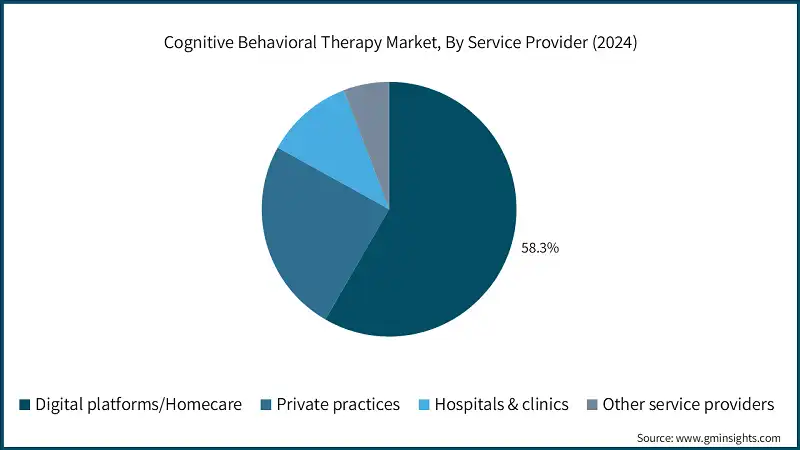
Based on service provider, the cognitive behavioral therapy market is segmented into digital platforms/homecare, private practices, hospitals & clinics, and other service providers. The digital platforms/homecare segment accounted for USD 20.5 billion in 2024 and is expected to grow at a 10.6% CAGR from 2025 to 2034.
- This growth is driven by the increasing preference for convenient, cost-effective therapy options that can be accessed from home, supported by the widespread adoption of mobile apps and telehealth services. Furthermore, advancements in AI-powered personalization, real-time progress tracking, and integration with wearable devices have enhanced engagement and outcomes, positioning this segment as a key driver of market expansion.
- The private practices segment accounted for USD 8.7 billion in 2024 and is expected to grow at a 9.8% CAGR from 2025 to 2034. This growth is fueled by the increasing demand for personalized, one-on-one therapy sessions and the preference for continuity of care with trusted providers. Additionally, the rise of hybrid models combining in-person consultations with digital follow-ups has enhanced flexibility and patient engagement, while expanding insurance coverage and employer-sponsored mental health benefits are further supporting segment growth.
- The hospitals & clinics segment is expected to grow at a substantial pace during the period from 2025 to 2034 at a CAGR of 10.1%. This growth is driven by the increasing integration of cognitive behavioral therapy into clinical care pathways, especially in primary care, mental health, and sleep medicine. Healthcare providers are recognizing the value of non-pharmacological interventions for sleep disorders, and cognitive behavioral therapy is emerging as a complementary service to traditional treatments.
- The other service providers segment is expected to grow at a substantial pace during the period from 2025 to 2034 at a CAGR of 9%, driven by increasing demand for flexible and accessible mental health solutions, rising adoption of digital platforms, and expanding partnerships with non-traditional healthcare entities such as wellness apps, educational institutions, and community organizations.
Looking for region specific data?
North America Cognitive Behavioral Therapy Market
North America dominated the market with the highest market share of 60.9% in 2024.
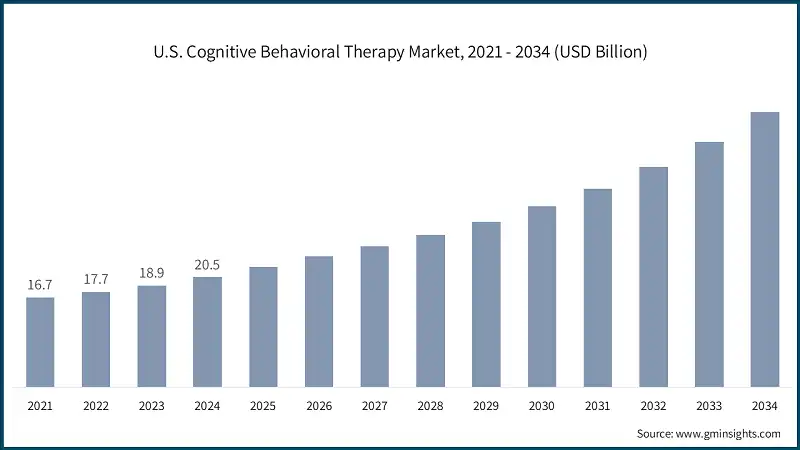
- The U.S. cognitive behavioral therapy market was valued at USD 16.7 billion and USD 17.7 billion in 2021 and 2022, respectively. The market size reached USD 20.5 billion in 2024, growing from USD 18.9 billion in 2023, and is anticipated to grow at a CAGR of 9.6% between 2025 and 2034.
- The U.S. leads the region with robust telehealth infrastructure, employer-sponsored wellness programs, and integration of CBT into primary care settings. The presence of major players such as BetterHelp, Talkspace, and Amwell has accelerated market penetration, supported by favorable reimbursement policies and government initiatives promoting behavioral health.
- The region’s growth is further fueled by technological advancements, including AI-powered CBT tools and wearable integration, which enhance personalization and engagement. Rising prevalence of anxiety, depression, and sleep disorders, coupled with increasing corporate investment in mental health, ensures sustained demand. North America is expected to maintain its leadership position throughout the forecast period due to its mature digital health ecosystem and strong regulatory support.
Europe Cognitive Behavioral Therapy Market
Europe market accounted for USD 8.2 billion in 2024 and is anticipated to show lucrative growth over the forecast period.
- Countries such as the UK, Germany, and France are at the forefront, supported by national health systems that increasingly reimburse CBT services. Emerging platforms have gained traction by offering secure, multilingual, and clinically validated CBT programs.
- The region’s growth is driven by rising awareness campaigns, destigmatization of mental health, and integration of CBT into public health strategies. Additionally, the expansion of hybrid care models combining digital platforms with in-person therapy is addressing accessibility challenges. Europe’s emphasis on data privacy and clinical validation positions it as a key market for trusted, regulated CBT solutions.
Asia Pacific Cognitive Behavioral Therapy Market
The Asia Pacific market is anticipated to grow at a CAGR of 12.4% during the analysis timeframe.
- Countries like India, China, and Japan are witnessing growing demand for affordable, scalable CBT solutions, particularly through mobile apps and telehealth platforms. Government initiatives promoting mental health and the entry of global players into local markets are accelerating adoption.
- Despite cultural stigma and limited therapist availability in some areas, the region’s large population base and expanding middle class present significant opportunities. The integration of CBT into corporate wellness programs and educational institutions is further driving uptake. Asia-Pacific is expected to record the fastest CAGR during the forecast period, supported by technological innovation and growing investment in digital health infrastructure.
RoW Cognitive Behavioral Therapy Market
The RoW market is experiencing robust growth over the analysis timeframe.
- Countries such as Brazil, Mexico, South Africa, and Saudi Arabia are leading adoption, supported by improving internet connectivity and mobile health initiatives. Digital platforms offering affordable CBT programs address the shortage of licensed therapists in rural and underserved areas. Telehealth services are gaining traction as a solution to address therapist shortages and geographic barriers.
Cognitive Behavioral Therapy Market Share
Leading industry players such as betterhelp, Talkspace, amwell, Thriveworks, and Brightside Health collectively hold a market share of 6.5% in the market. These companies continue to shape the industry through innovations in AI-powered therapy matching, real-time mood tracking, and integration with wearable health technologies. Their platforms offer scalable CBT solutions for individuals, employers, and healthcare systems, enhancing treatment outcomes through personalized, data-driven behavioral interventions.
Meanwhile, emerging players are gaining momentum by offering region-specific, culturally adaptive CBT solutions. These companies are leveraging mobile-first platforms, vernacular language support, and community-based therapy models to address underserved populations. Strategic partnerships with universities, NGOs, and public health agencies are enabling them to tackle localized mental health challenges such as trauma recovery, adolescent anxiety, and workplace burnout.
Cognitive Behavioral Therapy Market Companies
A few of the prominent players operating in the cognitive behavioral therapy industry include:
- AICT
- amwell
- betterhelp
- Brightside Health
- Cognitive Behavioral Therapy Los Angeles
- Grouport
- ieso UK
- RUSH
- Stanford MEDICINE
- Talkspace
- THE INSOMNIA AND SLEEP INSTITUTE OF ARIZONA
- Thriveworks
- betterhelp
betterhelp is the world’s largest online therapy platform, offering CBT-based interventions through text, phone, and video sessions. Its USP lies in on-demand therapist access, personalized matching algorithms, and scalable digital delivery, making mental health support accessible anytime, anywhere. With over 34,000 licensed therapists and a user-friendly interface, BetterHelp emphasizes affordability, anonymity, and convenience. The platform integrates CBT techniques into its therapy sessions, empowering users to manage anxiety, depression, and sleep disorders without the barriers of traditional care models.
Talkspace delivers CBT through a hybrid model of asynchronous messaging, live video therapy, and psychiatric services, tailored for both individuals and enterprise clients. Its USP is the integration of therapy with insurance and employer-sponsored plans, enabling broader access to mental health care. Talkspace leverages AI-driven engagement tools and clinical dashboards to enhance therapist efficiency and patient outcomes.
Amwell offers CBT through its Converge platform, combining virtual therapy with behavioral health automation tools like SilverCloud. Its USP is the blended care model, where therapists guide users through digital CBT modules with brief, targeted check-ins, maximizing clinical impact while minimizing therapist time. Amwell’s strength lies in seamless integration with health systems, EHR compatibility, and enterprise-level scalability, making it a preferred partner for payers and providers.
Cognitive Behavioral Therapy Market Report Attributes
| Key Takeaway | Details |
|---|---|
| Market Size & Growth | |
| Base Year | 2024 |
| Market Size in 2024 | USD 35.2 Billion |
| Market Size in 2025 | USD 38.7 Billion |
| Forecast Period 2025 – 2034 CAGR | 10.3% |
| Market Size in 2034 | USD 93.2 Billion |
| Key Market Trends | |
| Drivers | Impact |
| Rising prevalence of mental health disorders | Increasing demand for accessible and scalable CBT solutions across all age groups. |
| Technological advancements | Enabling AI-powered, app-based, and telehealth CBT delivery, improving reach and personalization. |
| Growing awareness and destigmatization of therapy | Encouraging more individuals to seek CBT as a proactive mental health solution. |
| Supportive government policies and insurance coverage | Expanding reimbursement for both digital and traditional CBT services, boosting adoption. |
| Pitfalls & Challenges | Impact |
| High dropout rates due to therapy duration | May limit treatment effectiveness and reduce long-term engagement. |
| Limited access in rural and underserved areas | Restricts availability of qualified CBT providers and infrastructure, especially for face-to-face therapy. |
| Opportunities: | Impact |
| Growth of AI-powered CBT tools and apps | Offers scalable, cost-effective, and personalized therapy experiences for diverse populations. |
| Expansion into corporate wellness programs | Creates new revenue streams and increases mental health support in workplace settings. |
| Market Leaders (2024) | |
| Market Leaders |
~3.4% |
| Top Players |
Collective market share in 2024 is ~6.5% |
| Competitive Edge |
|
| Regional Insights | |
| Largest Market | North America |
| Fastest growing market | Asia Pacific |
| Emerging countries | Italy, Spain, China, and Japan |
| Future outlook |
|
What are the growth opportunities in this market?
Cognitive Behavioral Therapy Industry News:
- In October 2025, betterhelp announced a strategic partnership with Talkiatry to offer integrated therapy and psychiatric services to businesses. This collaboration combines betterhelp’s extensive digital therapy network with Talkiatry’s in-network psychiatric care, creating a unified mental health solution for employers. The partnership aims to streamline access to both therapy and medication management, enhancing care continuity and improving outcomes for employees. This move strengthens betterhelp’s position in the enterprise mental health space and expands its reach into comprehensive behavioral health offerings.
The cognitive behavioral therapy market research report includes an in-depth coverage of the industry with estimates and forecasts in terms of revenue in USD Million from 2021 - 2034 for the following segments:
Market, By Delivery Mode
- Digital/Online platforms
- Platform based
- Telehealth/Videoconferencing
- Hybrid
- Traditional face-to-face therapy
- Individual therapy sessions
- Group therapy sessions
Market, By Application
- Anxiety disorders
- Depression
- Sleep disorder
- Substance use disorders
- Post-traumatic stress disorder (PTSD)
- Obsessive-compulsive disorder (OCD)
- Other applications
Market, By Patient
- Adult population
- Geriatric population
- Pediatric & adolescent population
Market, By Service Providers
- Digital platforms/Homecare
- Private practices
- Hospitals & clinics
- Other service providers
The above information is provided for the following regions and countries:
- North America
- U.S.
- Canada
- Europe
- Germany
- UK
- France
- Spain
- Italy
- Netherlands
- Asia Pacific
- China
- Japan
- India
- Australia
- South Korea
- RoW
Frequently Asked Question(FAQ) :
What is the market size of the cognitive behavioral therapy market in 2024?
The market size was USD 35.2 billion in 2024, with a CAGR of 10.3% expected through 2034, driven by the rising prevalence of mental health disorders, increased awareness, and supportive government policies.
What is the projected value of the cognitive behavioral therapy market by 2034?
The market is expected to reach USD 93.2 billion by 2034, fueled by advancements in digital platforms, AI-driven personalization, and growing accessibility of therapy services.
What is the projected size of the cognitive behavioral therapy market in 2025?
The market is expected to reach USD 38.7 billion in 2025.
How much revenue did the digital/online platforms segment generate?
The digital/online platforms segment accounting for 65.7% of the market share.
The digital/online platforms segment accounting for 65.7% of the market share. What was the valuation of the adult population segment?
The adult population segment held a market share valued at USD 22.4 billion in 2024, dominating the market.
Which region leads the cognitive behavioral therapy market?
North America led the market with a 60.9% share, generating the highest revenue in 2024. The region's dominance is attributed to advanced healthcare infrastructure and widespread adoption of digital therapy solutions.
What are the upcoming trends in the cognitive behavioral therapy industry?
Key trends include the proliferation of mobile health (mHealth) applications, AI-driven personalized therapy modules, and the increasing adoption of digital platforms for enhanced accessibility and engagement.
Who are the key players in the cognitive behavioral therapy market?
Key players include AICT, amwell, betterhelp, Brightside Health, Cognitive Behavioral Therapy Los Angeles, Grouport, ieso UK, RUSH, Stanford MEDICINE, and Talkspace.
Cognitive Behavioral Therapy Market Scope
Related Reports