Summary
Table of Content

Cocoa Bean Derivatives Market
Get a free sample of this report
Form submitted successfully!
Error submitting form. Please try again.
Thank you!
Your inquiry has been received. Our team will reach out to you with the required details via email. To ensure that you don't miss their response, kindly remember to check your spam folder as well!
Request Sectional Data
Thank you!
Your inquiry has been received. Our team will reach out to you with the required details via email. To ensure that you don't miss their response, kindly remember to check your spam folder as well!
Form submitted successfully!
Error submitting form. Please try again.
Cocoa Bean Derivatives Market Size
- Cocoa bean derivatives are processed products which result from the post-fermentation processing of cocoa beans through drying and roasting and grinding stages. The manufacturing process creates cocoa liquor as the primary intermediate product which people refer to as cocoa mass. The semi-liquid paste contains both cocoa solids and cocoa butter. The cocoa liquor undergoes separation through pressing which produces cocoa butter and cocoa cake that undergoes grinding to create cocoa powder. The cocoa-based applications depend on these derivatives as their basic elements.
- Cocoa bean derivatives include cocoa liquor and cocoa butter and cocoa powder and cocoa cake and cocoa shell by-products. The industrial application of each derivative depends on its unique combination of physical properties and chemical characteristics.
- The newest cocoa processing technologies aim to boost efficiency while maintaining product quality and controlling production processes. The advanced roasting systems enable coffee roasting professionals to control their roasting temperatures for better flavor outcomes. The hydraulic and mechanical pressing technologies achieve the highest cocoa butter extraction efficiency from cocoa liquor. The modern grinding and refining equipment produce uniform particle sizes which manufacturers need to create the required texture in their finished products.
- Cocoa bean derivatives function as vital components in numerous industries which produce food and beverages. Manufacturers use them in chocolate production and dairy formulation and bakery item creation and beverage development and confectionery manufacturing. The functional properties of these products make them essential for large-scale production processes because they provide emulsification and flavor enhancement and texture improvement and fat stability.
- Cocoa derivatives have diverse application in both food production and non-food industrial sectors. Cocoa butter is one of the common ingredients in cosmetics and personal care items because its moisturizing properties. Pharmaceutical and nutraceutical products use specific cocoa extracts as their main component. The overall importance of cocoa bean derivatives relies on their ability to functionally benefit multiple industrial applications.
The global cocoa bean derivatives market was valued at USD 53.9 billion in 2025. The market is expected to grow from USD 56 billion in 2026 to USD 74.9 billion in 2035, at a CAGR of 3.3% according to the latest report published by Global Market Insights Inc.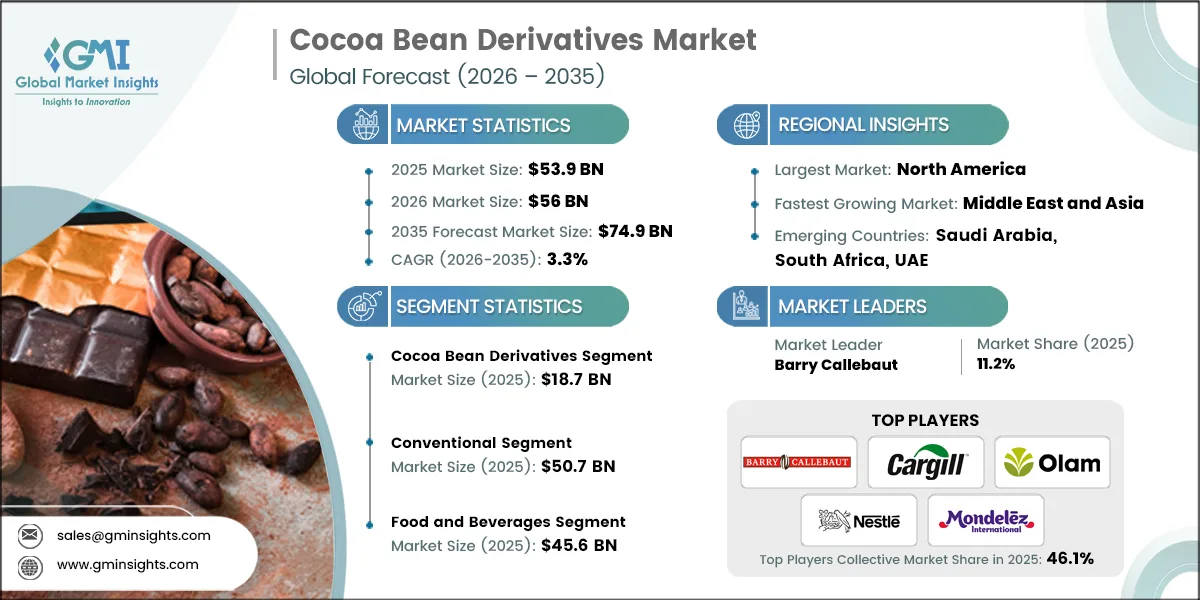
Cocoa Bean Derivatives Market Key Takeaways
Market Size & Growth
- 2025 Market Size: USD 53.9 Billion
- 2026 Market Size: USD 56 Billion
- 2035 Forecast Market Size: USD 74.9 Billion
- CAGR (2026–2035): 3.3%
Regional Dominance
- Largest Market: North America
- Fastest Growing Region: Middle East and Asia
Key Market Drivers
- Expanding food and beverage demand.
- Functional ingredient usage.
- Industrial and cosmetic utilization.
Challenges
- Raw material price volatility.
- Quality consistency challenges.
Opportunity
- Product innovation.
- Cross-industry integration.
- Sustainable and traceable sourcing.
Key Players
- Market Leader: Barry Callebaut led with over 11.2% market share in 2025.
- Leading Players: Top 5 players in this market include Barry Callebaut, Cargill, Olam International, Nestlé, Mondelez International, which collectively held a market share of 46.1% in 2025.
Get Market Insights & Growth Opportunities
To get key market trends
Cocoa Bean Derivatives Market Trends
- The food and beverage industry growth brings about increased demand for cocoa bean-derived products. The chocolate and confectionery and bakery and beverage industries require premium quality cocoa butter and cocoa powder and cocoa liquor products. The product demand continues to rise, and manufacturers need constant access to derivative supplies, which drives continuous market expansion.
- Cocoa derivatives function as versatile ingredients that drive market growth for their use throughout different applications. Cocoa butter creates a smooth texture that maintains its melting properties, while cocoa powder delivers flavor and color and antioxidant benefits. The functional attributes of derivatives become necessary for multiple uses, including bakery and dairy and beverage product development, which increases their market value.
- The cosmetic and personal care sector significantly drives growth. Cocoa butter serves as an essential ingredient in skincare products, lip care products and body care products because it provides moisture and skin protection. Derivative demand increases as natural ingredients and their ability to mix with other components make them more attractive to cosmetic manufacturers.
- The combination of product innovation and customization drives business expansion. Manufacturers create specialized cocoa powders and alkalized derivatives and customized fat compositions to serve the specific needs of niche and premium market segments. The innovation makes it possible for companies to create unique products which enables them to charge premium prices and serve multiple types of customer needs, thereby expanding their market reach.
- Industrial adoption together with cross-sector applications creates market expansion. Cocoa derivatives go beyond their typical food application because they serve as active components in functional foods and nutraceuticals and pharmaceutical products. The market demand increases when industrial applications expand which leads to companies investing in facilities that produce derivatives.
Cocoa Bean Derivatives Market Analysis
Learn more about the key segments shaping this market
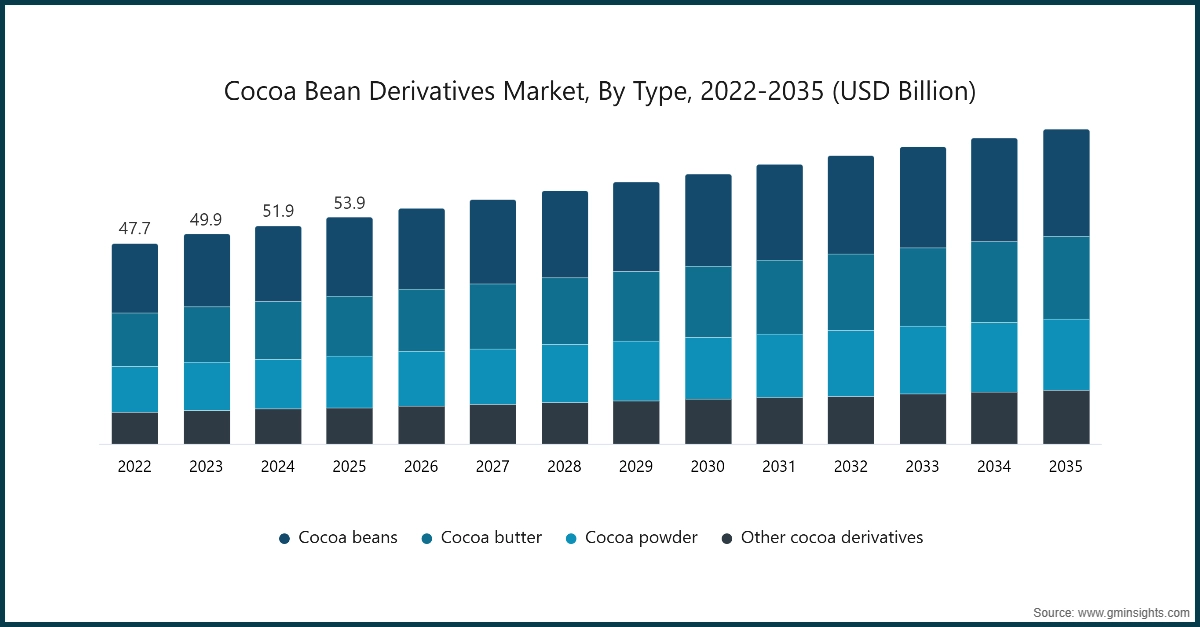
The market by type is segmented into cocoa beans, cocoa butter, cocoa powder and other cocoa derivatives. Cocoa bean derivatives hold the largest market value of USD 18.7 billion in 2025.
- The cocoa derivatives market continues to depend on cocoa beans as its main product because chocolate and confectionery manufacturers from all over the world maintain their steady demand for cocoa beans. Cocoa butter retains its status as a valuable product because it provides essential functional benefits which food and cosmetic makers use. The new processing and fat fractionation techniques allow manufacturers to create products with stable texture and melting characteristics.
- Cocoa powder is experiencing growing demand from the beverage and bakery and functional food markets because of its taste and coloring properties and its antioxidant effects. The cocoa powders which include low-fat and alkalized varieties now see greater adoption in premium and health-oriented product designs. Other includes cocoa liquor, cocoa cake and cocoa shells products for nutraceuticals, animal feed and industrial operations which create new markets while increasing total cocoa bean extraction.
The cocoa bean derivatives market by category is segmented into organic and conventional. Conventional holds the largest market value of USD 50.7 billion in 2025.
- The market for organic cocoa derivatives is expanding because more customers want to buy products which contain natural ingredients that do not have chemical additives and come from environmentally friendly sources. The premium chocolate industry along with bakeries and beverage producers and personal care product developers prefer organic cocoa beans and butter and cocoa powder. The market for organic cocoa ingredients expands through certification programs and traceability systems which build consumer trust and product credibility.
- The cocoa market still depends on traditional cocoa products which produce large quantities of basic chocolate and confectionery and bakery and beverage products. Cocoa processing and refining technologies have been improved through technological advancements which now deliver better quality and higher product yield and consistent product performance for traditional cocoa butter and cocoa powder and cocoa liquor.
Learn more about the key segments shaping this market
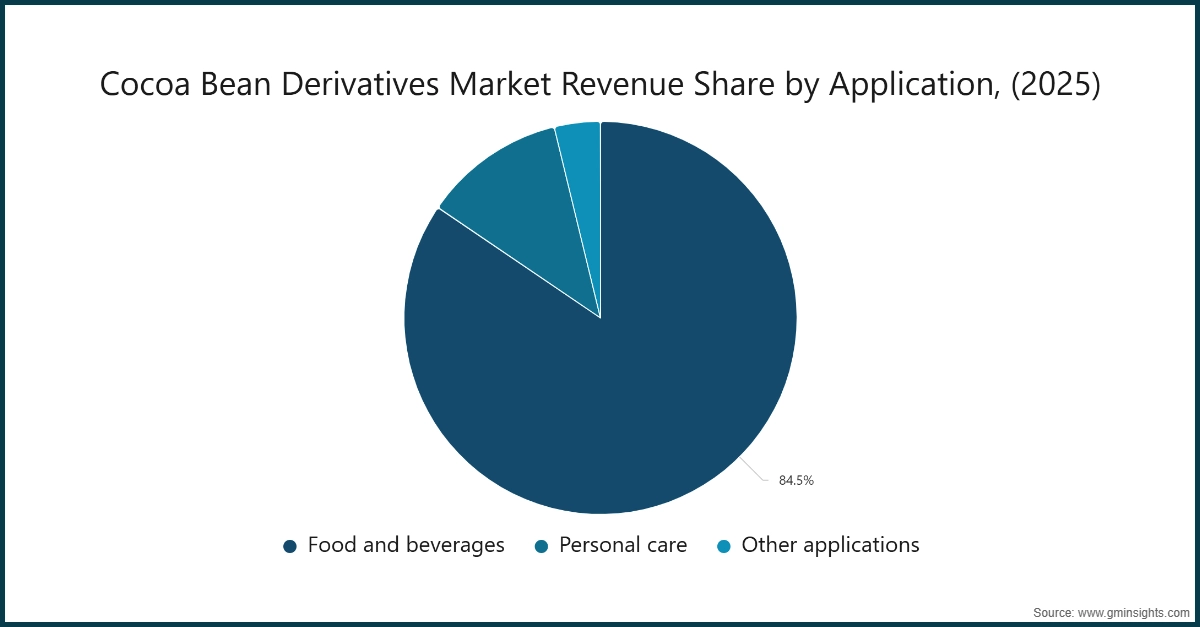
The cocoa bean derivatives market by application is segmented into food and beverages, personal care and other application. Food and beverages hold the largest market value of USD 45.6 billion in 2025.
- The food and beverage industry uses cocoa derivatives for all chocolate products, bakery items, dairy products and beverage items. The combination of cocoa butter, cocoa powder and cocoa liquor creates the essential taste, texture, color and product stability, while premium and functional products now use more specialized and custom-developed formulations.
- The personal care industry uses cocoa butter in its skincare products and lip care products and body care products because it provides skin softening and hydration benefits. The nutraceuticals field, pharmaceutical industry and industrial applications use as their functional ingredients. The applications of cocoa derivatives extend beyond food and beverages, which demonstrates their ability to serve multiple industries.
The cocoa bean derivatives market by distribution channel is segmented into distributors / wholesalers, retail channels and online channels. Distributors / Wholesalers holds the largest market value of USD 37 billion in 2025.
- Distributors and wholesalers distribute cocoa derivatives by delivering bulk shipments of cocoa butter and cocoa powder and cocoa liquor and other cocoa products to manufacturers and food processors and industrial users. The distribution channels enable the company to access multiple clients while delivering dependable product quality and constant supply of materials which meet their production demands.
- Retail channels make cocoa derivatives available to smaller businesses and end consumers through supermarkets, specialty stores, and gourmet shops. Online channels allow customers to purchase cocoa products directly from producers and small manufacturers, which helps the industry reach more customers while providing them with easy access to specialty and organic products. The online channels and retail channels together support traditional B2B distribution methods.
Looking for region specific data?
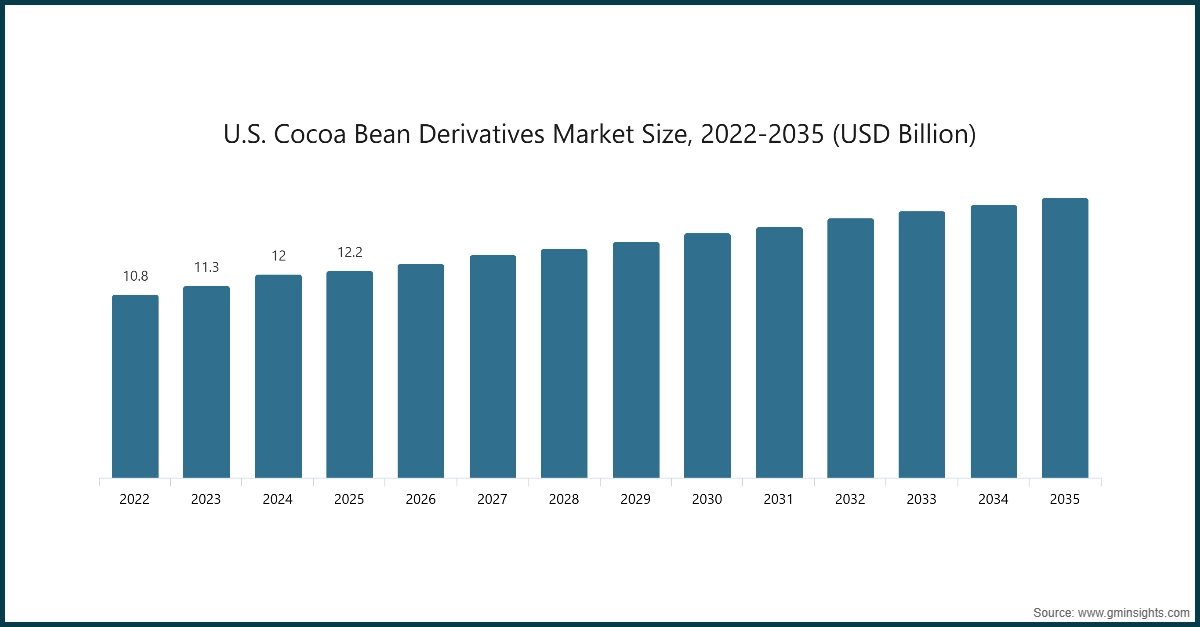
The market in the North America is expected to experience significant and promising growth from USD 15.9 billion in 2025 to USD 21.7 billion in 2035. The U.S. cocoa bean derivatives market accounted for USD 12.2 billion in 2025.
- North America sees strong demand for cocoa derivatives which food and beverage and confectionery industries use because of their advanced processing facilities and their development of functional and premium products. The market benefits from extensive retail and online channels which connect with different customer segments. The United States sees rising cocoa powder and butter use because consumers now prefer specialty chocolates and health-oriented products while manufacturers create clean-label and organic products.
The market in the Europe is expected to experience significant and promising growth from USD 14.8 billion in 2025 to USD 20.3 billion in 2035.
- Europe requires chocolate makers to follow democratic rules which protect environmental resources while creating premium chocolate products. The new product development process includes new taste solutions and new packaging solutions which must comply with both regulatory requirements and certification requirements. Belgian producers who operate in the country with a famous chocolate heritage produce cocoa powders and butters which combine traditional techniques with modern processing methods to create products for both local and international markets.
The cocoa bean derivatives market in Asia Pacific is expected to experience increasing growth from USD 13.8 billion in 2025 to USD 19.5 billion in 2035.
- The consumption of cocoa derivatives in Asia Pacific increases rapidly because of urbanization, rising incomes, the growth of confectionery and beverage industries. Increasing production capability and developing new products drives the market growth. Indian consumers now buy more chocolate because they have better access to chocolate products, which has increased demand for cocoa butter and powder. The chocolate market focuses on developing new flavors and creating budget-friendly products which help businesses to enter new market segments.
Middle East & Africa market is expected to experience significant and promising growth from USD 5.9 billion in 2025 to USD 8.3 billion in 2035.
- The Middle East and Africa region produces large quantities of cocoa beans while developing more processing facilities to meet the growing demand for cocoa products from consumers. South African cocoa butter and powder usage increases because of rising demand in both the confectionery and personal care product markets. The supply chain sustainability efforts certification programs and system improvements will create market stabilization and help build export growth opportunities.
Latin America is expected to experience significant and increasing growth from USD 3.5 billion in 2025 to USD 5.1 billion in 2035.
- Latin America maintains traditional cocoa farming practices while developing local processing facilities which produce value-added cocoa products to meet both domestic and international market demands. Brazilian chocolate makers and food producers use cocoa derivatives throughout their operations because they have built refining and packaging facilities. Brazil strengthens its global cocoa derivatives supply chain position through regional trade agreements and local innovation development.
Cocoa Bean Derivatives Market Share
- Markets are moderately consolidated with players like Barry Callebaut, Cargill, Olam International, Nestlé, Mondelez International holding 46.1% market share and Barry Callebaut being the market leader holding the market share of 11.2% in 2025.
- The cocoa derivatives industry requires companies to maintain their market position through ongoing research which results in better products and improved processing methods. The company achieves product differentiation through their investment in state-of-the-art roasting and pressing and refining techniques which produce reliable flavor results and greater production and better product attributes.
- Companies implement sustainable practices and ethical sourcing methods to achieve sustainable market success. The top industry players establish trust through transparent supply chain operations and farmer support programs and their active pursuit of environmental certifications which help them build consumer confidence and customer loyalty.
- Research and development investments empower companies to develop specialized cocoa derivatives which meet specific industry requirements. The company creates products which contain specific fat percentages and distinct flavor characteristics and functional advantages which enable market entry into specialized markets and high-end product segments.
- The organization gains competitive benefits through its extensive network of global distribution channels. The company achieves regional market access and timely delivery and flexible delivery of services through efficient logistics operations and distributor and wholesaler partnerships and its online and offline business model.
- The company establishes strong brand reputation and customer relationships through its commitment to delivering high-quality products which sustain reliable supply and excellent customer service. The company develops collaborative partnerships with manufacturers and retailers and end-user customers to create innovative paths which enable shared growth and accelerate their market leadership.
Cocoa Bean Derivatives Market Companies
Major players operating in the cocoa bean derivatives industry are:
- Barry Callebaut
- Cargill
- CEMOI
- Cocoa Touton
- ECOM Agroindustrial
- Ecuakao Group
- Ferrero
- Indcre
- JB Foods
- Mondelez International
- Moner Cocoa
- Natra
- Nestlé
- Olam Group
- United Cocoa Processor
Barry Callebaut operates globally in the cocoa and chocolate industry, producing cocoa beans, cocoa butter, cocoa powder, and chocolate products. The company serves a wide range of customers from large manufacturers to artisanal chocolatiers, and it focuses on three main areas which are innovation and sustainability and supply chain traceability.
Cargill is a major agribusiness company which handles all stages of cocoa from its initial sourcing to its final processing and product creation. The company provides cocoa liquor and butter and powder to food manufacturers worldwide while it promotes sustainable farming practices through its product development and technological advancements which improve quality and supply reliability.
Olam International oversees all aspects of cocoa bean supply chain management and processing operations between cocoa-growing areas. The company provides various cocoa derivatives to food and beverage manufacturers, and it supports farmer development and sustainable agriculture practices. The organization uses its worldwide sourcing network to maintain product quality while also allowing the business to adapt to market demands.
Nestlé is a multinational food and beverage company which produces cocoa derivatives through its chocolate and confectionery products. The company invests its resources into product innovation and sustainability efforts and ethical sourcing to create cocoa-based products which satisfy global consumer demands.
Mondelez International produces a wide range of chocolate and confectionery products which use cocoa derivatives as their main ingredient. The company develops its sustainable cocoa procurement system while it puts sustainable supply chain operations into practice to develop new products which improve flavour and texture and product appeal across different international markets.
Cocoa Bean Derivatives Market Report Attributes
| Key Takeaway | Details |
|---|---|
| Market Size & Growth | |
| Base Year | 2025 |
| Market Size in 2025 | USD 53.9 Billion |
| Market Size in 2026 | USD 56 Billion |
| Forecast Period 2026-2035 CAGR | 3.3% |
| Market Size in 2035 | USD 74.9 Billion |
| Key Market Trends | |
| Drivers | Impact |
| Expanding food and beverage demand | Steady consumption of chocolate, confectionery, bakery, and beverage products drives sustained demand for cocoa butter, cocoa powder, and cocoa liquor. |
| Functional ingredient usage | Cocoa derivatives flavor, texture, and fat properties make them valuable in diverse formulations beyond traditional confectionery. |
| Industrial and cosmetic utilization | Cocoa butter and related derivatives are increasingly used in personal care, cosmetics, and pharmaceutical formulations. |
| Pitfalls & Challenges | Impact |
| Raw material price volatility | Fluctuations in cocoa bean prices directly impact derivative production costs and profitability. |
| Quality consistency challenges | Variability in bean quality and processing conditions can lead to inconsistency in derivative characteristics, impacting end-product performance. |
| Opportunities: | Impact |
| Product innovation | Development of value-added and specialty derivatives (natural alkalized, high-flavor liquor, low-fat powders) can open premium market segments. |
| Cross-industry integration | Leveraging derivatives in health, nutraceuticals, and functional foods to tap into wellness and specialty product markets. |
| Sustainable and traceable sourcing | Adoption of sustainable certification and traceability systems can enhance market credibility and appeal to ethical consumers. |
| Market Leaders (2025) | |
| Market Leader |
Market share 11.2% |
| Top Players |
Collective market share of 46.1% in 2025 |
| Competitive Edge |
|
| Regional Insights | |
| Largest Market | North America |
| Fastest growing market | Middle East and Asia |
| Emerging countries | Saudi Arabia, South Africa, UAE |
| Future outlook |
|
What are the growth opportunities in this market?
Cocoa Bean Derivatives Industry News
- In November 2025, Barry Callebaut established a partnership with Planet A Foods to create chocolate replacements which use fermented sunflower seeds as a chocolate taste and texture substitute. The partnership intends to expand worldwide distribution of ChoViva which uses non-cocoa materials to provide semi-sweet vegan white chocolate solutions for various uses.
- In February 2025 Nestlé introduced its latest KitKat tablet products to European markets which contained double chocolate hazelnut and salted caramel flavors. The company expand its Sofia factory operations, which enabled production that supported export to 29 different countries. The program promotes sustainable practices by using cocoa supply from Nestlé's income accelerator initiative, which strengthens farmer income while decreasing child labor danger. The tablets are available in the UK and key markets including Canada and South Africa.
The cocoa bean derivatives market research report includes an in-depth coverage of the industry with estimates and forecast in terms of revenue in USD Billion and volume in terms of kilo tons from 2022–2035 for the following segments:
Market, By Type
- Cocoa beans
- Cocoa butter
- Cocoa powder
- Other cocoa derivatives
Market, By Category
- Organic
- Conventional
Market, By Application
- Food and beverages
- Personal care
- Other applications
Market, By Distribution Channel
- Distributors / wholesalers
- Retail channels
- Online channels
The above information is provided for the following regions and countries:
- North America
- U.S.
- Canada
- Europe
- Germany
- UK
- France
- Spain
- Italy
- Rest of Europe
- Asia Pacific
- China
- India
- Japan
- Australia
- South Korea
- Rest of Asia Pacific
- Latin America
- Brazil
- Mexico
- Argentina
- Rest of Latin America
- Middle East and Africa
- Saudi Arabia
- South Africa
- UAE
- Rest of Middle East & Africa
Frequently Asked Question(FAQ) :
What is the market size of the cocoa bean derivatives market in 2025?
The global cocoa bean derivatives market was valued at USD 53.9 billion in 2025, driven by strong demand from the chocolate and confectionery industry.
What is the expected market size of the cocoa bean derivatives market in 2026?
The market is projected to reach USD 56 billion in 2026, supported by increasing consumption of chocolate products and expanding food processing activities.
What is the projected value of the cocoa bean derivatives market by 2035?
The market is expected to reach USD 74.9 billion by 2035, growing at a CAGR of 3.3% during the forecast period due to expanding food and beverage applications.
Which category segment holds the largest share in the cocoa bean derivatives industry?
The conventional segment held the largest share with a market value of USD 50.7 billion in 2025, driven by large-scale chocolate and confectionery manufacturing.
What is the growth outlook for the personal care application segment?
The personal care segment is witnessing steady growth due to increasing use of cocoa butter in skincare, lip care, and body care products for its moisturizing and skin-protecting properties.
Which distribution channel dominates the cocoa bean derivatives industry?
The distributors and wholesalers segment held the largest market share with a value of USD 37 billion in 2025, as bulk cocoa derivatives are primarily supplied to food manufacturers and processing companies.
Which region leads the cocoa bean derivatives market?
North America led the market with USD 15.9 billion in 2025, driven by strong demand from the chocolate and confectionery industry and advanced food processing facilities.
Who are the key players in the cocoa bean derivatives market?
Key players operating in the market include Barry Callebaut, Cargill, Olam Group, Nestlé, Mondelez International, Ferrero, JB Foods, Natra, ECOM Agroindustrial, and United Cocoa Processor.
Cocoa Bean Derivatives Market Scope
Related Reports