Summary
Table of Content

Cardiac Monitoring Devices Market
Get a free sample of this report
Form submitted successfully!
Error submitting form. Please try again.
Thank you!
Your inquiry has been received. Our team will reach out to you with the required details via email. To ensure that you don't miss their response, kindly remember to check your spam folder as well!
Request Sectional Data
Thank you!
Your inquiry has been received. Our team will reach out to you with the required details via email. To ensure that you don't miss their response, kindly remember to check your spam folder as well!
Form submitted successfully!
Error submitting form. Please try again.
Cardiac Monitoring Devices Market Size
The global market is significantly driven by the rapidly increasing geriatric population, which is inherently at a higher risk of developing cardiovascular diseases (CVDs). Aging is strongly associated with conditions such as arrhythmias, heart failure, and ischemic heart disease, thereby escalating the need for continuous monitoring solutions.
Cardiac Monitoring Devices Market Key Takeaways
Market Size & Growth
- 2025 Market Size: USD 15 Billion
- 2026 Market Size: USD 16 Billion
- 2035 Forecast Market Size: USD 29 Billion
- CAGR (2026–2035): 6.8%
Regional Dominance
- Largest Market: North America
- Fastest Growing Region: Asia Pacific
Key Market Drivers
- Rising aging population and increased risk of cardiovascular diseases.
- Lifestyle changes and increasing prevalence of heart diseases.
- Advancements in remote monitoring and wearable technology.
- Advancements in digital health and AI.
Challenges
- Data privacy and security concerns.
- High cost of advanced monitoring solutions.
Opportunity
- Growing preference for home-based and ambulatory cardiac monitoring.
Key Players
- Market Leader: Medtronic led with over 25% market share in 2025.
- Leading Players: Top 5 players in this market include Abbott Laboratories, Medtronic, Philips, Boston Scientific Corporation, BIOTRONIK, which collectively held a market share of 52% in 2025.
Get Market Insights & Growth Opportunities
For example, according to major global demographic assessments, the proportion of people aged 65 years and above continues to rise sharply, contributing to a greater burden of chronic cardiac disorders that require long-term monitoring. As the aging population grows, the demand for advanced cardiac monitoring solutions such as implantable loop recorders and cardiac telemetry devices continues to increase, thereby supporting overall market expansion.
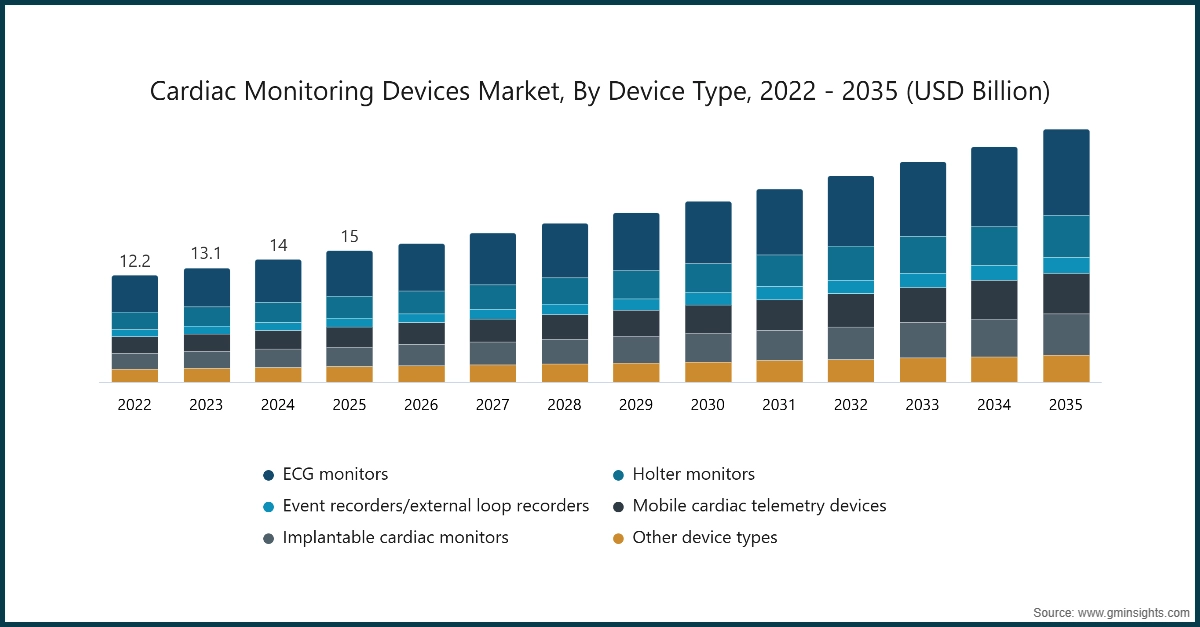
The market grew from USD 12.2 billion in 2022 to USD 14 billion in 2024. In addition, technological developments in the field of cardiac monitoring devices are also contributing significantly to market growth, along with the increasing acceptance of remote monitoring and wearable ECG technologies. Modern advancements such as wireless data transmission, AI-enabled ECG interpretation, extended-wear ECG patches, and cloud‑integrated monitoring platforms have significantly improved diagnostic accuracy and patient comfort.
These innovations are allowing clinicians to monitor patients continuously, both in clinical settings and at home, which enhances overall clinical outcomes and expands the market scope. Additionally, the top five players in the market are Medtronic, Philips, Boston Scientific Corporation, BIOTRONIK, and Abbott Laboratories, all of which offer extensive cardiac monitoring portfolios and continue to invest in next-generation technologies that strengthen their global market leadership.
Furthermore, the global population aged 65 years and older is expanding rapidly, driven by increased life expectancy and declining birth rates. This demographic shift significantly impacts the cardiac monitoring devices market because older adults are at a substantially higher risk of developing cardiovascular diseases, especially arrhythmia and heart failure. Age-related structural and electrical changes in the heart, such as myocardial fibrosis, reduced conduction efficiency, and impaired autonomic regulation, increase susceptibility to rhythm disturbances and ischemic events.
This trend translates into a growing demand for cardiac monitoring devices, including long-term ECG monitoring systems, implantable diagnostic recorders, and remote telemetry tools, as clinicians seek effective solutions to detect abnormalities early, guide treatment decisions, and reduce risks such as stroke, hospitalization, and sudden cardiac events.
Cardiac monitoring refers to the continuous or intermittent assessment of the heart’s electrical and physiological activity using specialized medical devices. It focuses on detecting, recording, and analyzing cardiac rhythms and patterns to identify abnormalities such as arrhythmias, ischemia, and other cardiovascular conditions. This field encompasses a wide range of technologies designed to monitor heart function.
The global cardiac monitoring devices market was valued at USD 15 billion in 2025 and is projected to grow from USD 16 billion in 2026 to USD 29 billion by 2035, expanding at a CAGR of 6.8%, according to the latest report published by Global Market Insights Inc.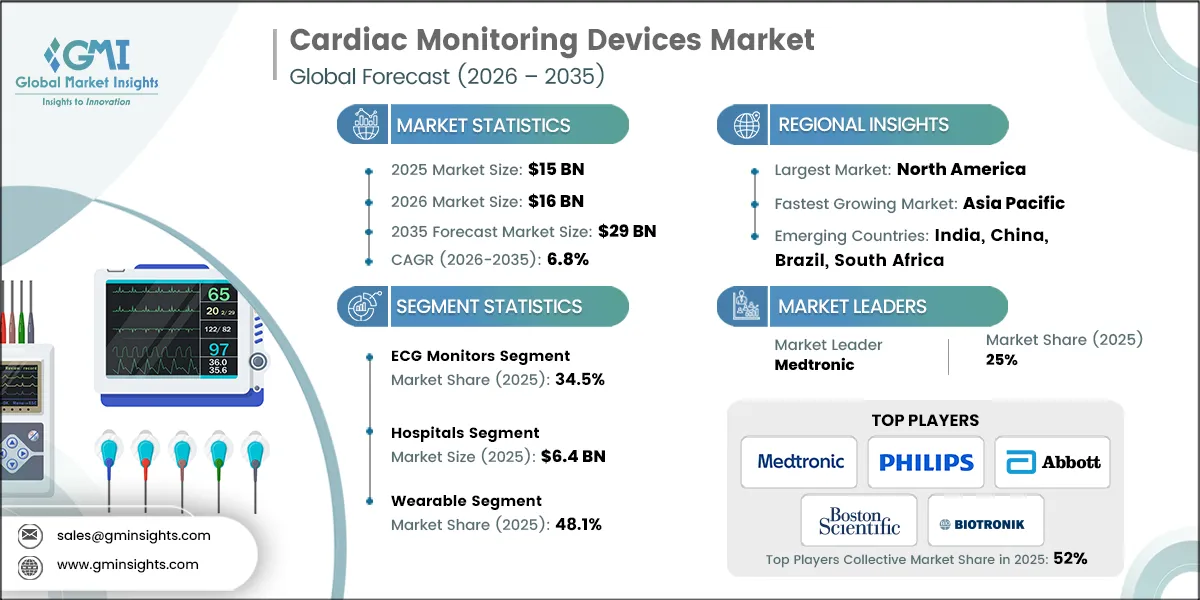
To get key market trends
Cardiac Monitoring Devices Market Trends
- Technological advancements in cardiac monitoring devices have significantly enhanced the precision, continuity, and effectiveness of diagnosing and managing cardiovascular conditions. Innovations span multiple dimensions, including device miniaturization, wearable form factors, enhanced signal accuracy, wireless data transmission, and integration with digital health platforms. These developments allow clinicians to capture high‑quality cardiac rhythm data over extended durations, improving early detection of arrhythmia and enabling more personalized care pathways.
- One of the major advancements is the rise of high‑fidelity wearable and patch‑based ECG monitoring systems, which provide continuous multi‑day or multi‑week rhythm analysis with minimal patient discomfort. These devices utilize improved electrode materials, noise‑reduction algorithms, and extended battery life to deliver accurate readings even during daily activities.
- For instance, modern cardiac patches integrate miniaturized sensors and wireless communication modules, enabling seamless real‑time data transfer to cloud platforms for continuous review by clinicians. These devices improve patient compliance and enhance arrhythmia detection rates due to longer monitoring durations and automatic event detection. Enhanced algorithm-driven signal filtering ensures accurate interpretation even during physical movement, making them suitable for outpatient and home-based monitoring.
- Additionally, rising demand for mobile and telemetry-based monitoring solutions is reshaping modern cardiac care. Patients increasingly prefer convenient, cost‑effective options that allow continuous rhythm assessment outside hospital settings, reducing dependency on frequent clinical visits. Mobile cardiac telemetry systems, smartphone-integrated ECG devices, and ambulatory monitoring platforms empower patients to actively participate in managing their heart health. This shift is accelerating the transition from traditional clinic‑centric cardiac monitoring to digitally enabled, patient‑centered cardiac care environments.
Cardiac Monitoring Devices Market Analysis
Learn more about the key segments shaping this market
Based on device type, the market is divided into ECG monitors, holter monitors, event recorders/external loop recorders, mobile cardiac telemetry devices, implantable cardiac monitors, and other device types. The ECG monitors segment accounted for a 34.5% market share in 2025.
- ECG monitors play a central role in capturing and interpreting the heart’s electrical activity, enabling clinicians to identify abnormalities such as arrhythmias, ischemic changes, and conduction defects.
- High‑precision signal recording and advanced filtering technologies allow ECG monitors to detect subtle electrical variations, supporting accurate diagnosis and early intervention while ensuring patient safety across clinical and emergency settings.
- Moreover, advanced ECG monitors now integrate intelligent features such as automated rhythm detection, AI‑driven interpretation, and event-triggered systems. These capabilities allow real‑time identification of irregular rhythms and provide immediate notifications to clinicians, improving response time in critical cases.
- Further, continuous ECG monitoring is supported by telemetry-based ECG systems that track patient vitals and electrical activity in real time. These systems incorporate advanced signal processing, noise reduction algorithms, and wireless transmission capabilities, allowing seamless streaming of cardiac data to central monitoring stations. Continuous monitoring enables clinicians to assess trends, evaluate treatment response, and intervene promptly in cases of cardiac deterioration, contributing significantly to the overall growth of the ECG monitors segment.
Based on type, the cardiac monitoring devices market is bifurcated into wearable and non-wearable devices. The wearable segment accounted for a 48.1% market share in 2025 and is projected for significant growth to reach USD 14.2 billion by 2035.
- The wearable segment includes portable, patient-friendly devices designed to continuously track heart rhythm during daily activities. These products are becoming increasingly popular because they offer comfort, long-term monitoring, and the ability to capture heart irregularities that may not appear during short hospital checks.
- Wearable cardiac monitoring devices are gaining strong traction because they allow patients to monitor their heart health anytime, anywhere. These devices include ECG patches, smart chest straps, and wrist-based ECG recorders. Their lightweight and wireless design helps patients continue their routine activities while the device continuously records cardiac signals.
- Companies such as Abbott and Medtronic are actively expanding their offerings in the wearable monitoring space.
- The main advantage of wearables is their ability to capture intermittent or unpredictable heart rhythm issues that traditional ECG tests might miss. Continuous, multi-day monitoring increases the chances of detecting arrhythmias such as atrial fibrillation, tachycardia, and bradycardia. This has made wearable ECG patches an essential tool for early diagnosis and preventive cardiac care.
- Overall, the wearable segment is expected to grow rapidly as patients and healthcare providers increasingly adopt convenient, long-term, and technology-enabled monitoring solutions that support early diagnosis and continuous care.
Based on application, the cardiac monitoring devices market is divided into arrhythmia detection, cardiac ischemia and myocardial infarction detection, heart rate and rhythm monitoring, syncope and palpitation monitoring, pre/post-operative monitoring, and other applications. The arrhythmia detection segment accounted for 56.6% of the market share in 2025.
- The arrhythmia detection segment represents one of the most critical application areas for cardiac monitoring devices, as abnormalities in heart rhythm are often intermittent, asymptomatic, and difficult to detect through short-term clinical assessments.
- Short-duration ECGs performed in hospitals frequently fail to capture arrhythmias, especially those that occur sporadically or during daily activities. As a result, there is a strong shift toward long‑term ambulatory monitoring technologies such as holter monitors and event recorders.
- These devices enable extended rhythm surveillance from 24 hours to several months, significantly improving diagnostic yield and supporting earlier initiation of therapy.
- The increasing global prevalence of atrial fibrillation and other rhythm disorders is a major factor driving demand in the arrhythmia detection segment. Aging populations, higher incidence of hypertension, diabetes, heart failure, obesity, and structural heart changes all contribute to rising arrhythmia burden.
- Overall, the arrhythmia detection segment is poised for strong and sustained growth, supported by the combined impact of rising disease prevalence, increasing focus on early diagnosis, and the rapid adoption of connected cardiac monitoring solutions across hospitals, ambulatory diagnostic centers, and homecare settings.
Learn more about the key segments shaping this market
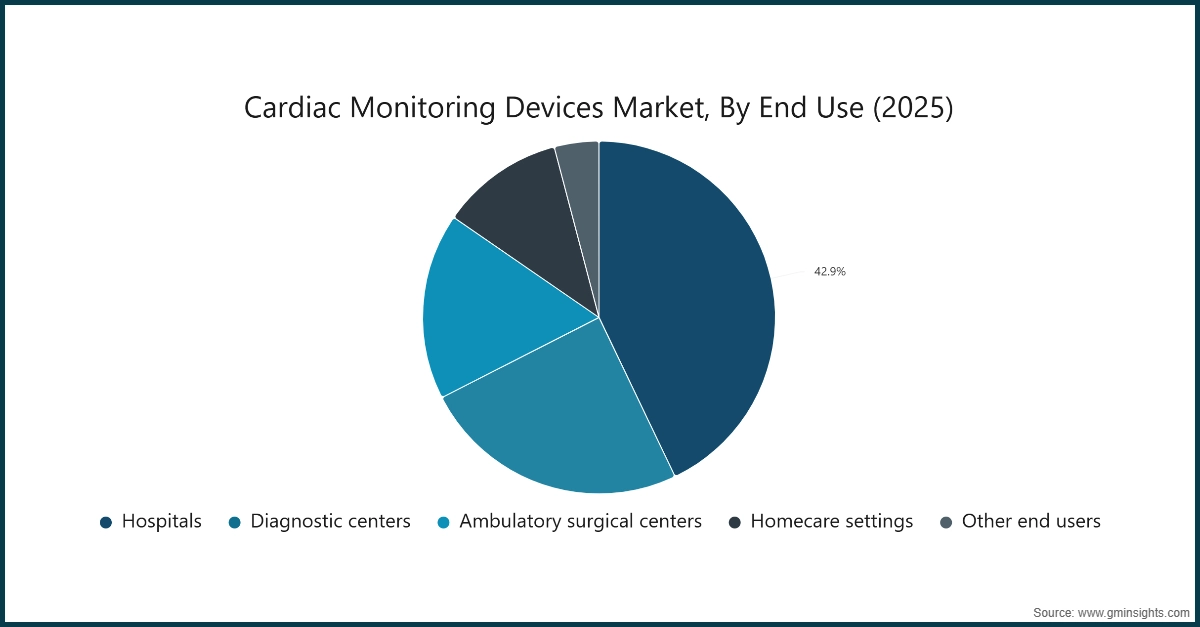
Based on end use, the cardiac monitoring devices market is bifurcated into hospitals, diagnostic centers, ambulatory surgery centers, homecare settings, and other end users. The hospitals segment accounted for USD 6.4 billion in 2025.
- Hospitals remain the primary end users of cardiac monitoring devices because they have the clinical expertise and infrastructure needed to manage patients with serious heart conditions.
- Hospitals typically have trained cardiologists, cardiac nurses, and technicians skilled in interpreting ECG signals, managing monitoring systems, and responding quickly to rhythm abnormalities. This ensures accurate diagnosis and high‑quality patient care, especially for conditions such as arrhythmias, heart failure, and ischemic events.
- Cardiac monitoring devices used in hospitals play a crucial role in managing high‑risk patients, including those with acute coronary syndromes, tachycardia, bradycardia, and post-surgical patients recovering from cardiac procedures. Continuous monitoring helps detect abnormal rhythms early, prevents complications, and improves patient outcomes.
- Hospitals are also key locations for initial diagnosis and long-term management of chronic heart conditions. They conduct routine ECG tests, advanced cardiac evaluations, stress tests, and in-hospital telemetry monitoring, making them central to the growing demand for high-performance cardiac monitoring equipment.
- Hence, these factors, including skilled clinical staff, advanced diagnostic infrastructure, and rapid adoption of new technologies, are collectively driving the growth of the hospital segment in the market.
Looking for region specific data?
North America Cardiac Monitoring Devices Market
- North America accounted for the largest share of the global market in 2025, supported by its advanced healthcare infrastructure, strong adoption of digital monitoring technologies, and well‑established regulatory systems such as the FDA, which help ensure the quality and reliability of cardiac monitoring devices.
- A major driver in North America is the high burden of cardiovascular diseases. Heart disease remains the leading cause of death in the U.S., with approximately 697,000 deaths recorded annually, highlighting the urgent need for continuous heart rhythm monitoring and early detection tools.
- This growing disease burden significantly increases demand for advanced cardiac monitoring devices, including Holter monitors, implantable loop recorders, and hospital-based ECG systems. Continuous rhythm monitoring devices dominate usage in the region because they allow clinicians to track real‑time data and detect arrhythmias before they lead to complications.
- With continuous innovation, strong clinical standards, and expanding use of remote monitoring technologies, North America is expected to maintain its dominant position in the global cardiac monitoring devices market throughout the forecast period. The region’s leadership is reinforced by rapid technology adoption, a high volume of cardiac patients, and strong demand for early diagnosis and chronic disease management.
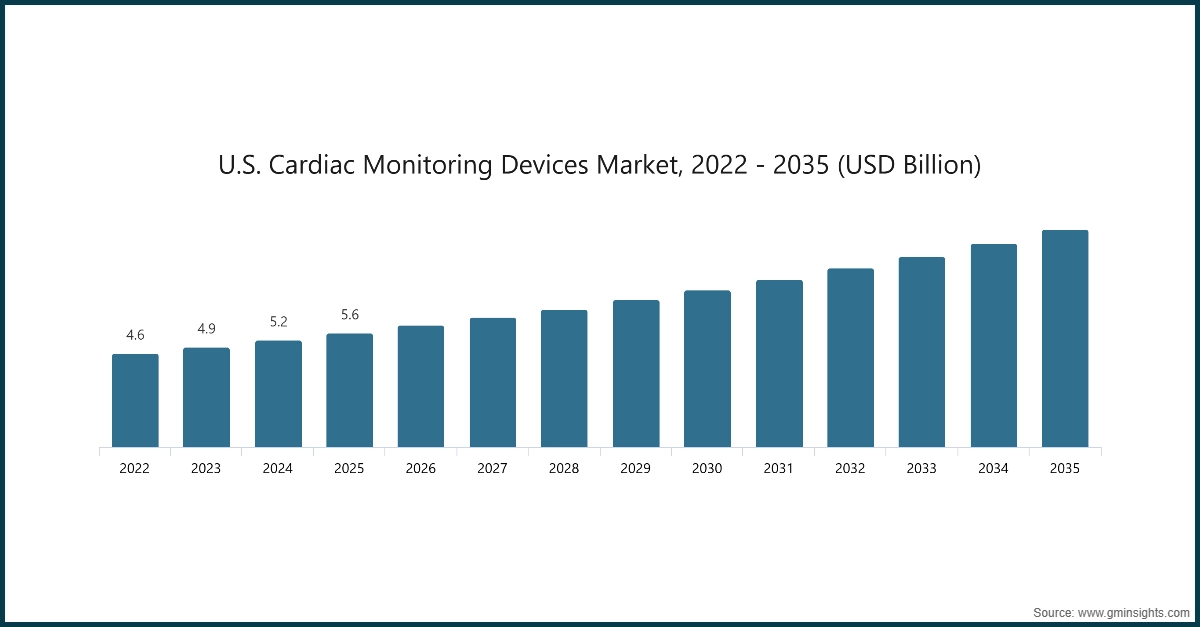
The U.S. market size reached USD 5.6 billion in 2025, growing from USD 5.2 billion in 2024.
- The U.S. has a mature and technologically advanced cardiovascular care ecosystem, supported by high‑capacity hospitals, cardiac care units (CCUs), and specialized cardiology centers equipped with digital ECG systems, telemetry units, Holter monitoring infrastructure, and remote patient monitoring (RPM) platforms. This enables continuous and post‑acute cardiac surveillance for a wide range of arrhythmia and chronic cardiac conditions.
- The clinical burden of heart rhythm disorders and cardiovascular disease (CVD) in the U.S. remains extremely high. Every year, about 805,000 people in the U.S. have a heart attack, as reported by the CDC.
- The U.S. cardiac monitoring landscape increasingly benefits from innovation driven by AI, wearable technologies, and connected sensors, with FDA actively approving next‑generation smart ECG patches, AI‑driven arrhythmia detection software, and advanced solutions. This environment accelerates market entry for digital cardiac diagnostics and supports continuous evolution of ambulatory monitoring modalities.
Europe Cardiac Monitoring Devices Market
The Europe market accounted for USD 4.2 billion in 2025 and is anticipated to show lucrative growth over the forecast period.
- Europe holds a strong position in the global market, supported by highly developed healthcare systems, advanced cardiac care facilities, and a well‑established network of cardiology departments across major hospitals.
- The region’s emphasis on early detection and long‑term management of cardiovascular diseases enables broad adoption of ECG systems, ambulatory cardiac monitors, wearable cardiac patches, and implantable loop recorders.
- Europe benefits from strong regulatory support through the European Medicines Agency (EMA) and Medical Device Regulation (MDR), which ensure high standards for device safety, interoperability, and data security.
- These regulations facilitate market entry for advanced cardiac monitoring devices, including AI-supported ECG interpretation systems and remote monitoring platforms, while maintaining strict quality benchmarks.
- With continuous technological advancements and expanding adoption of connected cardiac care solutions, Europe is expected to maintain a strong and growing presence in the global market. The region’s focus on preventive cardiology, chronic disease management, and digital transformation ensures sustained demand over the forecast period.
The cardiac monitoring devices market in Germany is expected to experience significant and promising growth from 2026 to 2035.
- Germany is a major contributor to the European market, driven by its robust healthcare infrastructure, highly specialized cardiology departments, and strong presence of academic hospitals that actively participate in cardiovascular research.
- The country’s advanced healthcare capabilities support widespread adoption of ECG systems, ambulatory cardiac monitors, and connected remote monitoring platforms for early detection and long‑term management of cardiac conditions.
- The country’s strong focus on digital health transformation and data‑driven cardiology workflows is accelerating adoption of remote patient monitoring (RPM) tools and AI‑assisted ECG analysis. Integration of telecardiology platforms across hospitals and outpatient cardiology practices supports long‑term cardiac monitoring for high‑risk and chronic disease patients, reducing the burden on acute care facilities.
- With continuous investment in healthcare infrastructure, technology‑driven care pathways, and rising emphasis on preventive cardiology, Germany is expected to sustain its leading position in the European market over the forecast period.
Asia Pacific Cardiac Monitoring Devices Market
The Asia Pacific region is projected to show a lucrative growth of about 7.5% during the forecast period.
- Asia Pacific is rapidly emerging as one of the fastest-growing regions in the global cardiac monitoring devices market, supported by a large and diverse patient population, expanding access to healthcare services, and increasing investments in modern cardiac care infrastructure.
- The region’s shift toward proactive cardiovascular disease management is accelerating adoption of ECG systems, ambulatory monitors, and remote cardiac monitoring solutions.
- Cardiovascular diseases, including arrhythmias, ischemic heart disease, and heart failure, are becoming increasingly prevalent across APAC, driven by aging populations, rising hypertension rates, diabetes burden, and lifestyle-related risk factors. This expanding clinical need underscores growing demand for continuous and ambulatory cardiac monitoring tools such as Holter monitors, wearable ECG patches, event recorders, and implantable loop recorders.
- With a large population base, improving healthcare accessibility, and strong technological innovation, Asia Pacific is expected to remain one of the fastest-growing regions in the global cardiac monitoring devices market. The region’s rising focus on early diagnosis, digital health transformation, and long-term cardiac disease management will continue to drive robust growth throughout the forecast period.
The Japan market is anticipated to witness lucrative growth between 2026 – 2035.
- Japan is a key market in Asia‑Pacific for cardiac monitoring devices, supported by highly advanced healthcare infrastructure, strong clinical standards, and widespread availability of specialized cardiology centers.
- The country’s strong emphasis on early detection and continuous management of cardiovascular diseases drives substantial adoption of ECG systems, ambulatory cardiac monitors, wearable sensors, and implantable loop recorders.
- Japan faces a growing burden of cardiovascular diseases, particularly arrhythmias such as atrial fibrillation (AF), strongly linked to its rapidly aging population. With more than one‑quarter of the population over age 65, demand for long‑term and continuous cardiac monitoring solutions is rising sharply. The increasing prevalence of AF, heart failure, and ischemic heart disease underscores the need for accurate diagnostic tools.
- The country’s aging demographic significantly increases the need for sustained cardiac surveillance, both in hospitals and home‑based care settings. This is driving growing adoption of remote patient monitoring (RPM) platforms.
- With strong technological advancement, growing adoption of digital health solutions, and a rapidly increasing elderly population, Japan is expected to remain a high‑growth market for cardiac monitoring devices within Asia Pacific.
Latin America Cardiac Monitoring Devices Market
Brazil is experiencing significant growth in the market.
- The growth of Brazil’s market is strongly driven by the rising burden of cardiovascular diseases (CVDs), demographic aging, and ongoing modernization of healthcare infrastructure. Increasing investments in cardiology departments and diagnostic capabilities are supporting wider adoption of ECG systems.
- Cardiovascular disease remains the leading cause of death in Brazil, and the country faces a growing prevalence of arrhythmias, hypertension, ischemic heart disease, and heart failure and other conditions that require continuous or periodic cardiac surveillance.
- The high incidence of atrial fibrillation (AF), post‑myocardial infarction complications, and stroke risk is driving demand for diagnostic tools such as Holter monitors, event recorders, and implantable loop recorders, which support early detection of intermittent rhythm abnormalities.
- Brazil’s population is aging rapidly, with the share of individuals aged 65 and older projected to rise sharply by 2050. This demographic transition significantly increases susceptibility to cardiac disorders and fuels the need for long‑term monitoring solutions, including patch-based ECG devices and mobile cardiac telemetry (MCT).
- With a growing focus on technology-driven workflows, early detection programs, and increased investment in cardiovascular care, Brazil is expected to remain a key growth market for cardiac monitoring devices in Latin America throughout the forecast period.
Middle East and Africa Cardiac Monitoring Devices Market
The market in Saudi Arabia is expected to experience significant and promising growth from 2026 to 2035.
- Saudi Arabia is witnessing strong growth in the market, fueled by large-scale healthcare investments under the Vision 2030 initiative. The government’s focus on modernizing hospitals, expanding cardiac centers, and strengthening specialty care has created a robust environment for the adoption of advanced ECG systems, ambulatory monitors, wearable cardiac patches, and remote monitoring technologies across the country.
- Saudi Arabia benefits from a structured and evolving regulatory framework, led by the Saudi Food and Drug Authority (SFDA), which ensures safety, quality, and compliance for cardiac monitoring devices. The regulatory environment facilitates the introduction of next-generation technologies, including wearable ECG sensors, AI-driven arrhythmia detection platforms, and connected home-based monitoring solutions that meet international quality standards.
- With continuous technological advancement, rising investments in health infrastructure, and a growing emphasis on precision diagnostics and preventive cardiology, Saudi Arabia is expected to remain a key growth market for cardiac monitoring devices in the Middle East. The country’s strategic push toward digital health transformation and early detection will drive sustained market expansion throughout the forecast period.
Cardiac Monitoring Devices Market Share
The market is highly competitive, characterized by a mix of diversified global medtech leaders and specialized diagnostic companies focused on continuous, ambulatory, and implantable cardiac monitoring solutions. Market players are strengthening their competitive positions through product innovation, AI‑driven diagnostics, remote monitoring ecosystems, and strategic partnerships with hospitals, cardiology networks, and digital health platforms.
Leading companies such as Medtronic, Abbott Laboratories, Boston Scientific Corporation, GE Healthcare, and Koninklijke Philips collectively account for an estimated 55% of the global cardiac monitoring devices market. These companies benefit from broad product portfolios that span ECG monitoring systems, Holter monitors, wearable cardiac patches, implantable loop recorders (ILRs), pacemakers, and implantable cardioverter defibrillators with advanced monitoring capabilities.
Overall, the competitive dynamics of the market continue to be shaped by technological innovation, remote monitoring expansion, regulatory harmonization, and the rising burden of cardiovascular diseases, ensuring sustained demand and steady market growth over the forecast period.
Cardiac Monitoring Devices Market Companies
Some of the eminent market participants operating in the cardiac monitoring devices industry include:
- Abbott Laboratories
- ACS Diagnostics
- AliveCor
- BIOTRONIK
- Boston Scientific Corporation
- BPL Medical
- GE Healthcare
- iRhythm
- Medtronic
- MicroPort
- Neurosoft
- Nihon Kohden
- Philips
- Schiller AG
Abbott is a leading global innovator in cardiac monitoring technologies, offering a comprehensive portfolio that enhances diagnostic accuracy, long-term rhythm surveillance, and patient management. The company’s advanced solutions, including the Assert-IQ Insertable Cardiac Monitor (ICM), deliver continuous, high-fidelity rhythm monitoring supported by Bluetooth-enabled connectivity and AI-driven arrhythmia detection, significantly improving the identification of atrial fibrillation and other clinically significant events.
Medtronic is a global leader in cardiac monitoring technologies, offering one of the most comprehensive portfolios for long-term rhythm surveillance and cardiac event detection. Its flagship solution, the Reveal LINQ Insertable Cardiac Monitor (ICM), is one of the world’s smallest and most accurate long-term monitoring devices, delivering continuous subcutaneous ECG data for up to three years.
Boston Scientific is a prominent innovator in cardiac monitoring solutions, offering a robust portfolio that supports continuous, accurate, and clinically actionable rhythm surveillance. Its advanced monitoring technologies, led by the LUX-Dx Insertable Cardiac Monitor (ICM) System, deliver high-fidelity subcutaneous ECG data powered by dual-stage detection algorithms, significantly reducing false positives while prioritizing clinically meaningful cardiac events.
Cardiac Monitoring Devices Market Report Attributes
| Key Takeaway | Details |
|---|---|
| Market Size & Growth | |
| Base Year | 2025 |
| Market Size in 2025 | USD 15 Billion |
| Market Size in 2026 | USD 16 Billion |
| Forecast Period 2026-2035 CAGR | 6.8% |
| Market Size in 2035 | USD 29 Billion |
| Key Market Trends | |
| Drivers | Impact |
| Rising aging population and increased risk of cardiovascular diseases | Growing elderly population globally is significantly increasing the prevalence of arrhythmia, heart failure, and ischemic heart diseases, driving strong demand for continuous cardiac monitoring through event recorders and implantable loop recorders. |
| Lifestyle changes and increasing prevalence of heart diseases | Higher prevalence of hypertension, diabetes, and metabolic syndrome is accelerating demand for regular ECG monitoring and remote cardiac assessment. |
| Advancements in remote monitoring and wearable technology | Growing acceptance of wearable ECG patches, wireless Holter devices, and smartphone-connected monitoring tools allows real-time rhythm assessment outside clinical settings, improving patient convenience and diagnostic accuracy. |
| Advancements in digital health and AI | Integration of AI algorithms enhances ECG interpretation, improves arrhythmia detection accuracy, and enables predictive analytics for early identification of cardiac events. |
| Pitfalls & Challenges | Impact |
| Data privacy and security concerns | Increased use of wearable and cloud-based cardiac monitoring systems raises concerns over patient data security, cybersecurity risks, and regulatory compliance, slowing adoption in sensitive markets. |
| High cost of advanced monitoring solutions | Tools such as implantable loop recorders, and AI-enabled platforms involve high acquisition and maintenance costs, limiting adoption in price-sensitive regions and smaller healthcare facilities. |
| Opportunities: | Impact |
| Growing preference for home-based and ambulatory cardiac monitoring | Shift toward outpatient and home-care monitoring is increasing demand for portable, patch-based, and wireless cardiac monitoring systems that offer long-term recording with high patient compliance. |
| Market Leaders (2025) | |
| Market Leader |
Market share 25% |
| Top Players |
Top players collective market share is 52% |
| Competitive Edge |
|
| Regional Insights | |
| Largest Market | North America |
| Fastest growing market | Asia Pacific |
| Emerging countries | India, China, Brazil, South Africa |
| Future outlook |
|
What are the growth opportunities in this market?
Cardiac Monitoring Devices Industry News
- In May 2025, iRhythm Technologies announced the commercial launch of its Zio Long‑Term Continuous Monitoring service in Japan, introduced locally as the Zio ECG Recording and Analysis System. The launch marked a significant advancement in AI‑powered arrhythmia detection, offering up to 14 days of continuous, uninterrupted ECG monitoring. This milestone underscores iRhythm’s commitment to expanding access to next‑generation cardiac monitoring solutions in Japan.
- In September 2024, B‑Secur announced that it had received FDA clearance and launched its HeartKey Rhythm solution, a suite of advanced ECG algorithms and analytics designed to enhance clinical confidence, improve ECG signal quality, and support more accurate arrhythmia detection across ambulatory ECG platforms. HeartKey Rhythm reduces noise, strengthens rhythm recognition, and streamlines data interpretation, addressing the rising demand for high-quality ECG analysis amid growing reliance on remote cardiac monitoring.
The cardiac monitoring devices market research report includes an in-depth coverage of the industry with estimates and forecast in terms of revenue in USD Million from 2022 – 2035 for the following segments:
Market, By Device type
- ECG monitors
- Holter monitors
- Event recorders/external loop recorders
- Mobile cardiac telemetry devices
- Implantable cardiac monitors
- Other device types
Market, By Type
- Wearable
- Non wearable
Market, By Application
- Arrhythmia detection
- Atrial fibrillation
- Tachycardia
- Bradycardia
- Premature atrial and ventricular contractions (PACs/PVCs)
- Cardiac ischemia and myocardial infarction detection
- Heart rate and rhythm monitoring
- Syncope and palpitation monitoring
- Pre/post-operative monitoring
- Other applications
Market, By End use
- Hospitals
- Diagnostic centers
- Ambulatory surgical centers
- Homecare settings
- Other end users
The above information is provided for the following regions and countries:
- North America
- U.S.
- Canada
- Europe
- Germany
- UK
- France
- Spain
- Italy
- Netherlands
- Asia Pacific
- China
- Japan
- India
- Australia
- South Korea
- Latin America
- Brazil
- Mexico
- Argentina
- Middle East and Africa
- South Africa
- Saudi Arabia
- UAE
Frequently Asked Question(FAQ) :
What was the market size of the cardiac monitoring devices market in 2025?
The cardiac monitoring devices market was valued at USD 15 billion in 2025, driven by the increasing geriatric population and the rising prevalence of cardiovascular diseases (CVDs).
What is the projected value of the cardiac monitoring devices market by 2035?
The market is expected to reach USD 29 billion by 2035, expanding at a CAGR of 6.8%, fueled by advancements in wearable technologies and continuous monitoring solutions.
What is the projected size of the cardiac monitoring devices market in 2026?
The market is projected to reach USD 16 billion in 2026, supported by the growing adoption of innovative cardiac monitoring devices.
What was the market share of the ECG monitors segment in 2025?
The ECG monitors segment accounted for a 34.5% market share in 2025, playing a critical role in diagnosing arrhythmias and other heart conditions.
What was the market share of the wearable devices segment in 2025?
The wearable devices segment held a 48.1% market share in 2025 and is projected to grow significantly, reaching USD 14.2 billion by 2035.
Which companies are key players in the cardiac monitoring devices market?
Major companies include Abbott Laboratories, ACS Diagnostics, AliveCor, BIOTRONIK, Boston Scientific, BPL Medical Technologies, GE HealthCare, iRhythm Technologies, and Medtronic.
Cardiac Monitoring Devices Market Scope
Related Reports