Summary
Table of Content

BTK Inhibitor Market
Get a free sample of this report
Form submitted successfully!
Error submitting form. Please try again.
Thank you!
Your inquiry has been received. Our team will reach out to you with the required details via email. To ensure that you don't miss their response, kindly remember to check your spam folder as well!
Request Sectional Data
Thank you!
Your inquiry has been received. Our team will reach out to you with the required details via email. To ensure that you don't miss their response, kindly remember to check your spam folder as well!
Form submitted successfully!
Error submitting form. Please try again.
BTK Inhibitor Market Size
The steady growth of the market is driven by the rising prevalence of cancers and autoimmune diseases, advancements in targeted therapies, ongoing research and development, and an increasing focus on personalized medicine. Major companies in the industry include F. Hoffmann-La Roche, Eli Lilly and Company, Novartis, Johnson & Johnson, and AstraZeneca.
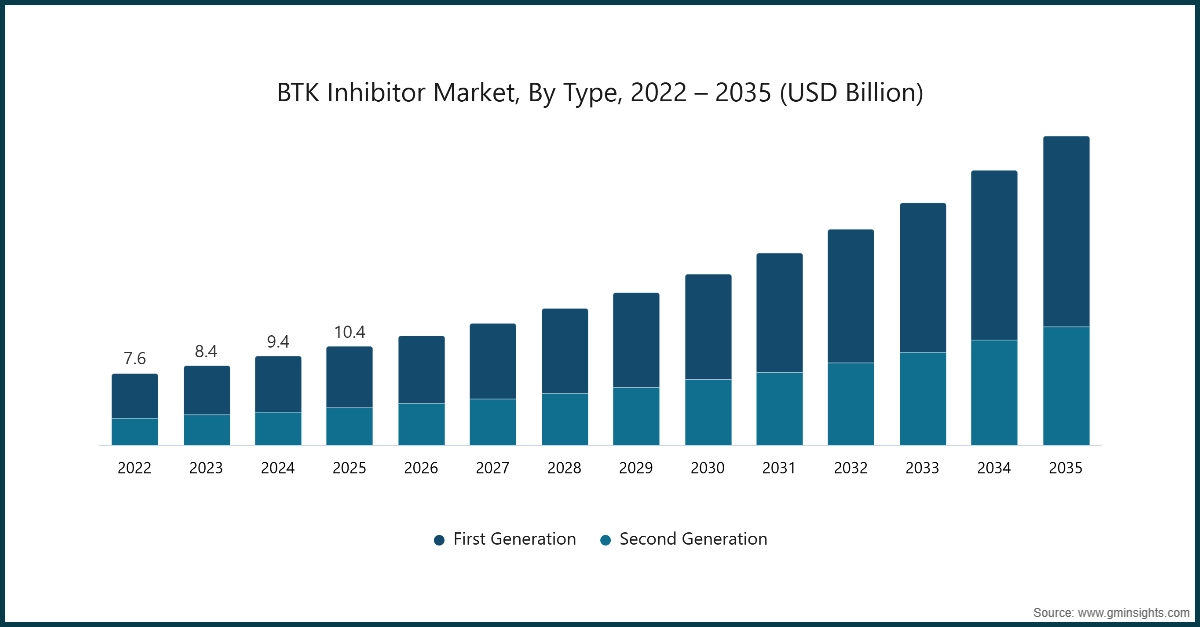
The market grew from USD 7.6 billion in 2022 to USD 9.4 billion in 2024. The BTK inhibitor market is experiencing significant growth, driven by an increasing number of cancer cases. For instance, according to data from the World Health Organization (WHO), in 2022, there were approximately 20 million cancer cases, with 9.7 million cancer deaths reported worldwide. It is estimated that 53.5 million people were cancer survivors within five years of being diagnosed with the illness. It is stated that one in five people globally will be diagnosed with cancer at some point in their life, while one in nine men and one in twelve women will die from it. These statistics highlight the rising demand for targeted therapies such as BTK inhibitors, which have broad therapeutic value for treating different types of cancers.
BTK Inhibitor Market Key Takeaways
Market Size & Growth
- 2025 Market Size: USD 10.4 Billion
- 2026 Market Size: USD 11.6 Billion
- 2035 Forecast Market Size: USD 32.7 Billion
- CAGR (2026–2035): 12.2%
Regional Dominance
- Largest Market: North America
- Fastest Growing Region: Asia Pacific
Key Market Drivers
- Rising prevalence of cancers and autoimmune diseases.
- Advancements in targeted therapies.
- Ongoing research and development.
- Increasing focus on personalized medicine.
Challenges
- High cost of BTK inhibitors.
- Stringent regulatory.
Opportunity
- Rising healthcare infrastructure in emerging markets.
Key Players
- Market Leader: Eli Lilly and Company led with over 12% market share in 2025.
- Leading Players: Top 5 players in this market include F. Hoffmann-La Roche, Eli Lilly and Company, Novartis, AstraZeneca, Johnson and Johnson, which collectively held a market share of 42% in 2025.
Get Market Insights & Growth Opportunities
Additionally, the growing focus on personalized medicine, such as BTK inhibitors, is accelerating the development of mutation-specific therapies, biomarker-driven treatment strategies, and precision dosing approaches. Furthermore, next-generation BTK inhibitors, including pirtobrutinib (LOXO-305) and vecabrutinib, are designed to target resistance mutations such as C481S. For instance, according to a study published by the National Institute of Health (NIH), patients with chronic lymphocytic leukemia (CLL) or small lymphoma achieved an overall response rate (ORR) of 62% with pirtobrutinib, showing consistent efficacy across subgroups, such as C481-mutant BTK disease (75% ORR) and those with previous covalent BTK inhibitor resistance (60%). Advancements in targeted therapy and ongoing R&D initiatives are also boosting the growth of the market.
A BTK inhibitor is a medication that blocks Bruton’s tyrosine kinase (BTK), an enzyme essential for the growth and survival of B-cells in the immune system. By inhibiting BTK, these drugs reduce abnormal B-cell activity and are commonly used to treat certain blood cancers, such as chronic lymphocytic leukemia (CLL), mantle cell lymphoma (MCL), and waldenstrom’s macroglobulinemia (WM).
The global BTK inhibitor market was valued at USD 10.4 billion in 2025 and is projected to grow from USD 11.6 billion in 2026 to USD 32.7 billion by 2035, expanding at a CAGR of 12.2%, according to the latest report published by Global Market Insights Inc.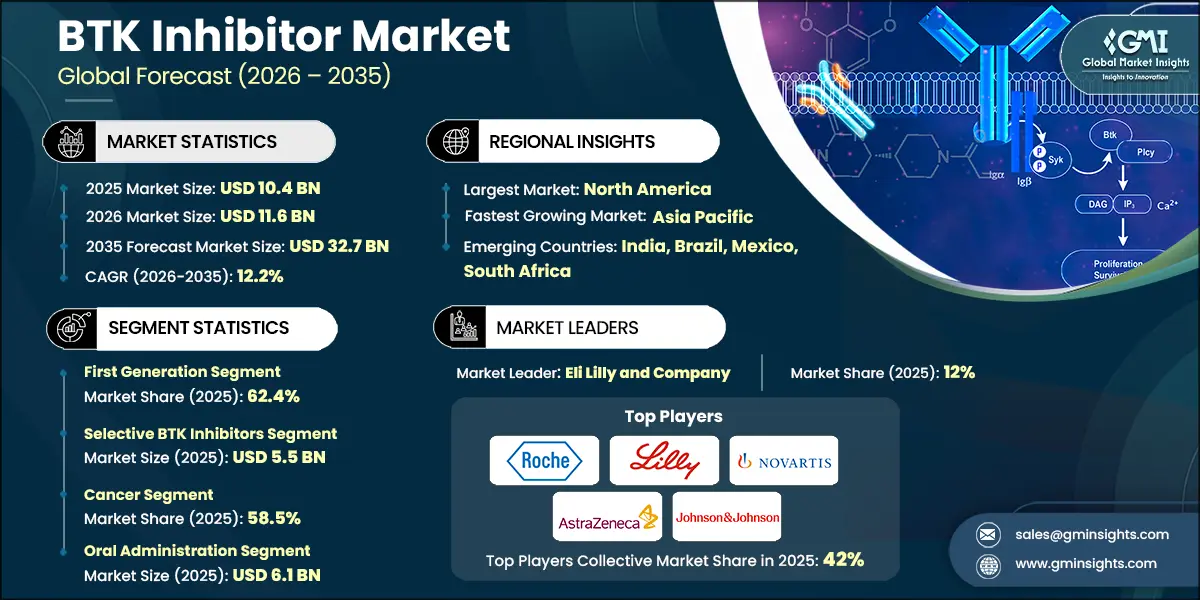
To get key market trends
BTK Inhibitor Market Trends
- Bruton's tyrosine kinase (BTK) inhibitors are proving to be relevant in reforming treatment procedures for different types of cancers and autoimmune disorders. Initially, these inhibitors were developed for several forms of cancers in the hematologic region and advanced significantly for B-cell type malignancies, such as chronic lymphocytic leukemia and mantle cell lymphoma.
- Additional technologies, such as acalabrutinib (Calquence) and zanubrutinib (Brukinsa), were developed to address the first BTK inhibitor, ibrutinib (Imbruvica). The second-generation inhibitors are more BTK-selective, lowering off-target engagements and side effects, which has also enhanced their use in clinical practice.
- Furthermore, BTK inhibitors are being paired with other therapies to broaden their effectiveness. For instance, clinical studies have proven that when acalabrutinib is combined with venetoclax (AV), it significantly improves progression-free survival (PFS) in patients with untreated chronic lymphocytic leukemia (CLL) compared to chemoimmunotherapy.
- Moreover, research has indicated significant progress in B-cell type malignancies and non-Hodgkin lymphoma with BTK inhibitors combined with anti-CD20 monoclonal antibodies, such as ibrutinib and rituximab.
- Additionally, combinations with checkpoint inhibitors are being studied for synergistic immune system modulation and greater antitumor effects. These factors are expected to propel market growth.
BTK Inhibitor Market Analysis
 Learn more about the key segments shaping this market
Learn more about the key segments shaping this market
Based on type, the BTK inhibitor market is segmented into first generation and second generation. The first generation segment was valued at USD 6.5 billion in 2025 and held a significant market share of 62.4%.
- First-generation BTK inhibitors, such as Ibrutinib, have shown significant clinical benefits for conditions including chronic lymphocytic leukemia (CLL), mantle cell lymphoma, and Waldenström macroglobulinemia. The use of Ibrutinib has improved survival rates and slowed disease progression in these cancers.
- For example, a study published by the National Institute of Health states that Ibrutinib, an FDA-approved drug designed to target Bruton’s tyrosine kinase (BTK), a protein essential for the growth and survival of B-cells, has demonstrated significant clinical efficacy in treating patients with CLL.
- Moreover, first-generation BTK inhibitors, including Ibrutinib, can be taken orally, which provides an advantage over intravenous therapies. This non-invasive method makes treatment easier for patients, improving adherence and overall compliance.
- Additionally, targeting Bruton’s tyrosine kinase (BTK), a critical enzyme that mediates B-cell receptor signaling, reduces the side effects associated with conventional chemotherapy. This targeted approach increases precision in therapy, contributing to market expansion.
Based on drug type, the BTK inhibitor market is bifurcated into selective BTK inhibitors, non-selective BTK inhibitors, and dual BTK inhibitors. The selective BTK inhibitors segment accounted for a revenue share of 52.5% and with revenue of USD 5.5 billion in 2025.
- Selective BTK inhibitors, such as Acalbrutinib (Calquence) and Zanubrutinib (Brukinsa), offer higher accuracy in targeting Bruton’s tyrosine kinase (BTK). Their increased specificity allows for better targeting of BTK while minimizing interference with other kinases, thereby reducing off-target effects.
- For instance, a study conducted by the European Society for Medical Oncology indicates that Acalbrutinib has greater selectivity compared to Ibrutinib among BTK inhibitors.
- Furthermore, these inhibitors are less likely to cause adverse effects, such as atrial fibrillation, bleeding tendencies, and gastrointestinal problems, which are more common with first-generation inhibitors. This improved safety profile enhances patient compliance and quality of life, particularly for those on prolonged therapy.
- Additionally, selective BTK inhibitors have a more favorable safety profile for patients with pre-existing cardiovascular conditions. For example, the National Comprehensive Cancer Network (NCCN) Clinical Practice Guidelines in Oncology state that second-generation covalent BTK inhibitors, such as Acalbrutinib and Zanubrutinib, have shown a lower incidence of atrial fibrillation (AF) and ventricular arrhythmias (VAs). These factors make them preferred treatment options, driving market growth.
Based on application, the BTK inhibitor market is bifurcated into cancer, autoimmune diseases, inflammatory disorders, and other applications. Further, the cancer segment is segmented into chronic lymphocytic leukemia (CLL), follicular lymphoma, mantle cell lymphoma, marginal zone lymphoma, small lymphocytic lymphoma (SLL), waldenstrom macroglobulinemia, and other selective b cell malignancies. The cancer segment accounted for a 58.5% market share in 2025.
- The increasing global prevalence of cancer, such as B-cell malignancies such as chronic lymphocytic leukemia (CLL) and non-Hodgkin lymphomas (NHL), is driving the demand for targeted therapies and expanding the BTK inhibitors market.
- For instance, according to the National Cancer Institute, the rate of new cases of diffuse large B-cell lymphoma was 5.5 per 100,000 men and women per year, while the death rate was 1.7 per 100,000 men and women per year from 2017 to 2021 in the U.S. population.
- BTK inhibitors demonstrate higher efficiency in targeting malignant B cells at low doses, reducing harm to healthy tissues. This precision makes them particularly valuable in treating B-cell malignancies, enhancing therapeutic outcomes while minimizing adverse effects.
- Furthermore, the development of new targeted therapies, such as monoclonal antibodies and antibody-drug conjugates (ADCs), necessitates the use of high-potency active pharmaceutical ingredients (HPAPIs) such as BTK inhibitors. These agents are specifically designed to target cancerous B cells.
- For example, in March 2024, the U.S. FDA approved Zanubrutinib (Brukinsa) in combination with obinutuzumab (Gazyva) for treating adults with follicular lymphoma that has relapsed or progressed after prior therapy. This approval highlights the expanding role of BTK inhibitors in managing B-cell malignancies and their contribution to market growth.
Based on route of administration, the BTK inhibitor market is bifurcated into oral administration, intravenous administration, and subcutaneous administration. The oral administration segment accounted for a revenue of USD 6.1 billion in 2025.
- Oral BTK inhibitors, such as FDA-approved Ibrutinib, Acalabrutinib, and Zanubrutinib, can be taken in pill form. This convenience promotes adherence to treatment schedules, particularly for long-term therapies, as the medication can be taken at home.
- Additionally, oral medication bypasses the risks and complications associated with vascular access devices, such as infections, vein inflammation, or allergic reactions to materials used during infusion. Enhanced safety is crucial for patients with weakened immune systems.
- The oral formulation of BTK inhibitors is designed for gradual release, ensuring consistent drug concentration levels in the blood. This controlled delivery leads to sustained inhibition of bruton's tyrosine kinase, eliminating the need for therapeutic overdosing seen with other administration routes.
- For instance, Acalabrutinib has shown improved selectivity with fewer off-target effects compared to first-generation inhibitors, contributing to better patient outcomes and driving market growth.
Learn more about the key segments shaping this market
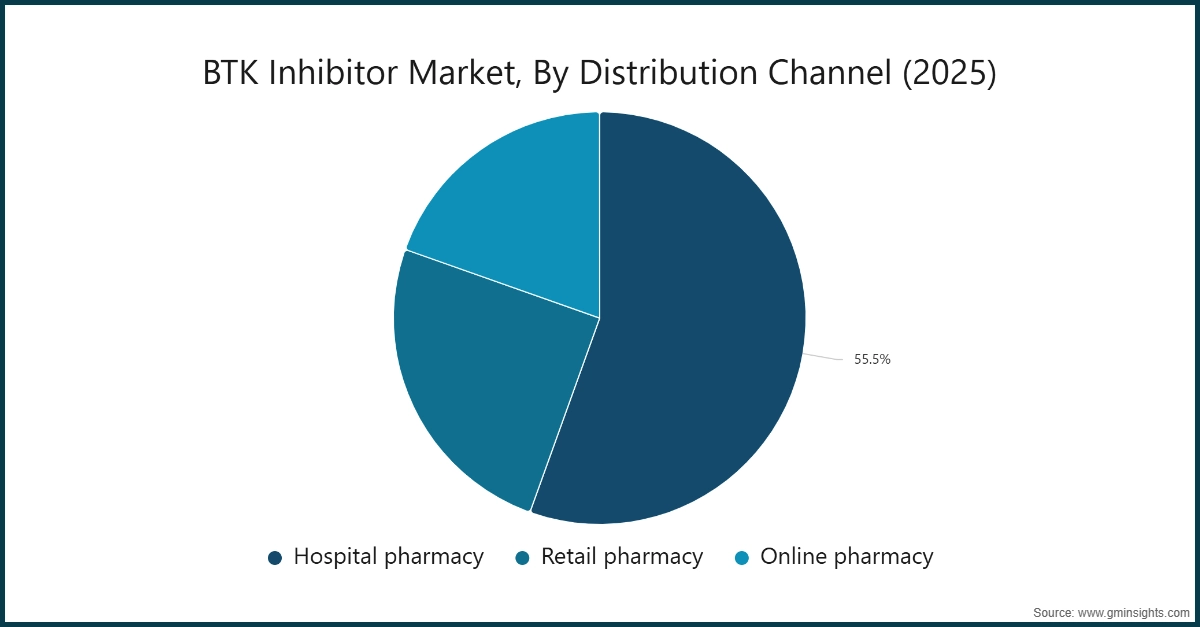
Based on distribution channel, the BTK inhibitor market is bifurcated into hospital pharmacy, retail pharmacy, and online pharmacy. The hospital pharmacy segment accounted for a 55.5% market share in 2025.
- The dominance of this segment is primarily attributed to the specialized care provided in hospital settings. Hospital pharmacies ensure secure access to BTK inhibitor drugs, particularly for newly diagnosed patients or those with complex cases requiring close medical supervision.
- Hospital pharmacies also educate patients about these medications, their side effects, and proper usage. They provide personalized counseling, helping patients understand the differences between various formulations, such as oral and injectable options for treating cancer.
- Furthermore, these pharmacies offer services such as patient support programs, medication management, closer monitoring of treatment responses, and collaboration with healthcare professionals. These efforts improve patient adherence to prescribed therapies, enhance treatment efficiency, and contribute to market growth.
Looking for region specific data?
North America BTK Inhibitor Market
The North America region accounted for 40.4% of the global BTK inhibitor industry in 2025. The North America market is experiencing robust expansion, driven by the region’s advanced healthcare infrastructure and technological advancements.
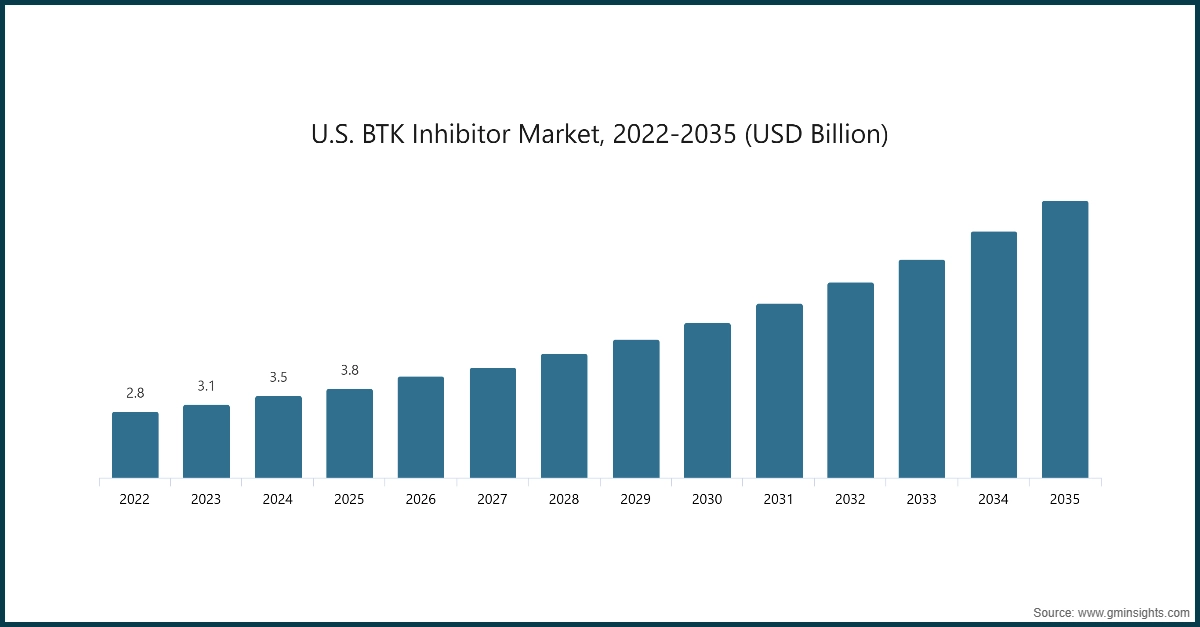
- The U.S. BTK inhibitor market was valued at USD 2.8 billion and USD 3.1 billion in 2022 and 2023, respectively. In 2025 the market size increased to USD 3.8 billion from USD 3.5 billion in 2024.
- The increasing incidence of cancer in the U.S. drives demand for BTK inhibitors, specifically for targeted therapies to treat various types of cancers. For instance, according to the National Cancer Institute, in 2024, it is estimated that 2,001,140 new cases of cancer will be diagnosed in the U.S., with 611,720 fatalities resulting from the disease.
- Additionally, the U.S. Food and Drug Administration (FDA) has implemented rigorous standards for BTK inhibitors, escalating the development of new drugs in the U.S. with enhanced safety, efficacy, and stability to meet the growing demand for effective treatments.
Europe BTK Inhibitor Market
Europe BTK inhibitor industry accounted for USD 2.3 billion in 2025 and is anticipated to show lucrative growth over the forecast period.
- The growth of the BTK inhibitor market in Europe is primarily attributed to the rising prevalence of chronic diseases and increasing government initiatives aimed at strengthening healthcare infrastructure across the region. Healthcare providers across the region are increasingly adopting BTK inhibitors to enhance treatment outcomes, reduce disease progression, and support personalized oncology care.
- Continuous advancements in BTK inhibitor drug design, including the development of next-generation and non-covalent BTK inhibitors with improved selectivity and fewer adverse effects, are accelerating market adoption in Europe. These innovations support better tolerability, efficacy against resistant mutations, and seamless integration into evolving treatment guidelines for cancers.
Germany's BTK inhibitor market is projected to experience steady growth between 2026 and 2035.
- The growing aging population in Germany is a major driver for the increasing use of BTK inhibitors. According to Statista, in 2024, individuals aged 40–59 represent the largest age group at approximately 22.3 million, while those aged sixty-five and older account for around 19 million. This demographic trend increases the demand for targeted therapies such as BTK inhibitors in oncology clinics and long-term care settings.
- Germany is emerging as a significant market for BTK inhibitors, supported by its advanced healthcare infrastructure, strong hematology-oncology expertise, and rising adoption of targeted therapies for chronic lymphoid cancers. The country’s well-established cancer treatment ecosystem enables broader utilization of BTK inhibitors for both newly diagnosed and relapsed patients.
- Public-private initiatives and investments in modernizing oncology services are accelerating the integration of innovative BTK inhibitor therapies within German hospitals and cancer centers. Efforts to enhance diagnostic pathways, improve treatment accessibility, and upgrade digital health systems support timely therapy initiation, improve disease management, and drive overall BTK inhibitor industry growth in Germany.
Asia Pacific BTK Inhibitor Market
The Asia Pacific region is projected to show a lucrative growth of about 12.8% during the forecast period.
- The BTK inhibitor industry in Asia-Pacific is experiencing rapid growth, driven by the rising prevalence of chronic diseases, growing awareness of early diagnosis, and increasing demand for targeted therapies across hospitals and oncology centers.
- Countries such as China, India, and Japan are adopting next-generation BTK inhibitors at a fast pace, supported by significant improvements in cancer care infrastructure and the need for effective long-term management of chronic lymphoid disorders. These nations are increasingly integrating both covalent and non-covalent BTK inhibitors into treatment protocols to enhance outcomes and manage resistant disease variants.
- Additionally, the expansion of hospitals and cancer institutes, combined with government initiatives aimed at strengthening oncology services and promoting the integration of precision medicine, is further accelerating BTK inhibitor market growth in the region. Efforts to improve clinical trial capacity, expand access to innovative therapies, and encourage the adoption of digital healthcare tools are boosting the overall market momentum.
China BTK inhibitor market is poised to witness lucrative growth between 2026 - 2035.
- China's aging population is driving the adoption of BTK inhibitors.
- According to WHO estimates (2019), approximately 254 million people aged 65 and above were living in China, and this number is projected to reach around 402 million individuals over the age of 60 by 2040. Thus, this increasing disease burden has surged the demand for effective therapies, escalating the growth of the BTK inhibitor market.
- Further, China also has leading pharmaceutical companies with significant capabilities in drug development, including BTK inhibitors.
Latin America BTK Inhibitor Market
Brazil is experiencing significant growth in the BTK inhibitor industry.
- The growth of the market in Brazil is strongly driven by the rising prevalence of chronic diseases and advancements in targeted cancer therapies. Hospitals and oncology facilities across the country are increasingly adopting BTK inhibitors to enhance treatment precision, improve patient outcomes, and provide effective long-term management for hematologic malignancies.
- Furthermore, government initiatives and private investments in modernizing oncology infrastructure are accelerating the adoption of innovative BTK inhibitor therapies, including next-generation and highly selective molecules. These advancements strengthen diagnostic capabilities, enable timely therapeutic interventions, and improve overall cancer care delivery, driving sustained growth of the BTK inhibitor industryin Brazil.
Middle East and Africa BTK Inhibitor Market
- Saudi Arabia is also experiencing a shift in population demographics. For instance, the number of people aged 60 and above is expected to increase fivefold from 2 million (5.9% of the total population) in 2020, reaching 10.5 million by 2050.
- Such significant trends in the aging population are expected to increase the demand for BTK inhibitor ingredients in the coming years.
- Additionally, Saudi Arabia’s advanced healthcare infrastructure and rising investments in advanced healthcare technologies create opportunities for the development and adoption of advanced BTK inhibitors tailored to the country’s patient-specific needs.
BTK Inhibitor Market Share
- The top five players in the BTK inhibitor industry, Eli Lilly and Company, AstraZeneca, Johnson and Johnson, F. Hoffmann-La Roche Ltd, and Novartis, collectively hold a 42% share of the global market. These companies strengthen their market positions through continuous innovation in BTK drug development, extensive clinical trial programs, and strategic collaborations aimed at addressing resistance mutations and improving therapeutic outcomes. Leading players are heavily investing in R&D to develop next-generation BTK inhibitors, including improved selectivity profiles and options for patients with C481S-mediated resistance.
- Johnson & Johnson through Janssen Pharmaceuticals maintains a strong leadership position in the BTK inhibitor market as a co-developer of IMBRUVICA (ibrutinib), one of the earliest and highest-revenue BTK inhibitors. J&J continues to focus on expanding clinical applications, optimizing treatment sequencing, and developing next-generation BTK strategies to strengthen its presence in hematologic oncology.
- Manufacturers are also adopting cost-effective strategies to penetrate emerging markets by expanding access to BTK therapies and exploring combination treatment regimens. Companies are prioritizing the development of highly selective inhibitors, oral formulations, and therapies suitable for broader patient populations, particularly in regions with a rising prevalence of B-cell malignancies and increasing demand for advanced targeted treatments.
- Emerging trends in the BTK inhibitor market include next-generation reversible inhibitors, combination-based regimens, and ongoing efforts to overcome drug resistance through innovative molecular designs. Companies are increasingly leveraging precision medicine approaches, biomarker-driven treatment pathways, and expanded therapeutic applications in autoimmune diseases, all of which are reshaping global market growth and accelerating adoption.
BTK Inhibitor Market Companies
Few of the prominent players operating in the BTK inhibitor industry include:
- Amgen
- AstraZeneca
- Agilent Technologies
- Bristol Myers Squibb
- Celgene
- Biogen
- Eli Lilly and Company
- F. Hoffmann-La Roche Ltd
- Gilead Sciences
- Johnson and Johnson
- Incyte
- Merck and Co
- Novartis
- Sanofi
- Takeda Pharmaceutical
Eli Lilly leads the BTK inhibition space with pirtobrutinib (Jaypirca), the first and only approved non-covalent BTK inhibitor. This provides a unique advantage, as it retains activity in patients previously treated with covalent BTK inhibitors.
Johnson & Johnson’s Imbruvica holds a strong position in the BTK inhibitor market as one of the earliest and most widely adopted covalent BTK inhibitors. Its competitive strength lies in its multiple approved indications, including CLL, mantle cell lymphoma, Waldenström macroglobulinemia, and chronic graft-versus-host disease.
Novartis strengthens its position in the BTK inhibitor market with remibrutinib (Rhapsody), a highly selective oral BTK inhibitor approved for chronic spontaneous urticaria. The company’s advantage stems from its superior selectivity profile, strong symptom-control outcomes across urticaria subtypes, and active expansion into additional immunology indications, supported by ongoing global regulatory submissions.
BTK Inhibitor Market Report Attributes
| Key Takeaway | Details |
|---|---|
| Market Size & Growth | |
| Base Year | 2025 |
| Market Size in 2025 | USD 10.4 Billion |
| Market Size in 2026 | USD 11.6 Billion |
| Forecast Period 2026-2035 CAGR | 12.2% |
| Market Size in 2035 | USD 32.7 Billion |
| Key Market Trends | |
| Drivers | Impact |
| Rising prevalence of cancers and autoimmune diseases | The increasing incidence of B-cell malignancies such as CLL, MCL, and WM is driving the clinical need for targeted oral therapies, leading to higher adoption of BTK inhibitors across hospitals, specialty oncology centers, and long-term treatment settings. |
| Advancements in targeted therapies | Next-generation BTK inhibitors with improved selectivity and reduced off-target toxicity are gaining clinical preference, enabling broader patient eligibility and improving treatment outcomes while supporting sustained market penetration. |
| Ongoing research and development | Continuous clinical studies on covalent and non-covalent BTK inhibitors, including resistance-overcoming molecules, are expanding therapeutic applications, increasing combination therapy potential, and strengthening the role of BTK inhibition in long-term disease management. |
| Increasing focus on personalized medicine | The growing use of biomarker-based patient profiling and mutation-driven treatment selection is supporting tailored BTK inhibitor regimens, driving greater adoption among high-risk patient groups and increasing global utilization. |
| Pitfalls & Challenges | Impact |
| High cost of BTK inhibitors | The high cost of BTK inhibitors limits access in cost-sensitive healthcare systems and restricts integration into standard treatment pathways in emerging regions, slowing adoption and reducing penetration among economically constrained patient populations. |
| Stringent regulatory | Expanding oncology networks and improved diagnostic capabilities in developing regions are increasing the identification of eligible patients for BTK inhibitors, enabling wider therapy access and supporting long-term market growth. |
| Opportunities: | Impact |
| Rising healthcare infrastructure in emerging markets | Expanding oncology networks and improved diagnostic capabilities in developing regions are increasing the identification of eligible patients for BTK inhibitors, enabling wider therapy access and supporting long-term market growth. |
| Market Leaders (2025) | |
| Market Leader |
12% market share |
| Top Players |
Collective market share in 2025 is 42% |
| Competitive Edge |
|
| Regional Insights | |
| Largest Market | North America |
| Fastest growing market | Asia Pacific |
| Emerging countries | India, Brazil, Mexico, South Africa |
| Future outlook |
|
What are the growth opportunities in this market?
BTK Inhibitor Industry News:
- In January 2025, AstraZeneca’s announced that it has received U.S. FDA approval for Calquence (acalabrutinib), in combination with bendamustine and rituximab to treat patients with mantle cell lymphoma (MCL). This approval expands AstraZeneca’s market reach, boost sales and strengthens its position in oncology market.
- In February 2024, Johnson & Johnson, in collaboration with Pharmacyclics LLC, an AbbVie company, announced that the U.S. FDA had approved a label expansion for IMBRUVICA (ibrutinib) to include an oral suspension formulation for adult patients with CLL/SLL, WM, and cGVHD after failure of one or more lines of systemic therapy. This expansion broadened treatment flexibility for patients with swallowing difficulties, strengthening the company’s product accessibility and reinforcing IMBRUVICA’s competitive position in the market.
The BTK inhibitor market research report includes an in-depth coverage of the industry with estimates and forecast in terms of revenue in USD Million and from 2022 - 2035 for the following segments:
Market, By Type
- First generation
- Second generation
Market, By Drug Type
- Selective BTK inhibitors
- Non-selective BTK inhibitors
- Dual BTK inhibitors
Market, By Application
Cancer
- Chronic lymphocytic leukemia (CLL)
- Follicular lymphoma
- Mantle cell lymphoma
- Marginal zone lymphoma
- Small lymphocytic lymphoma (SLL)
- Waldenstrom macroglobulinemia
- Other selective B cell malignancies
- Autoimmune diseases
- Systemic lupus erythematosus (SLE)
- Rheumatoid arthritis (RA)
- Multiple sclerosis (MS)
- Immune thrombocytopenia (ITP)
- Inflammatory disorders
- Inflammatory bowel disease (IBD)
- Asthma and allergic diseases
- IgG4-Related diseases
- Vasculitis
- Other applications
Market, By Route of Administration
- Oral administration
- Intravenous administration
- Subcutaneous administration
Market, By Distribution Channel
- Hospital pharmacy
- Retail pharmacy
- Online pharmacy
The above information is provided for the following regions and countries:
- North America
- U.S.
- Canada
- Europe
- Germany
- UK
- France
- Italy
- Spain
- Netherlands
- Asia Pacific
- China
- India
- Japan
- Australia
- South Korea
- Latin America
- Brazil
- Mexico
- Argentina
- Middle East and Africa
- Saudi Arabia
- South Africa
- UAE
Frequently Asked Question(FAQ) :
What was the market size of the BTK inhibitor in 2025?
The market size was valued at USD 10.4 billion in 2025, with a CAGR of 12.2% expected through 2035. The growth is driven by the rising prevalence of cancers and autoimmune diseases, advancements in targeted therapies, and increasing focus on personalized medicine.
What is the projected value of the BTK inhibitor market by 2035?
The market is projected to reach USD 32.7 billion by 2035, fueled by ongoing research and development, as well as innovations in targeted therapies.
What is the expected size of the BTK inhibitor industry in 2026?
The industry is projected to reach USD 11.6 billion in 2026.
What was the valuation of the first-generation BTK inhibitor segment in 2025?
The first-generation segment was valued at USD 6.5 billion in 2025, supported by strong adoption of therapies like ibrutinib.
How much revenue did the selective BTK inhibitors segment generate in 2025?
Selective BTK inhibitors generated USD 5.5 billion in 2025, accounting for 52.5% of the segment share.
What was the market share of the cancer application segment in 2025?
The cancer segment held a 58.5% share in 2025, driven by increasing cases of B-cell malignancies.
Which region led the BTK inhibitor sector in 2025?
North America led the global market with a 40.4% share in 2025. The market is driven by the region’s advanced healthcare infrastructure and technological advancements.
What are the upcoming trends in the BTK inhibitor market?
Key trends include expanding use of targeted therapies, increased R&D, development of improved BTK-selective inhibitors, reduced off-target effects, and rising adoption in oncology and autoimmune disorders.
Who are the key players in the BTK inhibitor industry?
Key players include Amgen, AstraZeneca, Agilent Technologies, Bristol Myers Squibb, Celgene, Biogen, Eli Lilly and Company, F. Hoffmann-La Roche Ltd, Gilead Sciences, Johnson & Johnson, Incyte, Merck & Co., Novartis, Sanofi, and Takeda Pharmaceutical.
BTK Inhibitor Market Scope
Related Reports