Summary
Table of Content

Bioink Market
Get a free sample of this report
Form submitted successfully!
Error submitting form. Please try again.
Thank you!
Your inquiry has been received. Our team will reach out to you with the required details via email. To ensure that you don't miss their response, kindly remember to check your spam folder as well!
Request Sectional Data
Thank you!
Your inquiry has been received. Our team will reach out to you with the required details via email. To ensure that you don't miss their response, kindly remember to check your spam folder as well!
Form submitted successfully!
Error submitting form. Please try again.
Bioink Market Size
The market is driven by numerous factors such as an increase in demand for 3D-printed tissue and organs, advancement in bioprinting technologies, growing application in regenerative medicine, and a rise in prevalence of chronic disease and organ failure, among other factors.
Bioink Market Key Takeaways
Market Size & Growth
- 2025 Market Size: USD 88.1 Million
- 2026 Market Size: USD 99.1 Million
- 2035 Forecast Market Size: USD 303.2 Million
- CAGR (2026–2035): 13.2%
Regional Dominance
- Largest Market: North America
- Fastest Growing Region: Asia Pacific
Key Market Drivers
- Rising application in regenerative medicine.
- Increase in demand for 3D printed tissue and organs.
- Rise in prevalence of chronic disease and organ failure.
- Advancement in bioprinting technologies.
Challenges
- Stringent approval filing process.
- High manufacturing cost.
Opportunity
- Innovations in nanomaterial-based bioinks.
- AI-driven optimization of bioink formulations.
Key Players
- Market Leader: CELLINK (BICO) led with over 16% market share in 2025.
- Leading Players: Top 5 players in this market include CELLINK (BICO), ALLEVI (3D SYSTEMS), MERCK, CollPlant, BIO INX, which collectively held a market share of 45% in 2025.
Get Market Insights & Growth Opportunities
Advancements in biomaterials and hydrogel technologies and growing demand for organ and tissue transplantation alternatives are expected to fuel the industry's growth. CELLINK (BICO), ALLEVI (3D SYSTEMS), MERCK, CollPlant, BIO INX, and AXOLOTL BIOSCIENCES are among the leading players operating in the market. These players mainly focus on product innovation, geographic expansion, strong R&D, and collaboration with local or regional players, among others.
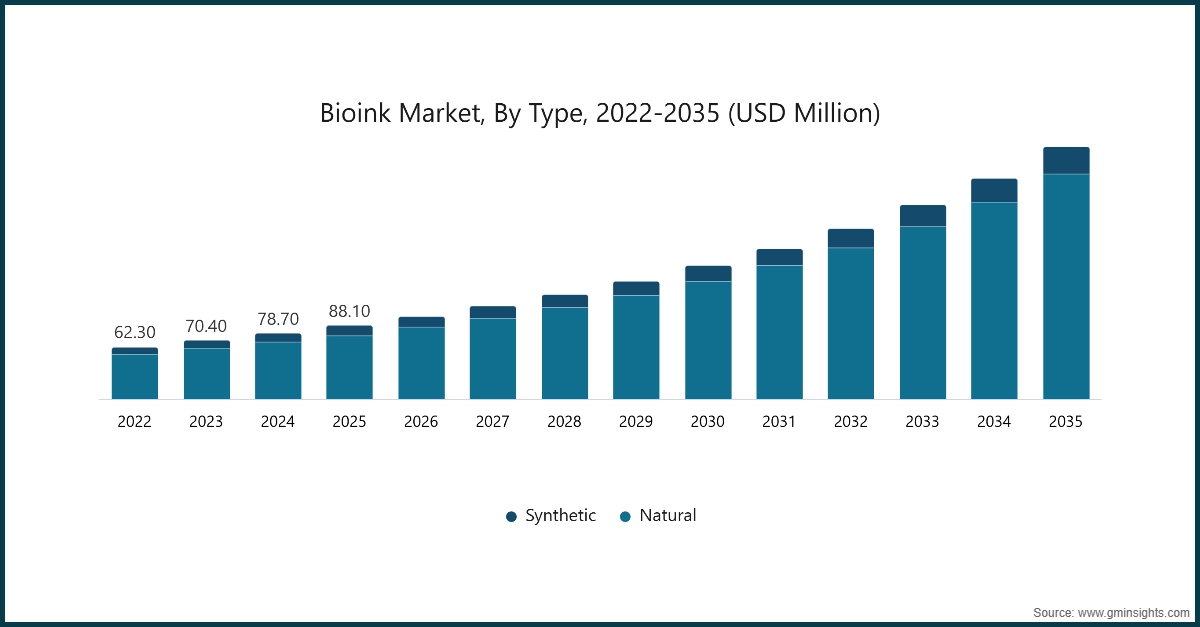
The market has increased from USD 62.3 million in 2022 and reached USD 78.7 million in 2024, with a historic growth rate of 12.5%. The increasing adoption of regenerative medicine is driving rapid growth in the bioink and bioprinting market. Bioinks are essential for developing functional tissue constructs that closely resemble the structure and complexity of native biological environments, as researchers are looking for ways to repair or replace damaged tissues. Hospitals, biotechnology companies, and academic institutions are using bioprinting technology to create skin grafts, bone patches, vascular structures, and organoid models that facilitate healing and decrease the reliance on donor tissue. The shift towards personalized regenerative therapies also increases the demand for bioinks designed particularly for a specific cell type and microenvironment. Thus, this growing clinical and preclinical adoption of bioinks is contributing to continued market growth.
Additionally, the global surge in chronic diseases such as diabetes, kidney failure, liver dysfunction, and cardiovascular disorders may lead to an increase in the need for alternative treatment methods. Numerous people are waiting for a transplant as there is a shortage of donor organs available. For example, according to the statistics reported by the Health Resources and Services Administration's (HRSA) Organ Procurement and Transplantation Network, around 89,792 patients in the U.S. were on the waiting list for their kidney transplant as of September 2024. Due to this lack of donors, bioprinting may help produce functional tissues for patients in the future. An important part of this process is creating disease-specific bioinks that replicate a pathophysiological condition, allowing testing of new treatments more easily and enabling bioprinting technology to advance more rapidly in the future.
Further advancements such as enhanced print quality, multi-material printing technologies, improved automated calibration systems, and crosslinkable chemistries are expected to continue to drive the bioink market and bioprinting technology. The modern generation of bioprinters can now create detailed, structurally stable, and cell-compatible structures that were not possible with earlier generation printers. Improved hardware and software systems have enabled greater print accuracy of soft tissues, hard tissues, vascular networks, and complex organoids available earlier. These advancements are expected to be more attractive to a broader range of institutions, including academia, pharma, and regenerative medicine, thus fueling the demand for specifically formulated bioinks tailored to suit the new printing technologies. As bioprinting continues to become more widely implemented and versatile, ongoing technological innovations are anticipated to continue to advance the development and commercialization of bioinks.
Bioink is a biocompatible material containing living cells and supportive biomolecules, designed for 3D bioprinting to create structured, functional tissues that mimic natural biological environments for research, therapeutic, or regenerative applications.
The global bioink market was estimated at USD 88.1 million in 2025. The market is expected to grow from USD 99.1 million in 2026 to USD 303.2 million in 2035, at a CAGR of 13.2% during the forecast period, according to the latest report published by Global Market Insights Inc.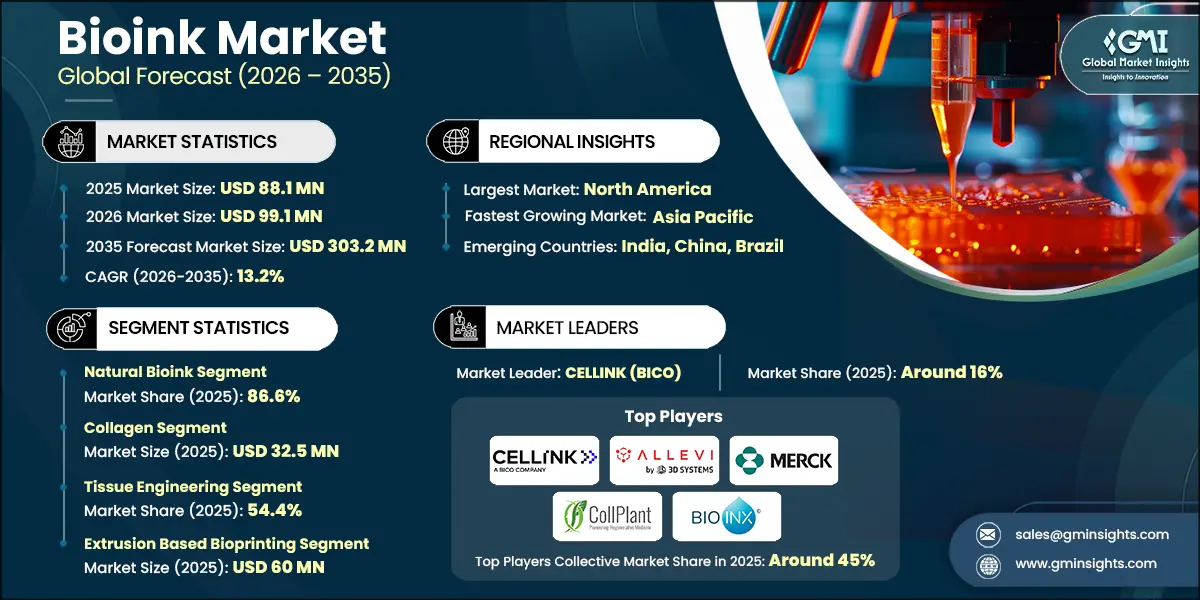
To get key market trends
Bioink Market Trends
The shift toward personalized and regenerative therapies, growing collaboration between bioprinting tech firms and academia, advancements in biomaterials and multi-material printing, and expansion of 3D bioprinting in pharmaceutical R&D are among the key trends shaping the market growth.
- Due to the growing trend among people towards customized treatment for their specific diagnosis and condition, the demand for bioinks that are used to develop a patient's unique tissue construct has witnessed significant growth.
- With advances in understanding of stem cells and improvements in biocompatible materials, it is now possible to create genetically specific grafts, organoids, and implants. This has led to greater usage of regenerative medicine while decreasing dependence on donated tissues, thereby increasing the chances of success for patients undergoing these therapies.
- Innovative joint development programs that integrate engineering expertise and biological research may help to bring new breakthroughs within tissue engineering and regenerative medicine faster than ever before.
- Bioinks can now support this innovation through industry-standard bioprinters used by universities for translational research, as well as by companies to develop new validated protocols and applications for their products. In addition, the collaboration between universities and companies will help to increase the overall usage of tissue engineering and regenerative medicine globally and speed up the pace of development of new products.
- Additionally, innovations in the areas of hydrogels, nanomaterials, and smart biomaterials enable higher-quality, multi-faceted, functional tissue construct development through multi-material 3D printing. By enabling simultaneous deposition of cells, scaffolds, and signaling molecules, 3D printing with multiple materials more closely resembles the native microenvironments of the body.
- Furthermore, the use of bioprinted tissues by pharmaceutical companies continues to grow and increasingly becomes an integral part of their drug discovery processes. Bioprinted tissues are high-fidelity models that improve predictive accuracy, reduce the need for animal testing, and increase the speed of candidate screening. As more and more drug developers are using bioprinting for toxicity testing and disease model development, the need for bioinks that can be standardized and reproduced is consistently rising.
Bioink Market Analysis
Learn more about the key segments shaping this market
Based on type, the global bioink market is segmented into natural bioink and synthetic bioink. The natural bioink segment accounted for a dominating share of 86.6% in 2025. Growing demand for organ and tissue transplantation alternatives is anticipated to fuel the segmental growth. The segment is expected to reach USD 271.3 million by 2035, growing at a CAGR of 13.6% during the forecast period.
- Biologically sourced materials (i.e., collagen, gelatin, alginate, fibrin, hyaluronic acid, decellularized extracellular matrix) are commonly referred to as bio-mechano-chemical inks because of their ability to provide excellent cellular attachment, growth of cells, and differentiation into various types of tissues.
- All of these bio-mechano-chemical inks closely resemble the extracellular matrix, providing greater physiological relevance in creating tissue that can be used in regenerative medicine, organ-on-chip systems, and in vitro disease modeling.
- Additionally, the high levels of cell viability and bioactivity from these natural inks support their increasing use and interest among researchers across academic, biomedical, and clinical applications.
- However, variability in mechanical strength and batch consistency remains a challenge, encouraging ongoing innovation to improve stability and printability.
- The synthetic bioink segment was valued at USD 11.8 million in 2025. Bioinks made from synthetic materials (for example, polylactic acid, polycaprolactone, etc.) are able to deliver mechanical properties that have been engineered with precise control over mechanical characteristics and are predictable for their application.
- Further, the major advantage of synthetics is that researchers can create any combination of the mechanical features by varying the concentration of different components: stiffness, rate of degradation, and crosslinking behavior to match specific application needs.
- Generally, bioinks made from synthetic materials may have a greater level of mechanical integrity and reproducibility than bioinks made from natural materials. They are well suited for applications that involve printing load‑bearing tissues, complex geometrical structures, and high-resolution printed parts.
- Lastly, their consistency and engineering flexibility drive increasing adoption across advanced bioprinting applications.
Based on material, the global bioink market is segmented into collagen, alginate, gelatin, agarose, chitosan, Pluronic, and other materials. The collagen segment accounted for a leading share and was valued at USD 32.5 million in 2025.
- Collagen is abundant in the environment and biocompatible. Since its structure is similar to that of the extracellular matrix (ECM) within the body, collagen has become widely accepted as a bioink. It is therefore possible to create a three-dimensional structure to grow cells for cell culture.
- Collagen provides an optimal environment for cell attachment, migration, and differentiation; therefore, it is the material of choice for creating engineered skin, cartilage, cardiac tissues, connective tissues, etc.
- In addition, by using a fibrillar network from collagen, the cells are able to behave more physiologically, which in turn allows for increased maturation and functional organization of the developing tissue. The gentle gelation of collagen allows for the encapsulation of sensitive cell types that may not survive the print process.
- However, pure collagen has very low mechanical strength; therefore, to improve the mechanical properties of the printed structure, collagen is commonly blended with gelatin, alginate, or synthetic polymers.
- The alginate segment was valued at USD 18.1 million in 2025. Alginate is a hydrogel material made from brown seaweed. It is a popular hydrogel material in bioinks due to its mild gelation, high biocompatibility, and ease of crosslinking with calcium ions.
- Additionally, Alginate produces stable, tunable hydrogels that encapsulate numerous types of cells with high viability. Alginate is capable of rapid printing and is commonly used for 3D printing soft tissue constructs, organoids, or drug screening models.
- Further, alginate does not have any inherent cell adhesive properties; however, it can be modified in a number of ways (e.g., with RGD peptides or by mixing with collagen or gelatin) to improve its biological functionality. Its structural versatility and controlled gelation make alginate a foundational material in extrusion‑based bioprinting applications.
- The gelatin segment was valued at USD 15.7 million in 2025. Gelatin is a significant bioink formulation ingredient due to its denatured form of collagen, which has a compatible bioactivity profile as well as a low level of immunogenicity. As a bioink, gelatin has been shown to promote cell adhesion, migration, and proliferation, making it beneficial for engineering applications involving vascular, cartilage, bony, and soft tissue.
- Gelatin can easily be mixed with other biomaterials, as well as chemically manipulated to improve its functional characteristics (e.g., solubility, mechanical strengths, and bioactivity).
- Moreover, gelatin readily blends with other materials and can be chemically modified—most commonly into GelMA (gelatin methacryloyl) to achieve photocrosslinking and improved mechanical stability. This versatility provides researchers with control of the resultant printed construct's mechanical properties (i.e., gel stiffness), degradation rate, and ability to be printed.
- Further, while inkjet bioprinting does have limitations when it comes to printing more viscous materials, it plays an important role in high-throughput research, tissue models, and controlled biological patterning for use in regenerative medicine and pharmaceutical applications.
Based on application, the global bioink market is segmented into tissue engineering, medical application, drug discovery & delivery, and other applications. The tissue engineering segment accounted for a leading share of 54.4% in 2025.
- The use of bioinks in tissue engineering allows for the production of functional three-dimensional living constructs that replicate the architecture of native tissue.
- Tissue engineering involves using bioinks in conjunction with living cells, growth factors, and scaffolding materials to produce engineered tissues, such as skin, cartilage, bone, vascular networks, and organoids.
- Additionally, the bioprinted tissues can be used to investigate how cells respond to different environmental conditions or to repair damaged tissue and to facilitate the use of regenerative medicine therapies to expedite healing processes.
- Further, as technology continues to develop and improve, bioprinting applications are being developed to match patient-specific grafts, create models to study the effects of disease, and form complex multi-tissue systems.
- The medical application segment was valued at USD 27 million in 2025. Bioinks are very important to many areas of medicine, such as regenerative medicine, surgical planning, drug testing, and creating implantable medical materials. Bioink allows for the production of 3D bioprinted tissue models to learn and investigate diseases and anticipate how individual patients may respond to drug treatment and improve preclinical testing.
- In clinical practice, bioinks can be used to manufacture skin substitutes, cartilage implants, dental and oral tissues, and wound healing products.
- Furthermore, bioprinted anatomical models provide a means for surgeons to practice complicated surgical techniques with a greater degree of accuracy than possible with a traditional 2D model.
- Moreover, future long-term advances in medical applications include implanting organ systems in patients and creating functional vascular grafts or the ability to produce patient-specific tissue that can be used in treatment. Hence, these biomedical applications improve personalized medicine, decrease reliance on organ donation, and increase the rate of successful clinical outcomes.
Based on printing modality, the global bioink market is segmented into extrusion based bioprinting, ink-jet based bioprinting, and laser-based bioprinting. The extrusion based bioprinting segment accounted for a leading share and was valued at USD 60 million in 2025.
- Extrusion‑based bioprinting is the most widely used modality for fabricating 3D biological constructs due to its ability to print highly viscous bioinks and large cell‑laden structures.
- In addition to allowing for the deposition of hydrogels, cell suspensions, and composite materials appropriately with respect to their viscosity (or thickness) by either pneumatic (compressed air) or mechanical (robotically pushed) force, extrusion bioprinting enables the manufacture of multiple types of materials simultaneously.
- Thus, the ability to mimic the intricate design of human tissues through the incorporation of material gradients in stiffness, chemical composition, and cellular densities is made possible by the flexibility of the extrusion-based bioprinter. For instance, researchers have successfully employed this technology to create engineered cartilage, bone, and skin, as well as vascularized tissues.
- The inkjet-based bioprinting segment was valued at USD 18 million in 2025. Bioink is printed using an inkjet printer (either thermal or piezoelectric) to precisely deposit tiny droplets of bioink onto a substrate.
- The most common use of inkjet bioprinting is for bioinks that are low viscosity and for fine cell, biomolecule, or growth factor patterning. Inkjet bioprinting provides high speeds, cost-effectiveness, and single-cell resolution, allowing for the creation of designs that include complicated structures such as microtissues, organoid arrays, and cell signaling gradients.
- Additionally, inkjet bioprinting is non-contact and drop-on-demand, which reduces the amount of mechanical stress placed on printed cells and increases the viability of the printed cells, including inkjet-printed cells.
- Further, while inkjet bioprinting does have limitations when it comes to printing more viscous materials, it plays an important part in high-throughput research, models of tissues, and controlled biological patterning for use in regenerative medicine and pharmaceutical products.
Learn more about the key segments shaping this market
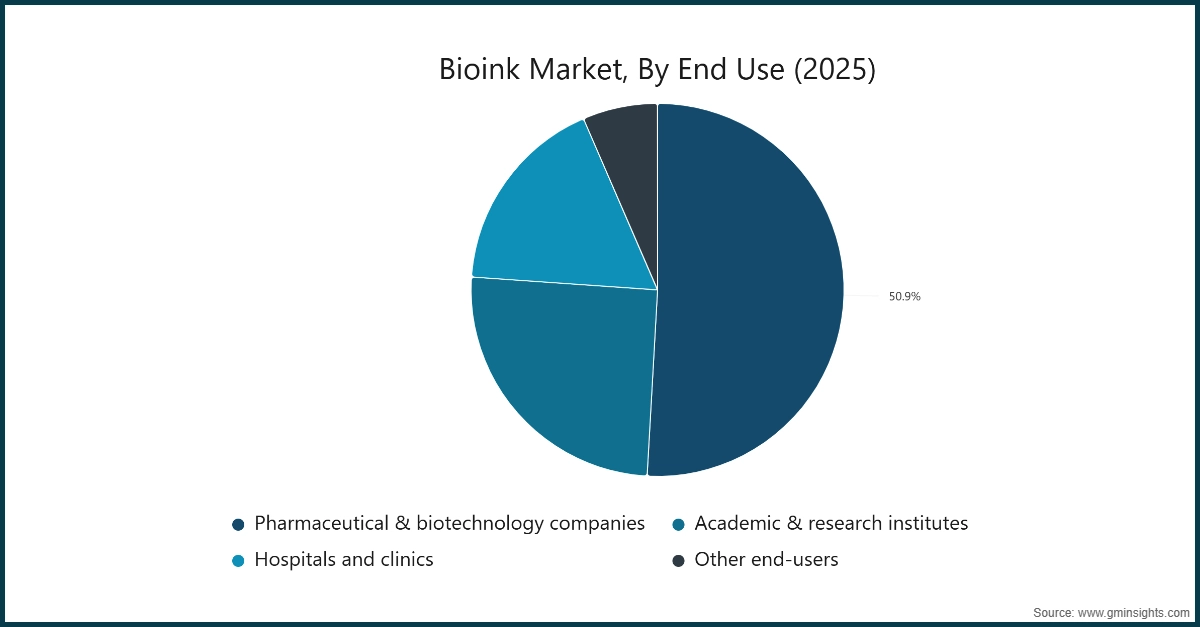
Based on end use, the bioink market is segmented into pharmaceutical & biotechnology companies, academic & research institutes, hospitals & clinics, and other end-users. The pharmaceutical & biotechnology companies segment accounted for the leading market share of 50.9% in 2025.
- Pharma and biotech companies are leveraging the power of bioinks and bioprinting to enhance their ability to discover new drugs, shorten the time required to develop drugs, and create better predictive models during preclinical drug development.
- Additionally, bioprinted tissues allow evaluation of toxicity, efficacy, and disease progression in human‑relevant systems, significantly reducing reliance on animal testing.
- 3D bioprinting also allows pharma and biotech companies to create personalized medicine through patient-specific tumor models that can be used to test different therapies before beginning treatment. There are many other uses for 3D bioprinting, including testing biologics, developing new therapies for regenerative medicine, and the evaluation of new advanced therapies.
- All of these applications promote increased throughput screening and physiological models through advances in bioink development and 3D bioprinting.
- Further, the academic & research institutes segment was valued at USD 22.2 million in 2025. Academic and research institutes remain core drivers of innovation in bioprinting, using bioinks to study cell–matrix interactions, tissue development, and regenerative processes.
- Research and academic institutions are the primary innovators of bioprinting technology and continue to be at the forefront of bioprinting research as a result of their interactions with universities and other non-profit organizations in the field.
- Furthermore, research and academic institutions are continuing their collaborative development of innovative technologies that will support future growth and development of both the science of bioprinting and marketplace opportunities through commercialization.
Looking for region specific data?
North America Bioink Market
North America bioink market accounted for majority share of 43.3% in 2025 in the global bioink market and is anticipated to show notable growth over the forecast period.
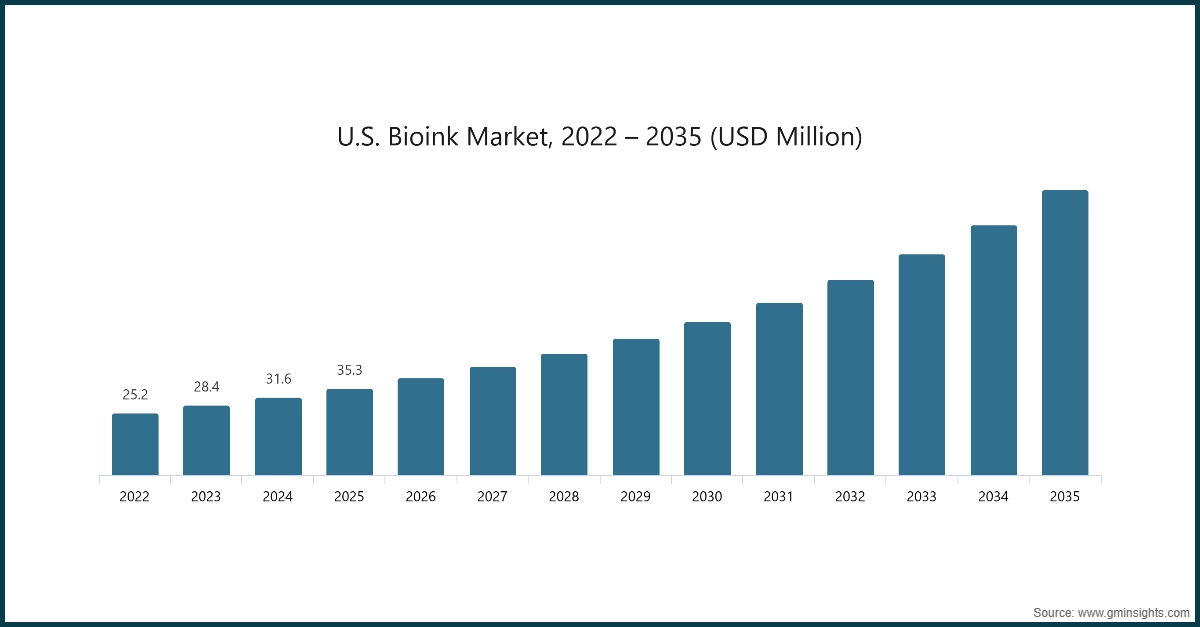
The U.S. bioink market was valued at USD 25.2 million and USD 28.4 million in 2022 and 2023, respectively. In 2025 the market size was valued at USD 35.3 million from USD 31.6 million in 2024. Use of bioinks in regenerative dermatology and wound healing is projected to fuel the market growth.
- With its well-established support systems for biotechnology, significant research and development (R&D), and early adaptation to emerging technologies within the fields of biomedical engineering, North America is the most advanced region for bioprinting and bioinks.
- The U.S. remains at the forefront due to academic-to-industry collaborative relationships, robust research networks related to cell biology, and early integration of bioprinting into regenerative medicine, drug development, and personalized medicine.
- In addition, academic institutions, start-up companies, and larger pharmaceutical companies have begun using bioprinted tissue models when evaluating drug toxicity and conducting research on diseases.
- Furthermore, large investments in developing advanced biomaterials, robotic systems for automation, and using artificial intelligence in bio fabrication provide the U.S. with a competitive advantage over other regions in the area of next-generation tissue engineering solutions.
Europe Bioink Market
Europe accounted for a significant share of the global bioink market and was valued at USD 26.6 million in 2025.
The bioink innovation in Europe is attributed to the presence of advanced biomedical research institutions, cross-disciplinary cooperation, and government-funded initiatives in regenerative medicine.
- Regional countries such as Germany, the UK, the Netherlands, and Sweden are developing bioink standards and advancing chemistry for biomaterials and are also moving bioprinting towards a clinical setting.
- Additionally, European institutions conduct research focus on developing bioprinting with high precision, organ-on-chip technologies, and developing patient-derived disease models. Regulatory, ethical, and quality standards drive the development of clinical-grade bioinks, which provide consistency and reproducibility, thus accelerating their adoption within the medical community.
- Moreover, Europe benefits from the active participation of region-wide research consortia, thus providing a platform for shared innovation in the fields of vascularized tissues, neural models, and musculoskeletal regeneration.
Asia Pacific Bioink Market
The Asia Pacific bioink market accounted for a substantial share of the market and was valued at USD 18 million in 2025.
Asia Pacific is rapidly emerging as a major hub for bioprinting and bioink development, driven by expanding healthcare infrastructure, growing biotechnology investment, and strong government support for advanced manufacturing.
- Additionally, due to the rapid growth in biotechnology and an increase in government support for advanced manufacturing, countries such as China, Japan, South Korea, Australia, and Singapore are adopting bioprinting technologies into their medical systems.
- Further, the region also promotes cost-effective bioinks, scalable biofabrication, and clinically relevant 3D tissue models. Universities are developing biomaterials to manufacture cartilage, skin, and organoid systems specifically with a focus on tissue engineering, while industry partners accelerate commercialization.
- Furthermore, the rise in chronic disease, coupled with the increase in translational research, continues to drive the use of these technologies.
Latin America Bioink Market
The Latin American bioink market is anticipated to exhibit remarkable growth during the analysis period.
Latin America has a keen focus on improving its footprint in both the bioprinter and bioinks industry in the last few years, as it continues to grow through expanding biomedical research initiatives and growing interest in regenerative medicine.
- Several Latin American countries, including Brazil, Mexico, Argentina, and Chile, are developing their academic strengths in the areas of biomaterials, stem cell research, and tissue engineering.
- Various Latin American institutions have integrated bioprinting into their research on wound healing, cartilage repair, and cancer models.
- Further, partnerships with global organizations expedite the process of technology transfer, training, and access to high-tech bioprinters.
Middle East and Africa Bioink Market
The Middle East and Africa bioink market is expected to experience substantial growth over the analysis timeframe.
The Middle East & Africa region is in the early stages of adopting bioink and bioprinting technologies, but interest is rising due to investments in advanced healthcare, biotechnology, and precision medicine.
- The Gulf countries are taking the lead, with countries such as Saudi Arabia and the UAE creating world-class biomedical research centers that integrate 3D bioprinting within their biomedical engineering fields, including tissue engineering, organ research, and medical education.
- Additionally, the different ongoing biomedical research activities in the Gulf region include skin regeneration, orthopedic use and applications, and organoid modeling.
- Further, in Africa, adoption remains limited, but emerging university programs are beginning to explore bioprinting for disease research and educational use.
Bioink Market Share
The bioink market features a mix of specialized bioprinting companies, biomaterials innovators, established biotechnology firms, and emerging academic spin‑offs. Competition is driven by advancements in biomaterial chemistry, printability, cell compatibility, and the ability to support complex tissue formation.
Additionally, leading bioprinting solution providers focus on integrated ecosystems combining bioprinters, bioinks, and software, enabling seamless workflows for researchers and pharmaceutical users. Companies specializing in bioinks differentiate through proprietary biomaterials such as recombinant collagen, gelatin derivatives, alginate blends, and photo‑curable hydrogels designed for precise structural stability and biological function. Many firms emphasize clinical‑grade, GMP‑ready bioinks to strengthen their presence in regenerative medicine.
In addition, the biopharmaceutical industry has a significant impact on the product development process, as partnerships between startups, research-based companies, and large life science organizations enable the development of innovative products.
Further, startups and research-based companies are able to compete against larger organizations by offering a niche area of high-performance materials that are designed for application in the areas of neural, musculoskeletal, vascular, and organoid tissues. Larger organizations are also able to leverage their infrastructure, regulatory knowledge, and existing customer relationships to grow faster than their smaller competitors.
Bioink Market Companies
A few of the prominent players operating in the global bioink industry include:
- 3D Biotechnology Solutions (3DBS)
- ALLEVI (3D SYSTEMS)
- AXOLOTL BIOSCIENCES
- BIO INX
- CELLINK (BICO)
- CollPlant
- Foldink
- Humabiologics
- innoregen
- MERCK
- The Well BIOSCIENCE
- VoxCell
CELLINK is pursuing a sharpened commercial agenda focused on long‑term stability, cost optimization, and profitability, emphasizing leading bioprinting technologies and deeper synergies within BICO to strengthen scalable, sustainable growth.
BIO INX focuses on global expansion through strategic distribution partnerships, commercialization of advanced light‑based and GMP‑like bioinks, and collaborative innovation with industry leaders to accelerate clinical translation and broaden bioprinting accessibility worldwide.
Axolotl Biosciences emphasizes developing high‑quality neural tissue bioinks, expanding product pipelines like TissuePrint and BrainPrint, and increasing market visibility through scientific outreach, partnerships, and participation in major additive manufacturing events.
Bioink Market Report Attributes
| Key Takeaway | Details |
|---|---|
| Market Size & Growth | |
| Base Year | 2025 |
| Market Size in 2025 | USD 88.1 Million |
| Market Size in 2026 | USD 99.1 Million |
| Forecast Period 2026-2035 CAGR | 13.2% |
| Market Size in 2035 | USD 303.2 Million |
| Key Market Trends | |
| Drivers | Impact |
| Rising application in regenerative medicine | Growing adoption of bioprinting in regenerative therapies is accelerating demand for bioinks as researchers increasingly pursue functional tissues for clinical translation. |
| Increase in demand for 3D printed tissue and organs | Higher reliance on lab-grown tissue models for drug testing and early-stage research is boosting immediate bioink usage across academic and commercial labs. |
| Rise in prevalence of chronic disease and organ failure | Increased organ failure cases are pushing researchers to explore bioprinted alternatives, directly stimulating current bioink consumption in preclinical development. |
| Advancement in bioprinting technologies | Improved print precision and compatibility are broadening bioink use, encouraging more labs to adopt bioprinting systems and test diverse formulations. |
| Pitfalls & Challenges | Impact |
| Stringent approval filing process | Regulatory complexities slow clinical progress, limiting near?term commercialization of bioink?based products and delaying investment in translational bioprinting projects. |
| High manufacturing cost | Expensive raw materials and production processes restrict widespread adoption, especially among smaller research groups and early-stage biotech startups. |
| Opportunities: | Impact |
| Innovations in nanomaterial-based bioinks | Future nano‑enhanced bioinks will enable stronger, more functional tissues with improved mechanical and biological performance, significantly expanding advanced clinical and industrial bioprinting applications. |
| AI-driven optimization of bioink formulations | AI‑enabled formulation design will accelerate development cycles, improve reproducibility, and allow highly customized bioinks tailored to specific tissue models and bioprinting systems. |
| Market Leaders (2025) | |
| Market Leader |
Market Share is around 16% |
| Top Players |
Top 5 Players Collective Market Share is around 45% |
| Competitive Edge |
|
| Regional Insights | |
| Largest Market | North America |
| Fastest growing market | Asia Pacific |
| Emerging countries | India, China, Brazil |
| Future outlook |
|
What are the growth opportunities in this market?
Bioink Industry News:
- In November 2025, BIO INX, a Belgium-based developer of bio-inks for 3D bioprinting, signed a distribution agreement with Yamato Scientific Co., Ltd. to supply its products in Japan. The partnership is BIO INX’s first formal entry into the Japanese market and is part of a broader international expansion effort.
- In October 2025, CollPlant Biotechnologies announced the expansion of its distribution footprint into North America through a new partnership with a U.S.-based logistics center. This expansion will support CollPlant's growing customer base for its rhCollagen and BioInk product lines in both the U.S. and Canada.
- In October 2023, CELLINK (BICO), a key player in bioprinting technologies, announced a pioneering innovation in the field of regenerative medicine and tissue engineering with the launch of CELLINK Vivoink, the first-ever medical-grade bioink specially designed to support researchers on their clinical translational journey. CELLINK Vivoink is optimized for superior printability, mechanical stability, and cell viability, which enabled it to gain presence in the bioprinting industry.
The global bioink market research report includes an in-depth coverage of the industry with estimates and forecasts in terms of revenue in (USD Million) from 2022 - 2035 for the following segments:
Market, By Type
- Natural bioink
- Synthetic bioink
Market, By Material
- Collagen
- Alginate
- Gelatin
- Agarose
- Chitosan
- Pluronic
- Other materials
Market, By Application
- Tissue engineering
- Medical application
- Drug discovery & delivery
- Other applications
Market, By Printing Modality
- Extrusion based bioprinting
- Ink-jet based bioprinting
- Laser-based bioprinting
Market, By End Use
- Pharmaceutical & biotechnology companies
- Academic & research institutes
- Hospitals and clinics
- Other end users
The above information is provided for the following regions and countries:
- North America
- U.S.
- Canada
- Europe
- Germany
- UK
- France
- Spain
- Italy
- Netherlands
- Asia Pacific
- China
- Japan
- India
- Australia
- South Korea
- Latin America
- Brazil
- Mexico
- Argentina
- MEA
- South Africa
- Saudi Arabia
- UAE
Frequently Asked Question(FAQ) :
What was the market size of the bioink market in 2025?
The global bioink market was valued at USD 88.1 million in 2025, driven by advancements in bioprinting technologies and increasing demand for regenerative therapies.
What is the projected value of the bioink market by 2035?
The market is expected to reach USD 303.2 million by 2035, growing at a CAGR of 13.2% during the forecast period, fueled by innovations in biomaterials and the expansion of 3D bioprinting in pharmaceutical R&D.
What is the projected size of the bioink industry in 2026?
The bioink market is anticipated to reach USD 99.1 million in 2026, supported by the growing adoption of personalized medicine and regenerative therapies.
How much revenue did the natural bioink segment generate?
The natural bioink segment accounted for 86.6% of the market share and generated USD 76.3 million in 2025. It is projected to grow at a CAGR of 13.6% to reach USD 271.3 million by 2035.
What was the valuation of the collagen material segment?
The collagen material segment led the market with a valuation of USD 32.5 million in 2025, driven by its widespread use in tissue engineering and regenerative medicine.
Which region leads the bioink market?
North America dominated the market with a 43.3% share, generating USD 38.1 million in 2025. The region's growth is attributed to strong R&D activities, advanced healthcare infrastructure, and increasing adoption of bioprinting technologies.
What are the upcoming trends in the bioink industry?
Key trends include the shift toward personalized and regenerative therapies, advancements in multi-material printing, growing collaborations between bioprinting tech firms and academia, and the increasing use of 3D bioprinting in pharmaceutical R&D.
Who are the key players in the bioink market?
Prominent players include 3D Biotechnology Solutions (3DBS), ALLEVI (3D SYSTEMS), AXOLOTL BIOSCIENCES, BIO INX, CELLINK (BICO), CollPlant, Foldink, Humabiologics, and innoregen.
Bioink Market Scope
Related Reports