Summary
Table of Content

Biodiesel and Biofuels Processing Equipment Market
Get a free sample of this report
Form submitted successfully!
Error submitting form. Please try again.
Thank you!
Your inquiry has been received. Our team will reach out to you with the required details via email. To ensure that you don't miss their response, kindly remember to check your spam folder as well!
Request Sectional Data
Thank you!
Your inquiry has been received. Our team will reach out to you with the required details via email. To ensure that you don't miss their response, kindly remember to check your spam folder as well!
Form submitted successfully!
Error submitting form. Please try again.
Biodiesel and Biofuels Processing Equipment Market Size
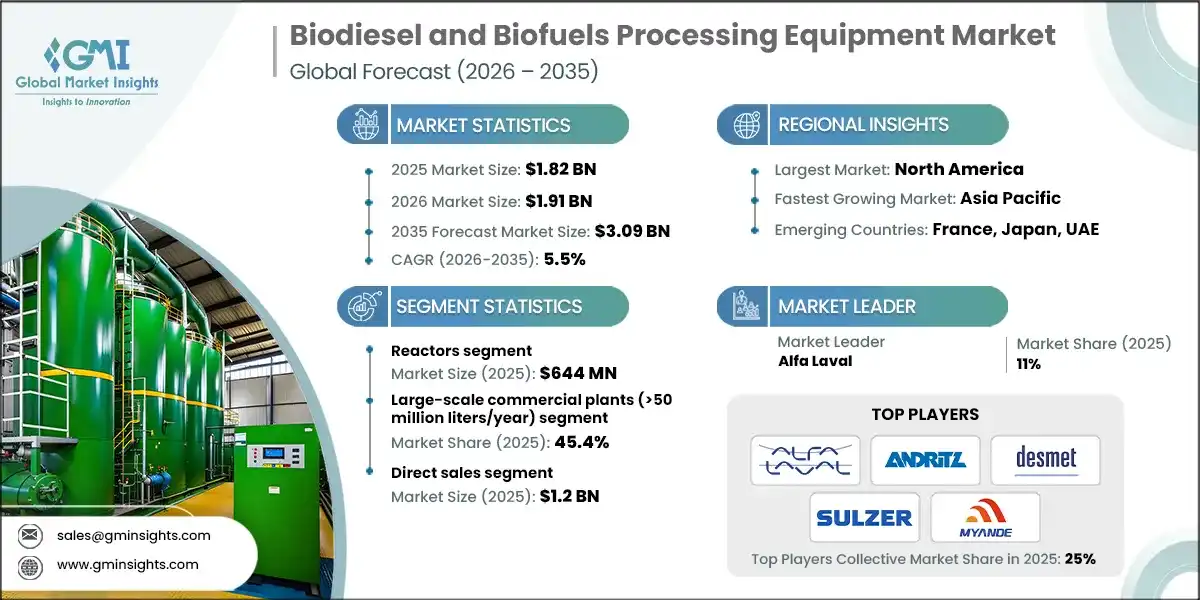
The biodiesel and biofuels processing equipment market was estimated at USD 1.82 billion in 2025. The market is expected to grow from USD 1.91 billion in 2026 to USD 3.09 billion in 2035, at a CAGR of 5.5% according to latest report published by Global Market Insights Inc.
To get key market trends
The communities around the world are starting to rethink their approach towards energy systems. As the world gains urgency from balancing society's desire to meet net zero goals, international supplies are beginning to shift from reliance upon fossil fuels to renewable and low carbon alternatives. Renewables derive their demand and rate of growth from the fact that there are substantial growing amounts of risk associated with climate change, corporate governance ESG requirements are beginning to play an increasing role in driving investments, and most importantly that technological advancements have enhanced and continue to enhance the ability of renewable energy to be competitively priced with existing fossil fuels. Biofuels have become four essential building blocks used by nations and specific sectors to establish successful and implementable plans for their own decarbonization.
At the same time, those segments of society and industry which cannot readily become fully electrified are driving substantive growth in the demand for renewable, high-density and drop-in fuels. This demand is spurring increased investment into biofuel production capacity and into the continual advancement of biofuel processing technologies that can deliver a reliable and stable supply of low carbon fuels on a large scale. As more governments and corporations commit to developing the long-term strategy to achieving reduced greenhouse gas (GHG) and carbon dioxide (CO2) emissions, the biofuels sector will continue to be an integral component of the global renewable energy future.
The established blending mandates from government will subsequently create market conditions conducive to biodiesel/biofuel growth. Blending requirements, such as requiring that fuel suppliers include renewable component percentages such as B5, B10, B20, or greater signal an established market demand to motivate investment in expanding production capabilities. The blending mandates will also assist in reducing dependence on fossil fuels, provide an avenue for securing our future energy needs, and support domestic agricultural supply chains by creating a consistent demand for feedstock materials.
In addition to mandated blending requirements, several areas of the U.S. currently provide other tax credits, production incentives, lower carbon fuels standards, and carbon intensity scoring programs which stimulate greater investment in biofuels processing technologies. These additional policies de-risk the capital expenditure investment required to construct new biofuels production facilities, encourage private sector investments to construct those facilities, and help facilitate the use of advanced production equipment that meets rigorous fuel quality and sustainability standards. Collectively, the existing blending mandates and incentives create an environment of regulatory certainty supporting rapid growth of and modernization to meet the evolving requirements of the entire biofuels ecosystem.
Biodiesel and Biofuels Processing Equipment Market Report Attributes
| Key Takeaway | Details |
|---|---|
| Market Size & Growth | |
| Base Year | 2025 |
| Market Size in 2025 | USD 1.82 Billion |
| Market Size in 2026 | USD 1.91 Billion |
| Forecast Period 2026 - 2035 CAGR | 5.5% |
| Market Size in 2035 | USD 3.09 Billion |
| Key Market Trends | |
| Drivers | Impact |
| Global decarbonization & energy transition | As the market for renewable diesel and SAF continues to expand, the need for cleaner burning fuels will continue to spur increased investments in both biodiesel and biofuel processing technologies. |
| Government blend mandates & policy incentives | The increasing adoption of these policies provides producers with surveyed sales projections, and with this projected sales volume, those producers will increase their production volumes by investment in processing technology and upgrading their processing equipment. |
| Rising adoption of advanced biofuels (HVO, SAF) | This drives the need for development of specialized hydrotreating and upgrading equipment capable of producing both renewable diesel and SAF. |
| Pitfalls & Challenges | Impact |
| High capital costs | The development of new projects at a slow pace and limiting access to updated technologies creates barriers for smaller producers. |
| Infrastructure & supply chain weaknesses | These bottlenecks affect how efficiently they handle feedstocks and fuel distributions, causing a decrease in operational performance and causing delays in their future expansions. |
| Opportunities: | Impact |
| Expansion of advanced biofuel plants | There is also a growing need for large, modular, scalable and highly efficient processing equipment that can process multiple feedstock types. |
| Growth in aviation & marine renewable fuels | There is an increased need to develop equipment that can produce high-purity, high-performance fuels that meet the new specifications imposed on the industry. |
| Market Leaders (2025) | |
| Market Leaders |
11% market share |
| Top Players |
|
| Competitive Edge |
|
| Regional Insights | |
| Largest market | North America |
| Fastest growing market | Asia Pacific |
| Emerging countries | France, Japan, UAE |
| Future outlook |
|
What are the growth opportunities in this market?
Biodiesel and Biofuels Processing Equipment Market Trends
With the global movement towards cleaner forms of energy, the constantly changing landscape of feedstocks used to create biodiesel and biofuels, and the increasing usage of advanced biofuels has led to continual progress in the development of biodiesel and biofuel processing equipment. Manufacturers continue to provide more efficient, flexible and digitally enabled equipment, which is necessary due to the challenges created by the introduction of stricter sustainability standards that must be adhered to by manufacturers, plus its impacts on production cost and availability of multiple feedstock sources. Therefore, the shift to a greater purity level for fuels and the continued development of low-carbon fuel pathways will contribute to a new period of innovation concerning the development of process optimization, automation, advance pretreatment and hydrotreating systems for biodiesel and biofuel processing equipment.
- Vegetable oil producers are starting to use more sophisticated feedstock alternatives than just the standard vegetable oils, including used cooking oils, tallow and agricultural residue. These producers require multidimensional equipment with enhanced pretreating capabilities, including filtration, degumming, dewatering, impurities removal, etc., to supply a variety of feedstocks. equipment manufacturers that provide producers with flexible feedstock support will gain a significant competitive edge as producers diversify their supply base.
- Hydrotreated vegetable oil (HVO) and sustainable aviation fuel (SAF) are rapidly growing in their appeal because both fuels are compatible with current engine technologies and have low carbon intensity. In addition, the production of these fuels requires advanced hydro-treating equipment, high pressure reactor equipment, catalyst equipment & hydrogen integration technology. As a result of this growth, the manufacturing equipment market is moving toward high-value/high-purity, continuous systems that produce refinery grade type fuels.
- Digital technologies are being incorporated in the biofuel production industry, such as IoT Sensors (Internet of Things Sensors), predictive maintenance, automated quality assurance and quality control, real time process optimization. These are all aimed toward reducing downtime and increasing efficiency. By utilizing advanced analytics and smart controls, modern-day equipment can improve reaction conditions, reduce waste, and increase energy efficiency.
- Digitalization is rapidly becoming a differentiating factor among large volume (commercial) biofuel producers. Producers are placing a higher priority on selecting equipment that provides the best performance on carbon intensity scores and sustainability certification requirements due to the impact of carbon intensity on purchasing decisions. New plants are increasingly being designed with Heat Integration systems, cleaner catalysts, compatibility with carbon captured and low waste processing technologies.
Biodiesel and Biofuels Processing Equipment Market Analysis
Learn more about the key segments shaping this market
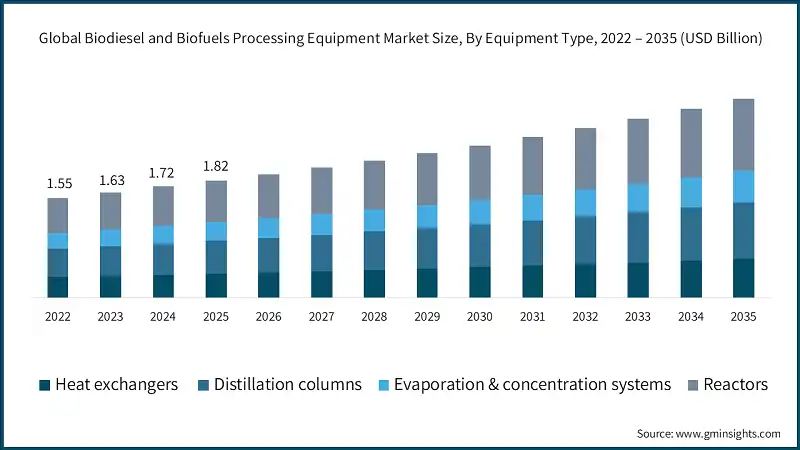
Based on equipment type, the market is divided into day heat exchangers, distillation columns, evaporation & concentration systems and reactors. The reactors segment generated a revenue of USD 644 million in 2025.
- Biodiesel and biofuel production systems rely heavily on reactors for their operation. These devices are the physical vessels through which various conversion processes occur; examples of such processes would include transesterification, hydrotreating and fermentation. In response to increasing demand for cleaner fuels, producers are seeking reactors that can maintain stable operating parameters with uniformity, maximum efficiency of reaction via conversion, and increased production volume compared to traditional batch systems. Technology has evolved away from simple batch designs toward more sophisticated continuous-flow and pressurized designs, enabling greater flexibility in scale and operational efficiency than previous technologies.
- Over time, the development of biofuels has led to the redesign of reactors to be more flexible in accommodating new process options and more complex feedstock types. Historically, biodiesel reactors were designed for the transesterification of vegetative oils and relatively clean feedstocks. With the introduction and growing use of waste oils, animal fats, and organic material derived from residue sources, reactor designs must be able to handle greater levels of impurities and variable viscosity from feedstock. In addition, reactors used in the production of advanced biofuels (e.g. hydrotreated vegetable oil (HVO) and sustainable aviation fuel (SAF)) must withstand much higher temperatures and increased pressures, as well as use specialized catalysis to improve the efficiency of these fuels.
- Digital transformation is disrupting how reactors are built, with manufacturers demanding greater operational control over their operations, improved energy efficiency, and the ability to perform predictive maintenance. Smart reactors incorporate temperature sensors, automatic dosing systems, and analytics into their processes, allowing operators to enhance conversion rates, minimize downtime, and cut operating costs. By enabling manufacturers to make real-time changes to reaction conditions based on quality of feedstock and target specifications, smart reactors provide the manufacturers with a means to enhance production efficiency.
Learn more about the key segments shaping this market
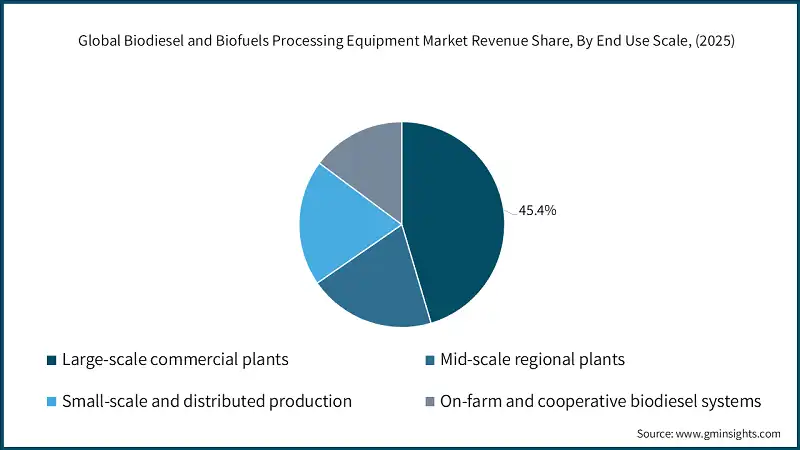
Based on end use scale, the biodiesel and biofuels processing equipment market is segmented into large-scale commercial plants (>50 million liters/year), mid-scale regional plants (10-50 million liters/year), small-scale and distributed production (<10 million liters/year), on-farm and cooperative biodiesel systems. The large-scale commercial plants (>50 million liters/year) segment held about 45.4% of the market share in 2025.
- The role of large-scale Biofuel production plants (> 50 million liter/year) is critical to fulfill the Government/Sustainability mandates for blending while also meeting the demand from Industry for energy, whilst providing renewable fuel sources through their large-scale operations. These production facilities are built to process a large amount of feedstock in an uninterrupted fashion, all year round, therefore requiring significant process engineering, quality equipment & reliable supply chain/logistics for feedstock. Due to the scale of production, these production facilities can produce Biofuel at a lower cost than fossil fuel and therefore are more competitive than fossil fuel.
- To operate on a large scale, significant investment in sophisticated infrastructure is required to ensure feedstock supply and ensure that feedstock is processed as efficiently as possible. A large facility will generally consist of many types of feedstock streams with large pre-treatment facilities capable of handling contaminants at high volume, supporting large-batch or continuous-flow operation of processing units. Processing units should be optimized to enable the high volume of production necessary to maintain product quality at that scale. Also, a large facility typically invests heavily in storage capacity, logistics infrastructure, and automated systems so that receive, produce, and deliver feedstock to refineries, blending terminals, or export ports are coordinated.
- Facilities of this magnitude must pay close attention to environmental efficiency and operational efficiency since large facilities attract greater regulatory scrutiny and the trend towards increasing regulatory requirements concerning carbon intensity and sustainability continues to increase. To fulfill these regulatory obligations, large production operations are implementing energy efficient heat integration systems and advanced emission control technology and digital monitoring systems, allowing them to continuously measure the performance of their production processes.
Based on distribution channel, the biodiesel and biofuels processing equipment market is segmented into direct sales and indirect sales. The direct sales segment crossed USD 1.2 billion in 2025.
- Biodiesel and biofuel producers usually use direct sales as a method of selling equipment. Manufacturers will have to maintain strong relationships with their customers by handling clients directly. When a manufacturer sells directly to a customer, the manufacturer retains control of the relationship by ensuring that all necessary information is communicated effectively. All technical specifications, compliance requirements, warranty terms, and after-sales service capabilities can be communicated accurately. As a result, the manufacturer understands the specific needs of each plant and can customize their equipment, facilitate plant commissioning, and produce longer-lasting equipment performance.
- Furthermore, with Direct Sales, instead of selling an individual component, manufacturers can deliver bundled solutions for integrated efforts with the customer's engineering team, product and process optimization services, digital monitoring systems, as well as maintenance contracts, spare parts and upgrades to predictable revenues. As the biofuels market continues to advance with new feed stocks and the growth of new fuel pathways, direct sales channel is becoming even more important as suppliers help their customers through their transition to technology and keep their position as a trusted partner for all technical assistance.
Looking for region specific data?
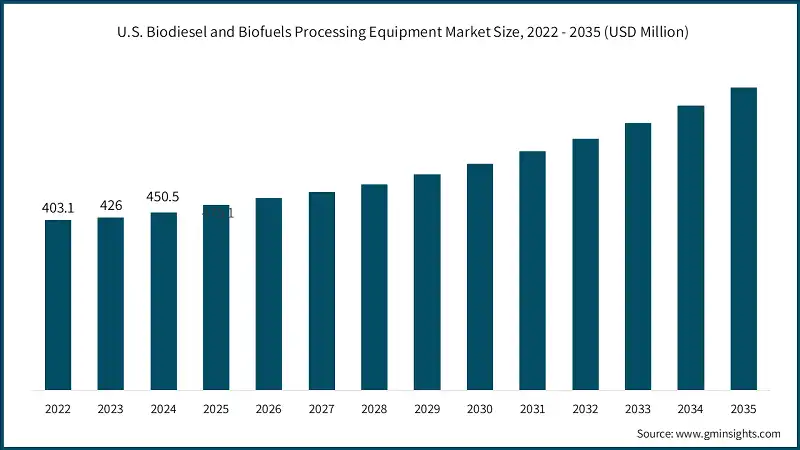
U.S dominated the North America biodiesel and biofuels processing equipment market with around 77.2% share and generating around USD 475.1 million revenue in 2025.
- The demand for biodiesel and biofuels processing equipment in the U.S. is influenced by both federal and state-level incentives that encourage the use of cleaner fuels and serve to assist in the transition toward decarbonizing their industries. Demand for processing equipment continues to increase due in part to the growth of commercial producers building large scale production facilities to produce large quantities of biodiesel and biofuels to meet the requirements imposed by the federal government regarding renewable fuel standards (RFS), as well as by the growing interest in the production of sustainable aviation fuels (SAF) from sources.
- North America has developed a strong market for biodiesel and biofuels production equipment thanks in large part to a robust policy framework and access to plentiful supplies of feedstocks, as well as an increasing number of corporations that are making commitments to reduce their lifecycle emissions. Additionally, both the U.S. and Canada have committed to investing in new facilities to produce next generation renewable diesel and SAFs, which has increased the demand for modular, scalable, and energy efficient processing equipment.
- Many regional producers are using more flexible systems that can process multiple feedstocks, and better supply chain support has led to more agricultural oils, forestry waste, and municipal waste being processed into advanced fuels. As North America's transition to cleaner alternatives to burning fossil fuels continues to accelerate, there will be continuous growth in the advanced processing technologies that support this transition, particularly: hydrotreating reactors; high-pressure systems; automated control and monitoring systems; and integrated pre-treatment lines.
Europe biodiesel and biofuels processing equipment market held 25.1% share in 2025 and is expected to grow at 5.1% CAGR during the forecast period.
- Due to rigorous sustainability policies, ambitious carbon reduction targets and high levels of sophistication in fuel quality standards, as well as the significant amount of R&D being conducted, Europe is one of the most developed markets for biodiesel and biofuel processing equipment. European Regulatory Agencies have created a robust regulatory environment, which encourages operators to make capital investments in energy-efficient reactors, advanced pretreatment systems, and state-of-the-art hydrotreating equipment to enable both traditional biodiesel as well as new renewable diesel technology advances. Additionally, European producers have to adhere to stringent certification standards, resulting in equipment manufacturers delivering solutions that minimize emissions and optimize resource efficiency and provide assurance to producers they meet all lifecycle carbon intensity standards.
- At the same time, the movement towards using waste and residual materials as feedstocks is increasing the demand for flexible and adaptable processing equipment across multiple feedstocks in Europe. More plants are now switching over to process used cooking oils, animal fat, and industrial waste streams, which require systems that remove impurities and reactors capable of processing different feedstocks As renewable aviation fuel mandates are established by certain EU member states, there has been an increase in demand for hydrotreating reactors, hydrogen integration systems, and downstream upgrades, confirming that Europe is becoming one of the largest adopters of new biofuels production technologies.
The Asia Pacific held market share of around 30.7% in 2025 and is anticipated to grow with a CAGR of around 6% from 2026 to 2035.
- The demand for biodiesel and biofuels equipment is growing rapidly in the Asia-Pacific (APAC) region due to increasing energy demand, strong agricultural resources and the support of many governments for cleaner transportation solutions. Several APAC governments are accelerating the development of their blending requirements and are encouraging local production of biodiesel, which has led to an increase in investment in medium and large-scale production facilities that are equipped with high-capacity reactors, feedstock pretreatment equipment and advanced separation technology. The availability of large amounts of vegetable oils, palm oil residuals and many agricultural byproducts has positioned APAC as one of the most important regions for biofuel expansion.
- APAC is seeing increased interest in Renewable Diesel (HVO) and Sustainable Aviation Fuel (SAF) in addition to the traditional biodiesel fuel market as governments in the region have set aggressive targets to lower their respective countries' dependency on foreign sourced fossil fuels. The increase in interest from manufacturers in APAC for hydrotreating reactors, catalytic processing units with multiple catalyst types, and modular plant designs will provide producers with the opportunities to quickly scale up their operations. The combination of these two factors makes APAC a strategic area of growth for many global equipment suppliers that can provide flexible energy-efficient feedstock-agnostic production equipment.
Latin America market is growing at a CAGR of 4.4% during the forecast period.
- The biodiesel and biofuels processing equipment market in Latin America has developed because of the region's strong agricultural base and established use of renewable fuels in its transportation sector. Countries with large supplies of soy, sugarcane, or oilseeds are investing heavily in modern facilities to improve yield rates and increase capacity for biodiesel/biofuel production. Governments across LATAM (Latin America) are focused on promoting rural growth and diversification of energy sources. As a result, LATAM is seeing an increase in demand for efficient reactors, pretreatment units and automated processing technologies that can process regionally specific feedstocks at competitive production prices.
- LATAM producers are also starting to take advantage of higher-value products such as renewable diesel and advanced biofuels; this will require LATAM producers to utilize more sophisticated hydrotreating and upgrading technologies than what has historically been used. Additionally, LATAM producers are focused on taking advantage of the increasing number of export opportunities to Europe and North America, thus many LATAM producers are utilizing higher-quality processing technologies that adhere to international standards. As infrastructure continues to develop in LATAM and as more countries implement climate change-related policies to incentivize long-term development of low-CF fuels, LATAM is expected to make greater investments in scalable, flexible and digitalized processing technologies that will provide biodiesel/biofuels for domestic use as well as for the overall biodiesel/biofuels export market supply chain.
Biodiesel and Biofuels Processing Equipment Market Share
Alfa Laval is leading with 11% market share. Alfa Laval, ANDRITZ, Desmet, Sulzer and Myande collectively hold around 25%, indicating moderately fragmented market concentration. These prominent players are proactively involved in strategic endeavors, such as mergers & acquisitions, facility expansions & collaborations, to expand their product portfolios, extend their reach to a broad customer base, and strengthen their market position.
Alfa Laval is one of the largest suppliers of biodiesel and bio-fuels processing technology providing innovative methods of separating, heating, cooling and handling of fluids, which include: Decanters, centrifuges, heat exchangers along with their capabilities to improve yield, increase operational efficiency and enhance quality of the biodiesel produced. Alfa Laval has developed engineering expertise and created a global presence through its service network making it an excellent selection for traditional Biodiesel manufacturers as well as the next generation of renewable diesel facilities using carbon-neutral and energy efficient technologies.
Springboard Biodiesel develops and produces small to medium sized biodiesel production systems for users that prefer modular, user-friendly processes to generate fuel in a decentralized manner or on the premise of the production site. Springboard Biodiesel's smaller-sized biodiesel production systems are being used throughout the country by academic institutions, farms, municipalities and corporations that wish to recycle their used cooking oil into a usable form of fuel in a cost effective and efficient manner. Springboard Biodiesel has established itself as an important contributor to the growing acceptance of biodiesel technology and supports the development of a circular economy with their low capital expenditure requirements and user-friendly designs to produce biodiesel fuels locally.
Biodiesel and Biofuels Processing Equipment Market Companies
Major players operating in the biodiesel and biofuels processing equipment industry are:
- Advance Biofuel
- Alfa Laval
- American Crane & Equipment
- ANDRITZ
- CPM Crown
- Desmet
- Ecolab
- Florida Biodiesel
- JBT
- Myande
- N&T Engitech
- S. Howes
- Springboard Biodiesel
- SRS International
- Sulzer
CPM Crown has long been acknowledged for its experience and expertise in the capitalization on oilseed preparation and mechanical processing equipment, as well as being a leader on the oilseed eco-system and biofuels value chain. offering a vast range of products that consist of extraction, pressing and material handling systems that provide reliable feedstock preparation, which is one of the most important points of biodiesel production. Through the design, manufacture and installation of all types of equipment and systems to support the versatility and efficiency needed at large scale sustainable biodiesel production facilities that utilize high throughput, durable, energy-efficient and cost-effective processing systems for multiple different oilseed or oil-bearing products.
Desmet an internationally established leader in the process engineering of edible oils and biodiesel production process' transesterification, reverse flow refining and feedstock pretreatment systems. The ability for several types of edible oil products to be produced through the operation of their biodiesel production processes, as well as the flexibility, continuous processing capabilities and multiple feedstock operations are reasons why Desmet production lines are preferred as the best in the industry. Through decades of oilseed and refinery technology experience, Desmet has the necessary tools to allow for high purity biodiesel production through an integrated, advanced and modular equipment design and manufacturing process.
Biodiesel and Biofuels Processing Equipment Market News
- In November 2025, Sulzer received recognition for supporting global biofuel development through innovative pumps, mixers, and stills. The equipment capabilities created by Sulzer for biofuels have also been utilized in the development of large-scale SAF and Renewable Diesel projects, a testament to their commitment to use of biofuels.
- In October 2025, CPM Crowns Monarc Clean Oilseed Processing introduces to the market a new alcohol solvent extraction and processing method for oilseeds. The Monarc system will allow users to scale their oil extraction processes from small to large volumes with safety in mind as well as when creating products with cleaner labels and lower carbon footprints.
- In March 2025, Florida Biodiesel released a new set of documentation that indicated that all company biodiesel processor models are capable of being used with enzymatic transesterification reactions, including using CALB as a catalyst for small-scale and pilot biodiesel facilities to achieve cleaner reaction pathways.
- In February 2025, ANDRITZ purchased LDX Solutions to expand upon its existing Environmental Technology portfolio. With the addition of LDX, ANDRITZ will continue to strengthen the air emission control offering required to comply with biofuel production standards and keep pace with increasing public environmental performance expectations in renewable fuel production for all types of manufacturers.
The biodiesel and biofuels processing equipment market research report includes in-depth coverage of the industry with estimates & forecasts in terms of revenue (USD Million) & volume (Thousand Units) from 2022 to 2035, for the following segments:
Market, By Equipment Type
- Heat exchangers
- Process cooling/heating heat exchangers
- Methanol recovery heat exchangers
- Glycerin processing heat exchangers
- Tube content per heat exchanger unit
- Distillation columns
- Methanol rectification columns
- Glycerin purification columns
- Feedstock pre-treatment columns
- Tube content per column
- Evaporation & concentration systems
- Methanol flash evaporators
- Falling film evaporators
- Reactors
Market, By Material Type
- Stainless steel 304/304l tubes
- Stainless steel 316/316L tubes
- Duplex and super duplex stainless-steel tubes
- Titanium tubes
- Nickel alloys and other materials
Market, By Application
- Methanol recovery and purification systems
- Glycerin recovery and purification systems
- Feedstock pre-treatment and preparation
- Transesterification reaction thermal management
- Biodiesel/FAMA cooling and finishing
- Renewable diesel (HVO/HEFA) high-pressure systems
Market, By End Use Scale
- Large-scale commercial plants (>50 million liters/year)
- Mid-scale regional plants (10-50 million liters/year)
- Small-scale and distributed production (<10 million liters/year)
- On-farm and cooperative biodiesel systems
Market, By Distribution Channel
- Direct sales
- Indirect sales
The above information is provided for the following regions and countries:
- North America
- U.S.
- Canada
- Europe
- Germany
- UK
- France
- Italy
- Spain
- Asia Pacific
- China
- India
- Japan
- Australia
- South Korea
- Latin America
- Brazil
- Mexico
- Argentina
- Middle East and Africa
- South Africa
- Saudi Arabia
- UAE
Frequently Asked Question(FAQ) :
Who are the key players in the biodiesel and biofuels processing equipment market?
Key players include Alfa Laval (11% market share), ANDRITZ, Desmet, Sulzer, Myande, Advance Biofuel, American Crane & Equipment, CPM Crown, Ecolab, Florida Biodiesel, JBT, N&T Engitech, S. Howes, Springboard Biodiesel, and SRS International.
What are the key trends in the biodiesel and biofuels processing equipment market?
Key trends include diversification to advanced feedstocks requiring enhanced pretreatment, rapid growth of HVO and SAF requiring hydrotreating equipment, digital transformation with IoT sensors and predictive maintenance, and focus on carbon intensity scoring.
Which region leads the biodiesel and biofuels processing equipment market?
U.S dominated the North America biodiesel and biofuels processing equipment market with around 77.2% share and generating around USD 475.1 million revenue in 2025.
What market share did large-scale commercial plants hold in 2025?
Large-scale commercial plants (>50 million liters/year) held about 45.4% of the market share in 2025, playing a critical role in fulfilling government blending mandates.
How much revenue did the reactors segment generate in 2025?
Reactors generated USD 644 million in 2025, serving as critical vessels for conversion processes including transesterification, hydrotreating, and fermentation.
What is the projected value of the biodiesel and biofuels processing equipment market by 2035?
The market is expected to reach USD 3.09 billion by 2035, propelled by global decarbonization initiatives, government blend mandates, and adoption of advanced biofuels like HVO and SAF.
What is the current biodiesel and biofuels processing equipment market size in 2026?
The market size is projected to reach USD 1.91 billion in 2026.
What is the market size of the biodiesel and biofuels processing equipment in 2025?
The market size was USD 1.82 billion in 2025, with a CAGR of 5.5% expected through 2035 driven by expanding renewable diesel and SAF demand and rising investment in clean fuel processing technologies.
Biodiesel and Biofuels Processing Equipment Market Scope
Related Reports