Summary
Table of Content

Biobanking Market
Get a free sample of this report
Form submitted successfully!
Error submitting form. Please try again.
Thank you!
Your inquiry has been received. Our team will reach out to you with the required details via email. To ensure that you don't miss their response, kindly remember to check your spam folder as well!
Request Sectional Data
Thank you!
Your inquiry has been received. Our team will reach out to you with the required details via email. To ensure that you don't miss their response, kindly remember to check your spam folder as well!
Form submitted successfully!
Error submitting form. Please try again.
Biobanking Market Size
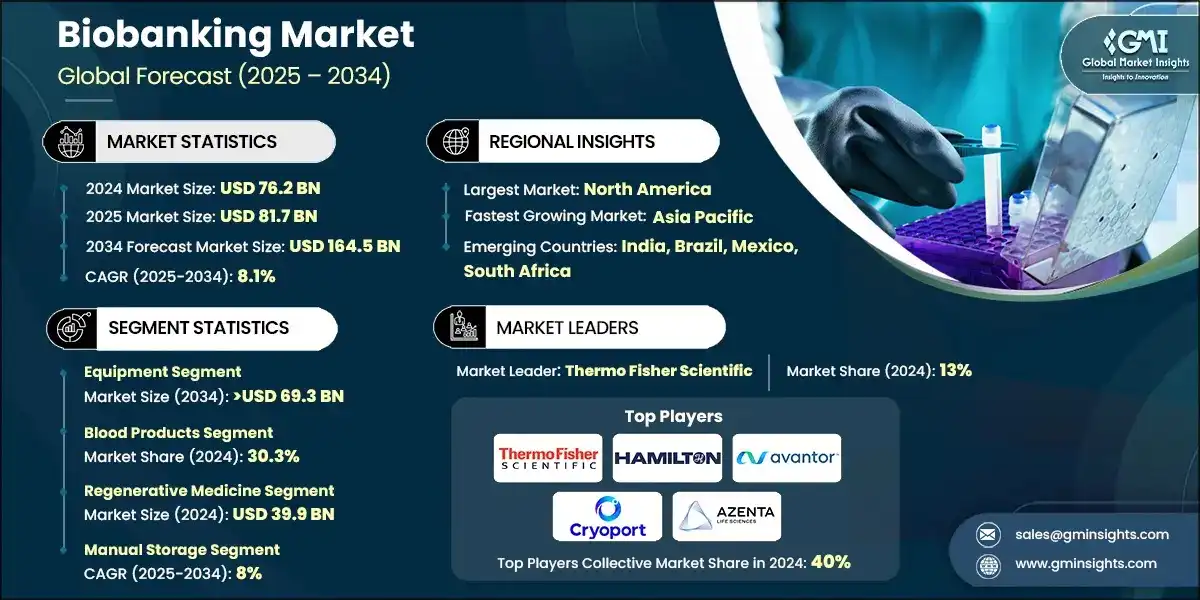
The global biobanking market was estimated at USD 76.2 billion in 2024. The market is expected to grow from USD 81.7 billion in 2025 to USD 164.5 billion in 2034, at a CAGR of 8.1%, according to the latest report published by Global Market Insights Inc.
Biobanking Market Key Takeaways
Market Size & Growth
- 2024 Market Size: USD 76.2 Billion
- 2025 Market Size: USD 81.7 Billion
- 2034 Forecast Market Size: USD 164.5 Billion
- CAGR (2025–2034): 8.1%
Key Market Drivers
- Technological advancements in genomics and drug development.
- Increasing demand for personalized medicine.
- Increasing investments in genomic research.
- Integration of bioinformatics tools and advanced data analysis techniques.
Challenges
- High cost associated with automated systems.
- Issues related to biospecimen sample procurement.
Opportunity
- Development of decentralized and mobile biobanking models.
- Expansion into multi-omics and longitudinal health data integration.
Key Players
- Market Leader: Thermo Fisher Scientific led with over 13% market share in 2024.
- Leading Players: Top 5 players in this market include Thermo Fisher Scientific, Hamilton Company, Avantor, Cryoport, Azenta, which collectively held a market share of 40% in 2024.
Get Market Insights & Growth Opportunities
The high demand for personalized medicine along with the increasing investments in genomic research are initially advancing the biobanking market growth. The biobanks are becoming important in various functions such as biomedical research, enabling the collection, storage, also analysis of biological samples that includes blood, tissues, and DNA for clinical and therapeutic applications. Many countries offer numerous national biobank programs that are experiencing growing public awareness, brings attention to the expanding role of biobanking in healthcare.
Biobanking is defined as the organized process of collecting and preserving biological specimens and associated data for use in research, diagnostics, and drug development. These repositories include physical biobanks and increasingly virtual biobanks, which support remote access and data integration. Biobanking applications span across regenerative medicine, clinical research, and life sciences, with samples stored under automated or manual conditions depending on infrastructure and scale. Biobanking services and products are deployed across academic institutes, pharmaceutical companies, and biotech firms, with solutions ranging from cryogenic storage systems to laboratory information management systems.
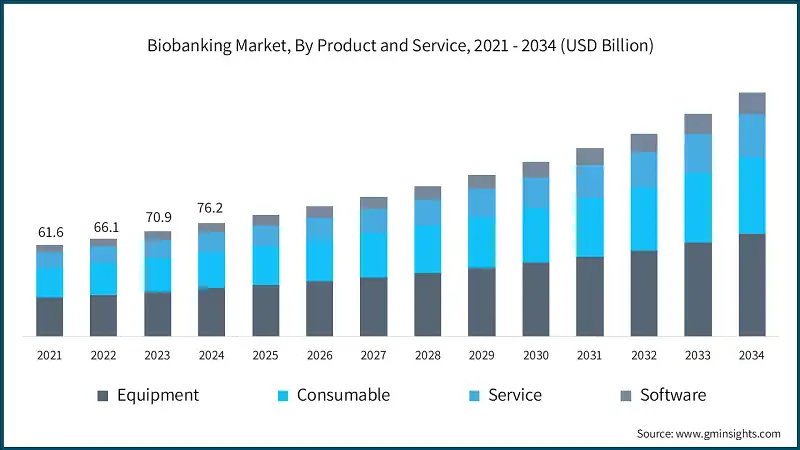
The biobanking market grew from USD 61.6 billion in 2021 to USD 70.9 billion by 2023. This growth was stimulated by the increasing need for high-quality biospecimens in precision medicine, the expansion of stem cell research, and the integration of AI-powered sample tracking, blockchain-based data security, and automated sample processing. These technologies are improving operational efficiency and enabling real-time analytics for disease prediction and biomarker discovery.
The high prevalence of chronic diseases such as cancer, cardiovascular disorders, and neurodegenerative conditions is stimulating demand for biobanking solutions. Companies such as Thermo Fisher Scientific, Hamilton Company, Avantor, Cryoport, and Azenta are leading the market with advanced equipment, consumables, and services tailored for biobank operations. Innovations in cold chain logistics, sample digitization, and cloud-based biobank platforms are expanding access and improving sample integrity.
However, challenges such as ethical concerns, data privacy, informed consent, and lack of standardization persist, especially across international collaborations. These issues have led to increased adoption of virtual biobanks and federated data systems, which offer secure, decentralized access to biospecimens. North America leads the biobanking market, while Asia-Pacific is the fastest-growing region due to rising healthcare investments and genomic initiatives.
Moreover, the integration of real-world evidence platforms, AI-driven cohort selection tools, and digital health records is transforming biobanking operations. The growing prevalence of comorbid conditions and the need for longitudinal sample tracking also contribute to the rising demand for comprehensive biobanking solutions.
To get key market trends
Biobanking Market Trends
- Biobanks are becoming foundational to oncology precision medicine, enabling researchers and clinicians to access well-characterized tumour samples and genomic data that support the development of targeted therapies.
- Virtual biobanks are gaining momentum, offering decentralized access to biospecimens and associated data, reducing geographic and logistical barriers, and enabling global collaboration among research institutions and healthcare providers.
- The rise of multi-omics data integration including genomics, transcriptomics, proteomics, and metabolomics is enhancing the value of biobanks by enabling comprehensive disease modelling and facilitating the discovery of novel therapeutic targets.
- Blockchain-based consent and data governance systems are being adopted to improve transparency, ensure secure data sharing, and uphold ethical standards in biobank operations, especially in multi-institutional and cross-border research collaborations.
- Population-scale biobanks are expanding rapidly, supporting real-world evidence generation, public health initiatives, and epidemiological studies that inform policy decisions and healthcare resource allocation.
- Blood collection remains a cornerstone of biobanking, with increasing demand for high-quality, annotated blood samples used in disease surveillance, biomarker discovery, and longitudinal studies across therapeutic areas including cardiovascular, infectious, and metabolic diseases.
- Growing interest in rare disease research is driving the establishment of specialized biobanks that collect and preserve unique biospecimens, enabling the development of orphan drugs and personalized treatment strategies for underserved patient populations.
- Biobank-enabled companion diagnostics are playing a critical role in oncology precision medicine, helping to identify eligible patients for targeted therapies and improving clinical trial efficiency and drug approval timelines.
- The adoption of automated storage and retrieval systems is improving sample integrity, reducing human error, and supporting high-throughput biobank workflows, especially in large-scale research institutions and commercial biorepositories.
- The commercialization of biobank services including sample leasing, data analytics, and platform licensing is creating new revenue streams and expanding the market reach of biobank operators, especially in pharmaceutical and biotech sectors.
Biobanking Market Analysis
Learn more about the key segments shaping this market
The biobanking industry was valued at USD 61.6 billion in 2021. The market size reached USD 70.9 billion in 2023, from USD 66.1 billion in 2022.
Based on product and service, the market is categorized into equipment, consumable, service and software. The equipment segment accounted for 42.5% of the market share in 2024 which is stimulated due to widespread adoption of ultra-low temperature freezers, cryogenic storage systems, and automated sample handling technologies. The segment is expected to exceed USD 69.3 billion by 2034, growing at a CAGR of 8% during 2025 to 2034.
- The equipment segment is further bifurcated into storage equipment, sample analysis equipment, sample processing equipment and sample transport equipment.
- The segment benefits by the escalating demand for high-throughput biobank operations, particularly in large-scale genomic populations and health studies.
- Additionally, such tools are important for the maintenance of biospecimen integrity and that also support long-term preservation across clinical, academic and pharmaceutical settings.
- Moreover, various equipments such as barcode-based inventory tools, liquid nitrogen tanks and automated retrieval systems, are becoming the standard option in modern biobank infrastructure.
- The growing emphasis on sample traceability and regulatory compliance is further driving investment in sophisticated biobanking equipment.
- On the other hand, the software segment is the fastest-growing category in the biobanking market, projected to grow at a CAGR of 9.2% during the forecast period.
- Further, the service segment plays a critical role in supporting biobank operations, offering solutions such as sample transport, processing, storage, and supply chain management.
Based on sample type, the market is segmented into blood products, human tissues, cell lines, nucleic acids, biological fluids, human waste products and other sample types. The blood products segment dominated the market in 2024 with a revenue share of 30.3%, driven due to the use of blood samples in clinical diagnostics, genomic research, and biomarker discovery.
- The segment is supported by the ease of collection, standardized protocols, and compatibility with a wide range of downstream applications including serology, haematology, and metabolomics.
- Moreover, blood samples are widely used in epidemiological research, immune profiling, and for blood donation, making them indispensable across both public health and pharmaceutical domains. According to WHO, 118.54 million blood donations are collected globally.
- Additionally, blood-based biobanks are increasingly contributing to national health registries and longitudinal studies, enabling researchers to track disease progression, treatment response, and genetic predispositions over time.
- Likewise, the nucleic acids segment is the fastest-growing category in the biobanking market, stimulated by the surge in genomic and transcriptomic research. DNA and RNA samples are essential for sequencing, gene expression analysis, and mutation profiling, especially in oncology and rare disease studies.
- Moreover, the human tissues segment plays a pivotal role in translational and histopathological research, offering insights into disease mechanisms, cellular architecture, and therapeutic response.
Based on application, the biobanking market is segmented into regenerative medicine, life-science research, clinical research and other applications. The regenerative medicine segment dominated the market in 2024 with USD 39.9 billion revenue, stimulated by reliance on high-quality biospecimens such as stem cells, tissues, and plasma for therapeutic development.
- The segment is stimulated by the increasing number of clinical trials focused on regenerative therapies. According to Statista, in Q2 2024, there were total 1,753 ongoing clinical trials from phase 1 to 3 for regenerative medicines, escalating the market growth.
- The biobanks are providing researchers access sources that are ethical, well-characterized samples that meet standard regulations for the use in advanced therapy medicinal products (ATMPs), stimulating innovation in personalized and curative treatments.
- Moreover, the demand for autologous and allogeneic cell therapies is increasing, prompting biobanks to invest in cryopreservation technologies and GMP-compliant storage facilities.
- In contrast, the life-science research segment is the fastest-growing category in the biobanking market, stimulated by the expanding use of biospecimens in basic and applied research across genomics, proteomics, and cellular biology.
- Also, the clinical research segment plays a vital role in supporting drug trials, biomarker validation, and patient stratification. Biobanks provide the biological materials needed to evaluate treatment efficacy, monitor safety, and identify predictive indicators.
Based on storage type, the biobanking treatment market is segmented into automated storage and manual storage. The manual storage segment dominated the market in 2024 with a growing CAGR of 8% through 2034, due to its widespread use in small- to mid-scale biobanks, academic institutions, and hospital-based repositories.
- Many biobanks in emerging markets and public health institutions continue to rely on manual storage due to lower infrastructure costs and simpler operational requirements.
- Moreover, manual storage also allows for greater flexibility in handling diverse sample types and is often preferred in settings where sample volumes are moderate and automation are not yet justified.
- Additionally, manual storage systems are often integrated with basic inventory tracking tools, allowing for efficient sample retrieval and documentation without the need for complex software or robotics.
- On the other hand, the automated storage segment is stimulated by increasing demand for high-throughput, error-free, and scalable biobanking solutions. These systems are particularly valuable in large-scale biobanks and pharmaceutical research centers.
Learn more about the key segments shaping this market
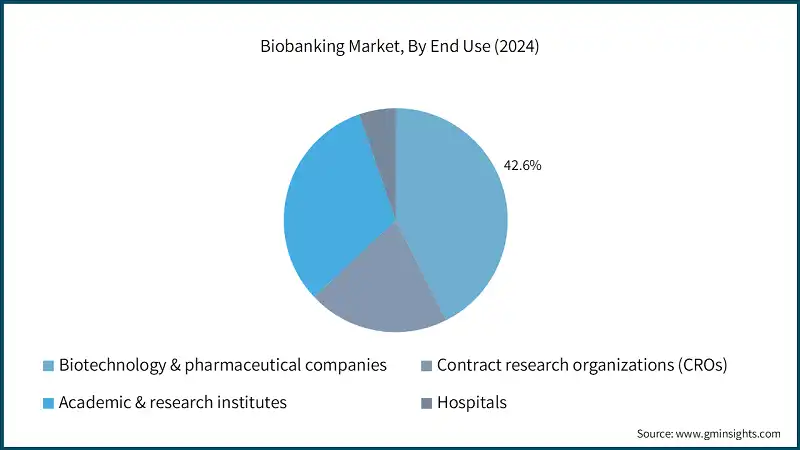
Based on end use, the biobanking market is segmented into biotechnology & pharmaceutical companies, contract research organizations (CROs), academic & research institutes and hospitals. The biotechnology & pharmaceutical companies segment dominated the market in 2024 with revenue share of 42.6%, the segment domination is due to the growing reliance on biospecimens for drug discovery, biomarker validation, and clinical development.
- The segment is stimulated by the increasing demand for high-quality, well-annotated samples that enable faster and more accurate drug development pipelines.
- These companies use biobanks to support preclinical research, identify therapeutic targets, and develop personalized treatment strategies.
- Moreover, the segment further benefits from the integration of biobanking with companion diagnostics and pharmacogenomics, allowing companies to tailor therapies based on genetic profiles.
- Biopharma companies are also investing in proprietary biobank networks and partnerships with academic institutions to secure access to diverse sample types and patient cohorts for translational research.
- Whereas the contract research organizations (CROs) segment is stimulated by the increasing trend of outsourcing clinical trial operations and biospecimen management. CROs offer specialized biobanking services, including sample collection, processing, storage, and logistics, to pharmaceutical and biotech clients.
- On the other hand, the academic and research institutes play a foundational role in the biobanking ecosystem, contributing significantly to basic science, epidemiological studies, and public health research.
Looking for region specific data?
The North America biobanking market dominated about 45.7% revenue share in 2024. The market is stimulated by growing demand for blood collection, personalized medicine, and advanced biospecimen management in clinical settings.
- Countries such as the U.S. and Canada are contributing to regional growth due to strong healthcare infrastructure, academic research networks, and expanding genomic initiatives by the government.
- The high adoption rate of precision medicine is advancing demand for tumour tissue and blood-based biospecimens, that supports targeted therapy development and biomarker research.
- Additionally, public health programs and national genomic efforts are escalating biobank expansion and improving access to high-quality biological samples.
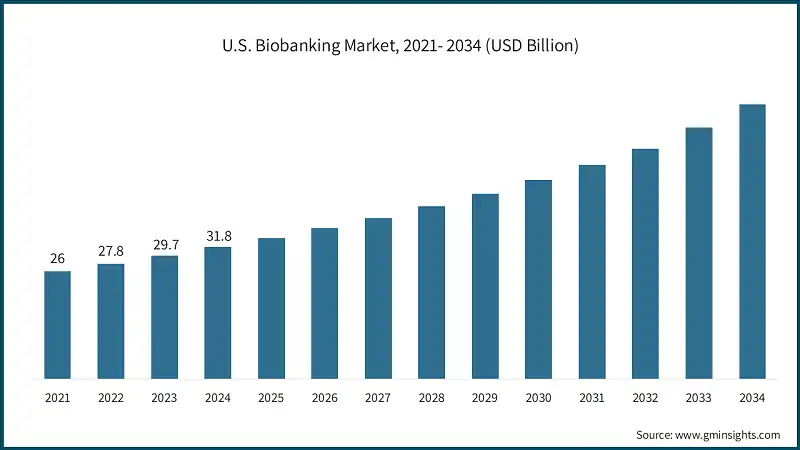
The U.S. biobanking market was valued at USD 26 billion and USD 27.8 billion in 2021 and 2022, respectively. The market size reached USD 31.8 billion in 2024, growing from USD 29.7 billion in 2023.
- Rising investments in regenerative medicine and stem cell research are expanding the scope of biobanking applications, especially in therapeutic development and tissue engineering.
- National initiatives and collaborations between pharma, biotech, and academic institutions are strengthening biobank infrastructure and promoting data interoperability.
- The region benefits from widespread implementation of automated storage systems, digital sample tracking, and AI-powered biobank platforms, enhancing operational efficiency and data utility.
Europe biobanking market accounted for USD 19.6 billion in 2024 and is anticipated to show lucrative growth over the forecast period.
- European countries such as Germany and France are leading contributors to regional growth, supported by strong biomedical research infrastructure and increasing biospecimen demand.
- The region is witnessing a surge in chronic disease prevalence, with cancer cases projected to rise over 35 million till 2050 as mentioned by WHO, increasing the need for biobank-supported oncology research.
- Countries such as UK, Italy, and Spain are investing in national biobank programs and genomic initiatives, improving access to high-quality biological samples for clinical and translational research.
Germany biobanking market is anticipated to witness considerable growth over the analysis period.
- The country experiences a high burden of chronic diseases, for instance as NIH mentions, hypertension consists most of the chronic disease cases, with over 65.7% males and 66.1% females, stimulating demand for biospecimens in personalized therapy development.
- Germany emphasis on regenerative medicine is expanding biobank applications in stem cell research, tissue engineering, and advanced therapeutic development.
- Government support and academic partnerships are fostering biobank expansion, with increased funding for infrastructure upgrades and ethical governance.
The Asia Pacific biobanking market is anticipated to grow at the highest CAGR of 8.5% during the analysis timeframe.
- The region includes key markets such as China, India, Japan, South Korea, and Australia, where increasing demand for biospecimen-based research is fueling biobank development across academic and commercial sectors.
- Moreover, rising prevalence of lifestyle-related diseases, including diabetes and cancer, is expanding the need for biospecimen repositories to support early detection and therapeutic innovation.
China biobanking market is predicted to grow significantly over the forecast period.
- The country experiences rapid urbanization and evolving lifestyle patterns are the primary factors that surge in chronic conditions such as cancer and cardiovascular diseases, stimulating the demand for biospecimen-based research.
- China is known to be among the top globally for clinical trials activity, with biobanks playing a critical role in supporting trial recruitment, sample storage, and biomarker validation.
- Rising public and institutional awareness of biobanking’s role in precision diagnostics is encouraging the development of hospital-integrated biorepositories and academic biobank networks.
Brazil is experiencing significant growth in the Latin America biobanking market due to the increasing demand for biospecimen-based research.
- The country’s humid climate contributes to a high prevalence of infectious and dermatological conditions, increasing the need for biological sample collection and storage for research and diagnostics.
- The presence of regional pharmaceutical and biotech companies is fostering innovation in sample processing, cryogenic storage, and data-driven biobank platforms.
Saudi Arabia biobanking market is poised to witness substantial growth in Middle East and Africa during the forecast period.
- Saudi Arabia’s Vision 2030 initiative is encouraging investment in life sciences and research innovation, with biobanking emerging as a strategic priority.
- The growth of academic medical centers and research universities is fostering biobank development for population health studies and genomic research.
Biobanking Market Share
Leading companies such as Thermo Fisher Scientific, Hamilton Company, Avantor, Cryoport, and Azenta collectively hold a dominant share of approximately 40% in the global biobanking industry. These companies maintain leadership through comprehensive biobanking portfolios, strategic investments in biospecimen infrastructure, and continued innovation in automated storage, sample logistics, and digital biobank platforms.
Thermo Fisher Scientific leads with end-to-end biobanking solutions including ultra-low temperature freezers, consumables, and LIMS software, supporting global research and clinical operations. Hamilton Company specializes in automated biobank storage systems, offering scalable, high-throughput solutions for sample preservation and retrieval.
Avantor provides integrated biorepository services and lab consumables, leveraging its supply chain expertise to support biobank operations across academic and commercial settings. Cryoport dominates cryogenic logistics and bioservices, enabling secure transport and long-term storage of sensitive biological materials for clinical trials and cell therapy programs. Azenta delivers advanced sample storage technologies and digital tracking platforms, focusing on precision biobanking and data-driven sample management.
Emerging and niche players such as BioStorage Technologies, Brooks Life Sciences, STEMCELL Technologies, BioIVT, and Charles River Laboratories are gaining traction through specialized services, regional strategies, and innovation in sample handling and analytics. These companies support market growth by offering tailored biobank solutions, expanding access in underserved regions, and advancing automation, virtual biobanking, and multi-omics integration. Their contributions are vital in improving sample integrity, enabling personalized research, and supporting the evolution of biobanking into a more connected and data-rich domain.
Biobanking Market Companies
Few prominent players operating in the biobanking industry includes:
- Avantor
- Azenta
- Becton, Dickinson and Company
- BioIVT
- BioStorage Technologies
- Brooks Life Sciences
- Charles River Laboratories
- Cryoport
- Eurofins Scientific
- Hamilton Company
- Labcorp
- Merck & Co.
- Novartis
- Pfizer
- PHC Holdings
- Qiagen
- STEMCELL Technologies
- Tecan Trading
- Thermo Fisher Scientific
Thermo Fisher leads the biobanking market with an estimated share of 13%, offering a comprehensive portfolio that spans ultra-low temperature freezers, consumables, and digital biobank management systems. As a global life sciences leader, the company combines infrastructure scale with innovation in sample preservation, traceability, and automation. Its strong presence across academic, clinical, and commercial sectors reinforces its leadership in biospecimen management and precision research.
Hamilton Company maintains a strong position in the biobanking segment through its BiOS automated storage systems, designed for high-throughput and long-term sample preservation. The company’s expertise in robotics and liquid handling supports scalable biobank operations, making it a preferred partner for large research institutions and pharmaceutical companies. Hamilton’s focus on automation and data integrity enhances its relevance in modern biobank workflows.
Avantor competes with integrated biorepository services and lab consumables tailored for biobank operations. The company’s strength lies in its supply chain capabilities and ability to support end-to-end sample lifecycle management. Avantor’s strategic investments in biobank infrastructure and partnerships with research organizations position it as a key player in enabling translational research and personalized medicine initiatives.
Biobanking Industry News
- In October 2025, SciSafe expanded biorepository facility in East Brunswick, New Jersey, expanding its cold chain and bio storage capabilities. This expansion strengthened SciSafe’s infrastructure and responsiveness in biobanking.
- In October 2025, Abu Dhabi Biobank partnered with NMC Healthcare to offer public and private cord blood banking across UAE hospitals. This collaboration broadened the biobank’s operational footprint and advanced UAE’s biomedical research capabilities.
- In July 2025, TTAM Research Institute acquired 23andMe’s assets, including its Biobank, the deal included personal genome service, total health, and research services. This initially enhanced access to genomic data, supporting its biobanking and genetics-driven drug development efforts.
- In February 2024, PHC North America launched a dual voltage model of its PHCbi VIP ECO SMART ultra-low temperature freezer series. This product advancement improved PHCbi’s positioning in the market by offering adaptable and energy-efficient specimen preservation.
The biobanking market research report includes in-depth coverage of the industry with estimates and forecast in terms of revenue in USD Billion from 2021 - 2034 for the following segments:
Market, By Product and Service
- Equipment
- Storage equipment
- Sample analysis equipment
- Sample processing equipment
- Sample transport equipment
- Consumable
- Storage consumables
- Analysis consumables
- Processing consumables
- Collection consumables
- Service
- Storage services
- Processing services
- Transport services
- Supply services
- Software
Market, By Sample Type
- Blood products
- Human tissues
- Cell lines
- Nucleic acids
- Biological fluids
- Human waste products
- Other sample types
Market, By Application
- Regenerative medicine
- Life-science research
- Clinical research
- Other applications
Market, By Storage Type
- Automated storage
- Manual storage
Market, By End Use
- Biotechnology & pharmaceutical companies
- Contract research organizations (CROs)
- Academic & research institutes
- Hospitals
The above information is provided for the following regions and countries:
- North America
- U.S.
- Canada
- Europe
- Germany
- UK
- France
- Italy
- Spain
- Netherlands
- Asia Pacific
- China
- Japan
- India
- Australia
- South Korea
- Latin America
- Brazil
- Mexico
- Argentina
- Middle East and Africa
- South Africa
- Saudi Arabia
- UAE
Frequently Asked Question(FAQ) :
What was the market size of the global biobanking market in 2024?
The market size was USD 76.2 billion in 2024, with a CAGR of 8.1% expected through 2034 driven by advancements in personalized medicine and genomic research.
What is the projected value of the biobanking market by 2034?
The biobanking market is expected to reach USD 164.5 billion by 2034, growing at a CAGR of 8.1% during the forecast period.
What is the estimated market size of the biobanking market in 2025?
The market size is projected to reach USD 81.7 billion in 2025.
How much revenue did the equipment segment generate in 2024?
The equipment segment accounted for 42.5% of the market share in 2024, supported by the adoption of ultra-low temperature freezers, cryogenic storage systems, and automated sample handling technologies.
What is the growth outlook for the equipment segment from 2025 to 2034?
The equipment segment is expected to grow at a CAGR of 8% and surpass USD 69.3 billion by 2034.
Which sample type dominated the biobanking market in 2024?
The blood products segment led the market in 2024 with a 30.3% revenue share, driven by its use in clinical diagnostics, genomic research, and biomarker discovery.
Which storage type dominated the biobanking market in 2024?
The manual storage segment dominated the market in 2024, with a projected CAGR of 8% through 2034, due to its widespread use in small- to mid-scale biobanks, academic institutions, and hospital repositories.
Which region led the biobanking market in 2024?
North America held a 45.7% revenue share in 2024, driven by increasing demand for blood collection, personalized medicine, and advanced biospecimen management in clinical settings.
Who are the key players in the biobanking market?
Key players include Avantor, Azenta, Becton, Dickinson and Company, BioIVT, BioStorage Technologies, Brooks Life Sciences, Charles River Laboratories, Cryoport, Eurofins Scientific, Hamilton Company, Labcorp, Merck & Co., Novartis, Pfizer, PHC Holdings, Qiagen, STEMCELL Technologies, Tecan Trading, and Thermo Fisher Scientific.
Biobanking Market Scope
Related Reports