Summary
Table of Content

Bio-based Surfactants for Personal Care Market
Get a free sample of this report
Form submitted successfully!
Error submitting form. Please try again.
Thank you!
Your inquiry has been received. Our team will reach out to you with the required details via email. To ensure that you don't miss their response, kindly remember to check your spam folder as well!
Request Sectional Data
Thank you!
Your inquiry has been received. Our team will reach out to you with the required details via email. To ensure that you don't miss their response, kindly remember to check your spam folder as well!
Form submitted successfully!
Error submitting form. Please try again.
Bio-based Surfactants for Personal Care Market Size
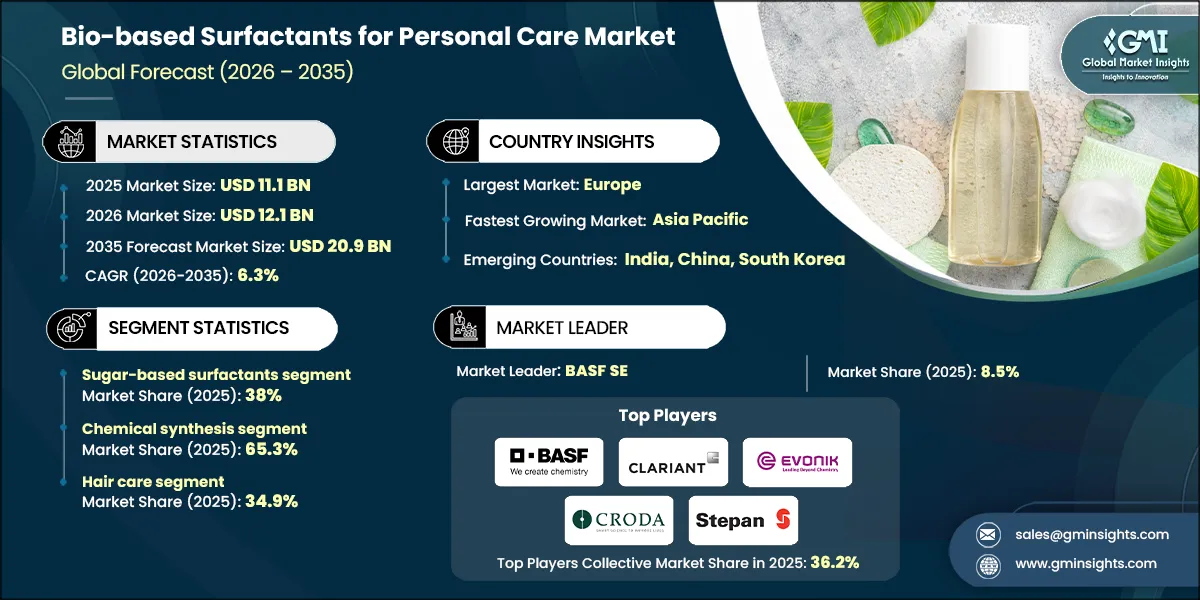
The global bio-based surfactants for personal care market was valued at USD 11.1 billion in 2025. The market is expected to grow from USD 12.1 billion in 2026 to USD 20.9 billion in 2035, at a CAGR of 6.3% according to the latest report published by Global Market Insights Inc.
Bio-based Surfactants for Personal Care Market Key Takeaways
Market Size & Growth
- 2025 Market Size: USD 11.1 Billion
- 2026 Market Size: USD 12.1 Billion
- 2035 Forecast Market Size: USD 20.9 Billion
- CAGR (2026–2035): 6.3%
Regional Dominance
- Largest Market: Europe
- Fastest Growing Region: Asia Pacific
Key Market Drivers
- Growing demand for sustainable & biodegradable personal care ingredients.
- Rising consumer awareness of clean beauty & eco-friendly products.
- Increasing regulatory support for green chemistry & renewable ingredients.
Challenges
- High fermentation & purification costs for microbial biosurfactants.
- Performance standardization across diverse renewable feedstocks.
Opportunity
- Emerging applications in waterless & concentrated personal care formats.
- Integration with microbiome-friendly & skin barrier protection formulations.
Key Players
- Market Leader: BASF SE led with over 8.5% in 2025.
- Leading Players: Top 5 players in this market include BASF SE, Clariant AG, Evonik Industries AG, Croda International Plc, Stepan Company, which collectively held a market share of 36.2% in 2025.
Get Market Insights & Growth Opportunities
- The bio-based surfactants for personal care diversity embraces microbial biosurfactants, sugar-based surfactants, amino acid-derived surfactants, bio-based ethoxylates, and other renewable surfactant technologies produced through microbial fermentation, chemical synthesis from renewable feedstocks, and enzymatic synthesis for various applications like hair care, skin care, oral care, baby care, and specialty personal care. The market is influenced by the rising demand for sustainable and biodegradable cleansing ingredients, with governments around the world undertaking measures to enable green chemistry initiatives, funding research into renewable personal care formulations, and putting in place policies to drive countries into transition to more sustainable beauty and personal care systems.
- With most of their governments with favorable policies, many European states, especially Germany, France, and the United Kingdom, have begun making substantial investments in both bio-based surfactant production and process infrastructures with the region now the largest market for bio-based surfactants for personal care. Asia Pacific has, however, been acknowledged as an upcoming and fast-emerging market driven by technological advancement and increased investment in natural and organic personal care ingredients and rising consumer shift toward clean beauty and eco-friendly product formulations.
- The green chemistry ecosystem underpinned by strong government support and innovative regulations has proven instrumental in the evolution and commercialization of bio-based surfactant development and innovation. The advent of new applications for bio-based surfactants across premium hair care, sensitive skin care, and natural baby care sectors, coupled with government strides in support of such initiatives, make this a time for global bio-based surfactant development.
To get key market trends
Bio-based Surfactants for Personal Care Market Trends
- The personal care industry becomes more and more reliant on this evolution, manifesting as a manufacturing practice that focuses on sustainability and biodegradability. Production processes are increasingly geared toward the optimization of microbial fermentation, renewable feedstock utilization, and product purity. One innovation that demonstrates efficiency of resources is a biorefinery concept, which also claims to have various valuable bio-based surfactant products from one raw material source. These are aimed at global sustainability and clean beauty goals and shaped by consumer demand for natural ingredients, transforming a supply chain to more eco-focused supply chains, and motivating regulators to further support green chemistry initiatives.
- Natural and mild cleansing solutions with reduced environmental impact are being sought, and bio-based surfactants are coming up fast in the developing world. These renewable surfactant ingredients outmatch other petroleum-derived surfactants because of superior biodegradability and better skin compatibility benefits. Amino acid-derived and sugar-based surfactants are also catching the attention of health-conscious consumers and the regulatory bodies intended to improve skin barrier protection because of their high mildness and required functional performance.
- Bio-based surfactants for personal care are attracting more and more interest as subjects for clear regulatory frameworks and certification standards to be applied to renewable surfactant products, especially in the natural cosmetics, organic personal care, and eco-label sectors. Their development increases product credibility, ensuring safety and, more importantly, acceptance into the market at a global scale. Thus, industry processes that align with regulatory requirements are constantly inspiring innovations while at the same time keeping compliance with the intent of sustainability and clean beauty development in the bio-based surfactants for personal care industry.
Bio-based Surfactants for Personal Care Market Analysis
Learn more about the key segments shaping this market
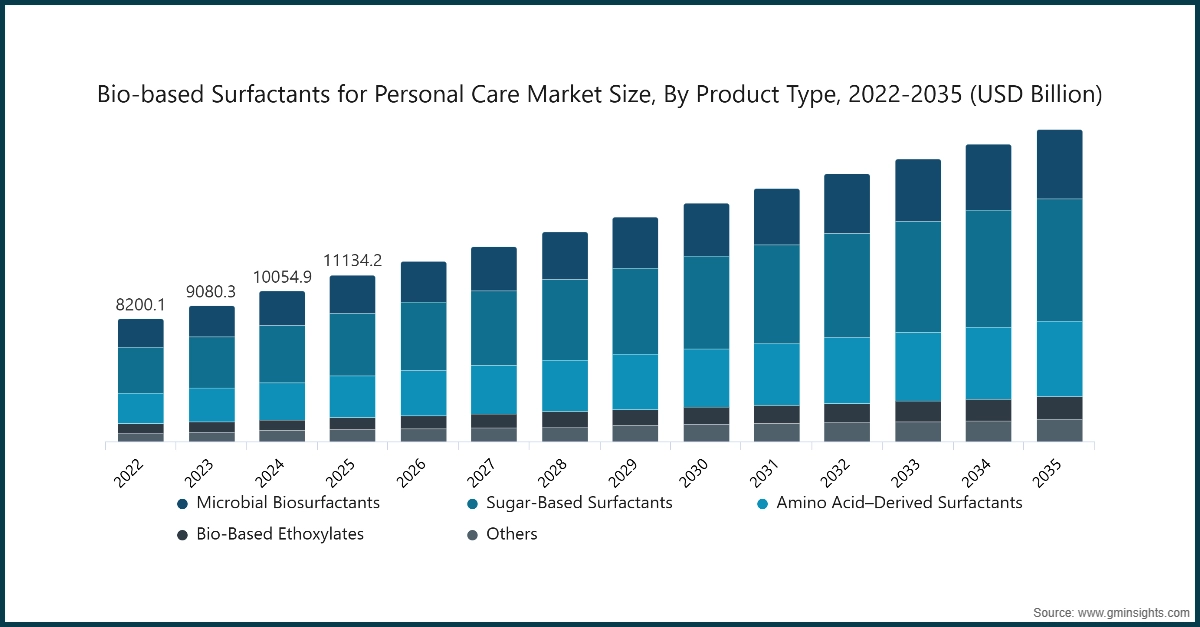
Based on product type, the market is segmented into microbial biosurfactants, sugar-based surfactants, amino acid-derived surfactants, bio-based ethoxylates, and other bio-based surfactants. Sugar-based surfactants dominated the market with an approximate market share of 38% in 2025 and is expected to grow with a CAGR of 6.7% by 2035.
- Sugar-based surfactants have begun taking their place in application across the hair care, skin care, baby care, and specialty personal care industries. Sugar-based surfactants derived from renewable carbohydrates such as glucose, sucrose, and alkyl polyglucosides (APGs) through enzymatic or chemical synthesis are appreciated for their excellent biodegradability, mildness, and compatibility with sensitive skin when compared to synthetic petroleum-based surfactants. The growing demand for natural and organic personal care products and the increasing awareness of clean beauty are driving the adoption of sugar-based surfactants in various cosmetic and personal care applications.
- Amino acid-derived surfactants represent another larger sector of bio-based surfactants for personal care, which have opportunities in the markets owing to their use as ultra-mild cleansing agents, skin-conditioning surfactants, and pH-balanced ingredients in premium hair care, facial cleansers, and baby care formulations. These surfactants are much favored for their natural origin, excellent skin compatibility, and functional properties being consistent with the trends toward gentle cleansing and dermatologically-tested products.
- Microbial biosurfactants represent a key segment based on their health benefits for antimicrobial properties, skin microbiome support, and sustainable production through fermentation processes. Rising clean beauty awareness, growing prevalence of sensitive skin conditions and scalp health concerns, and environmental sustainability demands are increasingly driving demand for microbial biosurfactants. Innovations in fermentation technology and downstream processing are increasing the yield and the cost viability of production; thus, microbial biosurfactants are one of the most innovative segments in the bio-based surfactants for personal care industry.
- Bio-based ethoxylates are linking up because of their performance benefits, particularly in high-foaming and emulsifying applications for shampoos, body washes, and specialty cleansing products. The renewable feedstock trend and a growing environmentally-conscious population represent key drivers encouraging manufacturers to position bio-based ethoxylates as sustainable, plant-derived alternatives to conventional ethoxylated surfactants. The advancements in green chemistry and bio-based ethylene oxide production are further increasing sustainability credentials and purity, thus contributing to the growth of this segment.
- Other bio-based surfactants, including bio-based betaines, bio-based sulfosuccinates, and novel fermentation-derived surfactants, while growing, still remain small segments in comparison to sugar-based and amino acid-derived surfactants. Their growing importance will be attributed to the compelled search for specialized multifunctional ingredients and next-generation sustainable surfactants by personal care formulators and clean beauty companies.
Based on technology type, the bio-based surfactants for personal care market is segmented into microbial fermentation technology, chemical synthesis from renewable feedstocks, enzymatic synthesis, and other bio-based production technologies. Chemical synthesis from renewable feedstocks dominated the market with an approximate market share of 65.3% in 2025 and is expected to grow with a CAGR of 6.2% by 2035.
- Chemical synthesis from renewable feedstocks has begun taking its place in application across the production of sugar-based surfactants, amino acid-derived surfactants, bio-based ethoxylates, and alkyl polyglucosides for diverse personal care formulations. This technology platform utilizes plant-derived raw materials such as coconut oil, palm kernel oil, corn glucose, and other renewable carbohydrates through established chemical processes that are appreciated for their scalability, cost-effectiveness, and consistent product quality when compared to emerging biotechnology approaches. The growing demand for commercially viable bio-based surfactants and the increasing investment in renewable feedstock infrastructure are driving the adoption of chemical synthesis technologies in various surfactant manufacturing operations.
- Microbial fermentation technology represents another significant sector of bio-based surfactant production, which has opportunities in the markets owing to its use for producing rhamnolipids, sophorolipids, mannosylerythritol lipids (MELs), and other microbial biosurfactants in specialty personal care, premium skin care, and natural cosmetic formulations. These fermentation-derived surfactants are much favored for their biological origin, multifunctional properties, and sustainability credentials being consistent with the trends toward circular economy and biotechnology-based ingredients.
- Enzymatic synthesis represents a key segment based on its advantages for precision modification, mild reaction conditions, and production of high-purity surfactants with specific molecular structures. Rising interest in green chemistry, growing demand for customized surfactant molecules with enhanced performance characteristics, and environmental sustainability requirements are increasingly driving demand for enzymatic synthesis. Innovations in enzyme engineering, immobilized biocatalyst systems, and continuous enzymatic processes are increasing the yield and the cost viability of production; thus, enzymatic synthesis is one of the fastest-growing segments in the bio-based surfactants for personal care industry.
Learn more about the key segments shaping this market
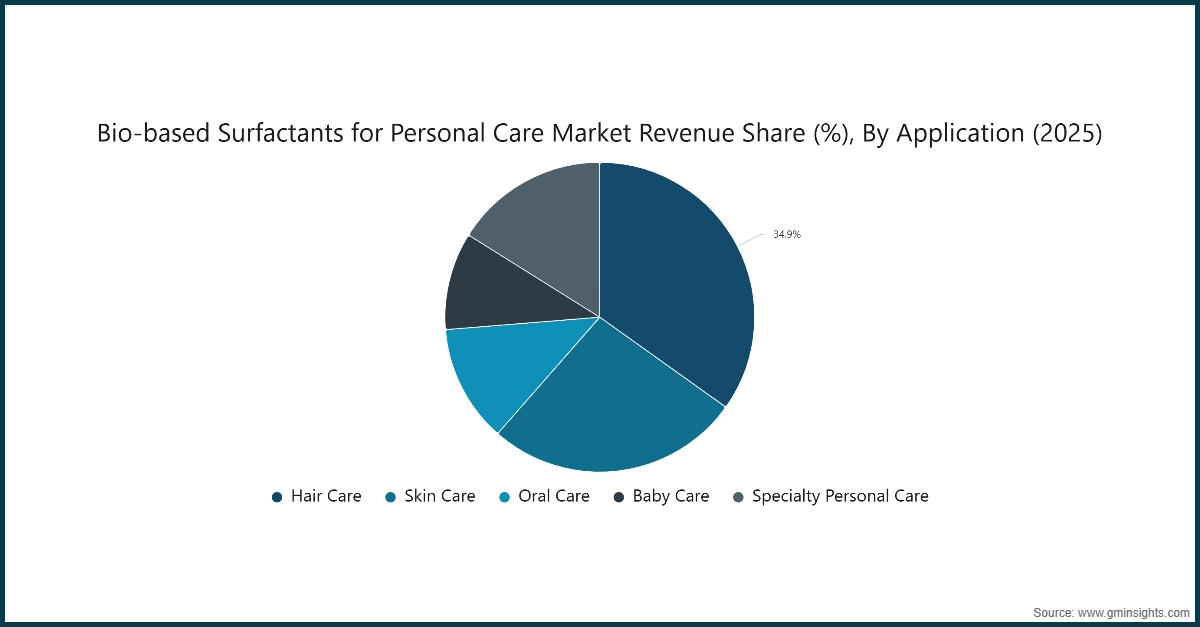
Based on application, the bio-based surfactants for personal care market is segmented into hair care, skin care, oral care, baby care, and specialty personal care. Hair care dominated the market with an approximate market share of 34.9% in 2025 and is expected to grow with a CAGR of 6% by 2035.
- Hair care has begun taking its place as the leading application across shampoos, conditioners, hair cleansers, scalp treatments, and styling products utilizing bio-based surfactants. Bio-based surfactants derived from renewable sources through fermentation, enzymatic modification, and green chemistry processes are appreciated for their gentle cleansing properties, scalp compatibility, and biodegradability when compared to synthetic sulfate-based surfactants. The growing demand for sulfate-free hair care products and the increasing awareness of scalp health and natural hair care are driving the adoption of bio-based surfactants in various hair care formulations.
- Skin care represents another substantial sector of bio-based surfactants for personal care, which has opportunities in the markets owing to their use as mild cleansing agents, emulsifiers, and solubilizers in facial cleansers, body washes, micellar waters, and sensitive skin formulations. These bio-based surfactants are much favored for their dermatological compatibility, skin barrier protection benefits, and clean beauty credentials being consistent with the trends toward gentle skincare and microbiome-friendly products.
- Specialty personal care represents a key segment based on its diverse applications for intimate hygiene products, hand sanitizers, makeup removers, and premium cosmetic formulations requiring specialized surfactant performance. Rising consumer sophistication, growing demand for multifunctional personal care products with enhanced sensory attributes, and niche market development are increasingly driving demand for bio-based surfactants in specialty applications. Innovations in bio-based surfactant chemistry and formulation science are increasing the performance versatility and the functional benefits; thus, specialty personal care is the fastest-growing segment in the bio-based surfactants for personal care industry with a CAGR of 6.8%.
- Oral care is linking up because of its specific requirements, particularly in toothpaste, mouthwash, and oral hygiene products where bio-based surfactants provide foaming, flavor dispersion, and cleaning efficacy. The natural oral care trend and a growing health-conscious consumer base represent key drivers encouraging manufacturers to position bio-based surfactants as safe, biocompatible alternatives to conventional synthetic detergents. The advancements in taste-masking technology and compatibility with active ingredients are further increasing formulation flexibility and consumer acceptance, thus contributing to the growth of this segment.
- Baby care, while representing a smaller segment, demonstrates steady growth driven by parental preference for gentle, hypoallergenic, and naturally-derived ingredients in baby shampoos, baby washes, and diaper care products. The emphasis on safety, mildness, and pediatric dermatology testing will be attributed to the sustained demand for premium bio-based surfactants by baby care manufacturers and pediatric personal care brands seeking to differentiate through natural and sustainable ingredient positioning.
Looking for region specific data?
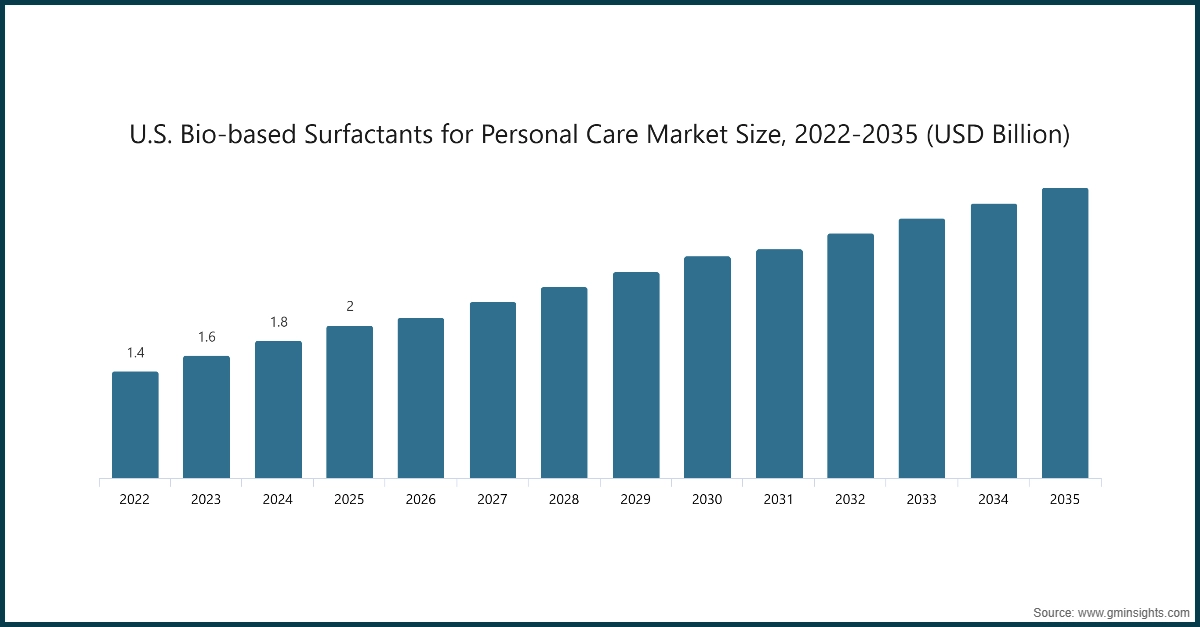
The bio-based surfactants for personal care market in North America will grow at a CAGR of approximately 6.7% between 2026 and 2035.
- Innovations in sustainable processing such as the use of microbial fermentation for clean-beauty ingredients and natural personal care development, further drive the adoption of bio-based surfactant chemicals along the principles of green chemistry and circular economy.
- Increasing awareness among consumers about the environmental impact of petroleum-based surfactants and the transition to biodegradable, plant-derived products have prompted brands to invest in bio-based surfactant ingredients for hair care, skin care, and specialty personal care, which further drives market growth expansion.
The bio-based surfactants for personal care markets in Europe, especially in a few countries like Germany, France, and the United Kingdom, are expected to grow with a rapid pace in the coming years.
- Continuous research is being conducted to develop eco-friendly fermentation and enzymatic synthesis techniques which will lessen environmental footprint but also increase purity and performance of bio-based surfactant products for organic cosmetics, natural personal care, and dermatologically-tested formulations.
- Increasing consumer demand for clean-label, sustainable, and cruelty-free products is leading industries into investment in green biotechnology and is reinforcing sustainability and clean beauty trends across personal care, cosmetics, and professional beauty sectors.
The bio-based surfactants for personal care market in China, India, and South Korea is expected to have lucrative growth between 2026 and 2035, with CAGR of 6.5% in the Asia Pacific region.
- The phenomenon of rapid urbanization and increasing disposable incomes have driven the demands of advanced bio-based surfactant technologies in premium hair care, natural skin care, and K-beauty using plant-derived and fermentation-based products.
- The demand for dermatologically-tested environmentally sustainable cleansing solutions, along with newer innovative biotechnology manufacturing practices are driving the increase for natural, multifunctional, and bio-based surfactant ingredients.
Between 2026 and 2035, the market for bio-based surfactants for personal care in the Middle East is projected to grow significantly during this period.
- Enhanced infrastructure development for personal care, cosmetics, and halal beauty industries with advanced bio-based surfactant production systems has been supported by increasing government initiatives and industry efforts that promote the development and acceptance of innovative sustainable surfactant technologies.
- Technological advancements in bio-fermentation and green chemistry methods such as immobilized enzyme technology and renewable feedstock optimization have reduced expenses because of the reduced dependency on petroleum-derived ingredients and also helped convert these systems as sustainable bio-based surfactant production systems accepted in numerous sectors.
Between 2025 and 2035, a promising expansion of the bio-based surfactants for personal care sector is foreseen in Latin America.
- Increased environmental awareness and growing policies promoting natural ingredients and sustainable practices would promote use of bio-based surfactant technologies in the hair care, skin care, baby care and natural cosmetics industries.
- Expanding disposable incomes and increasing scientific research into biodegradable surfactants and microbiome-friendly ingredients are fueling demand for environmentally friendly, plant-derived cleansing systems, thus contributing towards growth in personal care, cosmetics, and professional salon applications.
Bio-based Surfactants for Personal Care Market Share
Bio-based surfactants for personal care industry is moderately consolidated with players like BASF SE, Clariant AG, Evonik Industries AG, Croda International Plc, Stepan Company, and Kao Corporation which accounts for 36.2% market share in 2025.
The bio-based surfactants for personal care market consists of such leading companies operating mostly in their regional areas. Their long years of experience with bio-based surfactant technologies have allowed these companies to maintain a strong market position worldwide. Their product offerings are diverse and majorly supported by production capacities, fermentation facilities, and distribution networks, which can serve the increasing demand for bio-based surfactants for personal care in various regions.
Bio-based Surfactants for Personal Care Market Companies
Major players operating in the bio-based surfactants for personal care industry includes:
- BASF SE
- Clariant AG
- Evonik Industries AG
- Croda International Plc
- Kao Corporation
- Stepan Company
- Sino Lion
- Galaxy Surfactants Ltd
- Ajinomoto Co., Inc.
- Seppic
- Lonza
- Innospec
- Holiferm Ltd
- Solvay / Syensqo
- Miwon Commercial
BASF SE is the world's leading chemical company headquartered in Ludwigshafen, Germany, with operations spanning over 80 countries and a global workforce. The company operates through six business segments including Chemicals, Materials, Industrial Solutions, Surface Technologies, Nutrition & Care, and Agricultural Solutions. BASF's Care Chemicals division is a key supplier to the personal care and cosmetics industry, offering a comprehensive portfolio of sustainable ingredients including bio-based surfactants, emollients, polymers, and active ingredients. The company has made significant investments in renewable raw materials and green chemistry, positioning itself as a leader in sustainable personal care solutions with a strong focus on innovation, digitalization, and circular economy principles.
Clariant AG is a globally leading specialty chemicals company based in Muttenz, Switzerland, with a presence across more than 100 countries. The company operates through three business areas: Care Chemicals, Catalysis, and Adsorbents & Additives. The Care Chemicals business unit is a major supplier to the personal care, home care, and industrial applications markets, focusing on sustainable and bio-based solutions. Clariant has established itself as a pioneer in green chemistry and sustainable innovation, with a strong commitment to renewable raw materials, biodegradable ingredients, and carbon-neutral production processes. The company's strategic focus emphasizes innovation in natural and bio-based surfactants, positioning Clariant as a preferred partner for brands seeking clean-label and environmentally responsible personal care ingredients.
Evonik Industries AG is one of the world's leading specialty chemicals companies headquartered in Essen, Germany, with a global presence in more than 100 countries. The company operates through four business divisions: Nutrition & Care, Smart Materials, Performance Materials, and Technology & Infrastructure. Evonik's Nutrition & Care division serves the personal care, cosmetics, pharmaceutical, and nutrition markets with innovative specialty ingredients and bio-based solutions. The company has made substantial investments in biotechnology and fermentation-based production, establishing itself as a leader in microbial biosurfactants and sustainable personal care ingredients. Evonik's strategic focus emphasizes innovation through biotechnology, sustainable manufacturing, and developing next-generation bio-based ingredients that meet the growing demand for natural and environmentally friendly personal care products.
Croda International Plc is a global specialty chemicals company headquartered in Snaith, United Kingdom, with operations in over 38 countries. The company operates through three core business segments: Life Sciences, Consumer Care, and Performance Technologies. Croda's Consumer Care division is a leading supplier to the personal care, beauty, and cosmetics industries, offering a wide range of sustainable and bio-based ingredients including surfactants, emollients, actives, and functional ingredients. The company has established ambitious sustainability targets including achieving net-zero emissions and sourcing raw materials from renewable or sustainable sources. Croda's strategic focus emphasizes innovation in natural and bio-based chemistry, with significant investments in biotechnology, fermentation technology, and renewable feedstock development to meet the evolving demands of the clean beauty and sustainable personal care markets.
Kao Corporation is a leading Japanese chemical and consumer products company headquartered in Tokyo, Japan, with operations in more than 80 countries. The company operates through two main business segments: Consumer Products and Chemical. Kao's Chemical business is a major supplier to the personal care, cosmetics, and industrial markets, offering a comprehensive range of surfactants, functional materials, and specialty chemicals. The company has a long history of innovation in surfactant chemistry dating back several decades and has established itself as a pioneer in amino acid-based and bio-derived surfactant technologies. Kao's strategic focus emphasizes sustainability, innovation, and creating value through advanced chemistry, with significant investments in renewable raw materials, biodegradable ingredients, and environmentally responsible manufacturing processes aligned with the company's ESG commitments and vision for a sustainable future.
Bio-based Surfactants for Personal Care Market Report Attributes
| Key Takeaway | Details |
|---|---|
| Market Size & Growth | |
| Base Year | 2025 |
| Market Size in 2025 | USD 11.1 Billion |
| Market Size in 2026 | USD 12.1 Billion |
| Forecast Period 2026-2035 CAGR | 6.3% |
| Market Size in 2035 | USD 20.9 Billion |
| Key Market Trends | |
| Drivers | Impact |
| Growing demand for sustainable & biodegradable personal care ingredients | Driving increased adoption and innovation in bio-based surfactants, expanding market opportunities across hair care, skin care, and specialty formulations |
| Rising consumer awareness of clean beauty & eco-friendly products | Boosting demand for plant-derived and microbial surfactants within the personal care market, particularly in premium and natural product segments |
| Increasing regulatory support for green chemistry & renewable ingredients | Facilitating favorable policies and incentives, promoting bio-based surfactant production and market growth through sustainability mandates |
| Pitfalls & Challenges | Impact |
| High fermentation & purification costs for microbial biosurfactants | Creating barriers to large-scale commercialization of advanced bio-based surfactants, limiting market penetration in cost-sensitive segments |
| Performance standardization across diverse renewable feedstocks | Challenging formulation consistency and requiring extensive R&D investment to match synthetic surfactant performance benchmarks |
| Opportunities: | Impact |
| Emerging applications in waterless & concentrated personal care formats | Opening new markets for high-performance bio-based surfactants, enhancing sustainability benefits and product innovation |
| Integration with microbiome-friendly & skin barrier protection formulations | Presents opportunities for bio-based surfactants to contribute to dermatological health solutions while generating value-added personal care products |
| Market Leaders (2025) | |
| Market Leader |
8.5% |
| Top Players |
Collective Market Share of 36.2% in 2025 |
| Competitive Edge |
|
| Regional Insights | |
| Largest Market | Europe |
| Fastest growing market | Asia Pacific |
| Emerging countries | India, China, South Korea |
| Future outlook |
|
What are the growth opportunities in this market?
Bio-based Surfactants for Personal Care Industry News
- In May 2024, Evonik Industries AG announced a significant expansion of its biosurfactant production capacity at its facility in Slovakia to meet the growing global demand for sustainable surfactants in personal care applications. The expansion focuses on scaling up the production of rhamnolipid-based biosurfactants, which are produced through microbial fermentation technology. This strategic investment reflects the increasing market demand for naturally-derived, biodegradable surfactants in premium personal care formulations, particularly in Europe and North America. The expanded facility will enable Evonik to serve the growing clean beauty segment and support brands transitioning from conventional petroleum-based surfactants to bio-based alternatives.
- In February 2022, Clariant AG announced the launch of an expanded portfolio of bio-based surfactants specifically designed for natural and organic personal care formulations in 2024. The new product range features enhanced biodegradability profiles and improved performance characteristics for sulfate-free shampoos, gentle cleansers, and baby care applications. This launch is part of Clariant's broader strategy to strengthen its position in the sustainable personal care ingredients market and respond to increasing regulatory pressures and consumer preferences for clean-label products. The company highlighted that the new surfactant range is derived from renewable plant-based raw materials and meets stringent eco-certification standards including COSMOS and Ecocert.
This bio-based surfactants for personal care market research report includes in-depth coverage of the industry, with estimates & forecasts in terms of revenue (USD Billion) and volume (Kilo Tons) from 2022 to 2035, for the following segments:
Market, By Product Type
- Microbial biosurfactants
- Glycolipids
- Sophorolipids
- Rhamnolipids
- Mannosylerythritol lipids (MELs)
- Trehalolipids
- Lipopeptides
- Surfactin
- Iturin
- Lichenysin
- Glycolipids
- Sugar-based surfactants
- Alkyl polyglucosides (APGs)
- Glucamides
- Sucrose esters
- Sorbitan esters
- Amino acid–derived surfactants
- Glutamates
- Glycinates
- Isethionates
- Sarcosinates
- Taurates
- Bio-based ethoxylates
- Bio-based alcohol ethoxylates
- Bio-based polysorbates
- Bio-based PEG derivatives
- Bio-based castor oil ethoxylates
- Others
Market, By Technology Type
- Microbial fermentation technology
- Chemical synthesis from renewable feedstocks
- Enzymatic synthesis
- Others
Market, By Application
- Hair care
- Skin care
- Oral care
- Baby care
- Specialty personal care
The above information is provided for the following regions and countries:
- North America
- U.S.
- Canada
- Europe
- Germany
- UK
- France
- Spain
- Italy
- Rest of Europe
- Asia Pacific
- China
- India
- Japan
- Australia
- South Korea
- Rest of Asia Pacific
- Latin America
- Brazil
- Mexico
- Argentina
- Rest of Latin America
- Middle East and Africa
- Saudi Arabia
- South Africa
- UAE
- Rest of Middle East and Africa
Frequently Asked Question(FAQ) :
What is the market size of the bio-based surfactants for personal care market in 2025?
The market size for bio-based surfactants for personal care is valued at USD 11.1 billion in 2025. Increasing demand for sustainable and biodegradable ingredients is driving market growth.
What is the market size of the bio-based surfactants for personal care industry in 2026?
The market size for bio-based surfactants for personal care reached USD 12.1 billion in 2026, reflecting steady growth driven by rising consumer awareness of clean beauty products.
What is the projected value of the bio-based surfactants for personal care market by 2035?
The market size for bio-based surfactants for personal care is expected to reach USD 20.9 billion by 2035, growing at a CAGR of 6.3%. This growth is fueled by regulatory support for green chemistry and increasing adoption of renewable ingredients.
What was the market share of sugar-based surfactants in 2025?
Sugar-based surfactants dominated the market with an approximate share of 38% in 2025. Their leadership is attributed to their widespread use in personal care formulations and growing preference for plant-derived ingredients.
What was the market share of chemical synthesis from renewable feedstocks in 2025?
Chemical synthesis from renewable feedstocks accounted for approximately 65.3% of the market in 2025, making it the leading technology type. Its dominance is supported by advancements in renewable feedstock processing and scalability.
What is the growth outlook for the hair care segment from 2025 to 2035?
The hair care segment is projected to grow at a CAGR of 6% through 2035. Increasing demand for bio-based surfactants in shampoos, conditioners, and specialty hair care products is driving this growth.
Which region leads the bio-based surfactants for personal care market?
North America leads the market, with a projected CAGR of approximately 6.7% between 2026 and 2035. The region's growth is driven by strong regulatory support, consumer preference for eco-friendly products, and advancements in bio-based surfactant technologies.
What are the upcoming trends in the bio-based surfactants for personal care industry?
Key trends include the adoption of waterless and concentrated personal care formats, integration with microbiome-friendly formulations, and advancements in microbial fermentation and enzymatic synthesis technologies. Increasing focus on dermatological health solutions and sustainability is also shaping the market.
Who are the key players in the bio-based surfactants for personal care market?
Key players include BASF SE, Clariant AG, Evonik Industries AG, Croda International Plc, Kao Corporation, Stepan Company, Sino Lion, and Galaxy Surfactants Ltd.
Bio-based Surfactants for Personal Care Market Scope
Related Reports