Summary
Table of Content

ATP Assay Market
Get a free sample of this report
Form submitted successfully!
Error submitting form. Please try again.
Thank you!
Your inquiry has been received. Our team will reach out to you with the required details via email. To ensure that you don't miss their response, kindly remember to check your spam folder as well!
Request Sectional Data
Thank you!
Your inquiry has been received. Our team will reach out to you with the required details via email. To ensure that you don't miss their response, kindly remember to check your spam folder as well!
Form submitted successfully!
Error submitting form. Please try again.
ATP Assay Market Size
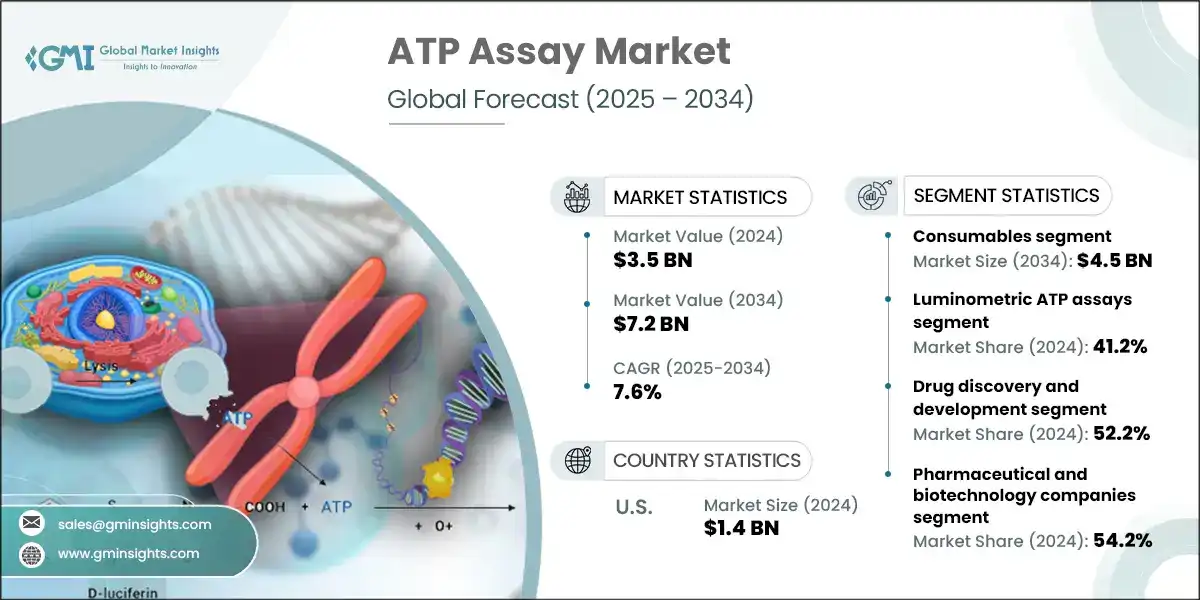
The global ATP assay market was valued at USD 3.5 billion in 2024 and is projected to grow from USD 3.7 billion in 2025 to USD 7.2 billion by 2034, expanding at a CAGR of 7.6%. The market is experiencing consistent growth, driven by the increasing prevalence of chronic diseases and the rising demand for personalized medicine. Technological advancements in ATP assay platforms, particularly in luminometric and enzymatic detection methods, are significantly improving sensitivity, speed, and scalability.
ATP Assay Market Key Takeaways
Market Size & Growth
- 2024 Market Size: USD 3.5 Billion
- 2034 Forecast Market Size: USD 7.2 Billion
- CAGR (2025–2034): 7.6%
Regional Dominance
- Largest Market: North America
- Fastest Growing Region: Asia Pacific
Key Market Drivers
- Rising burden of chronic diseases.
- Growing demand for cell-based assays.
- Growth in biopharmaceutical R&D.
- Technological advancements in assay formats.
Challenges
- High cost of advanced kits.
- Stringent regulatory guidelines.
Opportunity
- Explosive growth in hygiene and environmental monitoring.
Key Players
- Market Leader: Thermo Fisher Scientific led with over 28.5% market share in 2024.
- Leading Players: Top 5 players in this market include Thermo Fisher Scientific, Danaher, Merck, Promega Corporation, 3M Company, which collectively held a market share of 55% in 2024.
Get Market Insights & Growth Opportunities
These advancements are expanding the adoption of ATP assays across various life science applications, including drug discovery, development, contamination testing, and disease diagnostics. The integration of high-throughput luminometers and spectrophotometers is further enhancing research efficiency and assay accuracy. Key market players include Thermo Fisher Scientific, Danaher, Merck, 3M Company, and Promega Corporation.
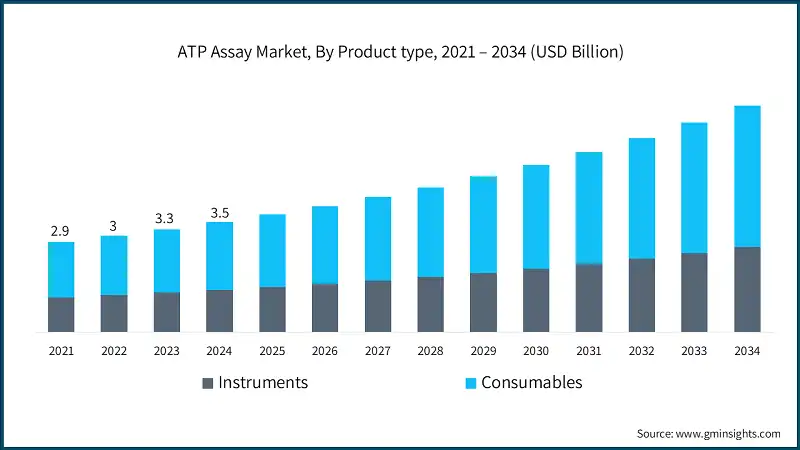
The market increased from USD 2.9 billion in 2021 to USD 3.3 billion in 2023. The growth of the market is primarily attributed to the increasing prevalence of chronic diseases such as cancer, neurodegenerative disorders, and autoimmune conditions, which has driven the demand for advanced cell-based analytical tools. Researchers and pharmaceutical companies are focusing on understanding cellular metabolism and energy dynamics, making ATP assays essential in both basic and translational research. A key factor contributing to this demand is the global cancer burden. According to the World Health Organization (WHO), cancer remains a leading cause of death worldwide, accounting for nearly 10 million deaths in 2020, or approximately one in six deaths globally, as projected in 2025. This highlights the critical need for tools that can analyze cellular responses to treatments and disease progression. ATP assays play a significant role by enabling the measurement of cellular energy levels, which are closely associated with cell viability assay (the market for which was valued at USD 1.7 billion in 2023 and is expected to grow at a CAGR of 8.5% from 2024 to 2032), proliferation, and therapeutic response.
The increasing demand for cell-based assays is a significant driver of market growth. With the shift toward targeted and personalized drug development, researchers require advanced tools to gain real-time insights into cellular behavior. ATP assays have become critical in evaluating cell health, cytotoxicity, and metabolic activity, making them indispensable for early-stage drug screening and toxicity assessment.
The increasing focus on biopharmaceutical research and development is driving the adoption of ATP assays among pharmaceutical and biotechnology companies. As reported by the World Intellectual Property Organization (WIPO) in 2024, global R&D spending reached approximately USD 3 trillion in 2023, with a substantial share allocated to life sciences and cell-based assay advancements. ATP assays play a critical role in these processes, enabling researchers to assess compound efficacy and refine therapeutic candidates effectively.
ATP assays are critical tools used to measure adenosine triphosphate (ATP), the primary energy molecule in living cells. These assays play a vital role in assessing cell viability, metabolic activity, and cytotoxic effects, making them indispensable in fields such as medical research, drug discovery, and environmental analysis. By providing insights into cellular energy levels, ATP assays enable researchers to evaluate cellular responses to treatments, stress factors, and disease conditions effectively.
To get key market trends
ATP Assay Market Trends
- The market is undergoing significant advancements, driven by increasing investments in chronic disease research, drug discovery, and environmental monitoring. Regulatory frameworks supporting contamination testing and cell viability screening are further propelling the adoption of ATP-based platforms across pharmaceutical, biotechnology, and industrial sectors.
- High-content screening technologies, such as luminometric, enzymatic, and BRET-based ATP assays, are becoming essential tools for researchers. These technologies enable the detection of subtle changes in cellular energy with enhanced sensitivity and throughput. For instance, Thermo Fisher Scientific’s ATP Determination Kit integrates seamlessly with automated luminometers, delivering reproducible and high-throughput results across various cell types and experimental conditions.
- Additionally, AI-powered platforms with features like automated signal normalization, real-time data analytics, and predictive modeling are improving assay accuracy and laboratory efficiency. These systems are increasingly integrated with cloud-based data management tools, facilitating remote collaboration and longitudinal studies. Promega’s GloMax Discover System, for example, supports real-time ATP quantification with built-in data analysis capabilities, streamlining workflows.
- Industry players are also focusing on innovations such as next-generation reagents, compatibility with 3D cell cultures, and AI-driven quality control to address the growing demand from academic and commercial laboratories. As healthcare systems emphasize early disease detection, contamination control, and precision therapeutics, ATP assay platforms are evolving into intelligent research solutions that enable scalable deployment, personalized insights, and cross-disciplinary integration.
ATP Assay Market Analysis
Learn more about the key segments shaping this market
The global market was valued at USD 2.9 billion in 2021. The market size reached USD 3.3 billion in 2023, up from USD 3 billion in 2022.
Based on the product type, the ATP assay market is segmented into instruments and consumables. The consumables segment led this market in 2024, primarily due to the high and recurring demand for assay kits, reagents, and microplates used in routine laboratory workflows. These consumables are essential for conducting ATP-based experiments across various platforms, including drug screening, contamination testing, and cell viability analysis. Their consistent use in both research and diagnostic settings contributes to sustained market dominance. This segment was valued at USD 2.1 billion in 2024 and is projected to reach USD 4.5 billion by 2034, growing at a CAGR of 7.7%.
This growth is driven by the increasing demand for high-performance reagents, ATP assay kits, and detection consumables that support scalable, reproducible, and high-throughput energy metabolism analysis across pharmaceutical R&D, academic research, and clinical diagnostics. The recurring nature of consumable use in routine workflows further reinforces their dominant market position. In comparison, the instrument segment, valued at USD 1.3 billion in 2024, is expected to grow to USD 2.7 billion by 2034, with a slightly lower CAGR of 7.4%. This growth is supported by the rising adoption of automated luminometers, and integrated imaging platforms. The integration of AI for real-time data analysis and expanding applications in drug discovery, toxicology, and personalized medicine across advanced research and clinical laboratories are further driving demand for ATP assay instruments.
- The consumables segment, comprising reagents, ATP assay kits, buffers, and microplates, dominates the ATP assay market due to its critical role in routine workflows for cell viability and energy metabolism analysis. These products are extensively utilized across pharmaceutical R&D, academic research, and clinical diagnostics, with their recurring demand ensuring consistent market growth.
- This segment's prominence is attributed to its ability to deliver scalable, reproducible, and high-sensitivity ATP analysis. Consumables are integral to various platforms, including luminometry, spectrophotometry, and automated microplate readers, enhancing laboratory efficiency and throughput. Their compatibility with liquid handling systems and multiplexing protocols further supports their widespread adoption.
- For example, Thermo Fisher Scientific’s ATP Determination Kit is a widely used consumable that facilitates rapid and sensitive ATP detection in biological samples. Utilizing a luciferase-based bioluminescence reaction, the kit enables researchers to evaluate cell viability, cytotoxicity, and metabolic activity with high specificity and minimal background interference.
- Overall, the consumables segment is expected to remain a cornerstone of ATP assay workflows, driving advancements in assay design, supporting precision research, and meeting the increasing demand for applications in personalized medicine, environmental monitoring, and translational research.
Based on assay type, the ATP assay market is segmented into luminometric ATP assays, enzymatic ATP assays, bioluminescence resonance energy transfer (BRET) ATP assays, cell-based ATP assays, and other assay types. The luminometric ATP assays segment accounted for the highest market share of 41.2% in 2024.
- The luminometric ATP assay segment leads the market due to its ability to provide rapid, sensitive, and quantitative measurements of cellular energy. This assay type is highly preferred for its high signal-to-noise ratio, ease of use, and compatibility with automated platforms, making it suitable for both basic research and high-throughput drug screening applications.
- Luminometric assays are designed for scalable workflows and are often integrated with advanced features such as microplate-based detection, real-time signal acquisition, and multiplexing capabilities. These attributes make them particularly valuable in pharmaceutical and clinical research laboratories, where precision and efficiency are critical. Their ability to handle large sample volumes with minimal manual intervention enhances productivity and reduces turnaround times significantly.
- For example, Promega’s CellTiter-Glo Luminescent Cell Viability Assay is a widely used luminometric ATP assay. It quantifies ATP levels through a luciferase-based bioluminescent reaction, producing a stable glow-type signal proportional to the ATP present. This enables researchers to assess cell viability and cytotoxicity with high accuracy and minimal background interference.
- Meanwhile, the cell-based ATP assay segment is projected to grow at the highest CAGR of 8% during the forecast period. This growth is attributed to its cost-effectiveness, ease of use, and increasing adoption in academic and clinical laboratories for routine cell viability and metabolic activity analysis. Its ability to deliver quantitative results with minimal sample preparation, along with compatibility across various assay platforms, positions it as an attractive option for high-throughput workflows.
Based on the application, the ATP assay market is segmented into drug discovery and development, contamination testing, and disease detection. The drug discovery and development segment accounted for the highest market share of 52.2% in 2024.
- The drug discovery and development segment leads the market in terms of application, driven by its critical role in assessing cell viability, cytotoxicity, and metabolic activity during early-stage drug screening. ATP levels are a reliable marker of cellular health, making these assays indispensable for evaluating the efficacy and safety of drug candidates across diverse therapeutic areas.
- ATP-based assay products are specifically designed for high-throughput screening workflows, offering features such as luminescent and enzymatic detection, automation compatibility, and multiplexing capabilities. These attributes enable rapid, quantitative results with minimal sample preparation, making them highly suitable for pharmaceutical research and academic laboratories.
- For example, AAT Bioquest’s ReadiUse Rapid Luminometric ATP Assay Kit is a widely utilized solution for measuring metabolically active cells in culture. The kit employs a firefly luciferase-based bioluminescent reaction to detect ATP levels with high sensitivity and operates in a user-friendly “add-mix-measure” format. It is optimized for 96-well and 384-well microplate formats, ensuring flexibility and reproducibility in applications such as compound screening, cytotoxicity profiling, and cell proliferation studies.
- Meanwhile, the contamination testing segment is projected to grow at a CAGR of 7.5%, driven by the increasing demand for rapid hygiene monitoring, microbial detection, and cleanroom validation across industries such as pharmaceutical manufacturing and healthcare. ATP assays are extensively used in these applications to detect biological residues and microbial contamination by measuring residual ATP on surfaces and equipment.
Learn more about the key segments shaping this market
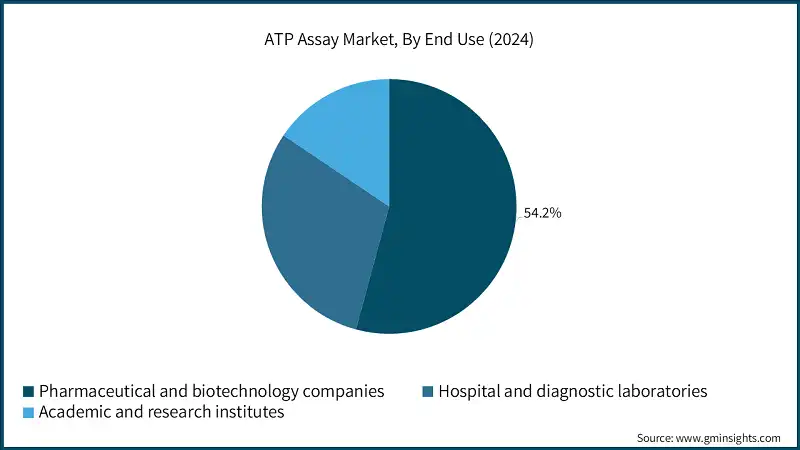
Based on end use, the ATP assay market is segmented into pharmaceutical and biotechnology companies, hospital and diagnostic laboratories, and academic and research institutes. The pharmaceutical and biotechnology companies segment accounted for the highest market share of 54.2% in 2024.
- The pharmaceutical and biotechnology companies segment demonstrates high assay volumes and well-integrated research pipelines, driving the adoption of advanced ATP detection technologies. These assays are frequently combined with robotic liquid handlers, laboratory information management systems (LIMS), and cloud-based analytics platforms, enabling streamlined workflows, and effective decision-making processes.
- Research advancements in areas such as oncology, infectious diseases, and metabolic disorders have further fueled the use of ATP assays, as cellular energy dynamics serve as critical indicators of treatment efficacy and disease progression.
- The incorporation of automation and real-time data analysis tools has significantly improved workflow efficiency, delivering rapid and reproducible results. Additionally, increased investments in biopharmaceutical innovation and personalized medicine have strengthened the segment's market position, establishing pharmaceutical and biotechnology companies as key contributors to the development of ATP assay technologies.
- The academic and research institutes segment, which accounted for 30.2% of the market share in 2024, has also experienced notable growth. This growth is attributed to the rising adoption of ATP assays in cellular metabolism studies and drug efficacy evaluations. These institutions utilize advanced laboratory infrastructure and skilled personnel to ensure accurate assay execution and data analysis. With high sample throughput, this segment plays a pivotal role in government-funded research initiatives and clinical trials, making it a vital environment for both routine and exploratory ATP testing.
Looking for region specific data?
North America dominated the global ATP assay market with the highest market share of 42.5% in 2024. The region benefits from a well-established healthcare and research infrastructure, along with a strong culture of adopting cutting-edge biomedical technologies. The growing focus on cell viability, drug screening, and microbial contamination detection, especially in pharmaceutical and biotechnology sectors has significantly boosted demand for ATP assays. Additionally, the rising incidence of chronic diseases and the expansion of clinical research activities in the U.S. and Canada continue to propel market growth.
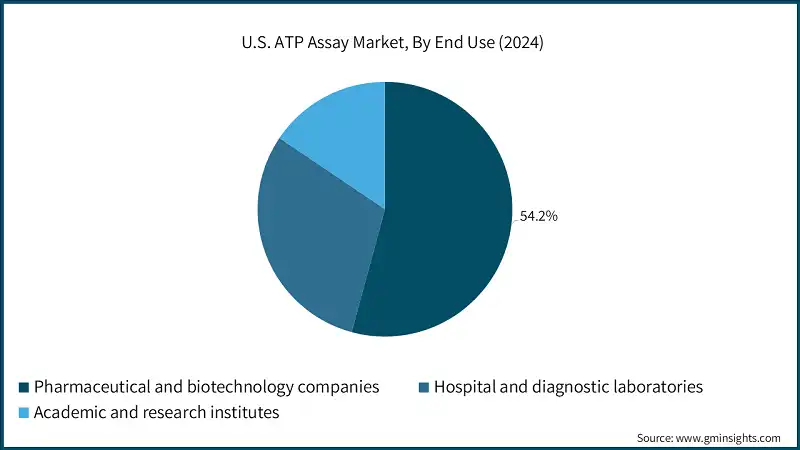
- The U.S. ATP assay market was valued at USD 1.1 billion in 2021 and USD 1.2 billion in 2022. By 2024, the market size reached USD 1.4 billion, up from USD 1.3 billion in 2023.
- The country continues to experience a significant burden of chronic and infectious diseases, driving the demand for sensitive and rapid diagnostic tools. ATP assays are increasingly utilized in clinical and research applications to monitor cellular health, detect microbial contamination, and evaluate treatment efficacy.
- According to the Global Cancer Observatory, approximately 89.1% of cancer cases in North America were reported in the U.S. in 2022. This highlights the growing need for advanced cell-based assays, including ATP-based methods, to assess metabolic activity and cytotoxicity.
- The U.S. market benefits from a supportive regulatory environment, substantial public and private investments in life sciences, and the widespread adoption of automated, high-throughput technologies. These factors continue to drive the development and integration of ATP assays across pharmaceutical, biotechnology, and academic sectors.
- As demand for precision diagnostics and real-time cellular analysis increases, the U.S. market is expected to sustain strong growth. Innovations in oncology, immunotherapy, and neurodegenerative disease research, along with expanding applications in environmental and food safety testing, are anticipated to further propel market expansion.
Europe ATP assay market accounted for USD 901.5 million in 2024 and is anticipated to show lucrative growth over the forecast period.
- Europe’s market is experiencing growth due to the increasing adoption of advanced cell-based research tools, automated screening platforms, and AI-driven assay technologies. The rising focus on cellular metabolism, drug efficacy testing, and microbial contamination detection has significantly boosted the utilization of ATP assays in clinical and research applications.
- According to WHO Europe, cancer remains the second leading cause of death in the region, with over 3.7 million new cases and 1.9 million deaths reported annually. This substantial disease burden highlights the demand for sensitive and scalable tools like ATP-based assays, which are widely used in oncology, neurology, and infectious disease research.
- Key markets such as Germany, France, and UK are leading in ATP assay adoption, particularly in pharmaceutical R&D and academic research. These countries are leveraging high-throughput platforms that enable multiplexed ATP quantification, real-time cell viability analysis, and integration with automated liquid handling systems, enhancing both accuracy and operational efficiency.
- Public-private partnerships, national health initiatives, and a robust biopharmaceutical ecosystem are driving market expansion. Europe’s emphasis on early disease detection, personalized medicine, and harmonized regulatory frameworks positions the region as a significant contributor to global ATP assay advancements.
Germany ATP assay market is projected to experience steady growth between 2025 and 2034.
- Germany’s market is expanding steadily, supported by the country’s robust healthcare and research infrastructure and a growing demand for advanced cell-based diagnostic tools. According to the Global Cancer Observatory, Germany reported 605,805 new cancer cases, 253,170 deaths, and over 1.88 million prevalent cases (5-year) in 2022, underscoring the need for sensitive assays to monitor cellular health and treatment response.
- These figures highlight the importance of ATP-based assays in oncology research, particularly for evaluating cell viability and metabolic activity in both male and female cancer studies.
- Hospitals, academic institutions, and pharmaceutical companies in Germany are increasingly adopting high-throughput ATP assay platforms for applications such as drug screening, microbial contamination detection, and cytotoxicity testing. These platforms enable real-time analysis and are often integrated with automated systems to enhance throughput and reproducibility.
- Germany’s commitment to precision medicine, biopharmaceutical innovation, and translational research is further accelerating market growth. With strong regulatory support, advanced laboratory infrastructure, and active public-private collaborations, the country remains a key driver of ATP assay adoption within Europe.
The Asia Pacific region is projected to be valued at USD 827.5 million in 2025 and is expected to reach USD 1.7 billion by 2034.
- Asia Pacific’s ATP assay market is witnessing strong growth, driven by a rapidly aging population and rising prevalence of chronic diseases such as cancer and neurodegenerative disorders. According to the United Nations (UN), the number of older persons in the region is projected to rise from 630 million in 2020 to approximately 1.3 billion by 2050, with one-quarter of the population aged 60 or older by mid-century. This demographic shift is expected to significantly increase demand for ATP-based diagnostics and cellular health monitoring tools.
- Countries such as China, India, Japan, and South Korea are making substantial investments in biopharmaceutical R&D, laboratory automation, and personalized medicine. The adoption of high-throughput ATP assay platforms is accelerating across academic institutions, contract research organizations (CROs), and clinical laboratories, supporting applications in drug screening, microbial detection, and cell viability analysis.
- Improving health insurance coverage, expanding digital healthcare infrastructure, and growing public-private partnerships are further facilitating the deployment of advanced ATP assay technologies. These developments are enhancing access to real-time, scalable diagnostic solutions across both urban and rural healthcare settings.
Japan ATP assay market is poised to witness lucrative growth between 2025 and 2034.
- Japan’s aging population is a significant factor driving the growth of the market. As of 2023, 29.1% of the population is aged 65 and older, according to Statista. This demographic shift is fueling the demand for advanced diagnostic tools to enable early detection and monitoring of age-related conditions, including cancer and neurodegenerative diseases.
- Government initiatives and public awareness campaigns are enhancing access to screening and research services, positioning Japan as a key player in the Asia Pacific biomedical sector. The country is heavily investing in automated, high-throughput ATP assay platforms for applications in oncology, immunology, and neurological research.
- Japan’s robust healthcare infrastructure, emphasis on precision medicine, and focus on biopharmaceutical innovation are driving the adoption of ATP assays across clinical and academic settings. The integration of AI-powered data analytics, real-time ATP quantification systems, and automated liquid handling technologies is improving workflow efficiency and diagnostic accuracy.
The ATP assay market in Brazil is witnessing substantial growth in Latin America region, driven by the country's increasing emphasis on chronic disease management and the rising demand for advanced diagnostic technologies.
- Brazil's investments in biomedical research and diagnostic infrastructure are driving the increased adoption of ATP-based cell viability and metabolic activity assays across both public and private healthcare sectors.
- According to the Brazilian Institute of Geography and Statistics, the population aged 65 and older reached 22.17 million in 2022, accounting for 10.9% of the total population, a 57.4% increase since 2010. This demographic trend is boosting the demand for early detection tools and preventive care solutions, including ATP assays utilized in oncology, neurology, and infectious disease monitoring.
- Additionally, Brazil is strengthening its position in clinical trials, biopharmaceutical innovation, and academic research, establishing itself as a key emerging market for ATP assay technologies in Latin America. The adoption of high-throughput platforms and real-time ATP quantification systems is gaining momentum, particularly in drug development and microbial contamination testing.
- The country’s focus on early disease detection, digital healthcare transformation, and international research collaborations is anticipated to support consistent market growth through 2034. Brazil’s advancing healthcare infrastructure and commitment to scientific progress position it as a significant contributor to the global market.
Saudi Arabia is projected to witness substantial growth in the Middle East and Africa ATP assay market during the forecast period of 2025 to 2034.
- The market in Saudi Arabia is poised for significant growth, driven by the country’s aging population and increasing prevalence of chronic diseases. Projections indicate that the population aged 60 and above will rise from 2 million (5.9% of the total population) in 2020 to 10.5 million by 2050. This demographic shift is expected to contribute to a higher incidence of age-related conditions, such as cancer and neurodegenerative diseases, thereby boosting the demand for ATP-based diagnostics and cellular health monitoring tools.
- According to the Global Cancer Observatory, Saudi Arabia reported 28,113 new cancer cases, 13,399 deaths, and 94,951 prevalent cases over a five-year period in 2022. These statistics underscore the growing need for advanced ATP assays to support clinical diagnostics and biomedical research in the region.
- Additionally, the Vision 2030 initiative, which focuses on healthcare innovation, digital transformation, and strengthening local R&D capabilities, is driving the adoption of ATP assay technologies across hospitals, academic institutions, and research centers. These technologies are increasingly utilized for applications such as drug screening, microbial contamination detection, and cell viability analysis.
ATP Assay Market Share
- The top five players, including Thermo Fisher Scientific, Danaher, Merck, 3M Company, and Promega Corporation, collectively account for 55% of the total market share. These companies maintain their dominance through technological advancements, extensive assay portfolios, strategic acquisitions, and robust global distribution networks.
- Promega Corporation and Thermo Fisher Scientific have established strong positions in ATP-based cell viability and cytotoxicity assays, offering high-throughput platforms that support automated workflows and real-time data analysis. Danaher, through its subsidiaries, delivers integrated solutions for drug screening and microbial detection using ATP quantification technologies.
- In addition, emerging and niche players such as AAT Bioquest, Biotium, BioVision, Cayman Chemical, and Reddot Biotech are gaining market traction by providing cost-effective, multiplex-ready, and AI-enabled ATP assay kits. These companies are addressing unmet needs in personalized medicine, resource-limited settings, and rapid microbial testing applications.
- To strengthen their market position, leading companies are introducing next-generation ATP assays with improved sensitivity, automated quality control features, and compatibility with advanced cell models. The adoption of AI-driven analytics, cloud-based platforms, and digital laboratory ecosystems is transforming the competitive landscape and driving innovation across the market.
ATP Assay Market Companies
Few of the prominent players operating in the ATP assay industry include:
- 3M Company
- AAT Bioquest
- Abcam
- Agilent Technologies
- Berthold Technologies
- Biotium
- BioVision
- Cayman Chemical
- Cell Signaling Technology
- Charm Sciences
- Danaher Corporation
- Lonza
- Merck
- PCE Instruments
- Promega
- Reddot Biotech
- Revvity
- Thermo Fisher Scientific
- Agilent Technologies
Agilent Technologies is a prominent player in real-time cellular metabolism analysis, with its Seahorse XF Real-Time ATP Rate Assay Kit being a key offering. This kit allows researchers to measure mitochondrial and glycolytic ATP production in live cells simultaneously, providing a comprehensive understanding of cellular energy metabolism. Agilent’s ATP assay solutions are extensively utilized in oncology, immunology, metabolic disease research, and drug development, where insights into energy metabolism shifts are critical. With high-throughput capabilities and advanced data analytics, Agilent continues to strengthen its position in the ATP assay market, catering to researchers seeking dynamic and multiparametric bioenergetic insights.
- Promega
Promega is a leading provider of ATP-based cell viability assays, with its BacTiter-Glo Microbial Cell Viability Assay being a standout product. This luminescent assay quantifies ATP as a marker of metabolically active microbial cells, offering rapid and sensitive results suitable for high-throughput applications. The assay eliminates the need for cell washing or separation steps, enhancing efficiency. Promega’s ATP assay portfolio is widely adopted across pharmaceutical, academic, and clinical research sectors, supporting real-time analysis, automation, and multiplexing. The company’s advancements in luminescent technologies and integration with digital platforms solidify its position as a key innovator in ATP-based cell health and viability testing.
- Abcam
Abcam provides versatile ATP assay solutions tailored for both basic and advanced cell metabolism research. Its ATP Assay Kit enables accurate quantification of ATP in biological samples using colorimetric or fluorometric detection methods. This kit is applicable to various studies, including cell viability, apoptosis, and energy metabolism research. Known for their flexibility, ease of use, and compatibility with high-throughput workflows, Abcam’s ATP assay kits are highly regarded. The company’s focus on reagent quality, technical support, and integration with broader cell health assay portfolios positions it as a trusted provider in the ATP assay market.
ATP Assay Market Report Attributes
| Key Takeaway | Details |
|---|---|
| Market Size & Growth | |
| Base Year | 2024 |
| Market Size in 2024 | USD 3.5 Billion |
| Forecast Period 2025 – 2034 CAGR | 7.6% |
| Market Size in 2034 | USD 7.2 Billion |
| Key Market Trends | |
| Drivers | Impact |
| Rising burden of chronic diseases | Increasing demand for ATP assays to assess cellular energy levels and viability in diseases such as cancer, neurodegenerative disorders, and autoimmune conditions. |
| Growing demand for cell-based assays | Growing adoption of ATP assays for evaluating cell health, cytotoxicity, and metabolic activity in drug discovery and disease research. |
| Growth in biopharmaceutical R&D | Rising utilization of ATP assays in high-throughput screening and compound efficacy evaluation. |
| Technological advancements in assay formats | Advancements in luminometric, enzymatic, and BRET-based formats are improving the sensitivity, reproducibility, and automation compatibility of ATP assays. |
| Pitfalls & Challenges | Impact |
| High cost of advanced kits | Limits the adoption of advanced ATP assay platforms, especially in cost-sensitive academic laboratories and smaller biotechnology companies. |
| Stringent regulatory guidelines | Prolongs product approval timelines and complicates the utilization of assays in clinical and diagnostic applications due to stringent requirements for assay validation and data reproducibility. |
| Opportunities: | Impact |
| Explosive growth in hygiene and environmental monitoring | The adoption of ATP assays is increasing for detecting microbial contamination and evaluating cleanliness across healthcare, pharmaceutical manufacturing, and industrial sectors. |
| Market Leaders (2024) | |
| Market Leaders |
28.5% market share |
| Top Players |
Collective market share in 2024 is 55% |
| Competitive Edge |
|
| Regional Insights | |
| Largest Market | North America |
| Fastest Growing Market | Asia Pacific |
| Emerging Countries | India, Brazil, Mexico, South Africa |
| Future outlook |
|
What are the growth opportunities in this market?
ATP Assay Industry News:
- In March 2025, Biotium introduced its Luminescent Viability Assay, designed for high-throughput screening (HTS). This assay measures ATP as an indicator of metabolically active cells and features a simplified mix-and-read protocol with a stable luminescent signal output. The launch expanded Biotium’s cell viability assay portfolio, catering to applications in drug discovery, antimicrobial testing, and toxicology research.
- In April 2024, Reaction Biology unveiled its HotSpot ATP-Max KinomeScreen at the American Association for Cancer Research (AACR) Annual Meeting. This advanced kinase assay platform offers high-sensitivity screening at 1 mM ATP across an extensive kinase target portfolio. The ATP-Max KinomeScreen enhances physiological relevance in kinase inhibitor profiling, supporting more accurate drug discovery processes. This launch strengthens Reaction Biology’s position in kinase testing and broadens its oncology-focused platform, which includes biochemical, cell-based, and in vivo assay services.
The ATP assay market research report includes an in-depth coverage of the industry with estimates and forecast in terms of revenue in USD Million and from 2021 – 2034 for the following segments:
Market, By Product Type
- Instruments
- Luminometers
- Spectrophotometers
- Consumables
- Reagents and kits
- Microplates
- Other consumables
Market, By Assay Type
- Luminometric ATP assays
- Enzymatic ATP assays
- Bioluminescence resonance energy transfer (BRET) ATP assays
- Cell-based ATP assays
- Other assay types
Market, By Application
- Drug discovery and development
- Contamination testing
- Disease detection
Market, By End Use
- Pharmaceutical and biotechnology companies
- Hospital and diagnostic laboratories
- Academic and research institutes
The above information is provided for the following regions and countries:
- North America
- U.S.
- Canada
- Europe
- Germany
- UK
- France
- Italy
- Spain
- Netherlands
- Asia Pacific
- China
- India
- Japan
- Australia
- South Korea
- Latin America
- Brazil
- Mexico
- Argentina
- Middle East and Africa
- Saudi Arabia
- South Africa
- UAE
Frequently Asked Question(FAQ) :
What is the market size of the ATP assay market in 2024?
The market size was USD 3.5 billion in 2024, with a CAGR of 7.6% expected through 2034, driven by the rising prevalence of chronic diseases and demand for personalized medicine.
The market size was USD 3.5 billion in 2024, with a CAGR of 7.6% expected through 2034, driven by the rising prevalence of chronic diseases and demand for personalized medicine.
The market is expected to reach USD 7.2 billion by 2034, fueled by advancements in luminometric and enzymatic detection methods and growing adoption in drug discovery and contamination testing.
What is the projected size of the ATP assay market in 2025?
The ATP assay market is expected to reach USD 3.7 billion in 2025.
How much revenue did the consumables segment generate?
The consumables segment generated USD 2.1 billion in 2024.
What was the valuation of the pharmaceutical and biotechnology companies segment?
The pharmaceutical and biotechnology companies segment held a 54.2% market share.
Which region leads the ATP assay market?
North America held a 42.5% share in 2024, driven by advanced healthcare infrastructure and high adoption of cell-based assay technologies.
What are the upcoming trends in the ATP assay industry?
Key trends include the integration of AI-driven analytics, high-throughput screening platforms, real-time data analysis, and expanding applications in hygiene monitoring and personalized medicine.
Who are the key players in the ATP assay market?
Key players include Thermo Fisher Scientific, Danaher, Merck, 3M Company, Promega Corporation, AAT Bioquest, Abcam, Agilent Technologies, Berthold Technologies, Biotium, BioVision, Cayman Chemical, Cell Signaling Technology, Charm Sciences, and Lonza.
ATP Assay Market Scope
Related Reports