Summary
Table of Content

Athletic Socks Market
Get a free sample of this report
Form submitted successfully!
Error submitting form. Please try again.
Thank you!
Your inquiry has been received. Our team will reach out to you with the required details via email. To ensure that you don't miss their response, kindly remember to check your spam folder as well!
Request Sectional Data
Thank you!
Your inquiry has been received. Our team will reach out to you with the required details via email. To ensure that you don't miss their response, kindly remember to check your spam folder as well!
Form submitted successfully!
Error submitting form. Please try again.
Athletic Socks Market Size
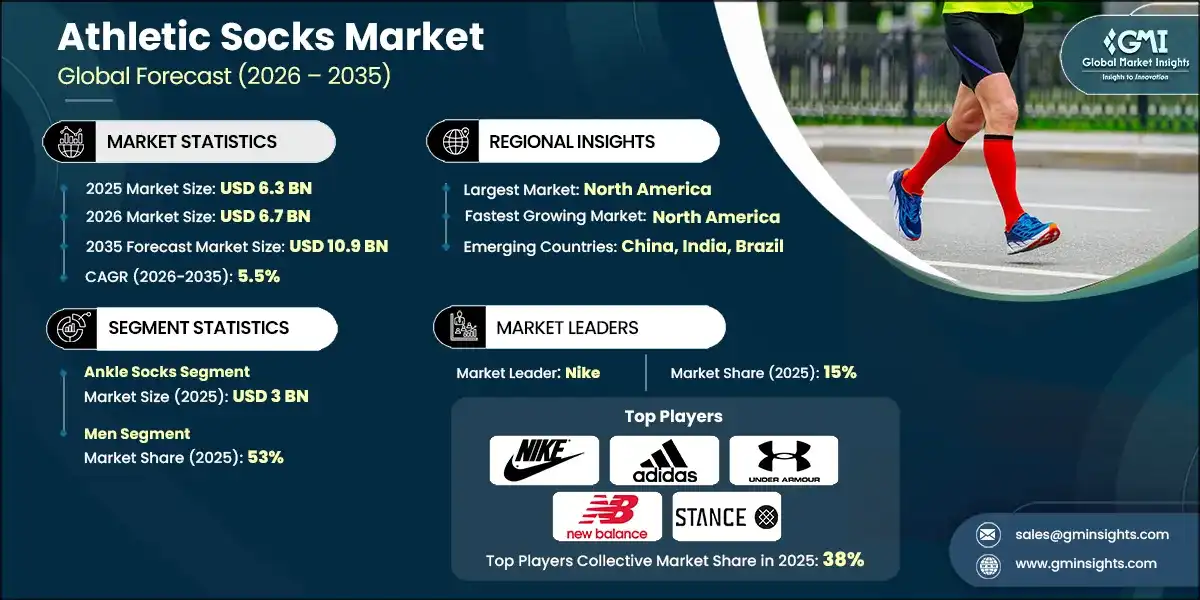
The global athletic socks market was estimated at USD 6.3 billion in 2025. The market is expected to grow from 6.7 billion in 2026 to USD 10.9 billion in 2035, at a CAGR of 5.5%, according to latest report published by Global Market Insights Inc.
Athletic Socks Market Key Takeaways
Market Size & Growth
- 2025 Market Size: USD 6.3 Billion
- 2026 Market Size: USD 6.7 Billion
- 2035 Forecast Market Size: USD 10.9 Billion
- CAGR (2026–2035): 5.5%
Regional Dominance
- Largest Market: North America
- Fastest Growing Region: North America
Key Market Drivers
- Rising Sports and Fitness Participation.
- Expansion of the Athleisure Trend.
- Advancements in Material Technology.
Challenges
- Intense Competition and Product Saturation.
- Rising Expectations for Sustainability.
Opportunity
- Growth of E‑Commerce and Digital Personalization.
- Increasing Demand for Natural and Eco‑Friendly Fibers.
Key Players
- Market Leader: Nike led with over 15% market share in 2025.
- Leading Players: Top 5 players in this market include Nike, Adidas AG, Under Armour, New Balance, Stance, which collectively held a market share of 38% in 2025.
Get Market Insights & Growth Opportunities
The athletic socks market is moving through a period of steady change, shaped mostly by how people live, dress, and stay active. The rise of athleisure has pulled athletic socks into everyday wear, as consumers look for clothing that works for both casual use and exercise without feeling out of place. This shift is helped by fitness influencers and social media culture, which have made sporty styles feel natural beyond the gym.
At the same time, more people are taking up regular fitness routines and outdoor activities, which has pushed brands to design socks that offer comfort, support, and durability. Features like moisture control, cushioning, and anti-odor fabrics are no longer special add-ons—they have become basic expectations. These improvements reflect a broader focus on performance and well-being, as socks now play a subtle but important role in helping users feel comfortable and protected during activity.
The spread of online shopping has also changed how the market works, giving customers a wide variety of options and letting brands present niche or customized designs. At the same time, traditional stores still matter because many shoppers want to feel the fabric and fit before buying. Sustainability is becoming another guiding force, as consumers increasingly pay attention to how products are made. Brands are responding with more eco-friendly materials and responsible production methods. All these shifts such as style, comfort, innovation, and values are blending, guiding the athletic socks market toward a future where everyday lifestyle needs and performance expectations continue to merge.
To get key market trends
Athletic Socks Market Trends
The global market is experiencing dynamic shifts, driven by evolving applications, consumer needs, and material advancements.
- Sport-Specific Specialization: The market shows a strong trend toward socks being specifically designed for sports. For running, socks come with blister protection; for hiking, socks offer additional arch support; and for cycling, socks are light and breathable. The trend toward sport-specific specialization ensures just the right functionality and comfort for each set of sporting demands.
- Performance Improvements by Product Design and Materials: Many manufacturers are adding high-performance features to their socks using advanced materials and technologies to improve athletes' performance and comfort. Examples include Targeted Cushioning (the cushioning placed to absorb impacts and give support), Seamless Toe Construction (to reduce chafing of the toes), and Ventilation Zones (proper placement of holes in the fabric allows for ventilation and breathability). All these new features represent a manufacturer’s effort to provide athletes with a competitive advantage and overall better experience during their training sessions.
- Eco-friendly / Sustainable Materials: Manufacturers are increasingly using reprocessed, organic, and biodegradable materials to produce athletic socks. As a result of consumer demand for environmentally friendly products, many manufacturers today use recycled polyester, merino wool, bamboo blends, etc. This trend also aligns with larger goals of sustainability and strengthens consumer confidence in the brand.
- Compression Technology in Design: Athletic socks today generally have compression technology added as a standard feature (particularly graduated compression designs). These compression socks have been designed to improve blood flow, reduce muscle fatigue, and speed recovery from exercise. These benefits are important to the increasing number of athletes seeking ways to improve their endurance and reduce their downtime between workouts for less overall stress on their bodies.
- Trendy Designs (Fashion) and Personalization Options: Athletic socks today are no longer strictly functional; they have become an extension of one's own personal style and a form of self-expression. Therefore, many athletic sock brands now offer exciting new colors, unique patterns, and limited-edition collaborations with other companies that include both functionalities and trends within them.
Athletic Socks Market Analysis
Learn more about the key segments shaping this market
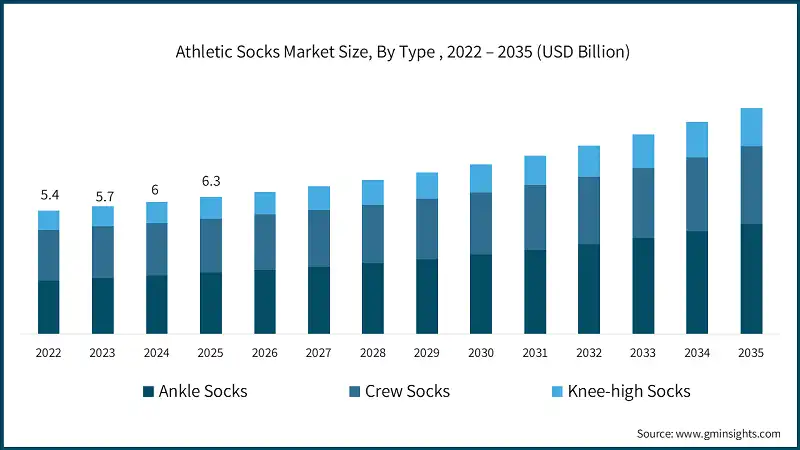
Based on product type, the athletic socks market is divided into ankle socks, crew socks, and knee-high socks. In 2025, ankle socks held the major market share, generating a revenue of USD 3 billion.
- There is a fundamental distinction among the various types of materials used to create athletic socks, which influence consumer preferences. Athletic socks made with a synthetic material are preferred by many athletes because they are seen as being dependable during strenuous activity. The moisture-wicking properties of synthetic socks keep athletes dry; they are lightweight and perform well after repeated use, allowing them to continue to perform at a high level during athletic activities. As a result, synthetic materials comprise most of the foundation of athletic sock lines from well-known brands.
- With that said, there is a growing trend in terms of natural fiber, specifically cotton, as more consumers are seeking out natural fiber socks options due to a desire for greater comfort and environmental sustainability when purchasing socks. Cotton appeals to consumers looking for comfort and breathability.
- The increase in acceptance of cotton socks is also a reflection of an overall trend toward environmentally friendly products; therefore, athletes and non-athletes alike are looking for products that will satisfy both their personal comfort and environmental responsibility. As the athletic sock industry continues to transform, companies within this market are also investigating ways to incorporate natural fiber into their performance designs without sacrificing their ability to perform.
- As a result of these trends in fabric selection, the market will continue to evolve and offer consumers both high-performance expectations and a growing demand for more eco-conscious natural fiber options in the future.
Learn more about the key segments shaping this market
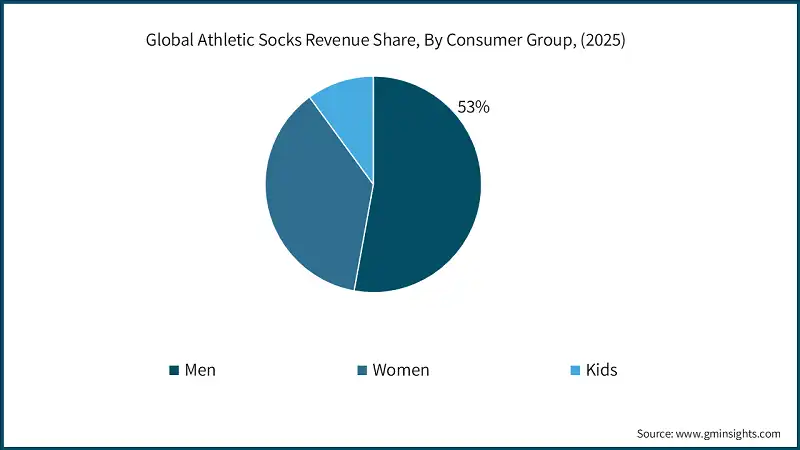
Based on consumer group, the athletic socks market is segmented into men, women, and kids. The men segment held the largest share, accounting for 53% of the global market in 2025.
- The men’s segment leads the market, making men the most influential of all the consumer groups with demographics. Men have shown the greatest preference toward performance socks which have driven growth within this category given the significant increase of male consumers participating in regular sports, exercise routines, and outdoor recreation, where high-quality supportive, durable athletic socks are critical.
- The development of better quality cushioning; improved stability; and better moisture control through socks has created essential footwear items for males who are active within athletically based outdoor lifestyles.
- In addition to performance tentacles, style has become a significant motivator as athleisure apparel blurs the lines between casual and athletic apparel; hence, men are increasingly purchasing athletic socks for their daily attire as well as for working out. This trend has resulted in a wider selection of colour, pattern and design varieties for athletic socks that incorporate greater levels of functionality while also incorporating fashionable, sporty appearances.
- Although women and children also constitute significant segments among consumers of athletic socks, both female and child segments have shown increasing interest in the importance of comfort, fit, and purposeful design features. However, men are much more likely than either women or children to be heavy buyers of sports-related products (i.e., a higher spend on sports equipment than women/children) and are more likely to select and purchase products because they combine functionality and fashion. Overall, these trend lines identify how the men's market is evolving.
Based on distribution channel, the athletic socks market is segmented into online and offline. In 2025, offline dominate the market with highest market share.
- The market has two distinct trends - the trend of offline retailing is still strong due to many people wanting to see and feel the products before they buy them and because of their ongoing ability to enable customers to try on socks and see how they fit in terms of texture, thickness and comfort. Offline retailing gives customers more confidence in their buying experience and creates a more interactive buying environment than what is available through the internet. The traditional retailing experience continues to dominate in certain geographical parts of the world where shopping in physical stores is still a part of the daily routine for consumers.
- On the other hand, changes in consumer buying habits due to the internet and e-commerce is proving the traditional retailing methods of finding and purchasing athletic socks. Consumers are now able to search through dozens of different brands of athletic socks, compare styles side by side and read customer reviews about the socks before they make their purchase, which has opened the e-commerce channel to many kinds of consumers.
- Convenience is a major priority for consumers today who want the ability to browse and compare products from the comfort of their own home. Now with the convenience of shipping directly to their homes, shoppers have even more ease of use. As the internet and e-commerce sites continue to create personalized experiences for customers, increase their product offerings and streamline the process of returning and exchanging items, a growing number of customers are moving to purchasing their everyday products and specialty products from online locations rather than from traditional retail locations.
- The two trends of traditional and modern retailing are indicative of a market still evolving; therefore, while offline stores are still an essential part of customers' buying experiences, many customers are now primarily using online retail websites for their purchases.
Looking for region specific data?
North America Athletic Socks Market
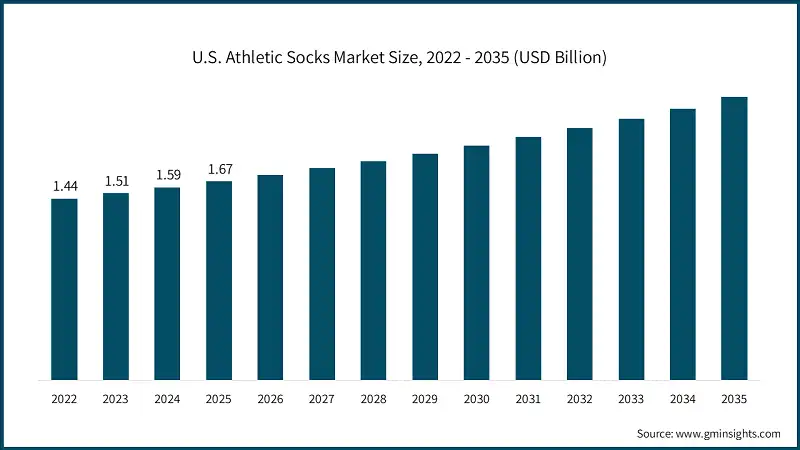
In 2025, the U.S. dominated the North America market, accounting for around 78% and generating around USD 1.7 billion revenue in the same year.
- Numerous elements, including extensive participation levels in sporting activities, the advances of developed retail networks, and a high fitness culture make North America one of the major markets for the athletic sock industry.
- As the number of professional and recreational sporting activities continues to rise in North America, so too do the number of consumers searching for socks that perform at their highest levels (i.e., providing a comfortable and durable fashion experience).
- The combination of these factors and the emergence of global athletic brands and the greater presence of athleisure products within the market will continue to drive growth and will solidify North America as the leading country within the market with ongoing product innovations and a high level of consumer engagement within the category.
Europe Athletic Socks Market
In Europe market, Germany leads the market 30.0% share in 2025 and is expected to grow at 5.1% during the forecast period.
- The European market is similarly characterized as one that has a long history of developing a strong sports culture and an even more established preference for sustainability and quality. As a result, consumers are more frequently searching for athletic socks that combine functional attributes with eco-friendly materials to accommodate European consumer behavior towards responsible consumption.
- A mature retail environment and participation in running, soccer and fitness continue to contribute to sustained demand for athletic socks within Europe. As athleisure trends continue to develop and premium brands continue to have an established presence, Europe will remain a very important region for the continued development of the global athletic sock industry."
Asia Pacific Athletic Socks Market
The Asia Pacific holds significant share in the market. China holds a market share of around 30% in 2025 and is anticipated to grow with a CAGR of around 5.9% from 2026 to 2035.
- The APAC region continues to see strong growth because of higher disposable incomes, increasing urbanization, and increased engagement in fitness and outdoor activities. With more customers living an active lifestyle, the demand for performance-oriented and trend-driven athletic socks is also growing rapidly.
- The growth in e-commerce and the affinity of global and local sports brands continues to create momentum in the APAC market. Additionally, the evolving patterns of fashion preferences in the APAC region, particularly among younger consumers, are contributing to the growth of the athleisure trend, making this region one of the most rapidly growing regions of the global market.
Athletic Socks Market Share
Nike is leading with 15% market share. Nike, Adidas AG, Under Armour, New Balance, Stance collectively hold around 37%, indicating moderately fragmented market concentration. These prominent players are proactively involved in strategic endeavors, such as mergers & acquisitions, facility expansions & collaborations, to expand their product portfolios, extend their reach to a broad customer base, and strengthen their market position.
- Nike leads the way in fitness footwear, apparel and equipment including its dominance in the athletic sock segment. Nike's vast research and development capabilities allow them the ability to utilize cutting-edge performance technology in the form of Dri-FIT (a moisture-wicking fabric) and tailored cushioning. In addition to these performance advancements, Nike's brand recognition, broad selection of products and superior distribution channels all add to their strength in the athletic socks market.
- Adidas is a multi-national corporation that designs and manufactures lifestyle and athletic products. As part of their athletic sock line, Adidas offers technology such as ClimaLite (for moisture management) and Arch Compression (arch support). Adidas has maintained a strong position in the athletic sock market due to its size, storied heritage, and relationships with prominent professional leagues and athletes around the world.
- Under Armour specializes in creating, developing, and marketing performance apparel, footwear and accessories that help athletes perform better than they were previously able to do. Their athletic socks often feature proprietary moisture-wicking materials and strategically placed padded cushioning that are designed to provide maximum comfort and support during strenuous athletic activities. Under Armour continues to capture a considerable portion of the market by concentrating on delivering innovative performance-enhancing solutions to athletes.
Athletic Socks Market Companies
Major players operating in the athletic socks industry are:
- Adidas AG
- ASICS Corporation
- Balega International
- Darn Tough Vermont
- Feetures, LLC
- New Balance Athletics, Inc.
- Nike, Inc.
- PUMA SE
- Reebok International Limited
- SockGuy, Inc.
- Stance Inc.
- Swiftwick LLC
- Thorlos, Inc.
- Under Armour, Inc.
- Wigwam Mills Inc.
New Balance is a leading manufacturer of high-quality athletic footwear and apparel, as well as has an expanding presence in athletic socks. The brand focuses on producing performance-driven, high-quality products for their loyal customer base through Fit to Performance, and also the development of their quality products.
Stance is a one-of-a-kind sock company that produces premium-quality, athlete-centric products using cutting edge technology to create a unique look and feel for their customer. It blends artistic expression with technical innovation using high-quality materials to offer both comfort and performance. They represent a bridge between the performance athletic industry and fashion, offering an alternative to mainstream brands.
Athletic Socks Market Report Attributes
| Key Takeaway | Details |
|---|---|
| Market Size & Growth | |
| Base Year | 2025 |
| Market Size in 2025 | USD 6.3 Billion |
| Market Size in 2026 | USD 6.7 Billion |
| Forecast Period 2026 - 2035 CAGR | 5.5% |
| Market Size in 2035 | USD 10.9 Billion |
| Key Market Trends | |
| Drivers | Impact |
| Rising Sports and Fitness Participation | Growing engagement in sports, gym activities, and outdoor recreation is fueling demand for performance-oriented athletic socks. |
| Expansion of the Athleisure Trend | Athletic socks has blurred the line between sportswear and everyday fashion, making athletic socks a staple beyond workout settings. |
| Advancements in Material Technology | Manufacturers are integrating features such as moisture-wicking fabrics, anti-odor treatments, and ergonomic designs. |
| Pitfalls & Challenges | Impact |
| Intense Competition and Product Saturation | The presence of numerous global and regional brands increases competitive pressure. |
| Rising Expectations for Sustainability | Consumers increasingly demand eco-friendly materials and responsible manufacturing practices. |
| Opportunities: | Impact |
| Growth of E‑Commerce and Digital Personalization | The rapid rise of online shopping allows brands to reach wider audiences, offer customized designs, and leverage consumer reviews to drive engagement and sales. |
| Increasing Demand for Natural and Eco‑Friendly Fibers | As sustainability becomes a priority, there is strong potential for growth in cotton‑based and eco‑alternative athletic socks. |
| Market Leaders (2025) | |
| Market Leaders |
15% market share |
| Top Players |
|
| Competitive Edge |
|
| Regional Insights | |
| Largest market | North America |
| Fastest growing market | North America |
| Emerging countries | China, India, Brazil |
| Future outlook |
|
What are the growth opportunities in this market?
Athletic Socks Industry News
- In October 2025, Bombas opened its first three owned retail stores in West Village NYC, Boca Raton Florida, and Austin Texas, transitioning from DTC-only model Retail TouchPoints. This omnichannel expansion helps Bombas capture the 65% of consumers who purchase socks in physical stores and reduce digital acquisition costs.
- In April 2025, Injinji launched its first Performance Shirt Collection for men and women, expanding beyond its core toe socks business into technical apparel Injinji. This category expansion helps Injinji leverage its 25-year performance heritage to capture cross-sell opportunities and build a complete head-to-toe athletic offering.
- In January 2025, Balega introduced UltraGlide athletic socks featuring Lycra Dry technology, friction-free yarns, Drynamix moisture-wicking, and recycled materials with targeted cushioning Balega. This innovation helps Balega differentiate in the premium running sock segment by addressing blister prevention and sustainability demands from performance athletes.
- In January 2024, Palamon Capital Partners acquired a majority stake in Happy Socks at SEK 725 million valuation with SEK 40 million growth capital injected Palamon. This strategic investment helps Happy Socks accelerate international expansion across its 90+ country distribution network and strengthen its omnichannel retail presence.
- In June 2024, Smartwool launched a radically redesigned Hike Collection featuring ZQ-certified Merino wool and recycled nylon with improved fit technology and durability features Smartwool. This product innovation helps Smartwool strengthen its premium positioning in performance hiking socks while advancing sustainability commitments through recycled material integration.
The athletic socks market research report includes in-depth coverage of the industry with estimates & forecasts in terms of revenue (USD Billion) and volume (Thousand Units) from 2022 to 2035, for the following segments:
Market, By Product Type
- Ankle Socks
- Crew Socks
- Knee-high Socks
Market, By Material
- Cotton
- Fleece
- Wool
- Synthetic
- Others
Market, By Price
- Low
- Medium
- High
Market, By Consumer Group
- Men
- Women
- Kids
Market, By Distribution Channel
- Online
- Offline
The above information is provided for the following regions and countries:
- North America
- U.S.
- Canada
- Europe
- Germany
- UK
- France
- Italy
- Spain
- Turkey
- Asia Pacific
- China
- India
- Japan
- Australia
- South Korea
- Latin America
- Brazil
- Mexico
- Argentina
- Middle East and Africa
- South Africa
- Saudi Arabia
- UAE
Frequently Asked Question(FAQ) :
What was the market size of the athletic socks market in 2025?
The market size was USD 6.3 billion in 2025, with a CAGR of 5.5% expected through 2035, driven by sport-specific product innovations and advancements in materials.
What is the projected value of the athletic socks market by 2035?
The market is expected to reach USD 10.9 billion by 2035, fueled by increasing consumer demand for performance-enhancing features and comfort-focused designs.
What is the projected size of the athletic socks market in 2026?
The market is projected to reach USD 6.7 billion in 2026.
How much revenue did the ankle socks segment generate?
The ankle socks segment generated USD 3 billion in 2025, holding the largest market share among product types.
What was the market share of the men’s segment in 2025?
The men’s segment accounted for 53% of the global market in 2025, making it the largest consumer group.
Which region leads the athletic socks market?
The U.S. dominated the North America market in 2025, holding a 78% share and generating USD 1.7 billion in revenue. The region's dominance is attributed to high consumer spending on sportswear and a strong sports culture.
What are the upcoming trends in the athletic socks industry?
Key trends include sport-specific product specialization, integration of advanced materials for performance improvements, and features like targeted cushioning, seamless toe construction, and ventilation zones for enhanced comfort and functionality.
Who are the key players in the athletic socks market?
Key players include Adidas AG, ASICS Corporation, Balega International, Darn Tough Vermont, Feetures, LLC, New Balance Athletics, Inc., Nike, Inc., PUMA SE, Reebok International Limited, SockGuy, Inc., Stance Inc., and Swiftwick LLC.
Athletic Socks Market Scope
Related Reports