Summary
Table of Content

Asia Pacific Gas Turbine Market
Get a free sample of this report
Form submitted successfully!
Error submitting form. Please try again.
Thank you!
Your inquiry has been received. Our team will reach out to you with the required details via email. To ensure that you don't miss their response, kindly remember to check your spam folder as well!
Request Sectional Data
Thank you!
Your inquiry has been received. Our team will reach out to you with the required details via email. To ensure that you don't miss their response, kindly remember to check your spam folder as well!
Form submitted successfully!
Error submitting form. Please try again.
Asia Pacific Gas Turbine Market Size
The growing environmental awareness & the stricter government control over the emission of greenhouse gases has forced industries and power generation companies to use more efficient and cleaner forms of energy thus ensuring the potential of the gas turbine market to grow. The regulatory frameworks to minimize carbon intensity are also stimulating the implementation of highly efficient and low-emission turbine technologies and the introduction of combined cycle systems, which enable full utilization of fuels. Further, the gradual increase of worldwide electricity demand, and the accelerated urbanization and industrial growth all serve to support the necessity of scalable, reliable power generation systems.
A gas turbine is an internal combustion engine that converts the energy that is produced with fuel combustion into mechanical power in stages of air compression, combustion and expansion. The increased focus on grid resilience and energy security increases the importance of turbines in supplementing variable sources of power such as wind and solar, as well as providing a steady electrical supply. Modernization of old power plants, the infrastructure upgrades and the increase in the need to have reliable back up power strengthen the place of these systems.
Asia Pacific Gas Turbine Market Key Takeaways
Market Size & Growth
- 2025 Market Size: USD 9.1 Billion
- 2026 Market Size: USD 10.3 Billion
- 2035 Forecast Market Size: USD 27.1 Billion
- CAGR (2026–2035): 11.4%
Regional Dominance
- Largest Market: China
- Fastest Growing Country: Malaysia
Key Market Drivers
- Large‑scale integration of renewable energy.
- Growing focus on decentralized generation technologies.
- Surging focus toward clean power generation.
Challenges
- Cost competitiveness.
Opportunity
- Grid‑balancing requirements amid renewable penetration.
- Industrial demand for high‑reliability power.
- Policy‑driven transition toward lower‑emission thermal assets.
- Advancements in turbine efficiency and fuel flexibility.
Key Players
- Market Leader: GE Vernova led with over 12.5% market share in 2025.
- Leading Players: Top 5 players in this market include Wärtsilä, Ansaldo Energia, Bharat Heavy Electricals, GE Vernova, Siemens Energy, which collectively held a market share of 44.5% in 2025.
Get Market Insights & Growth Opportunities
For instance, in April 2025, the gas-based power capacity in India has been rationalized to 20.1 GW, which gives a reflection of the strategic realignment of the thermal generation portfolio. The aim of this optimization is to enhance efficiency in the fleets and focus on flexible and cleaner generation assets. The streamlined capacity helps the gas-based plants be placed in better positions to contribute towards the improvement of grid balancing and management of peak demand.
The Asia Pacific gas turbine market was estimated at USD 9.1 billion in 2025. The market is expected to grow from USD 10.3 billion in 2026 to USD 27.1 billion by 2035, at a CAGR of 11.4%, according to a recent study by Global Market Insights Inc.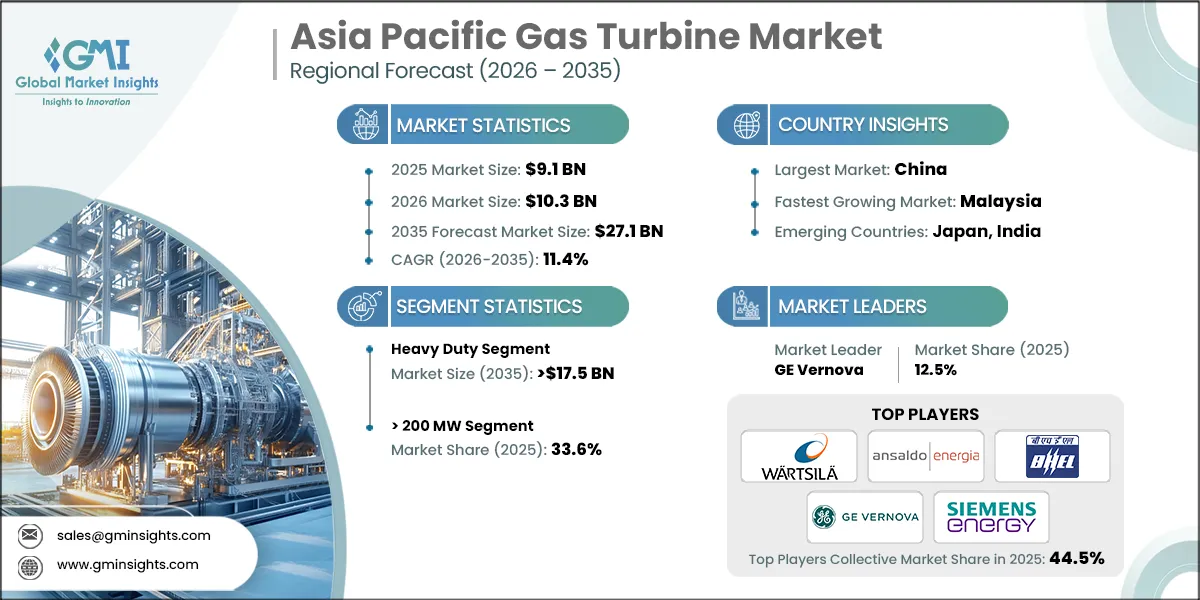
To get key market trends
Asia Pacific Gas Turbine Market Trends
The growing demand to use more electricity and the increasing energy demand to have cleaner energy will revive the business dynamics. The business situation will increase through increased incorporation of renewable sources of energy with the aid of strict energy-saving agreements. The global trend in pursuit of solutions to lower-carbon emissions is to pursue a balance between economic viability and environmental stewardship, leading to more active implementation of high-efficiency turbine systems.
Asia Pacific Gas Turbine Market Analysis
Learn more about the key segments shaping this market
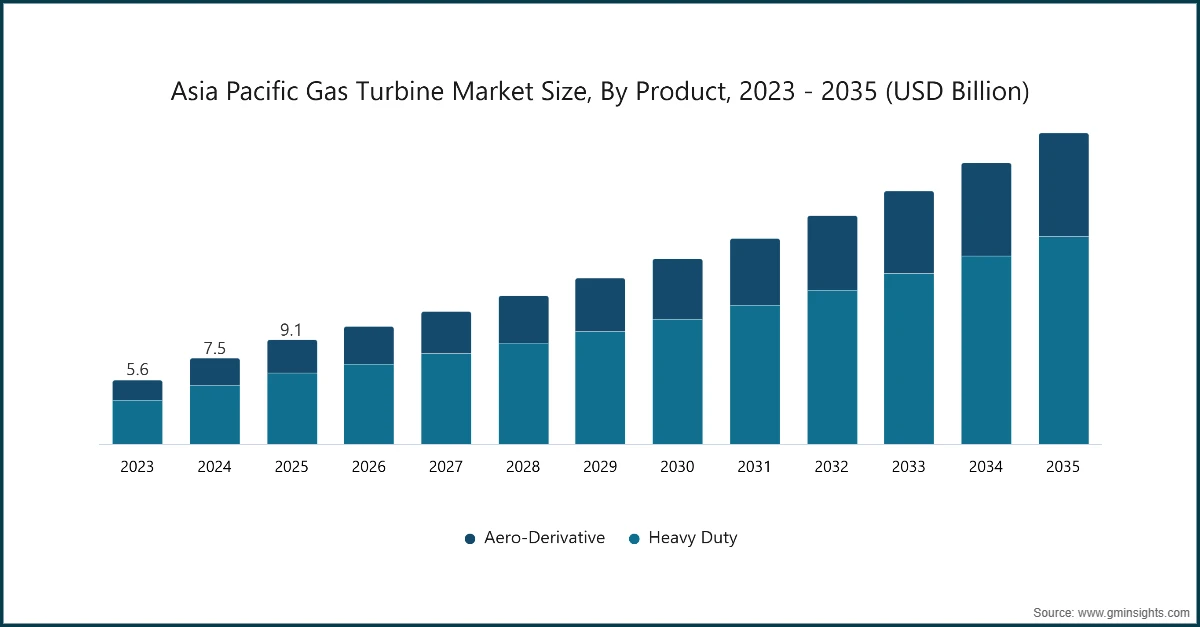
The Asia Pacific gas turbine market from heavy duty segment will exceed USD 17.5 billion by 2035 owing to the fact that it is vital in the production of large volumes of power and can help serve the increasing global electricity demand. These turbines are a pillar of the energy industry since it provides high power generation, can run continuously, and with great reliability even in the challenging operating environments like peak power demand and harsh weather. They are also more economical when incorporated into combined cycle power plants, thereby boosting the level of efficiency and hence preferred by utilities that are in need of cost-effective and low-emissions energy sources.
Learn more about the key segments shaping this market
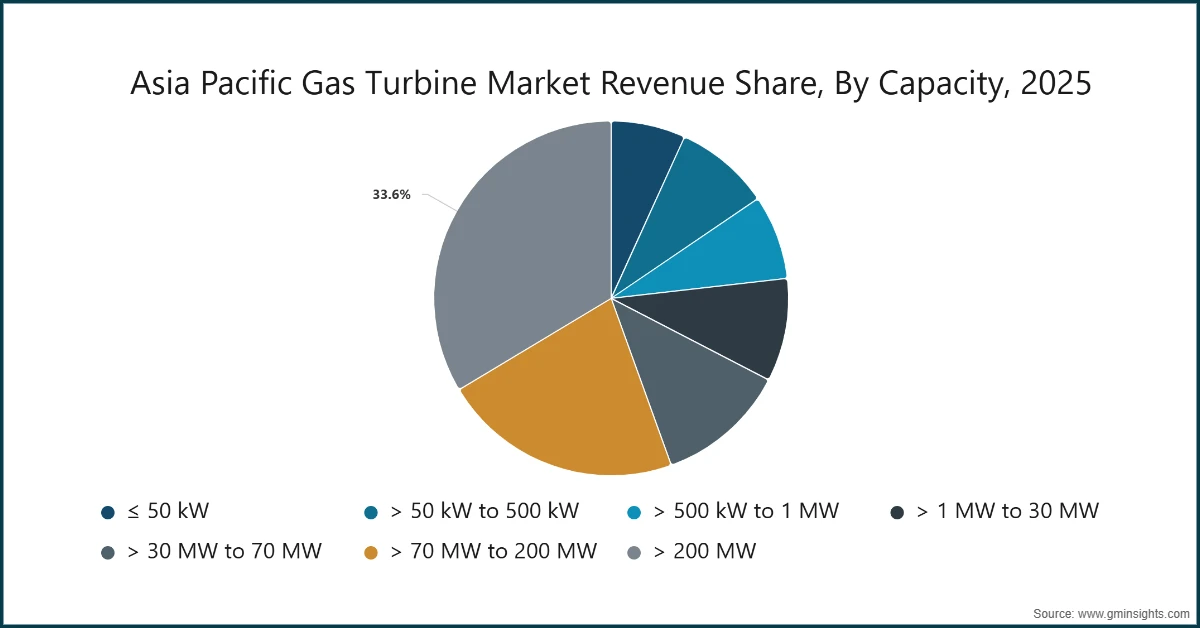
The > 200 MW gas turbine market holds a share of 33.6% in 2025. Enhanced combustion systems, enhanced materials of turbine blades and enhanced cooling technologies allow greater firing temperature and greater efficiency without impacting the durability of the operation. Furthermore, continued innovation to fuel flexibility, such as hydrogen mix and low-carbon fuel, enhances their long-term applicability in future-oriented energy systems, which, consequently, will drive the business expansion.
Looking for region specific data?
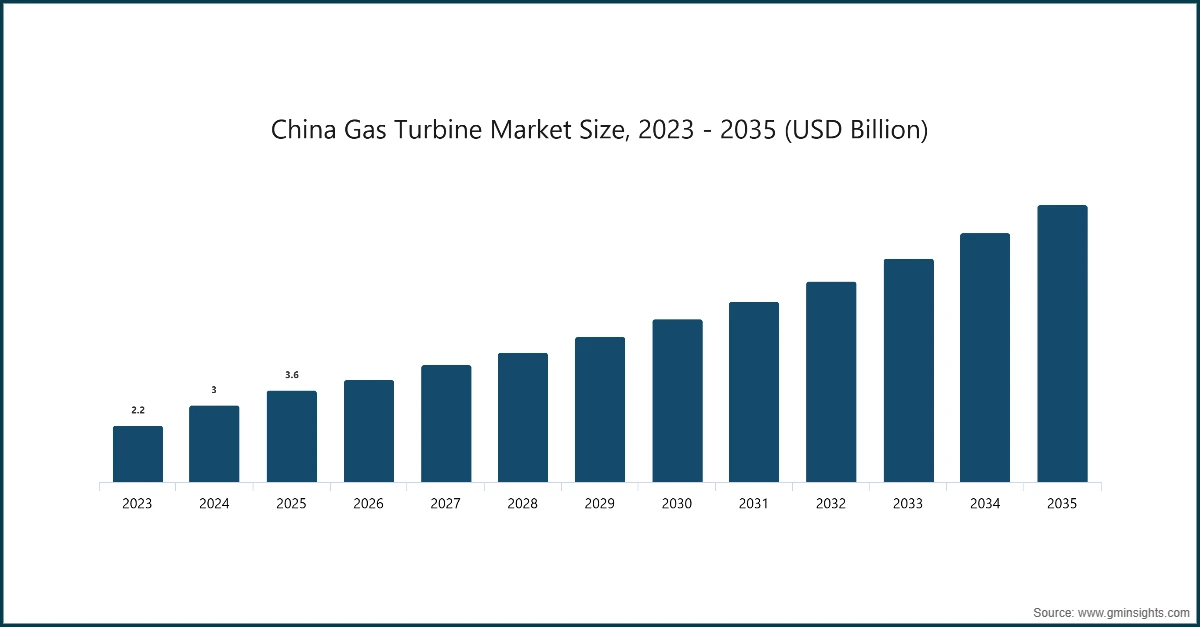
China gas turbine market was valued at USD 3.6 billion in 2025. The continued increase of manufacturing and processing industries will sustain increase of captive and self regulated power generation facilities. The environment of the industry is being reinforced by the government efforts to build a balanced and sustainable energy mix. Moreover, the existence of strict emission standards and the growing demand in the flexible generation assets will increase the business prospect.
For instance, in 2024, China strengthened its emphasis on the balanced & sustainable energy mix within the context of the dual carbon agenda and the 14th five-year plan. The policy actions were focused on the adoption of clean power in industries with incentives on onsite generation, increased green power trading programs and energy storage roll out. These efforts are increasing the reliability of power supply and raising cost & emission performance.
The growth has been fueled by a high focus on reduction of greenhouse gas emissions and the transition to cleaner sources of energy in Japan gas turbine industry. The growing energy consumption along with the augmented emphasis on the generation of renewable energy will boost the business dynamics. Moreover, the product deployment will increase with rapid industrialization and increased investments in modernizing infrastructure based on the use of gas-fired distributed energy systems.
Asia Pacific Gas Turbine Market Share
The market players are becoming increasingly more innovative and service-oriented in the market in an attempt to stay competitive. The major investments are now channeled to high efficiency turbines and low emission technologies that will facilitate the decarbonization efforts. Moreover, the long-term service contract is extensively employed to create consistent streams of revenues and enhance the retention of the customers. Growing into emerging markets, as well as strategic alliances, joint ventures, and acquisitions, also make it possible to get access to new technologies, diversified portfolios and wider customer base.
Asia Pacific Gas Turbine Market Companies
The key industry players include:
Ansaldo Energia
Baker Hughes
Bharat Forge
Bharat Heavy Electricals Limited
Capstone Green Energy Corporation
Destinus Energy
Doosan Enerbility
Everllence
FlexEnergy Solutions
GE Vernova
IHI Corporation
Kawasaki Heavy Industries
Mitsubishi Heavy Industries
N. S. Energy Group
Nanjing Steam Turbine Motor
Rolls-Royce
Siemens Energy
Solar Turbines
Vericor
Wärtsilä
Asia Pacific Gas Turbine Market Report Attributes
| Key Takeaway | Details |
|---|---|
| Market Size & Growth | |
| Base Year | 2025 |
| Market Size in 2025 | USD 9.1 Billion |
| Market Size in 2026 | USD 10.3 Billion |
| Forecast Period 2026-2035 CAGR | 11.4% |
| Market Size in 2035 | USD 27.1 Billion |
| Key Market Trends | |
| Drivers | Impact |
| Large‑scale integration of renewable energy | Rising penetration of renewable power is increasing the need for flexible gas turbines to balance intermittency and ensure grid stability. Gas turbines are increasingly deployed as fast‑ramping, reliability‑enhancing assets supporting large‑scale renewable integration. |
| Growing focus on decentralized generation technologies | Expanding adoption of distributed energy systems is driving demand for gas turbines in captive and onsite power applications. Their modular design and operational flexibility make them well‑suited for decentralized, location‑specific power generation. |
| Surging focus toward clean power generation | Heightened emphasis on low‑emission power solutions is accelerating the use of high‑efficiency gas turbines as a cleaner alternative to conventional fossil fuel technologies. Advances in turbine efficiency and fuel flexibility are strengthening their role in the global clean energy transition. |
| Pitfalls & Challenges | Impact |
| Cost competitiveness | High capital costs and fuel price volatility can limit the cost competitiveness of gas turbine deployments, particularly when compared to renewables with declining levelized costs. Additionally, exposure to carbon pricing and regulatory levies may further pressure operating margins over the long term. |
| Opportunities: | Impact |
| Grid‑balancing requirements amid renewable penetration | Increasing variability from wind and solar generation is elevating demand for gas turbines that can deliver rapid start‑up and load‑following capabilities. Their operational flexibility makes them critical assets for maintaining grid reliability and frequency control. |
| Industrial demand for high‑reliability power | Energy‑intensive industries are prioritizing gas turbines to secure uninterrupted and high‑quality power supply. These systems offer dependable baseload and peak‑load support while improving operational efficiency across large industrial facilities. |
| Policy‑driven transition toward lower‑emission thermal assets | Tightening emission norms and decarbonization policies are encouraging the replacement of older coal‑based units with high‑efficiency gas turbines. This transition supports compliance objectives while reducing carbon intensity across power portfolios. |
| Advancements in turbine efficiency and fuel flexibility | Ongoing innovation in gas turbine technology, including higher efficiencies and hydrogen‑readiness, is strengthening their long‑term deployment potential. These advancements enable operators to future‑proof assets while optimizing lifecycle economics. |
| Market Leaders (2025) | |
| Market Leader |
Market Share of 12.5% |
| Top Players |
Collective Market Share of 44.5% |
| Competitive Edge |
|
| Regional Insights | |
| Largest Market | China |
| Fastest growing market | Malaysia |
| Emerging countries | Japan, India |
| Future outlook |
|
What are the growth opportunities in this market?
Asia Pacific Gas Turbine Industry News
In October 2025, GE Vernova signed a contract with QPM Energy, to supply two LM6000 gas turbine packages. The turbines will be installed in the Isaac Power Station of QPM in Queensland, increasing the installed generation capacity up to 112 MW. The LM6000 units will also be designed with a range of options concerning the types of fuel to be used to provide a greater range of options with which the facility will use the current natural gas sources of QPM as well as coal mine waste gas with a minimum of 50 percent of the overall composition of methane gas to generate power in the most efficient and sustainable manner.
In May 2025, Baker Hughes developed Flame Tracker Increased Low Gain (ILG), the newest development of the gas turbine safety technology. This is a superior flame detecting product that is designed to provide the best flame sensing performance, which leads to the overall turbine safety, reliability of the operation, and protection. Flame sensors are essential in the works of the gas turbines, where resilience of the flame in the combustor is controlled. As a vital control measure, they engage automatic shut-down mechanisms in condition of loss or instability of the flame, which will protect the equipment, as well as to reduce the threat of dangerous events, such as fire explosions due to the stagnation of non-burned fuel.
The Asia Pacific gas turbine market research report includes in-depth coverage of the industry with estimates & forecast in terms of volume (MW) & revenue (USD Million) from 2022 to 2035, for the following segments:
Market, By Capacity
≤ 50 kW
> 50 kW to 500 kW
> 500 kW to 1 MW
> 1 MW to 30 MW
> 30 MW to 70 MW
> 70 MW to 200 MW
> 200 MW
Market, By Product
Aero-derivative
Heavy duty
Market, By Technology
Open cycle
Combined cycle
Market, By Application
Power plants
Oil & gas
Process plants
Aviation
Marine
Others
The above information has been provided for the following countries:
China
Australia
Japan
India
South Korea
Indonesia
Thailand
Malaysia
Bangladesh
Frequently Asked Question(FAQ) :
What was the Asia Pacific gas turbine market size in 2025?
The market was estimated at USD 9.1 billion in 2025.
What is the projected market value of the Asia Pacific gas turbine industry by 2035?
The market is expected to reach USD 27.1 billion by 2035, growing at a CAGR of 11.4%.
What is the expected size of the Asia Pacific gas turbine market in 2026?
The market is expected to grow to USD 10.3 billion in 2026.
Which companies are the top 5 players in the Asia Pacific gas turbine market?
The top 5 players are Wärtsilä, Ansaldo Energia, Bharat Heavy Electricals, GE Vernova, and Siemens Energy.
What was the market share of the > 200 MW gas turbine segment in 2025?
The > 200 MW gas turbine market held a share of 33.6% in 2025.
Which country is the largest market for gas turbines in the Asia Pacific region?
China is the largest market, valued at USD 3.6 billion in 2025.
What is the projected value of the heavy duty gas turbine market by 2035?
The heavy duty gas turbine market will exceed USD 17.5 billion by 2035.
Asia Pacific Gas Turbine Market Scope
Related Reports