Summary
Table of Content

Animal Disinfectants Market
Get a free sample of this report
Form submitted successfully!
Error submitting form. Please try again.
Thank you!
Your inquiry has been received. Our team will reach out to you with the required details via email. To ensure that you don't miss their response, kindly remember to check your spam folder as well!
Request Sectional Data
Thank you!
Your inquiry has been received. Our team will reach out to you with the required details via email. To ensure that you don't miss their response, kindly remember to check your spam folder as well!
Form submitted successfully!
Error submitting form. Please try again.
Animal Disinfectants Market Size
- Quaternary compounds are widely used in the animal disinfectants industry due to their broad-spectrum antimicrobial activity, effectiveness against a wide range of pathogens, and residual activity that provides extended protection. These compounds, also known as quats, are particularly valued for their ability to disinfect surfaces rapidly while being less corrosive and more stable compared to other disinfectants. Their compatibility with various surfaces and ease of application further enhances their appeal in environments requiring stringent sanitation practices, such as veterinary clinics and livestock farms.
- The general trend in the animal disinfectants industry is a growing preference for quaternary compounds due to their proven efficacy and user-friendly properties. As concerns over biosecurity and disease management in animal husbandry increase, the demand for effective, reliable disinfectants like quaternary compounds is on the rise. This trend is influencing the market by driving innovation and competition among disinfectant manufacturers, leading to the development of more advanced formulations and applications in the animal health sector.
- The hydrogen peroxide market is growing rapidly that reflects significant investment in effective disinfectant solutions. In the market, hydrogen peroxide is recognized for its strong antimicrobial properties and versatility, making it a key player in maintaining biosecurity and hygiene in veterinary settings and livestock farms. Its market value underscores the increasing demand for potent and reliable disinfectants, driving innovations and applications across various animal health sectors. As the need for robust disinfection solutions grows, hydrogen peroxide's role in the market continues to be pivotal.
- The high cost of advanced disinfectants presents a significant restraint in the market. Many effective disinfectants, particularly those with advanced formulations or novel technologies, come with a premium price. This can limit their accessibility for smaller or resource-constrained farms and veterinary practices. Additionally, the expense can strain the budgets of end-users, making cost-effective alternatives more attractive despite potentially lower efficacy. This cost barrier impacts market growth by restricting the widespread adoption of superior disinfectant solutions. Addressing this challenge requires balancing effectiveness with affordability to enhance market penetration.
The global animal disinfectants market was valued at USD 4.05 billion in 2025. It is projected to grow from USD 4.26 billion in 2026 to USD 8.86 billion by 2035, representing 8.5% CAGR from 2026 to 2035, according to latest report published by Global Market Insights Inc.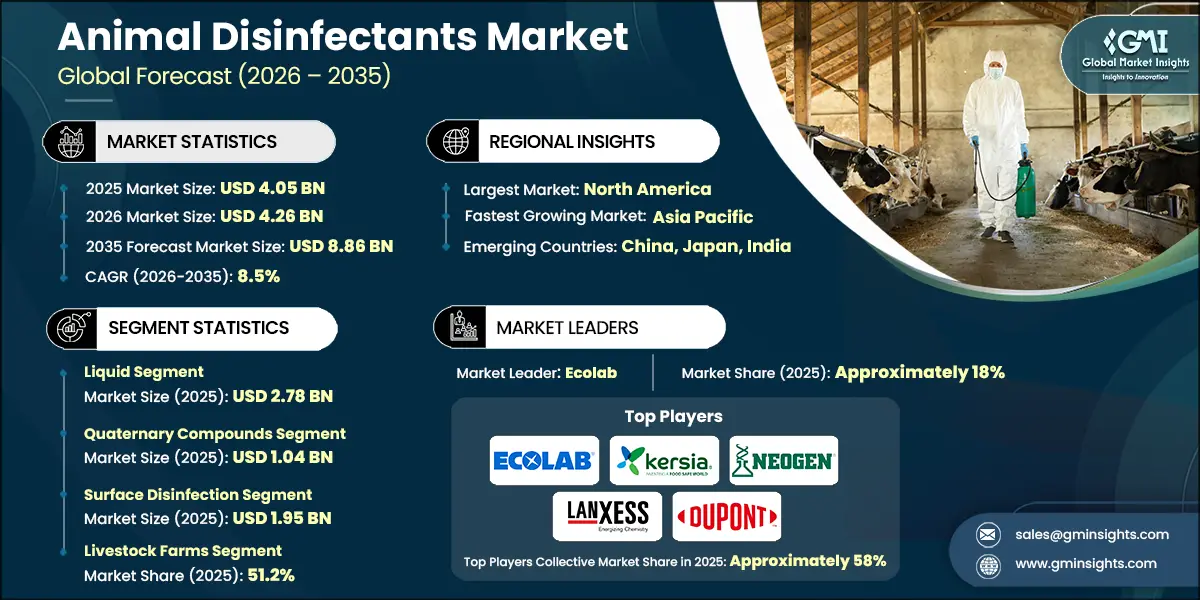
Animal Disinfectants Market Key Takeaways
Market Size & Growth
- 2025 Market Size: USD 4.05 Billion
- 2026 Market Size: USD 4.26 Billion
- 2035 Forecast Market Size: USD 8.86 Billion
- CAGR (2026–2035): 8.5%
Regional Dominance
- Largest Market: North America
- Fastest Growing Region: Asia-Pacific
Key Market Drivers
- Rising livestock population density.
- Growing awareness of zoonotic disease prevention.
- Stricter biosecurity standards in animal farming.
- Expansion of commercial poultry and dairy farms.
Challenges
- Chemical safety concerns for animals and handlers.
- Price sensitivity among small-scale farmers.
- Variability in regional regulatory requirements.
Opportunity
- Price sensitivity among small-scale farmers.
- Variability in regional regulatory requirements.
- Shift toward eco-friendly and non-toxic disinfectants.
- Growth of organized animal healthcare services.
Key Players
- Market Leader: Ecolab led with over 18% market share in 2025.
- Leading Players: Top 5 players in this market include Ecolab, Kersia Group, Neogen Corporation, Lanxess AG, DuPont Animal Health, which collectively held a market share of 58% in 2025.
Get Market Insights & Growth Opportunities
To get key market trends
Animal Disinfectants Market Trends
- The increasing livestock farming and dairy production drive growth in the animal disinfectants industry. As the global demand for meat and dairy products rises, livestock numbers expand, leading to greater needs for effective sanitation and disease control. Enhanced farming practices and higher production volumes necessitate advanced disinfectant solutions to maintain animal health and prevent outbreaks. This increased demand stimulates market expansion as farmers and producers seek reliable disinfectants to safeguard their herds and ensure product safety. The growing scale of operations in both intensive and extensive farming systems further fuels the demand for comprehensive disinfectant solutions, driving innovation and market growth.
- The growth in companion animal care significantly drives the market. As pet ownership increases globally, there is a heightened focus on the health and hygiene of companion animals, which includes regular use of disinfectants in their environments. This rising trend reflects greater awareness among pet owners about the importance of maintaining a clean living space to prevent diseases and infections. Enhanced pet care practices, including the use of advanced cleaning and disinfecting products, are becoming more common as pet owners seek to provide the best for their animals.
- Moreover, the expansion of veterinary clinics, pet boarding facilities, and grooming centers further fuels demand for effective disinfectants. These establishments require high-quality disinfectants to ensure a sterile environment, thus protecting both animals and staff from potential infections. The increasing number of specialty pet products and services also drives market growth, as these businesses seek top-tier disinfectants to meet the evolving needs of their clientele. This trend highlights a broader market shift toward more comprehensive hygiene solutions in the companion animal sector, driving innovation and growth in the market.
Animal Disinfectants Market Analysis
Learn more about the key segments shaping this market
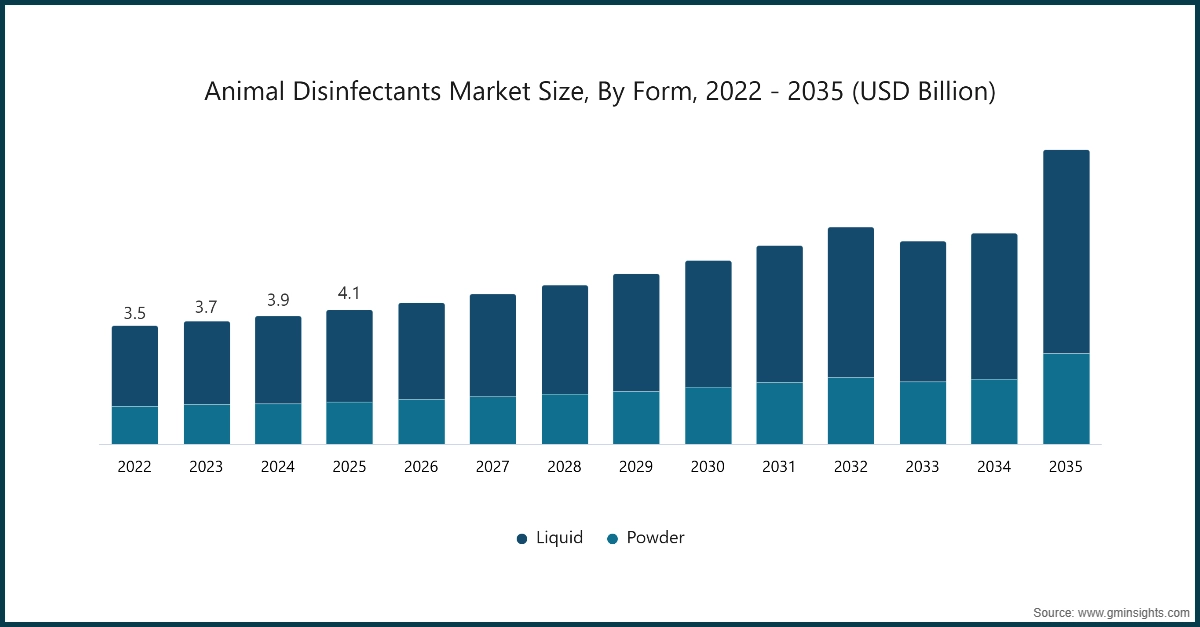
- Liquid disinfectants account for a substantial share due to ease of dilution, uniform surface coverage, and compatibility with spray and fogging systems commonly used in commercial farms and animal healthcare facilities. Powder disinfectants continue to serve cost-sensitive and remote farming environments where storage stability and transport efficiency are prioritized. While liquids are expected to maintain faster growth driven by operational convenience and large-scale farm adoption, powders retain relevance for dry disinfection practices and emergency disease control applications, supporting overall form-based market balance..
Animal disinfectants market based on type is into quaternary compounds, iodine, hydrogen peroxide, phenolic acids, chlorine, chlorine dioxide, lactic acid, chlorohexidine, glycolic acid and others. The quaternary compounds segment was valued at USD 1.04 billion in 2025, and it is anticipated to expand to 8.5% of CAGR during 2026-2035.
- Quaternary compounds hold a strong position due to broad-spectrum antimicrobial action, surface compatibility, and suitability for routine sanitation in animal housing and equipment. Other segments such as iodine, chlorine-based products, hydrogen peroxide, organic acids, and chlorhexidine address specific pathogens, environmental conditions, and safety requirements. Growing emphasis on formulation safety, residue control, and targeted disinfection supports balanced demand across traditional oxidizing agents and newer organic acid-based alternatives over the forecast period.
Animal disinfectants market based on application method is segmented into surface disinfection, aerial/fogging disinfection, water treatment, and equipment sanitization. The surface disinfection segment was valued at USD 1.95 billion with a market share of with a market share of 48% in 2025, and it is anticipated to expand to 8.1% of CAGR during 2026-2035.
- Surface disinfection accounts for the largest share due to its routine role in maintaining hygiene across animal housing floors, walls, and contact areas, supporting effective pathogen control. Aerial or fogging disinfection and equipment sanitization address large-scale and hard-to-reach contamination risks, particularly in intensive poultry and livestock operations. Water treatment disinfectants support disease prevention through safe drinking systems, while the growing emphasis on comprehensive biosecurity programs sustains balanced demand across all application methods over the forecast period.
Learn more about the key segments shaping this market
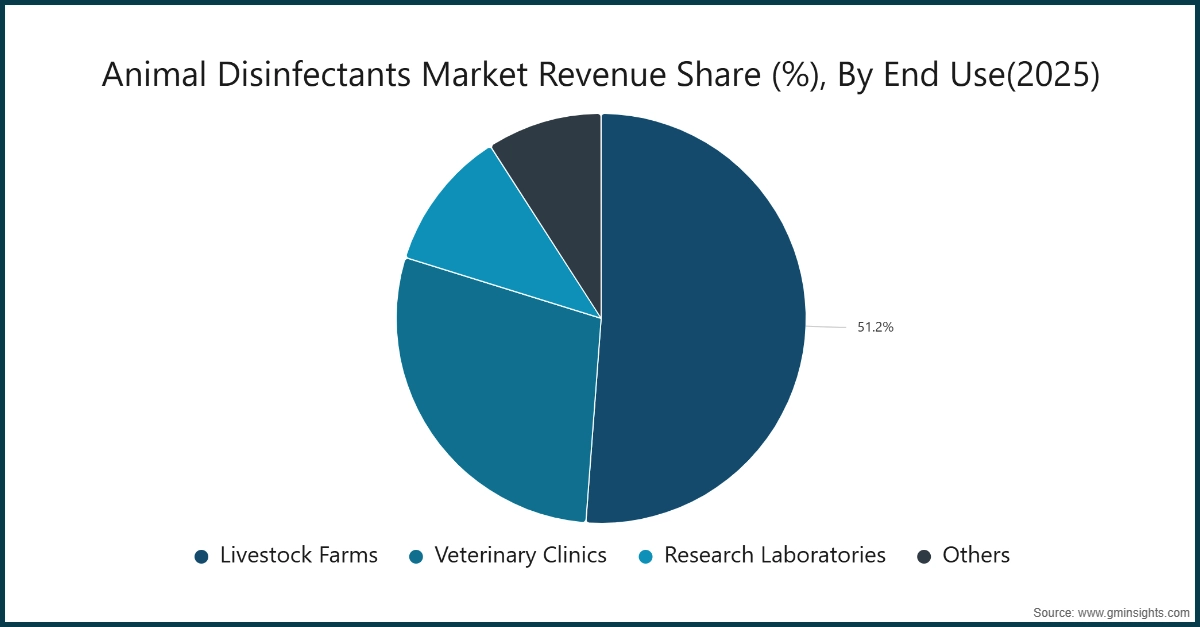
- Livestock farms represent the largest end‑use segment, supported by routine disinfection needs across animal housing, feeding areas, and waste management zones to control infection spread in high‑density environments. Veterinary clinics and research laboratories emphasize precision disinfection to maintain sterile conditions and protect animal and human health during treatment and experimentation. Other end uses, including animal shelters and breeding facilities, contribute steady demand as biosecurity awareness improves, reinforcing sustained disinfectant consumption across diverse animal management ecosystems.
Looking for region specific data?
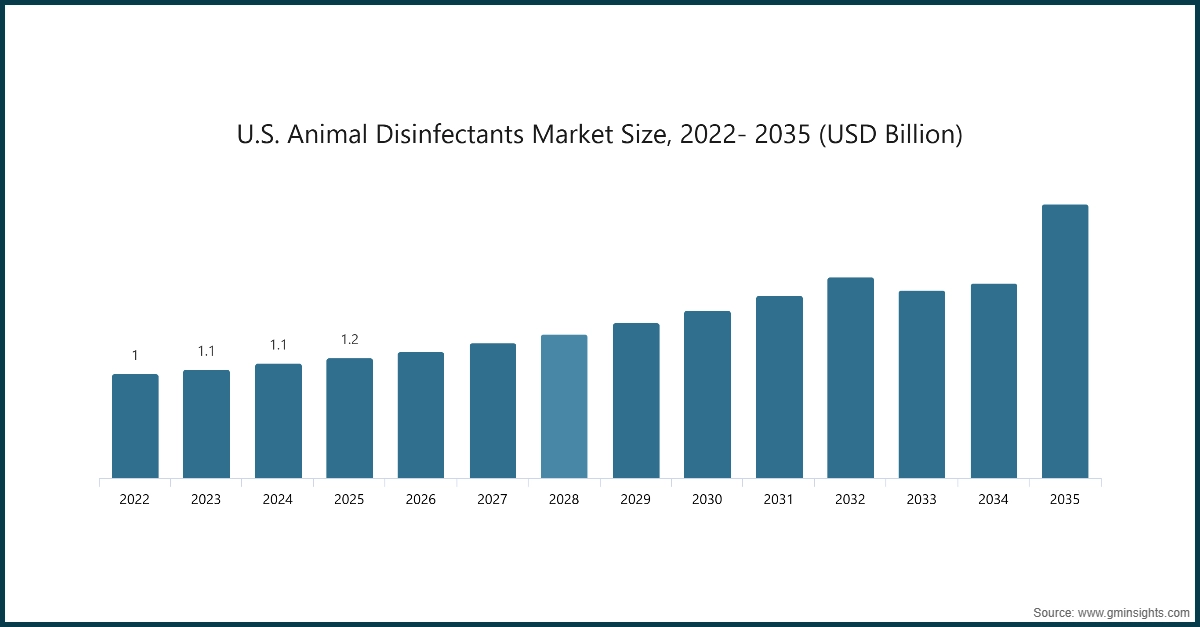
North America reflects mature adoption of animal disinfectants supported by structured livestock operations and strong veterinary infrastructure. The United States drives regional demand through large-scale poultry, dairy, and swine farms emphasizing routine hygiene and disease prevention, while Canada supports steady consumption through regulated animal healthcare practices and biosecurity compliance across commercial farming environments.
The Europe market accounted for USD 1.21 billion in 2025 and is anticipated to show lucrative growth over the forecast period.
Europe demonstrates consistent demand for animal disinfectants aligned with stringent animal welfare norms and preventive disease control practices. Germany supports market growth through intensive livestock management and organized farm sanitation protocols, while France contributes through dairy and poultry sectors focused on infection control, residue management, and environmentally compatible disinfectant usage.
Asia Pacific animal disinfectants market accounted for 21.7% market share in 2025 and is anticipated to show lucrative growth over the forecast period.
Asia Pacific shows rapid expansion supported by increasing livestock populations, rising protein consumption, and improving biosecurity awareness. China contributes significantly due to large-scale poultry and swine production requiring frequent disinfection, while India supports growth through expanding dairy farms and improving veterinary hygiene practices across both organized and semi-organized farming systems.
Latin America market is anticipated to grow at a CAGR of 8.5% during the analysis timeframe.
Latin America reflects growing adoption of animal disinfectants supported by expanding commercial livestock and export-oriented meat production. Brazil drives regional demand through poultry and cattle farming requiring consistent sanitation measures, while Argentina contributes through livestock biosecurity improvements aimed at disease prevention and productivity enhancement.
Middle East & Africa market is expected to grow at a CAGR of 8.3% during the analysis timeframe.
The Middle East & Africa region shows gradual growth supported by improving animal health infrastructure and increasing awareness of farm hygiene. Saudi Arabia supports demand through structured poultry farming and biosecurity investments, while South Africa contributes through livestock and veterinary service expansion focused on controlling infectious diseases in animal housing and handling environments.
Animal Disinfectants Market Share
- Ecolab, Kersia Group, Neogen Corporation, Lanxess AG, and DuPont Animal Health are a significant part of the market and with further standing of being slightly consolidated with the top five players steadily holding 58% market share in the year 2025.
- Competition is influenced by the ability to offer broad disinfectant portfolios addressing bacteria, viruses, and fungi. Wider coverage supports adoption across livestock farms, clinics, and biosecure facilities.
- Strong regulatory alignment supports smoother approvals across regional animal health markets. Compliance readiness improves credibility among institutional and commercial end users.
- Focus on formulation safety for animals and farm workers strengthens product acceptance. Lower toxicity and residue concerns support frequent and routine usage.
- Cost efficiency plays a critical role in markets with high price sensitivity. Affordable formulations enable deeper penetration among small and medium-scale farms.
- Innovation in eco-compatible and biodegradable disinfectants supports differentiation. Sustainability-oriented solutions align with evolving animal welfare expectations.
- Robust distribution networks improve access across rural and organized farming regions. Channel reach supports consistent supply and repeat purchasing behavior.
- Customization for species-specific and farm-size requirements enhances value delivery. Tailored solutions improve disinfection effectiveness and operational efficiency.
- Proven performance under varied environmental and climatic conditions builds confidence. Reliability supports continued use in intensive and high-risk farming settings.
Animal Disinfectants Market Companies
The major players operating in animal disinfectants industry include:
- Kersia Group
- Antec International
- Virox Technologies
- Ecolab (includes CID LINES)
- Christeyns
- Evonik Industries AG
- Lanxess AG
- Solvay Group
- STOCKMEIER Group
- DuPont Animal Health
- Neogen Corporation
- Kemin Industries
- Others
- Ecolab plays a significant role through biosecurity-focused disinfectant solutions for livestock farms and animal housing. Emphasis on hygiene management, pathogen control, and operational sanitation supports routine and preventive animal health practices.
- Kersia Group contributes through specialized disinfectants designed for animal farming, dairy hygiene, and biosecurity applications. Focus on disease prevention and farm-level sanitation supports usage across intensive livestock and poultry environments.
- Neogen Corporation is active in the market through animal safety and biosecurity solutions supporting disease control programs. Its disinfectant offerings align with preventive animal health strategies across farms, veterinary settings, and animal handling areas.
- Lanxess AG participates via chemical-based disinfectant ingredients and formulations used in animal hygiene applications. Strong formulation expertise supports effectiveness, stability, and compliance across diverse animal care environments.
- DuPont Animal Health is involved through disinfection and hygiene technologies supporting animal health and biosecurity needs. Its solutions contribute to pathogen control, surface sanitation, and safety standards within livestock and veterinary ecosystems.
Animal Disinfectants Market Report Attributes
| Key Takeaway | Details |
|---|---|
| Market Size & Growth | |
| Base Year | 2025 |
| Market Size in 2025 | USD 4.05 Billion |
| Market Size in 2026 | USD 4.26 Billion |
| Forecast Period 2026-2035 CAGR | 8.5% |
| Market Size in 2035 | USD 8.86 Billion |
| Key Market Trends | |
| Drivers | Impact |
| Rising livestock population density | Increases routine disinfection frequency across farms and animal housing |
| Growing awareness of zoonotic disease prevention | Expands preventive disinfectant use in animal care environments |
| Stricter biosecurity standards in animal farming | Drives consistent demand for certified disinfectant solutions |
| Expansion of commercial poultry and dairy farms | Supports higher-volume and repeat disinfectant consumption |
| Pitfalls & Challenges | Impact |
| Chemical safety concerns for animals and handlers | Limits adoption of certain disinfectant formulations |
| Price sensitivity among small-scale farmers | Restrains penetration of premium disinfectant products |
| Variability in regional regulatory requirements | Complicates product approvals and market entry strategies |
| Opportunities: | Impact |
| Price sensitivity among small-scale farmers | Restrains penetration of premium disinfectant products |
| Variability in regional regulatory requirements | Complicates product approvals and market entry strategies |
| Shift toward eco-friendly and non-toxic disinfectants | Creates scope for differentiated product development |
| Growth of organized animal healthcare services | Opens stable institutional procurement channels |
| Market Leaders (2025) | |
| Market Leader |
Market Share Approximately 18% |
| Top Players |
Collective Market Share Approximately 58% |
| Competitive Edge |
|
| Regional Insights | |
| Largest Market | North America |
| Fastest growing market | Asia-Pacific |
| Emerging countries | China, Japan, India |
| Future outlook |
|
What are the growth opportunities in this market?
Animal Disinfectants Industry News
- In November 2022, Neogen Corporation has introduced its well-established Synergize disinfectant in European, Middle Eastern, and African markets. Synergize, a trusted solution in North America for over two decades, is recognized for its effectiveness in biosecurity and research practices. It is relied upon by industries such as swine, poultry, cattle, equine, and companion animals to prevent spread of diseases proactively.
The animal disinfectants market research report includes in-depth coverage of the industry with estimates & forecast in terms of revenue (USD Billion) & (Kilo Tons) from 2022 to 2035, for the following segments:
Market, By Form
- Liquid
- Powder
Market, By Type
- Quaternary Compounds
- Iodine
- Hydrogen Peroxide
- Phenolic Acids
- Chlorine
- Chlorine Dioxide
- Lactic Acid
- Chlorohexidine
- Glycolic Acid
- Others
Market, By Application Method
- Surface Disinfection
- Aerial/Fogging Disinfection
- Water Treatment
- Equipment Sanitization
Market, By End-user
- Livestock Farms
- Veterinary Clinics
- Research Laboratories
- Others
The above information is provided for the following regions and countries:
- North America
- U.S.
- Canada
- Europe
- UK
- Germany
- France
- Italy
- Spain
- Rest of Europe
- Asia Pacific
- China
- India
- Japan
- South Korea
- Australia
- Rest of Asia Pacific
- Latin America
- Brazil
- Mexico
- Argentina
- Rest of Latin America
- MEA
- UAE
- Saudi Arabia
- South Africa
- Rest of Middle East and Africa
Frequently Asked Question(FAQ) :
What is the market size of the animal disinfectants market in 2025?
The global animal disinfectants market was valued at USD 4.05 billion in 2025, driven by rising biosecurity concerns, expanding livestock farming, and increasing demand for effective sanitation solutions.
What is the expected market size of the animal disinfectants market in 2026?
The market is projected to reach USD 4.26 billion in 2026, supported by growing adoption of advanced disinfectants across livestock farms and veterinary facilities.
What is the projected value of the animal disinfectants market by 2035?
The market is expected to reach USD 8.86 billion by 2035, growing at a CAGR of 8.5%, driven by increasing focus on disease prevention and hygiene in animal care.
How much revenue did the quaternary compounds segment generate in 2025?
The quaternary compounds segment generated USD 1.04 billion in 2025, leading the market due to its broad-spectrum antimicrobial activity and ease of application.
What was the valuation of the liquid segment in 2025?
The liquid segment was valued at USD 2.78 billion in 2025, driven by its ease of use, uniform coverage, and compatibility with spray and fogging systems.
What is the growth outlook for the surface disinfection segment?
The surface disinfection segment is projected to grow at a CAGR of 8.1% during the forecast period, supported by its essential role in maintaining hygiene in animal housing and facilities.
Which region leads the animal disinfectants market?
North America led the market with USD 1.32 billion in 2025, supported by advanced livestock practices and strong veterinary infrastructure.
Who are the key players in the animal disinfectants market?
Key players include Ecolab, Kersia Group, Neogen Corporation, Lanxess AG, DuPont Animal Health, Evonik Industries AG, Christeyns, and Virox Technologies.
Animal Disinfectants Market Scope
Related Reports