Summary
Table of Content

Algae Based Chemical Market
Get a free sample of this report
Form submitted successfully!
Error submitting form. Please try again.
Thank you!
Your inquiry has been received. Our team will reach out to you with the required details via email. To ensure that you don't miss their response, kindly remember to check your spam folder as well!
Request Sectional Data
Thank you!
Your inquiry has been received. Our team will reach out to you with the required details via email. To ensure that you don't miss their response, kindly remember to check your spam folder as well!
Form submitted successfully!
Error submitting form. Please try again.
Algae Based Chemical Market Size
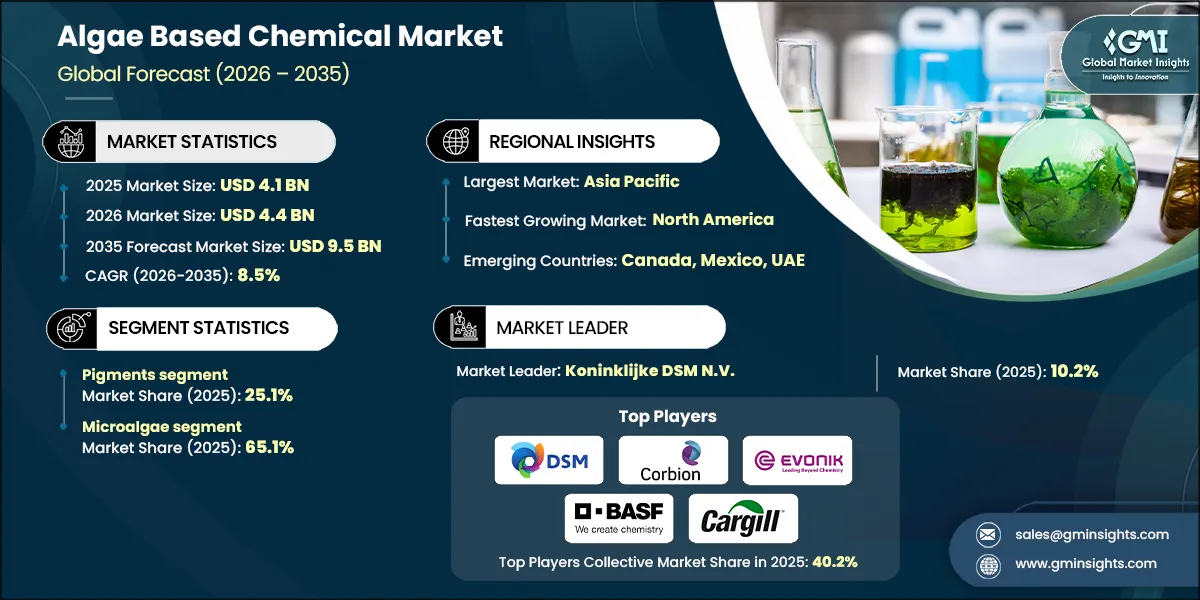
The global algae based chemical market was valued at USD 4.1 billion in 2025. The market is expected to grow from USD 4.4 billion in 2026 to USD 9.5 billion in 2035, at a CAGR of 8.5% according to latest report published by Global Market Insights Inc.
To get key market trends
- The algae-based chemical diversity embraces biofuels, bioplastics, nutraceuticals, and other bioactive compounds produced by algae for various industries like healthcare, agriculture, and energy. The market is influenced by the rising demand for sustainable ingredients-both plant- and non-plant-based-with governments around the world undertaking measures to enable bioeconomy initiatives, funding scientists, and putting in place policies to drive countries into transition to renewable resources.
- With most of their governments with favorable policies, many Asian states, especially China and India, have begun making substantial investments in both algae cultivation and process infrastructures with the region now the largest market for algae-based chemicals. North America has, however, been acknowledged as an upcoming and fast-emerging market driven by technological advancement and increased investment in sustainable manufacturing and rising consumer shift toward eco-friendly products.
- The biotech ecosystem underpinned by strong government support and innovative regulations has proven instrumental in the evolution and commercialization of algae-based development and innovation. The advent of new applications for algae across aerospace, automotive, and healthcare sectors, coupled with government strides in support of such initiatives, make this a time for global algae chemical development.
Algae Based Chemical Market Report Attributes
| Key Takeaway | Details |
|---|---|
| Market Size & Growth | |
| Base Year | 2025 |
| Market Size in 2025 | USD 4.1 Billion |
| Market Size in 2026 | USD 4.4 Billion |
| Forecast Period 2026-2035 CAGR | 8.5% |
| Market Size in 2035 | USD 9.5 Billion |
| Key Market Trends | |
| Drivers | Impact |
| Growing demand for sustainable & plant-based ingredients | Driving increased adoption and innovation in algae-based chemicals, expanding market opportunities |
| Rising consumer awareness of health & wellness | Boosting demand for algae-derived bioactive compounds and nutraceuticals within the market |
| Increasing regulatory support for biofuels & renewable energy | Facilitating favorable policies and incentives, promoting algae-based biofuel production and market growth |
| Pitfalls & Challenges | Impact |
| High production & processing costs | Creating barriers to large-scale commercialization of algae-based chemicals, limiting market penetration |
| Scalability challenges & capital-intensive infrastructure | Hindering widespread industrial adoption and rapid expansion of algae-based chemical manufacturing |
| Opportunities: | Impact |
| Emerging applications in bioplastics & circular economy | Opening new markets for algae-derived materials, enhancing sustainability and product diversification |
| Integration with wastewater treatment & carbon capture | Presents opportunities for algae-based chemicals to contribute to environmental remediation while generating value-added products |
| Market Leaders (2025) | |
| Market Leader |
Market Share: 10.2% |
| Top Players |
Collective Market Share of 40.2% in 2025 |
| Competitive Edge |
|
| Regional Insights | |
| Largest Market | Asia Pacific |
| Fastest growing market | North America |
| Emerging countries | Canada, Mexico, UAE |
| Future outlook |
|
What are the growth opportunities in this market?
Algae based Chemical Market Trends
- The manufacturing industry becomes more and more reliant on this evolution, manifesting as a manufacturing practice that focuses on sustainability. Production processes are increasingly geared toward the reduction of water, energy consumptions, and waste. One innovation that demonstrates efficiency of resources is a biorefinery concept, which also claims to have various valuable end products from one algae biomass. These are aimed at global sustainability goals and shaped by consumer demand for greener products, transforming a chain to more environment-friendly supply chains, and motivating regulators to further support circular economy initiatives.
- Renewable energy is being sought, and algae biofuels are coming up fast in the developing world. These algae-derived biofuels outmatch other traditional biofuels because of high yields and better environmental performance. Algae-based bioplastics are also catching the attention of green consumers and the regulatory bodies intended to reduce plastic footprints because of their high biodegradability and required performance.
- Algae are attracting more and more interest as subjects for clear regulatory frameworks and certification standards to be applied to algae-based products, especially in the health, food, and environmental sectors. Their development increases product credibility, ensuring safety and, more importantly, acceptance into the market at a global scale. Thus, industry processes that align with regulatory requirements are constantly inspiring innovations while at the same time keeping compliance with the intent of sustainable development in the algae-based chemical industry.
Algae Based Chemical Market Analysis
Learn more about the key segments shaping this market
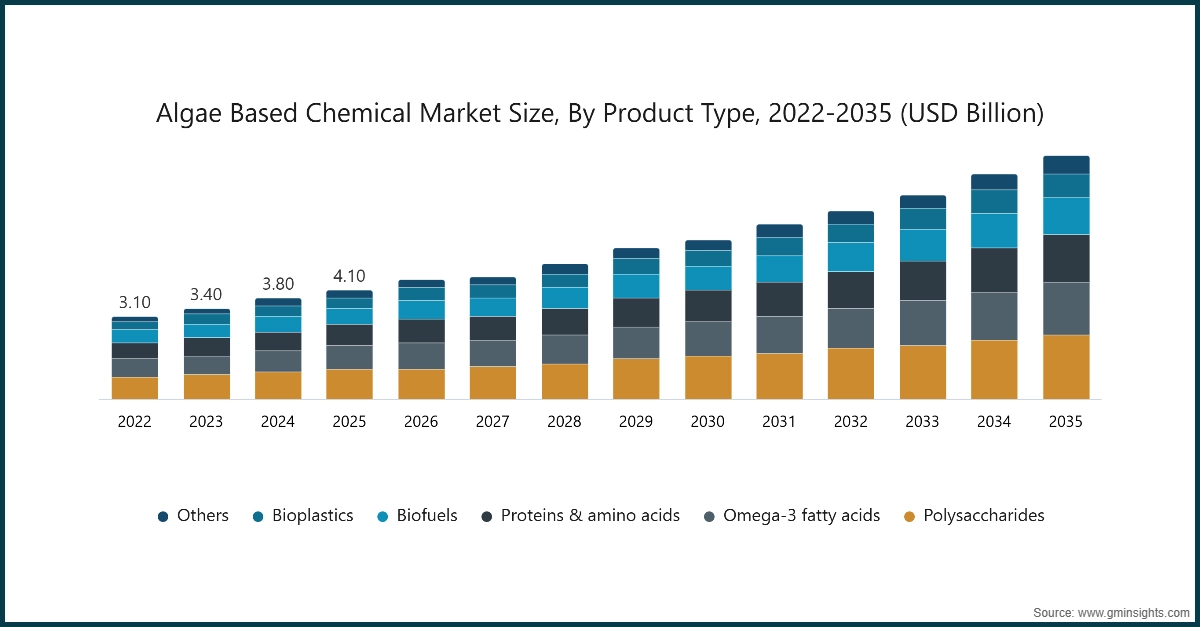
Based on product type, the algae based chemical market is segmented into pigments, polysaccharides, omega-3 fatty acids, proteins & amino acids, biofuels, bioplastics and others. Pigments dominated the market with an approximate market share of 25.1% in 2025 and is expected to grow with a CAGR of 8.6% till 2035.
- Pigments have begun taking their place in application across the textile, food, cosmetic, and packaging industries. Natural pigments deriving from algae such as astaxanthin, phycocyanin, and beta-carotene are appreciated for their natural properties, safety, and sustainability aspects when compared to synthetic dyes.
- Polysaccharides such as agar, carrageenan, and alginate represent another larger sector of algae chemicals, which have opportunities in the markets owing to the use of thickeners, gelling agents, or stabilizers in food, pharmaceutical, or cosmetic industries. These biopolymers are much favored for their biodegradability, safety, and functional properties being consistent with the trends toward sustainable and clean-label products.
- Omega-3 fatty acids represent a key segment for Easter based on their health benefits for just diet supplements, functional foods, and infant nutrition. Rising health and wellness awareness, dwindling supply of fish oil, and ocean sustainability concerns are increasingly driving demand for algae-derived omega-3s. Innovations in algae cultivation and processing are increasing the yield and the cost viability of the algae; thus, omega-3 fatty acids are one of the fastest-growing segments in the algae chemicals industry.
- Proteins and amino acids from algae are linking up because of their nutritional benefits, particularly in plant-based diets and animal feed. The clean-label trend and a growing vegan population represent key drivers encouraging manufacturers to position algae proteins as one-more sustainable, allergen-free alternatives. The advancements in fermentation technology are further increasing yield and purity, thus contributing to the growth of this segment.
- Biofuels and bioplastics, while growing, still remain small segments in comparison to pigments and polysaccharides. Their growing importance will be attributed to the compelled search for renewable energy sources and biodegradable plastics by governments and industries.
Learn more about the key segments shaping this market
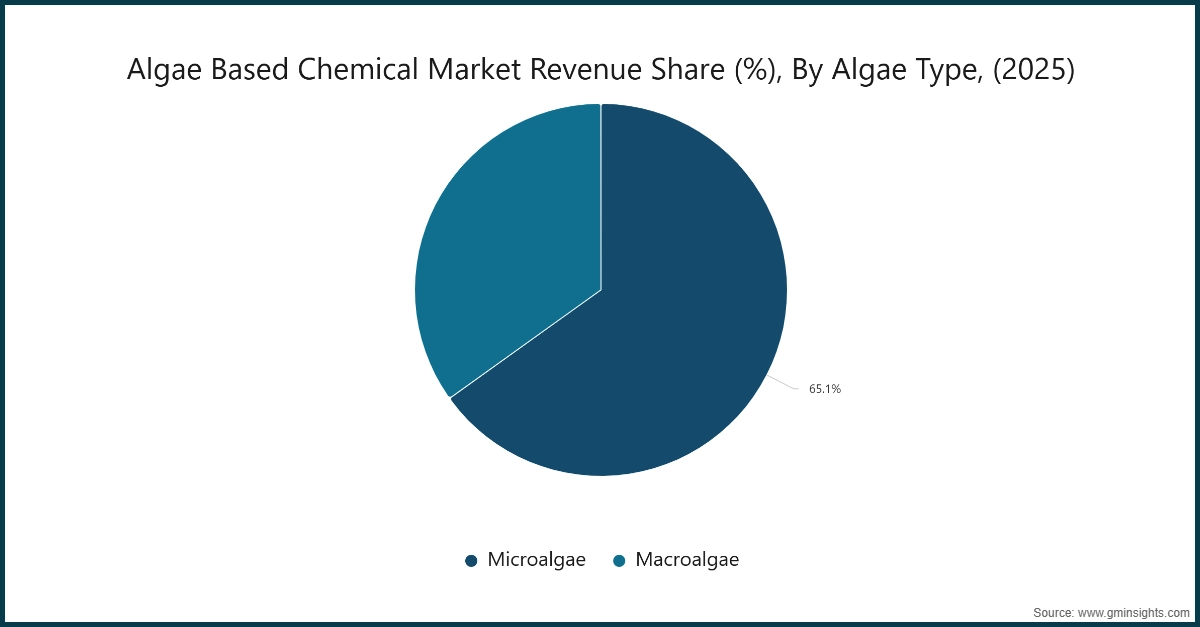
Based on algae type, the algae based chemical market is segmented into microalgae and macroalgae. Microalgae held the largest market share of 65.1% in 2025.
- High productivity and versatility in value chain options to quality biochemicals such as omega-3 fatty acids, pigments, and biofuels have been responsible for the domination of microalgae in the market. The potential of microalgae for high-value products with minimal land use and low water consumption fuels their chances as the best candidates for nutraceutical applications, cosmetics, and bioenergy.
- Macroalgae play an important role but are a minor player in the market due to their slow growth rates and lower biochemical yield. Seaweeds such as kelp and nori are primarily consumed in human diets, as well as being used in animal feed and certain industrial applications. Because of these, most of them are grown in coastal areas, making scalability quite limited compared to microalgae systems.
Based on application, the algae based chemical market is segmented into food & beverages, nutraceuticals & dietary supplements, pharmaceuticals, cosmetics & personal care, animal feed & aquaculture, biofuels & energy, agriculture & fertilizers and others.
- Food & beverages segment that is growing primarily due to the growing consumer demand for natural and clean-label ingredients as well as functional foods. There is a great demand for omega-3 fatty acids, antioxidants, and coloring agents, all derived from algae, which are acclaimed for their benefits to health and their natural origin, which adhere to transforming consumers' demands for healthier food.
- Algae are sustainable, nutrient-rich sources that fit food manufacturers who seek to create products to meet consumer demand and fuel innovation in product formulation. Extensively for the food sector, it has a wider reach along the applications line-from snacks, drinks, to dietary supplements-that do much on market expansion.
- In the nutraceuticals & dietary supplements sector, the increase has also led to increased use of algae-based additives. Pharmaceuticals is, however, gaining interest because bioactive against compound algae are increasingly used in making drugs or therapeutic agents. The growing demand for algae's antioxidant and anti-aging properties in natural skin care products drives the cosmetics and personal care segment.
- The animal feed & aquaculture segment derives an opportunity from the rising demand for improving livestock nutrition and ensuring sustainable aquaculture practice by incorporating algae as nutritious and eco-friendly additives.
Looking for region specific data?
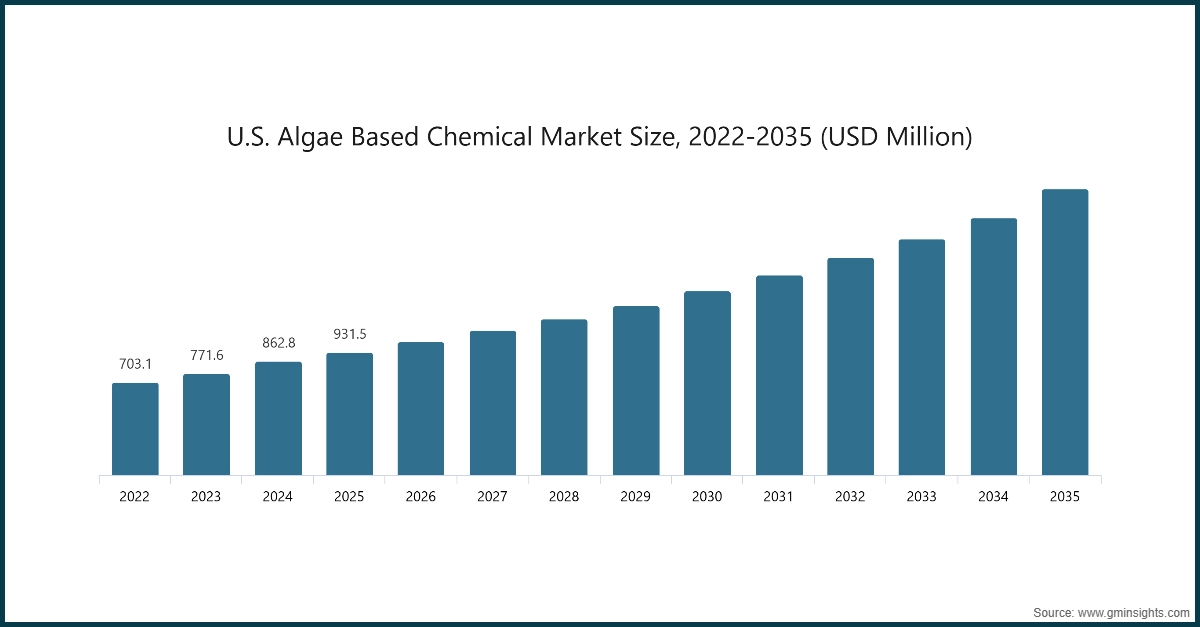
The algae based chemical market in North America will grow at a CAGR of 8.6% between 2026 and 2035.
- Innovations in sustainable processing such as the use of algae for bioremediation and waste valorization, further drive the adoption of algae chemicals along the principles of the circular economy.
- Increasing awareness among consumers about the environmental effects of synthetic chemicals and the transition to plant-based eco-friendly products have prompted brands to invest in algae-derived ingredients for food, cosmetics, and pharmaceuticals, which further drives market growth expansion.
The algae based chemical markets in Europe, especially in a few countries like Germany, are expected to grow with a rapid pace in the coming years.
- Continuous research is being conducted to develop eco-friendly extraction and processing techniques which will lessen environmental footprint but also increase purity and safety of algae-based products for organic farming, natural extracts, and pharmaceutical-grade ingredients.
- Increasing consumer demand for clean-label, sustainable, and allergen-free products is leading industries into investment in green processing technologies and is reinforcing health and sustainability trends across food, personal care, and pharmaceutical sectors.
The algae based chemical market in China and India is expected to have lucrative growth between 2026 and 2035, with CAGR 8.5% in the Asia Pacific region.
- The phenomenon of rapid urbanization and increasing disposable incomes have driven the demands of advanced algae processing equipment in food, packaging, and healthcare using natural and organic products.
- The demand for pharmaceutical-grade environmentally sustainable processing solutions, along-with newer innovative manufacturing practices are driving the increase for natural, functional, and bio-based ingredients.
Between 2026 and 2035, the market for algae based chemical in the Middle East is projected to grow significantly during this period.
- Enhanced infrastructure development for food, cosmetics, and dietary supplements industries with advanced processing systems has been supported by increasing government initiatives and industry efforts that promote the development and acceptance of innovative algae processing systems.
- Technological advancements in bio- and thermal treatment methods such as UV-based processing and waste valorization have scrimped expenses because of the reduced dependency on grid-based energy and also helped convert these systems as sustainable algae-based production systems accepted in numerous sectors.
Between 2025 and 2035, a promising expansion of the algae based chemical sector is foreseen in the Latin America.
- Increased environmental awareness and growing policies promoting recycling of waste and sustainable practices would promote use of algae technologies in the meat, poultry, cosmetics and functional foods industries.
- Expanding disposable incomes and increasing scientific research into natural extracts and bio-based ingredients are fueling demand for environmentally friendly, bio-based processing equipment, thus contributing towards growth in food, pharmaceutical, and cosmetic applications.
Algae Based Chemical Market Share
Algae based chemical industry is moderately consolidated with players like DSM-Firmenich, Corbion, Evonik Industries AG, BASF SE and Cargill, Incorporated which accounts for 40.2% market share in 2025.
The algae based chemical industry consists of such leading companies operating mostly in their regional areas. Their long years of experience with algae based chemical have allowed these companies to maintain a strong market position worldwide. Their product offerings are diverse and majorly supported by production capacities and distribution networks, which can serve the increasing demand for algae based chemical in various regions.
Algae Based Chemical Market Companies
Major players operating in the algae based chemical industry includes:
- Aliga ApS
- BASF SE
- Cabio Biotech
- Cargill, Incorporated
- Cellana Inc
- Corbion
- Cyanotech Corporation
- Earthrise Nutritionals LLC
- Evonik Industries AG
- Koninklijke DSM N.V.
- Parry Nutraceuticals
BASF SE is developing algae-based ingredients for agriculture, food, and personal care applications, with special focus cast on sustainable chemical solutions.
Cargill, Incorporated utilizes algae-derived bioactives in nutritional supplements, food additives, and sustainable ingredients for various industrial processes.
Corbion makes algae-based biochemicals and ingredients for food preservation, animal nutrition, and environmentally-friendly packaging solutions.
Evonik Industries AG researches and manufactures algae-based specialty chemicals for pharmaceutical, cosmetic, and environmentally sustainable applications.
Koninklijke DSM N.V. works on algae-derived ingredients for health, nutrition, and beauty products, with a strong emphasis on natural and sustainable bio-based solutions.
Algae Based Chemical Industry News
- In April 2025, AlgaEnergy began marketing four CE-certified biostimulants based on microalgae in Europe, including a formulation for olive trees that had ameliorated oil quality, yield, and stability in real farming conditions.
- In December 2023, DIC launched KS-519, the world's first sulfurized EP additive from algae oil, outperforming conventional vegetable oil products on the market, while also reducing CO2 emissions, with strong demand anticipated in both the EV and global markets.
- In August 2023, Corbion received regulatory approvals in China to offer its algae-based omega-3 DHA solutions for both human and animal nutrition.
This algae based chemical market research report includes in-depth coverage of the industry, with estimates & forecasts in terms of revenue (USD Billion) and volume (Kilo Tons) from 2022 to 2035, for the following segments:
Market, By Product Type
- Pigments
- Polysaccharides
- Omega-3 fatty acids
- Proteins & amino acids
- Biofuels
- Bioplastics
- Others
Market, By Algae Type
- Microalgae
- Spirulina
- Chlorella
- Haematococcus pluvialis
- Others
- Macroalgae
- Brown seaweeds
- Red seaweeds
- Green seaweeds
Market, By Automation Level
- Food & beverages
- Natural colorants
- Thickeners & stabilizers
- Nutritional ingredients
- Nutraceuticals & dietary supplements
- Omega-3 supplements
- Protein powders
- Antioxidant supplements
- Pharmaceuticals
- Cosmetics & personal care
- Skin care products
- Hair care products
- Anti-aging formulations
- Animal feed & aquaculture
- Biofuels & energy
- Agriculture & fertilizers
- Others
The above information is provided for the following regions and countries:
- North America
- U.S.
- Canada
- Europe
- Germany
- UK
- France
- Spain
- Italy
- Rest of Europe
- Asia Pacific
- China
- India
- Japan
- Australia
- South Korea
- Rest of Asia Pacific
- Latin America
- Brazil
- Mexico
- Argentina
- Rest of Latin America
- Middle East and Africa
- Saudi Arabia
- South Africa
- UAE
- Rest of Middle East and Africa
Frequently Asked Question(FAQ) :
Who are the key players in the algae-based chemical industry?
Key players include Aliga ApS, BASF SE, Cabio Biotech, Cargill, Incorporated, Cellana Inc, Corbion, Cyanotech Corporation, Earthrise Nutritionals LLC, Evonik Industries AG, Koninklijke DSM N.V., and Parry Nutraceuticals.
What is the growth outlook for the algae-based chemical sector in North America?
The North American market is set to expand at a CAGR of 8.6% till 2035, supported by innovations in sustainable processing, such as bioremediation and waste valorization.
What are the upcoming trends in the algae-based chemical market?
Adoption of biorefinery models, growth of high-yield algae biofuels, rising demand for biodegradable algae-based bioplastics, and stronger regulatory frameworks to boost credibility across health, food, and environmental sectors.
What was the market share of microalgae in 2025?
Microalgae dominated the market with a 65.1% share in 2025, led by their high productivity, minimal land use, and low water consumption.
What is the expected size of the algae-based chemical industry in 2026?
The market size is projected to reach USD 4.4 billion in 2026.
What was the market share of pigments in 2025?
Pigments held approximately 25.1% of the market share in 2025 and is expected to grow at a CAGR of 8.6% through 2035.
What is the projected value of the algae-based chemical market by 2035?
The market is poised to reach USD 9.5 billion by 2035, fueled by advancements in biofuels, bioplastics, and nutraceuticals, along with supportive government policies for renewable resources.
What was the market size of the algae-based chemical in 2025?
The market size was valued at USD 4.1 billion in 2025, with a CAGR of 8.5% expected through 2035. The market's growth is driven by increasing demand for sustainable ingredients and bioeconomy initiatives globally.
Algae Based Chemical Market Scope
Related Reports