Summary
Table of Content

Acitretin Market
Get a free sample of this report
Form submitted successfully!
Error submitting form. Please try again.
Thank you!
Your inquiry has been received. Our team will reach out to you with the required details via email. To ensure that you don't miss their response, kindly remember to check your spam folder as well!
Request Sectional Data
Thank you!
Your inquiry has been received. Our team will reach out to you with the required details via email. To ensure that you don't miss their response, kindly remember to check your spam folder as well!
Form submitted successfully!
Error submitting form. Please try again.
Acitretin Market Size
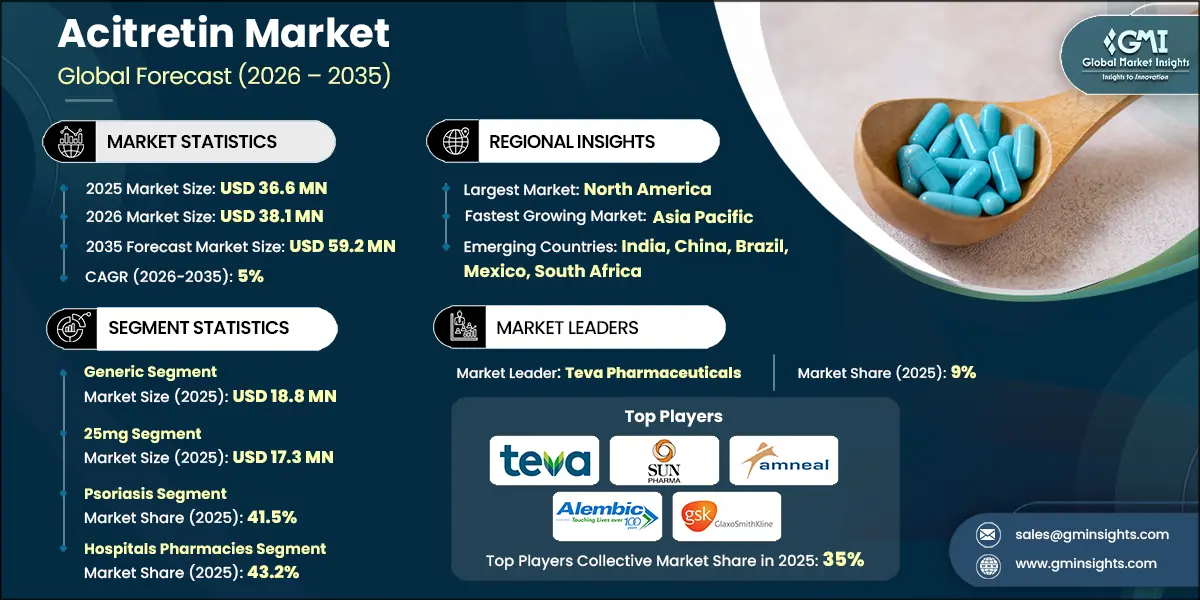
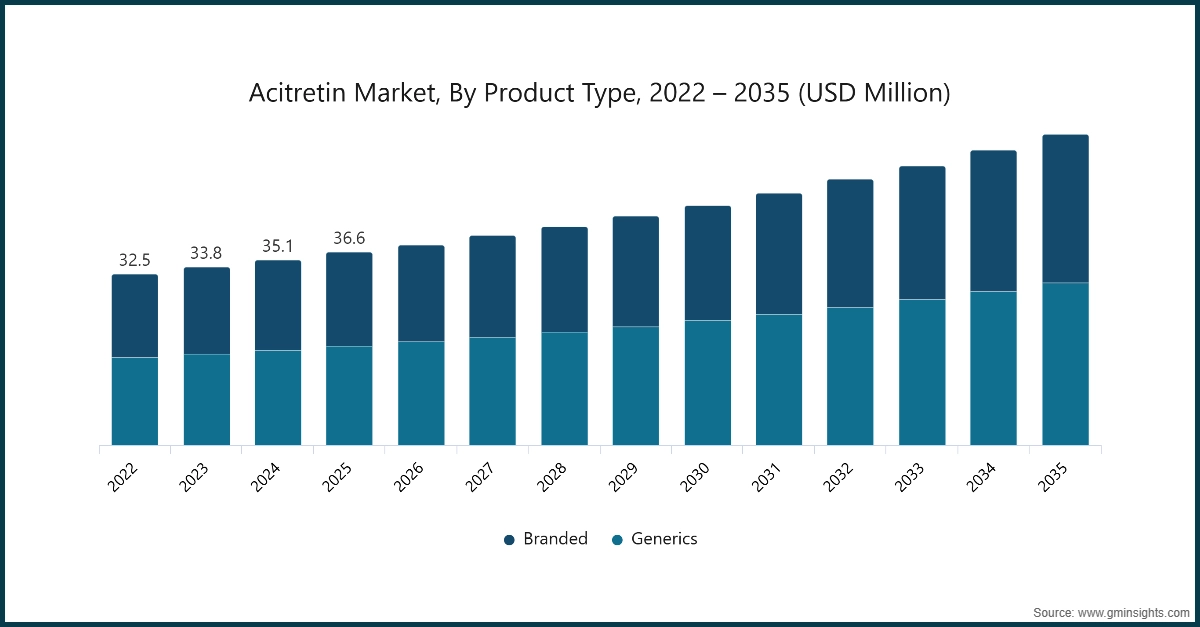
The global acitretin market was valued at USD 36.6 million in 2025 and is projected to grow from USD 38.1 million in 2026 to USD 59.2 million by 2035, expanding at a CAGR of 5%, according to the latest report published by Global Market Insights Inc. This steady growth is driven by rising prevalence of psoriasis globally, advancements in treatment and growing awareness and diagnosis.
Acitretin Market Key Takeaways
Market Size & Growth
- 2025 Market Size: USD 36.6 Million
- 2026 Market Size: USD 38.1 Million
- 2035 Forecast Market Size: USD 59.2 Million
- CAGR (2026–2035): 5%
Regional Dominance
- Largest Market: North America
- Fastest Growing Region: Asia Pacific
Key Market Drivers
- Rising prevalence of psoriasis globally.
- Advancements in treatment.
- Growing awareness and diagnosis.
- Growing dermatology specialty clinics.
Challenges
- Stringent regulatory requirements.
- Side effects and safety concerns.
Opportunity
- Rising demand for cost-effective alternatives to biologics.
Key Players
- Market Leader: Teva Pharmaceuticals led with over 9% market share in 2025.
- Leading Players: Top 5 players in this market include Teva Pharmaceuticals, Sun pharmaceuticals, Amneal Pharmaceuticals, Alembic Pharmaceuticals, GSK Plc, which collectively held a market share of 35% in 2025.
Get Market Insights & Growth Opportunities
The market increased from USD 33.8 million in 2023 to USD 35.1 million in 2024. The global rise in psoriasis prevalence is a major driver creating demand for acitretin, a key systemic retinoid used in moderate to severe cases. According to the World Psoriasis Day consortium, an estimated 125 million people worldwide representing 2–3% of the global population are affected by psoriasis. This expanding patient base is placing increased emphasis on long‑term, cost‑effective, and clinically reliable treatment options. Acitretin, with its established efficacy in chronic plaque psoriasis and keratinization disorders, remains a cornerstone therapy particularly in regions where access to biologics is limited.
Additionally, updated epidemiological reviews indicate that psoriasis prevalence continues to rise in several regions, largely due to improved diagnostic capabilities and expanding population demographics. As more patients are identified earlier in the disease course, the need for systemic treatments that offer sustained symptom control is expected to grow. This trend is especially significant in high-income countries where lifetime prevalence rates are increasing, as well as in underserved regions beginning to strengthen dermatological care infrastructure. Overall, the escalating global burden of psoriasis directly contributes to steady, long-term demand for acitretin across markets.
Additionally, increasing global awareness of psoriasis and its broader health implications is significantly strengthening the foundation for early diagnosis and timely therapeutic intervention directly supporting demand for acitretin. International organizations, including the World Health Organization, have emphasized the need to enhance understanding of psoriasis and reduce stigma, launching efforts aimed at educating both policymakers and the public about the disease’s burden and treatment pathways. Such initiatives are not only raising public recognition but also encouraging more individuals to seek medical evaluation, thereby improving detection rates in both developed and underrepresented regions.
Additionally, recurring awareness campaigns such as the National Psoriasis Foundation’s annual National Psoriasis Month play a pivotal role in informing patients about available therapies and the importance of clinical management. These structured programs help dismantle misconceptions surrounding psoriasis, promote recognition of its various forms, and foster more proactive engagement with dermatology services. As diagnosis becomes clearer, more people with moderate to severe psoriasis are being directed to the right systemic treatments.
Acitretin is an oral, second-generation retinoid used to treat severe, resistant psoriasis and keratinizing disorders. It works by regulating skin cell growth, reducing inflammation, and slowing down rapid, excessive skin cell proliferation.
To get key market trends
Acitretin Market Trends
- Advancements in dermatological treatment strategies are reshaping how clinicians manage chronic psoriasis, and these improvements are positively influencing the demand for acitretin. As research continues to refine understanding of disease pathways, acitretin remains a valuable systemic option particularly for patients who require long‑term, affordable, and broadly effective therapy.
- The evolution of treatment guidelines is also creating more structured approaches to psoriasis care, ensuring that systemic therapies like acitretin are used more strategically. Clinicians are increasingly tailoring treatment plans to individual patient needs, including age, disease severity, and comorbidities. This has helped reinforce acitretin’s relevance, especially in cases where biologics may not be suitable due to cost, contraindications, or limited availability.
- Another factor driving the acitretin market is the growing use of combination therapies. Dermatologists are frequently pairing acitretin with phototherapy, topical agents, or even biologics to achieve faster and more sustained clinical responses. Its ability to enhance phototherapy outcomes and reduce cumulative UV exposure makes it a preferred add‑on treatment in many regimens.
- As combination therapy becomes more common in clinical practice, acitretin is increasingly positioned as a central component of integrated psoriasis management. Its complementary mechanism of action, cost efficiency, and compatibility with various treatment modalities ensure that it continues to play a pivotal role in addressing diverse patient needs. Together, these advancements elevate acitretin’s market potential and reinforce its importance in modern dermatology.
Acitretin Market Analysis
Learn more about the key segments shaping this market
Based on product type, the acitretin market is divided into branded and generics. The generic segment held significant share in the market with the revenue of USD 18.8 million in 2025.
- Generic acitretin products are manufactured in compliance with stringent regulatory standards and must demonstrate bioequivalence to the reference branded drug, ensuring comparable efficacy and safety. Once approved, generics benefit from established clinical knowledge of the molecule accumulated over decades of use, without the need for repeated large‑scale trials. Their significantly lower cost and broad availability make generics highly accessible, especially in price‑sensitive healthcare systems, thereby earning widespread acceptance among clinicians, payers, and patients.
- Dermatologists frequently adopt generic acitretin for both moderate and severe psoriasis management, particularly when long‑term therapy and affordability are key considerations. With multiple approved manufacturers offering AB‑rated formulations, physicians gain flexibility in prescribing while maintaining therapeutic consistency. In many markets, hospital formularies, government tenders, and insurance providers strongly encourage or mandate generic use, reinforcing their routine adoption in clinical practice and increasing patient adherence due to reduced financial burden.
- Consequently, generic acitretin products constitute the dominant share of the global market, driven by cost efficiency, broad regulatory approval, and integration into standard treatment protocols. While branded products retain relevance in select settings, generics play a central role in expanding access to systemic psoriasis therapy worldwide, particularly in emerging markets and public healthcare environments where affordability and scalability are critical.
Based on dosage strength, the acitretin market is divided into 10 mg, 25 mg and 50 mg. The 25mg segment dominated the market with the largest revenue of USD 17.3 million in 2025.
- Acitretin is prescribed in varying doses depending on disease severity and how each patient responds to therapy. 25 mg strength supports more accurate dose titration, especially in situations where lower dosing is sufficient to achieve clinical improvement while helping limit unwanted side effects.
- Using lower strengths such as the 25 mg formulation can also lessen both the frequency and intensity of adverse effects compared with higher doses. This improved safety profile often enhances patient tolerance and long‑term adherence, as individuals are less likely to discontinue treatment due to discomfort or quality‑of‑life disruptions.
- Moreover, offering a 25 mg dosage gives healthcare professionals greater flexibility when designing personalized treatment regimens. The ability to find dosing according to each patient’s needs and preferences strengthens therapeutic outcomes. Collectively, these advantages are expected to support the growth of this dosage segment.
Based on application, the acitretin market is divided into psoriasis, ichthyosis, Darier disease, pityriasis rubra pilaris, solid organ transplants, Grover’s disease, lichen planus, and lupus erythematosus. The psoriasis segment accounted for the highest market share of 41.5% in 2025.
- Psoriasis is a chronic inflammatory disease that primarily affects the skin and, in some cases, the joints and other organs, forming part of a broader spectrum known as psoriatic disease. It is characterized by recurring, scaly, erythematous plaques and often requires long‑term management. The disease poses a significant public health burden due to its lifelong nature and impact on patients’ quality of life.
- For instance, according to IPFA in the Western Pacific Region (WPR), which comprises approximately 1.9 billion people across 27 countries, psoriasis prevalence in the Asia‑Pacific region ranges from 0.11% in East Asia to 1.58% in Australasia, translating into a substantial patient population.
- Psoriasis represents the dominant application segment in the acitretin market mainly because of its high prevalence and the established role of acitretin in treating moderate‑to‑severe forms of the disease. The chronic and relapsing nature of psoriasis necessitates prolonged or repeated treatment, resulting in sustained demand for systemic therapies such as acitretin, especially in regions where access to advanced biologic therapies may be limited.
- As a result, the dominance of psoriasis in the market is driven by the large and growing patient pool, chronic disease progression, and consistent clinical reliance on acitretin as a cost‑effective systemic therapy.
Learn more about the key segments shaping this market
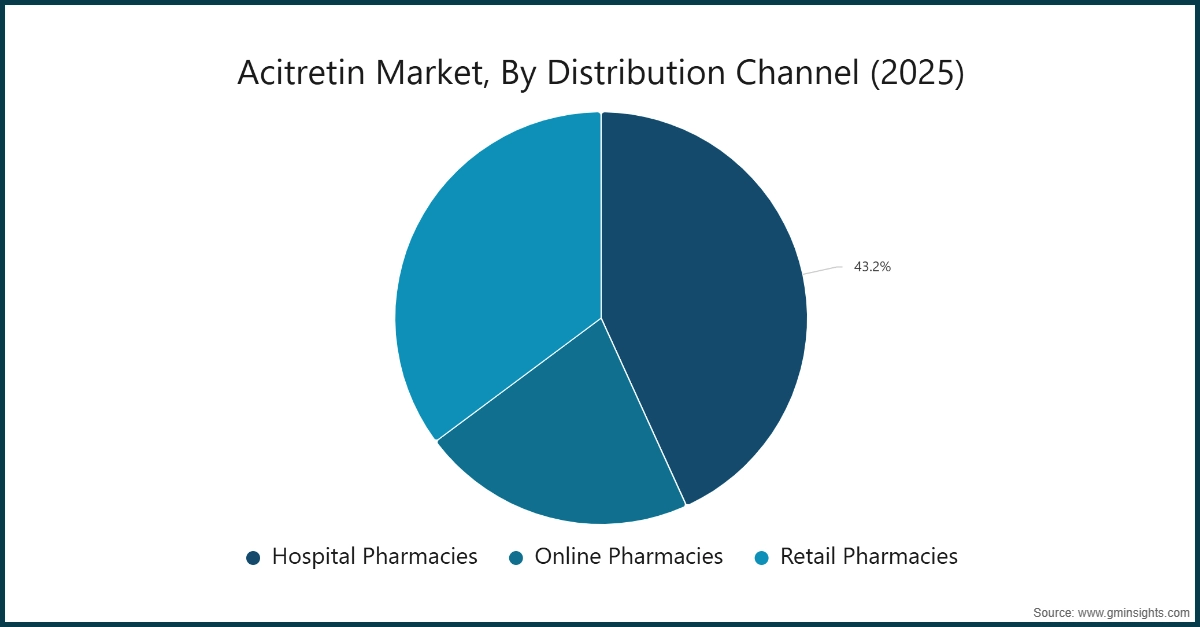
Based on distribution channel, the acitretin market is segmented into hospital pharmacies, retail pharmacies, and online pharmacies. The hospitals pharmacies segment accounted for the highest market share of 43.2% in 2025.
- Hospital pharmacies play a crucial role by providing access to a comprehensive portfolio of medications, including both branded and generic formulations of acitretin. This broad availability enables healthcare providers to tailor treatment choices based on individual patient needs, clinical considerations, and institutional formulary guidelines.
- In addition, hospital pharmacists are highly trained medication experts with in‑depth knowledge of drug therapy management. Their expertise allows them to offer informed guidance on the appropriate use of acitretin, including recommended dosing schedules, identification of potential drug interactions, and essential monitoring requirements to ensure safe and effective therapy.
- Beyond medication dispensing, hospital pharmacies often deliver specialized pharmaceutical services that support optimal treatment outcomes. These include compounding services for customized formulations, medication reconciliation to prevent errors during care transitions, and structured medication therapy management (MTM) programs.
- Collectively, these capabilities enhance medication adherence, patient safety, and therapeutic effectiveness for individuals receiving acitretin. As a result, the integrated clinical support and advanced services offered by hospital pharmacies are expected to significantly drive the growth of this distribution segment.
Looking for region specific data?
North America Acitretin Market
The North America region accounted for 40.4% of the market in 2025. The market in North America is experiencing robust expansion, driven by the increasing prevalence of psoriasis.
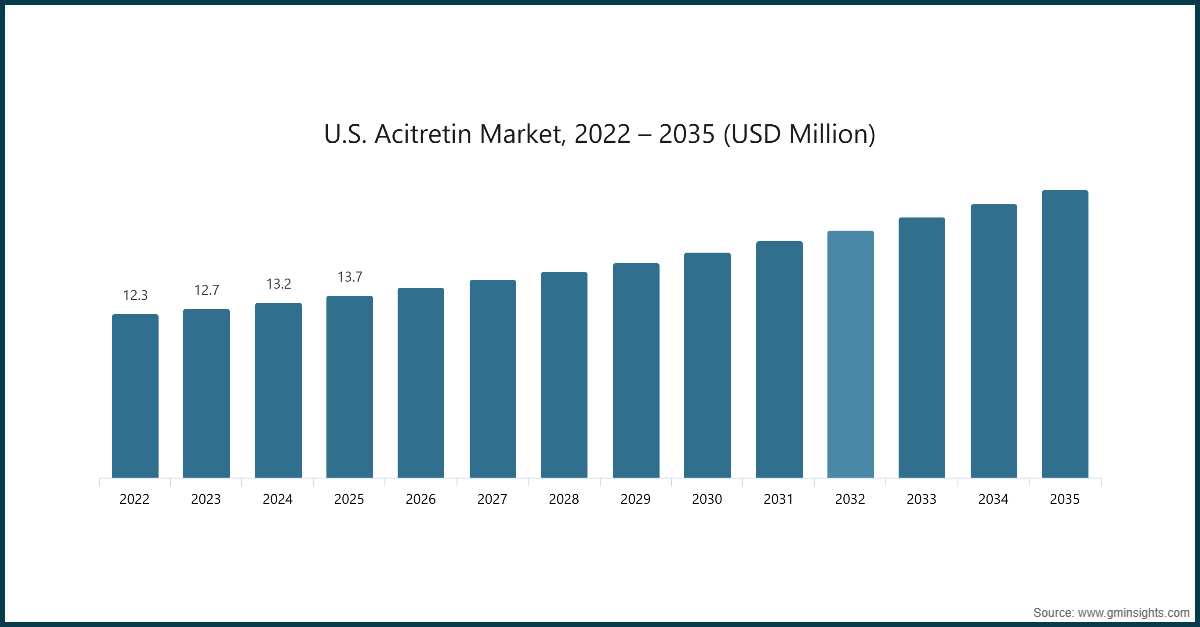
- The U.S. market was valued at USD 12.3 million and USD 12.7 million in 2022 and 2023, respectively. The market size reached USD 13.7 million in 2025, growing from USD 13.2 million in 2024.
- The high prevalence of psoriasis in the is a key driver of the U.S. acitretin market. Psoriasis is one of the most common chronic dermatological conditions in the country, creating a substantial and sustained demand for effective systemic therapies. According to the National Institutes of Health (NIH), approximately 3% of U.S. adults were affected by psoriasis in 2021, representing over 7.5 million individuals, highlighting the large addressable patient population.
- Acitretin plays an important role in the management of moderate‑to‑severe psoriasis, particularly in patients who are unsuitable for biologic therapies due to contraindications, cost concerns, or preference for non‑immunosuppressive treatments.
- Consequently, the significant disease burden, widespread diagnosis, and ongoing treatment needs associated with psoriasis continue to drive demand for acitretin in the U.S. This strong epidemiological foundation positions psoriasis as a major contributor to market growth and reinforces acitretin’s relevance in the U.S. dermatology therapeutics landscape.
Europe Acitretin Market
Europe market accounted for USD 8 million in 2025 and is anticipated to show lucrative growth over the forecast period.
- The growing awareness and improved diagnosis of psoriasis across Europe are key drivers of the European market. In recent years, coordinated efforts by patient organizations, healthcare providers, and research consortia have significantly enhanced understanding of psoriatic disease among both clinicians and the general population. Initiatives led by European patient advocacy groups and public health bodies have emphasized psoriasis as a systemic, chronic condition rather than a purely dermatological disorder, encouraging earlier medical consultation and referral to specialist care.
- Health Initiatives in Psoriasis and Psoriatic Arthritis Consortium European States (HIPPOCRATES), launched in 2021 with support from the European Union. This multi‑country initiative focuses on early identification, risk stratification, and improved diagnostic pathways for psoriatic disease, particularly in patients at risk of progression. By strengthening screening practices and standardizing clinical approaches across European healthcare systems, such programs are increasing the number of diagnosed and treated patients, thereby expanding the eligible population for systemic therapies such as acitretin.
- As awareness campaigns and large‑scale research collaborations continue to reduce underdiagnosis and diagnostic delays, demand for established systemic treatments is expected to rise.
Germany's acitretin market is projected to experience steady growth between 2026 and 2035.
- Advancements in treatment are a significant driver of the Germany market, supported by the country’s strong dermatology healthcare infrastructure and continuous clinical innovation. Germany has been at the forefront of adopting updated psoriasis treatment guidelines that emphasize personalized and step‑wise therapy selection.
- In addition, advancements in combination treatment approaches, such as the use of acitretin alongside phototherapy or topical agents, have improved therapeutic outcomes while minimizing adverse effects. These innovations have enhanced the clinical utility of acitretin by increasing treatment efficacy and tolerability, thereby sustaining physician confidence in its prescription. Improved monitoring practices and clearer safety guidance have further supported its continued use in routine clinical practice across Germany.
Asia Pacific Acitretin Market
The Asia Pacific region is projected to show a lucrative growth of about 5.5% during the forecast period.
- The rising prevalence of psoriasis across the Asia Pacific region is a major driver of the market in this geography. Psoriasis is increasingly recognized as a chronic, systemic inflammatory condition affecting a growing number of patients across both developed and emerging Asia Pacific countries. Large population bases in countries such as China, India, Japan, South Korea, and Australia mean that even modest prevalence rates translate into millions of affected individuals, significantly expanding the addressable patient pool for systemic therapies.
- Urbanization, lifestyle changes, increasing stress levels, and improved access to dermatology care have contributed to a steady rise in diagnosed psoriasis cases across the region. In parallel, growing awareness among healthcare professionals and patients has led to higher consultation rates and earlier diagnosis of moderate‑to‑severe disease, where systemic treatments such as acitretin are commonly prescribed. This trend is particularly pronounced in developing Asia Pacific markets.
China acitretin market is poised to witness lucrative growth between 2026 and 2035.
- The rising prevalence of psoriasis in China is a key driver of the China market. Psoriasis represents a growing dermatological burden in the country due to increased disease awareness, improved diagnostic capabilities, and broader access to healthcare services. It is estimated that approximately 2.3 million people in China are affected by psoriasis, creating a substantial patient base that requires effective long‑term disease management.
- As the number of diagnosed patients continues to rise and clinical emphasis shifts toward sustained disease control, demand for reliable systemic therapies is expected to grow. Consequently, the increasing psoriasis prevalence and the need for continuous treatment are expected to significantly drive the growth of the market in China over the forecast period.
Latin America Acitretin Market
Brazil is experiencing significant growth in the market.
- The rising prevalence of psoriasis in Brazil is a key driver of the Brazilian market. Psoriasis is increasingly recognized as a common chronic inflammatory skin disorder in the country, supported by improved disease awareness and expanded access to dermatological care.
- As diagnosis rates increase across both urban and semi‑urban regions, a growing number of patients are entering long‑term treatment pathways, thereby expanding the demand for systemic therapies.
- As the burden of psoriasis continues to grow, supported by better clinical recognition and patient follow‑up, demand for reliable systemic treatments is expected to remain strong.
Middle East and Africa Acitretin Market
- Saudi Arabia is witnessing growing awareness and improved diagnosis of chronic dermatological conditions, supported by ongoing healthcare reforms and expanding access to specialized medical services. Increased patient education, routine dermatology consultations, and better diagnostic capabilities across hospitals and clinics are leading to earlier identification of conditions such as psoriasis, thereby increasing the demand for established systemic treatments like acitretin.
- Alongside rising awareness, the country’s evolving healthcare ecosystem supports effective treatment adoption, with enhanced clinical guidelines and broader physician familiarity with systemic dermatology therapies. This improved diagnostic and treatment landscape facilitates appropriate therapy selection and long‑term disease management, contributing to the steady uptake of acitretin and supporting market growth in Saudi Arabia.
Acitretin Market Share
- The leading companies in the acitretin industry include Teva Pharmaceuticals, Sun pharmaceuticals, Amneal Pharmaceuticals, Alembic Pharmaceuticals, and GSK Plc, collectively accounting for a 35% market share of the global market.
- Leading players in the acitretin industry are increasingly focusing on therapeutic optimization and formulation improvements to enhance treatment effectiveness, safety, and patient adherence. Companies are investing in improved oral formulations, optimized dosage strengths, and clearer prescribing information to support long‑term management of chronic dermatological conditions such as psoriasis while minimizing adverse effects.
- Market participants are strengthening partnerships with hospitals, dermatology clinics, and specialty pharmacies to expand access to acitretin across both developed and emerging regions. These collaborations help improve drug availability, streamline distribution, and ensure appropriate prescribing practices, particularly in high‑growth markets across Asia‑Pacific, Latin America, and the Middle East.
- With the rising burden of chronic skin disorders requiring systemic therapy, manufacturers are increasingly aligning their products with stringent regulatory standards and pharmacovigilance requirements. Enhanced compliance with quality certifications and safety monitoring supports consistent product performance, reinforces physician confidence, and promotes wider adoption of acitretin in hospital and outpatient settings.
- Emerging and regional manufacturers are emphasizing cost‑effective production and scalable supply strategies to cater to price‑sensitive healthcare systems. These companies often focus on generic acitretin formulations and leverage local distributors, regional pharmaceutical partners, and retail pharmacy networks to expand market presence efficiently while maintaining affordability.
Acitretin Market Companies
Few of the prominent players operating in the acitretin industry include:
- Amneal Pharmaceuticals, Inc.
- Biophore
- Chongqing Huapont Pharmaceutical Co., Ltd.
- Glenmark Pharmaceuticals Ltd.
- GSK Plc
- Merck KGaA
- Prasco Laboratories
- Sun Pharma Industries Limited
- Teva Pharmaceuticals Industries Ltd
- Alembic Pharmaceuticals Ltd
Merck KGaA exhibits a peripheral presence in the acitretin market, primarily through its life science and specialty chemicals capabilities rather than finished pharmaceutical products. The company’s strengths lie in research tools, specialty excipients, and high‑quality chemical intermediates that may indirectly support retinoid development and production. However, acitretin formulations and direct market participation are not a strategic focus for Merck KGaA, positioning the company more as an enabling partner within the broader pharmaceutical value chain rather than an active acitretin supplier.
Glenmark Pharmaceuticals Ltd maintains a selective presence in the acitretin market, supported by its broader strength in dermatology and branded generics across emerging and semi‑regulated markets. While acitretin is not a flagship product within Glenmark’s portfolio, the company’s established dermatology infrastructure, formulation expertise, and physician reach enable targeted commercialization where market demand exists. Glenmark’s focus on therapeutic depth, brand‑led strategies, and cost‑competitive manufacturing allows it to serve niche market segments in the management of severe psoriasis.
GSK Plc has a limited and indirect role in the acitretin market, as the company’s strategic focus is centered on innovative prescription medicines, vaccines, and specialty therapeutics rather than off‑patent retinoid generics. Although GSK possesses deep expertise in dermatology and inflammatory diseases, acitretin does not align with its current innovation‑driven portfolio or commercial priorities. As a result, GSK’s involvement in the acitretin space remains minimal, with no significant manufacturing, formulation, or direct commercialization activity.
Acitretin Market Report Attributes
| Key Takeaway | Details |
|---|---|
| Market Size & Growth | |
| Base Year | 2025 |
| Market Size in 2025 | USD 36.6 Million |
| Market Size in 2026 | USD 38.1 Million |
| Forecast Period 2026-2035 CAGR | 5% |
| Market Size in 2035 | USD 59.2 Million |
| Key Market Trends | |
| Drivers | Impact |
| Rising prevalence of psoriasis globally | Expanding patient populations directly increase long term demand for systemic therapies such as acitretin, particularly for moderate to severe psoriasis cases. |
| Advancements in treatment | Improved clinical guidelines, combination therapies, and better safety monitoring enhance acitretin’s clinical adoption as a cost effective systemic treatment option. |
| Growing awareness and diagnosis | Higher disease awareness and earlier diagnosis rates drive increased prescription volumes of established oral retinoids, including acitretin. |
| Growing dermatology specialty clinics | Expansion of specialized dermatology practices improves access to systemic psoriasis treatments, supporting consistent utilization of acitretin in clinical settings. |
| Pitfalls & Challenges | Impact |
| Stringent regulatory requirements | Strict approval pathways, pharmacovigilance obligations, and pregnancy prevention labeling requirements increase development complexity and delay market entry for acitretin products |
| Side effects and safety concerns | Known risks such as teratogenicity and long half life limit patient eligibility and prescriber preference, constraining broader adoption despite clinical effectiveness. |
| Opportunities: | Impact |
| Rising demand for cost-effective alternatives to biologics | This driver accelerates market growth by boosting adoption through lower treatment costs and broader patient access |
| Market Leaders (2025) | |
| Market Leader |
9% market share |
| Top Players |
Collective market share is 35% in 2025 |
| Competitive Edge |
|
| Regional Insights | |
| Largest Market | North America |
| Fastest growing market | Asia Pacific |
| Emerging countries | India, China, Brazil, Mexico, South Africa |
| Future outlook |
|
What are the growth opportunities in this market?
Acitretin Industry News
- In April 2021, Amneal Pharmaceuticals, Inc. completed the acquisition of Kashiv Specialty Pharmaceuticals, LLC. This strategic decision broadened Amneal's portfolio, incorporating a more extensive array of branded products and complex generics, while strengthening its position in the medication market and opening avenues for innovation and growth within the industry.
The acitretin market research report includes an in-depth coverage of the industry with estimates and forecast in terms of revenue in USD Million and from 2022 – 2035 for the following segments:
Market, By Product Type
- Branded
- Generics
Market, By Dosage Strength
- 10 mg
- 25 mg
- 50 mg
Market, By Application
- Psoriasis
- Ichthyosis
- Darier disease
- Pityriasis rubra pilaris
- Solid organ transplants
- Grover’s disease
- Lichen planus
- Lupus erythematosus
Market, By Distribution Channel
- Hospital pharmacies
- Online pharmacies
- Retail pharmacies
The above information is provided for the following regions and countries:
- North America
- U.S.
- Canada
- Europe
- Germany
- UK
- France
- Italy
- Spain
- Netherlands
- Asia Pacific
- China
- India
- Japan
- Australia
- South Korea
- Latin America
- Brazil
- Mexico
- Argentina
- Middle East and Africa
- Saudi Arabia
- South Africa
- UAE
Frequently Asked Question(FAQ) :
What was the market size of the acitretin in 2025?
The market was valued at USD 36.6 million in 2025, expanding at a CAGR of 5% till 2035. The market is driven by the increasing prevalence of psoriasis and advancements in treatment strategies.
What is the projected value of the acitretin market by 2035?
The market is poised to reach USD 59.2 million by 2035, fueled by rising awareness, diagnosis, and the adoption of combination therapies.
What is the expected size of the acitretin industry in 2026?
The market size is projected to grow to USD 38.1 million in 2026.
How much revenue did the generic segment generate in 2025?
The generic segment generated USD 18.8 million in 2025, benefiting from affordability, regulatory compliance, and broad accessibility in cost-sensitive healthcare systems.
What was the valuation of the 25mg segment in 2025?
The 25mg segment accounted for USD 17.3 million in 2025, due to its suitability for precise dose titration and minimizing side effects.
What is the market share of hospital pharmacies in the market?
Hospital pharmacies held the largest market share of 43.2% in 2025, providing access to a comprehensive range of branded and generic acitretin formulations.
Which region leads the acitretin sector?
North America led the market, accounting for 40.4% of the global market in 2025, led by the increasing prevalence of psoriasis in the region.
What are the key trends in the acitretin market?
Key trends include advancements in dermatological treatments, the adoption of combination therapies, evolving treatment guidelines, and the growing relevance of acitretin in integrated psoriasis management.
Who are the key players in the acitretin industry?
Prominent players include Amneal Pharmaceuticals, Inc., Biophore, Chongqing Huapont Pharmaceutical Co., Ltd., Glenmark Pharmaceuticals Ltd., GSK Plc, Merck KGaA, Prasco Laboratories, and Alembic Pharmaceuticals Ltd.
Acitretin Market Scope
Related Reports