
Caring for the Caregivers: Why Healthcare Worker Wellbeing Cant Wait
Published Date: August 19, 2025
From silent suffering to systemic crisis, workplace mental health has evolved from a whispered concern to a substantial market demanding urgent attention. The transformation from ignoring employee wellbeing to recognizing it as a critical business imperative is not just a cultural shift but an economic necessity. Today, healthcare systems face unprecedented challenges as burnout rates soar, with nearly half of nurses and physicians at risk of leaving their organizations, costing up to USD 1 million per physician replacement.
In this blog, we explore how workplace mental health has become the hidden cost draining healthcare systems, backed by real-world examples, current market practices, innovative solutions, and future trends. Whether you're a healthcare administrator, HR professional, or someone seeking to understand the mental health crisis in healthcare, this guide provides everything you need to understand the workplace mental health revolution.
The Evolution of Workplace Mental Health: From Stigma to Strategic Priority
The journey of workplace mental health began with Employee Assistance Programs (EAPs) in the 1940s, initially focused on addressing alcohol-related workplace issues. The Americans with Disabilities Act of 1990 marked a significant milestone, legally protecting employees with mental health conditions. However, the real transformation began in the 2010s when companies started recognizing the direct correlation between employee mental health and business outcomes.
The COVID-19 pandemic accelerated this evolution dramatically. Healthcare workers, already facing high-stress environments, experienced unprecedented levels of burnout, anxiety, and depression. According to the estimates from the American Medical Association, healthcare worker burnout rates have reached crisis levels, with some specialties reporting burnout rates exceeding 60%.
This turning point marked a broader shift where healthcare organizations began prioritizing mental health not just as a compliance requirement but as a strategic business imperative directly impacting patient care quality, staff retention, and financial performance.
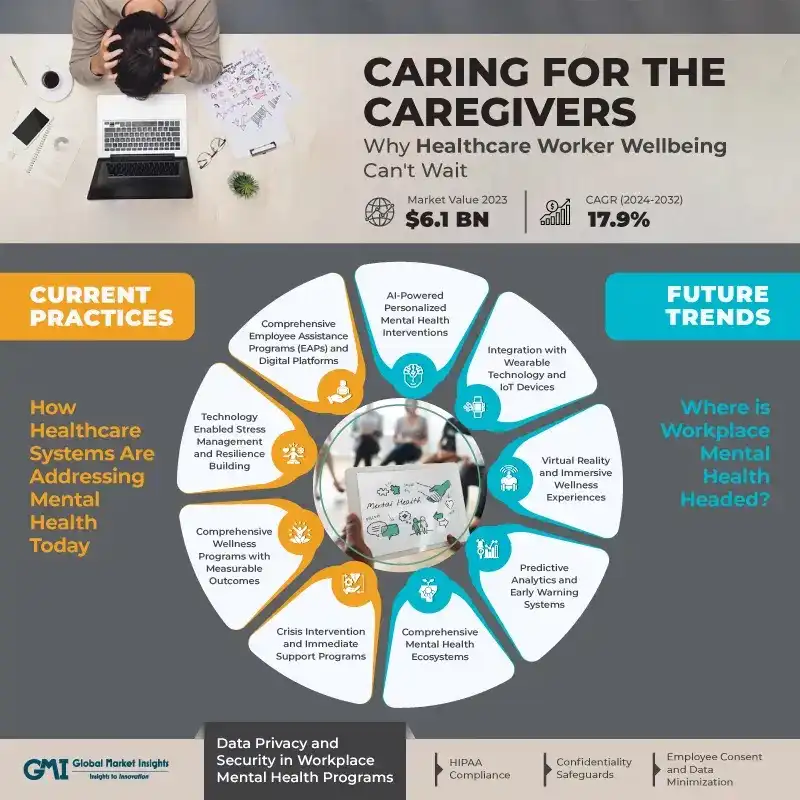
Current Practices: How Healthcare Systems Are Addressing Mental Health Today
1. Comprehensive Employee Assistance Programs (EAPs) and Digital Platforms:
Modern healthcare organizations are moving beyond traditional EAPs to comprehensive digital mental health platforms that provide 24/7 support, personalized interventions, and data-driven insights.
- Headspace Care (formerly Ginger): This AI-powered platform offers stratified care models, providing everything from self-guided meditation to on-demand coaching and clinical therapy. The platform uses artificial intelligence to match employees with appropriate levels of care based on their needs and risk factors.
- Lyra Health: Serving over 4.5 million members globally, Lyra provides personalized mental health care that includes therapy, coaching, and medication management. Their platform integrates with existing healthcare benefits and provides real-time analytics to employers.
- Spring Health: Utilizing precision mental healthcare, Spring Health offers personalized treatment plans based on individual mental health profiles, providing faster access to care and better outcomes.
2. Crisis Intervention and Immediate Support Programs:
Healthcare organizations are implementing immediate response programs to address acute mental health crises and provide real-time support.
- Cleveland Clinic's "Code Lavender" Program: This innovative initiative provides immediate emotional and spiritual support to healthcare workers following traumatic events. The program deploys trained teams within minutes of a crisis, offering on-the-spot counseling, meditation, and stress-relief techniques.
- Mayo Clinic's Program on Physician Well-Being: This comprehensive initiative includes the "Joy in the Workplace" program, which focuses on reducing administrative burden, improving work-life integration, and providing professional coaching for physicians.
3. Technology-Enabled Stress Management and Resilience Building:
Healthcare systems are leveraging technology to build resilience and manage stress proactively.
- CHRISTUS Health and Calm Partnership: CHRISTUS Health implemented Calm for Business to help their 45,000+ caregivers build resilience and reduce burnout. The program provides unlimited access to meditation, sleep stories, and mindfulness exercises specifically designed for healthcare workers.
- Guthrie Clinic's Virtual Care Hub: Facing a 43% drop in clinical workforce, Guthrie Clinic launched the Pulse Center, a virtual care hub that reduced nurse turnover from 25% to 13% and achieved USD 7 million in labor cost savings while improving nurse satisfaction.
4. Comprehensive Wellness Programs with Measurable Outcomes:
Healthcare organizations are implementing holistic wellness programs that address both physical and mental health with quantifiable results.
- Healthcare Delivery System Wellness Program: A prominent healthcare system in Kentucky serving over 100,000 residents implemented a comprehensive wellness program for its 1,500+ employees, resulting in significant health improvements: 95.3% decrease in COPD claims, 17.8% reduction in asthma claims, 12.9% decrease in diabetes claims, and 5.2% reduction in cholesterol claims.
Comparison Table of Leading Workplace Mental Health Platforms
|
Sr. No. |
Platform/Solution |
Features |
Key Differentiator |
|
|
Headspace Care |
|
|
|
|
Lyra Health |
|
|
|
|
Spring Health |
|
|
|
|
Modern Health |
|
|
|
|
Calm for Business |
|
|
|
|
BetterUp |
|
|
|
|
Talkspace for Business |
|
|
|
|
Virgin Pulse |
|
|
|
|
Well-Being Index |
|
|
|
|
Workplace Options |
|
|
Integration with Healthcare Operations and Electronic Health Records
Modern workplace mental health platforms are increasingly integrating with existing healthcare infrastructure:
- Epic EHR Integration: Platforms like Lyra Health integrate with Epic Systems to provide seamless access to employee mental health data for occupational health teams.
- Telehealth Platform Integration: Solutions integrate with existing telehealth infrastructure, allowing employees to access mental health services through familiar platforms.
- HR Information Systems: Advanced platforms connect with HRIS systems to provide real-time analytics on employee wellbeing, absenteeism, and productivity metrics.
These integrations enable healthcare organizations to track ROI through reduced turnover, decreased sick days, and improved employee satisfaction scores.
Regulatory Framework and Compliance Requirements
- Occupational Safety and Health Administration (OSHA): OSHA has developed comprehensive workplace mental health guidelines, including checklists for senior managers and supervisors. These guidelines emphasize the employer's responsibility to provide a safe work environment that includes psychological safety.
- The Joint Commission Standards: The Joint Commission's Quick Safety Issue 54 addresses psychosocial well-being of healthcare workers, requiring organizations to implement programs that address burnout, stress, and mental health support.
- Americans with Disabilities Act (ADA) Compliance: Healthcare organizations must ensure their mental health programs comply with ADA requirements, providing reasonable accommodations for employees with mental health conditions while maintaining confidentiality and non-discrimination policies.
- UK's National Institute for Health and Care Excellence (NICE): NICE provides comprehensive guidance on healthy workplaces, emphasizing evidence-based approaches to improving employee mental and physical health and wellbeing.
- Canadian Standards Association (CSA): Canada's National Standard for Psychological Health and Safety in the workplace provides a framework for promoting mental health and preventing psychological harm in the workplace.
Data Privacy and Security in Workplace Mental Health Programs
With workplace mental health platforms collecting sensitive personal health information, data governance becomes critical:
- HIPAA Compliance: Healthcare organizations must ensure all mental health platforms meet HIPAA requirements for protected health information.
- Employee Consent and Data Minimization: Programs must obtain explicit consent for data collection and limit data gathering to what is necessary for program effectiveness.
- Confidentiality Safeguards: Robust policies must protect employee mental health information from unauthorized access by supervisors or colleagues.
Consumer Tip: Before participating in workplace mental health programs, review the organization's privacy policy and understand how your mental health data will be used, stored, and shared.
Recent Innovations Transforming Workplace Mental Health
The workplace mental health industry continues to innovate rapidly with novel solutions addressing evolving needs:
- AI-Powered Mental Health Interventions (2024-2025): Advanced artificial intelligence is being used to provide personalized mental health interventions, predict mental health crises before they occur, and match employees with the most appropriate level of care.
- Virtual Reality Therapy Programs: Healthcare organizations are piloting VR therapy programs that provide immersive stress-relief experiences, allowing employees to "escape" to calm environments during breaks.
- Wearable Device Integration: Mental health platforms are integrated with smartwatches and fitness trackers to monitor stress levels, sleep patterns, and other indicators of mental wellbeing in real-time.
- Predictive Analytics for Mental Health Risk: Advanced analytics platforms can identify employees at risk of burnout or mental health crises before symptoms become severe, enabling proactive interventions.
Market Size and Industry Growth
According to Global Market Insights, the global mental health apps market was valued at USD 6.1 billion in 2023 and is projected to grow at a 17.9% CAGR from 2024 to 2032. Key drivers include:
- Aging healthcare workforce require enhanced support
- Increasing recognition of burnout as a patient safety issue
- Growing demand for personalized mental health solutions
- Integration of mental health with overall employee wellness programs
Thus, the workplace mental health market is experiencing unprecedented growth, driven by increased awareness, regulatory requirements, and demonstrated ROI.
Future Trends: Where is Workplace Mental Health Headed?
1. AI-Powered Personalized Mental Health Interventions
Future workplace mental health platforms will leverage advanced AI to provide highly personalized interventions based on individual risk factors, work patterns, and stress indicators. These systems will predict mental health challenges before they become critical and automatically deploy appropriate resources.
2. Integration with Wearable Technology and IoT Devices
Workplace mental health programs will increasingly integrate with wearable devices, smart badges, and environmental sensors to monitor stress levels, sleep quality, and work-life balance in real-time, providing immediate feedback and interventions.
3. Virtual Reality and Immersive Wellness Experiences
VR technology will become mainstream in workplace mental health, offering immersive meditation experiences, virtual therapy sessions, and stress-relief environments that employees can access during breaks or high-stress periods.
4. Predictive Analytics and Early Warning Systems
Advanced analytics will identify patterns in employee behavior, productivity, and engagement that predict mental health crises, enabling proactive interventions and preventing burnout before it occurs.
5. Comprehensive Mental Health Ecosystems
Rather than standalone solutions, future workplace mental health programs will offer integrated ecosystems combining therapy, coaching, peer support, wellness activities, and crisis intervention in seamless, user-friendly platforms.
Strategic Collaborations Driving Workplace Mental Health Innovation
The transformation of workplace mental health from reactive support to proactive wellness has been driven by strategic partnerships between technology companies, healthcare organizations, research institutions, and mental health providers. These collaborations are essential for clinical validation, evidence-based program development, and successful implementation across diverse healthcare settings.
Key Partnership Models
- Technology-Healthcare Provider Partnerships: Companies like Headspace partnering with major health systems to integrate mental health support into employee benefits.
- Academic-Industry Collaborations: Research institutions working with technology companies to validate mental health interventions and measure outcomes.
- Payer-Provider Partnerships: Insurance companies collaborating with employers to fund comprehensive mental health programs that reduce overall healthcare costs.
Economic Impact: The True Cost of Burnout in Healthcare Systems
- Direct Financial Impact:
- Turnover Costs:
- Nurse turnover costs: USD 56,300 per nurse, including recruitment, training, and productivity loss.
- Physician turnover costs: USD 500,000 to USD 1,000,000 per physician, considering recruitment, onboarding, and lost revenue.
- Nearly half of nurses and physicians are at risk of leaving their organizations in 2024.
- Productivity and Quality Impact:
- Burned-out healthcare workers are 2.6 times more likely to leave their jobs and 63% more likely to take sick days.
- Patient safety incidents increase by 10-15% in units with high burnout rates.
- Turnover Costs:
- Return on Investment (ROI) Data:
- Proven Financial Returns:
- USD 4 return for every USD 1 invested in mental health treatment, according to the World Health Organization (WHO).
- Companies with strong mental health programs see 21% higher profitability compared to those without.
- 76% reduction in absenteeism with comprehensive workplace mental health programs.
- USD 3,000 per employee annual savings with comprehensive mental health programs.
- Proven Financial Returns:
How the Industry is Moving Forward: Challenges and Opportunities
- Current Challenges:
- Implementation Barriers:
- Leadership buy-in and cultural resistance to mental health initiatives
- Integration complexity with existing healthcare IT systems
- Measuring ROI and demonstrating program effectiveness
- Ensuring employee privacy while collecting meaningful data
- Resource Constraints:
- Limited budgets for comprehensive mental health programs
- Shortage of qualified mental health professionals
- Time constraints for employee participation in wellness programs
- Competing priorities in high-pressure healthcare environments
- Implementation Barriers:
- Emerging Opportunities:
- Technology-Enabled Solutions:
- AI-powered platforms reducing the need for human mental health professionals
- Mobile-first solutions increasing accessibility and engagement
- Integration with existing healthcare workflows minimizing disruption
- Real-time analytics providing immediate insights into program effectiveness
- Policy and Regulatory Support:
- Increasing recognition of mental health as a workplace safety issue
- Potential for insurance coverage of workplace mental health programs
- Government initiatives supporting healthcare worker wellbeing
- Professional organizations advocating for mental health resources
- Technology-Enabled Solutions:
Interactive Section: Find Your Perfect Workplace Mental Health Solution!
Curious which workplace mental health approach best fits your healthcare organization's needs? Use this assessment to discover your ideal strategy:
1. What is your organization's primary mental health challenge?
- High turnover and recruitment difficulties
- Widespread burnout and stress among staff
- Crisis situations and acute mental health incidents
- Low engagement and productivity
- Lack of mental health resources and support
2. What is your organization's size and complexity?
- Small healthcare practice (under 100 employees)
- Medium healthcare system (100-1,000 employees)
- Large health system (1,000-10,000 employees)
- Multi-state healthcare organization (10,000+ employees)
- Academic medical center with diverse workforce
3. What is your budget range for mental health initiatives?
- Under USD 50,000 annually
- USD 50,000 - USD 200,000 annually
- USD 200,000 - USD 500,000 annually
- USD 500,000 - USD 1,000,000 annually
- Over USD 1,000,000 annually
4. What is your organization's technology readiness?
- Basic IT infrastructure, prefer simple solutions
- Moderate technology adoption, open to new platforms
- Advanced IT capabilities, seeking comprehensive integration
- Innovative technology environment, want innovative solutions
- Mixed technology levels across different departments
5. What is your primary goal for mental health programs?
- Reduce turnover and recruitment costs
- Improve employee satisfaction and engagement
- Enhance patient safety and quality of care
- Demonstrate ROI and business value
- Create a comprehensive wellness culture
Your Results:
- Mostly A's – Start with Calm for Business or Basic EAP Enhancement:
Your organization needs foundational mental health support that is easy to implement and cost-effective. Focus on stress reduction tools, mindfulness programs, and basic counseling services. Consider partnering with established EAP providers to enhance existing services.
- Mostly B's – Implement Headspace Care or Lyra Health:
Your organization is ready for comprehensive digital mental health platforms that provide personalized care and measurable outcomes. These solutions offer the right balance of features, accessibility, and professional support for medium-sized healthcare systems.
- Mostly C's – Deploy Spring Health or Modern Health:
Your large organization needs sophisticated platforms with advanced analytics, integration capabilities, and comprehensive care options. Focus on solutions that can scale across multiple locations and provide detailed reporting for leadership.
- Mostly D's – Consider BetterUp or Custom Enterprise Solutions:
Your organization is ready for cutting-edge mental health technology with AI-powered interventions, predictive analytics, and comprehensive integration with existing systems. Look for platforms that offer innovation and customization options.
- Mostly E's – Develop Comprehensive Multi-Platform Strategy:
Your complex organization needs a combination of solutions addressing different populations and needs. Consider implementing multiple platforms with strong integration capabilities and comprehensive change management support.
Final Tip: If your answers were evenly distributed, consider a phased implementation approach, starting with foundational programs and gradually expanding to more comprehensive solutions as you demonstrate success and build organizational support.
Conclusion: A Mental Health Revolution in Healthcare
Workplace mental health is no longer just about employee satisfaction—it is about organizational survival. Healthcare systems that fail to address the mental health crisis among their workforce face catastrophic costs in turnover, reduced quality of care, and compromised patient safety. The evidence is clear: investing in comprehensive mental health programs delivers measurable returns in reduced turnover, improved productivity, and enhanced patient outcomes.
For healthcare leaders, this means prioritizing mental health initiatives with the same urgency as patient safety programs. For employees, it signals a promising future where mental health support is integrated into daily work life, providing real-time assistance and long-term resilience building.
The transformation from reactive crisis management to proactive mental health support represents one of the most significant opportunities to improve both employee wellbeing and organizational performance in healthcare. The question now is: Is your organization ready to invest in the mental health revolution that could save both lives and millions of dollars?
The future of healthcare depends not just on medical technology and clinical expertise, but on the mental health and wellbeing of the professionals who deliver care. The time for action is now—the cost of inaction is simply too high to ignore.


